

You are standing in your kitchen holding a takeout box, and one question is running through your head: can you microwave it? You do not want to read a science paper. You want a straight answer before your food gets cold. This page gives you that answer in seconds, then backs it up with the full detail if you want it.
Below you will find a complete safety chart covering more than 30 materials, the 10-second label check that answers most cases on its own, a one-minute water test for unmarked containers, and straight answers to the 14 questions people ask most. Every safety claim here follows guidance from the USDA Food Safety and Inspection Service and the FDA. When the official guidance says “check the label,” this page says so too.
The Short Answer
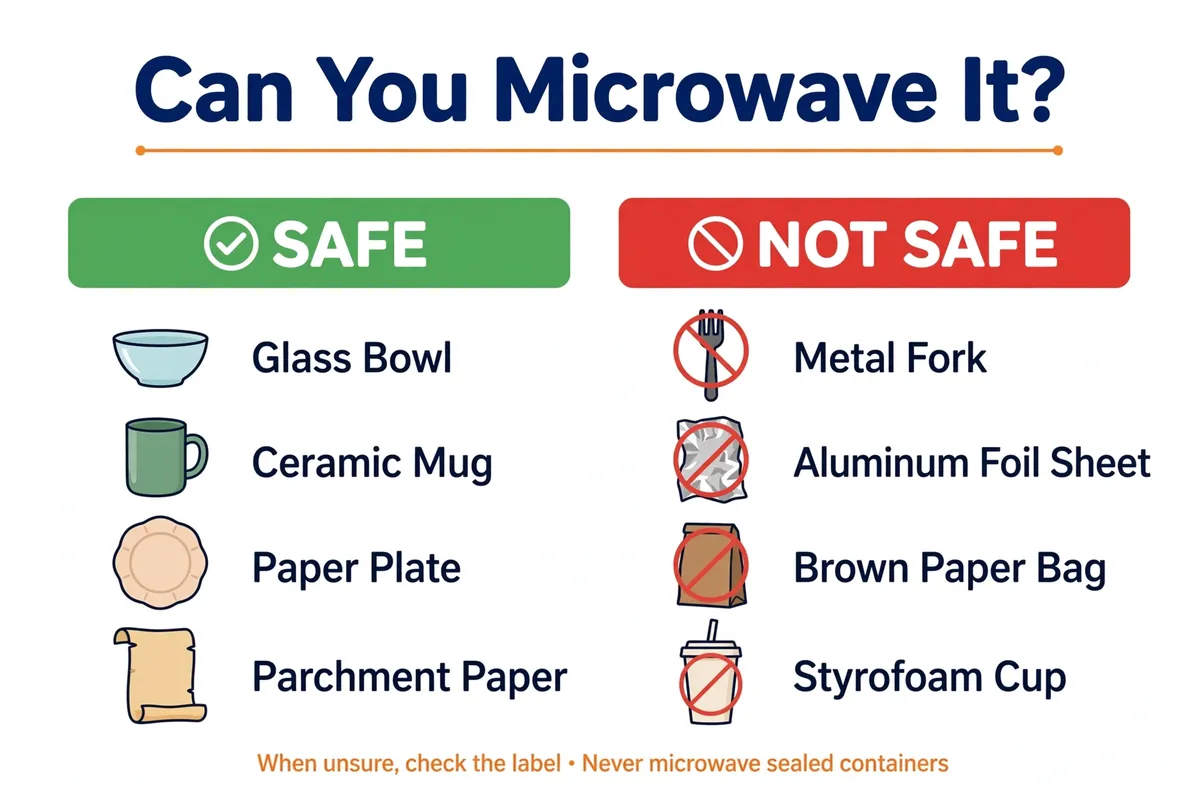
Most glass, ceramic, parchment paper, wax paper, and containers clearly labeled “microwave safe” are fine. Metal, aluminum foil, brown paper bags, newspapers, and unlabeled plastics are not. For everything in between, the chart below gives you a verdict in one glance, and the label check further down settles the close calls.
If you only remember one rule, make it this: the USDA says to use only containers specifically labeled for microwave use. Glass, ceramic containers, and plastics should all carry that label. One-time-use containers like margarine tubs and takeout tubs should not go in, because they can warp or melt and let chemicals migrate into food.
The Complete Microwave Safety Chart
This is the heart of the page. Find your material, read the verdict, and check the note. “Sometimes” means it depends on a condition explained in the note. Full guides for the most-searched materials are linked under the table.
| Material | Verdict | Why |
|---|---|---|
| Glass (heatproof, like Pyrex-style) | Yes | Microwaves pass straight through; the standard safe choice |
| Glass-ceramic (like CorningWare) | Yes | Made for heat; explicitly listed as safe by the USDA |
| Ceramic and porcelain (no metal trim) | Yes | Safe when labeled; avoid pieces with metallic paint or glaze |
| Paper plates (plain white, labeled) | Yes | Fine for short reheats; read the full guide for coated and printed plates |
| Paper towels (white, microwave-safe) | Yes | Safe for covering food and catching splatters |
| Parchment paper | Yes | Heat-safe by design; ideal for covering and wrapping |
| Wax paper | Sometimes | Safe as a short-reheat cover; not for long cooking or greasy food |
| Plastic containers labeled microwave-safe | Yes | Tested by the maker for microwave heat; still avoid overheating |
| Plastic wrap labeled microwave-safe | Sometimes | Yes only if it does not touch the food; vent it |
| Silicone (food-grade) | Yes | Heat-stable and widely labeled for microwave use |
| Oven cooking bags | Yes | Designed for heat; USDA lists them as safe |
| Straw and wicker baskets | Yes | For quick warming of bread and rolls only |
| Cardboard takeout boxes (plain) | Sometimes | Plain paperboard is okay for short reheats; greasy or wax-coated boxes are not |
| Oyster pail takeout boxes | Sometimes | Paperboard part is fine briefly; remove any metal handle first |
| Ziploc-style bags | Sometimes | Reheat and defrost only, vented, on a dish; never for high-fat or sugary food |
| Styrofoam labeled microwave-safe | Sometimes | Only if the label says so; most foam is not |
| Aluminum foil (small smooth pieces) | Sometimes | USDA allows small smooth pieces for shielding with strict rules; easier to just avoid it |
| Styrofoam (unlabeled) | No | Can melt and leach styrene; never assume it is safe |
| Plastic takeout tubs (one-time use) | No | Made for cold storage; they warp and can leach chemicals when heated |
| Margarine tubs and whipped topping bowls | No | One-time-use plastics; the USDA specifically warns against them |
| Yogurt cups | No | Thin single-use plastic; not made for heat |
| Thin plastic storage bags | No | USDA lists these as never-use items |
| Plastic grocery bags | No | Melt risk and chemical risk; never use them |
| Brown paper bags | No | Can catch fire and may release fumes from inks and glue |
| Newspapers | No | Inks and fire risk; the USDA lists them as never-use |
| Aluminum foil (crumpled or large pieces) | No | Causes arcing and sparks; can damage the oven |
| Metal utensils, bowls, and dishes | No | Microwaves bounce off metal, causing sparks and oven damage |
| Dishes with metallic trim or gold rims | No | The trim arcs even when the dish itself is ceramic |
| Twist ties with metal wire | No | Tiny metal, big sparks; remove them before microwaving |
| Wood | No | Dries out, cracks, and can harbor bacteria in the cracks |
| Melamine dishes | No | Can leach chemicals when heated; not for the microwave |
| Eggs in the shell | No | Steam builds up inside and the egg can explode, even after you take it out |
| Sealed containers and jars | No | Trapped steam has nowhere to go; open or vent them first |
| Grapes (whole) | No | Can create plasma-like sparks; cut them first if you must heat them |
| Hot peppers (whole, dry) | No | Capsaicin vaporizes and becomes a painful airborne irritant |
| Pizza boxes | No | Grease-soaked cardboard plus possible metal staples; transfer the slices |
| Insulated metal travel mugs | No | Metal shell blocks microwaves and can spark |
| Bamboo (lacquered or painted) | No | Coatings can break down; plain bamboo is only for very brief warming |
Want the deep version of any row? These guides go further: can you microwave styrofoam, can you microwave paper plates, can you microwave aluminum foil, can you microwave plastic, parchment paper vs wax paper, can you microwave cardboard takeout boxes, can you microwave glass, can you microwave paper towels, can you microwave ziploc bags, can you microwave metal, can you microwave eggs in shell, can you microwave cup noodles, microwave-safe symbols decoded, and things you should never put in a microwave.
How to Read This Chart
A “Yes” means the material is widely accepted as microwave-safe when used normally. It still assumes common sense: do not overheat, do not microwave an empty container, and stop if you see warping or smell something odd. A “No” means the USDA or FDA guidance rules it out, or the physics makes it dangerous. Do not test a “No” to see what happens.
“Sometimes” is where most confusion lives. It means the material can be safe under specific conditions, and the note tells you the condition. Wax paper is a good example: perfectly fine as a loose cover for a one-minute reheat, but a bad idea wrapped tight around greasy food for five minutes. When you see “Sometimes,” read the linked full guide before you decide. The two minutes of reading beats replacing a microwave.
The 10-Second Label Check
Before you touch the chart, try this. It answers most real cases faster than any article can.
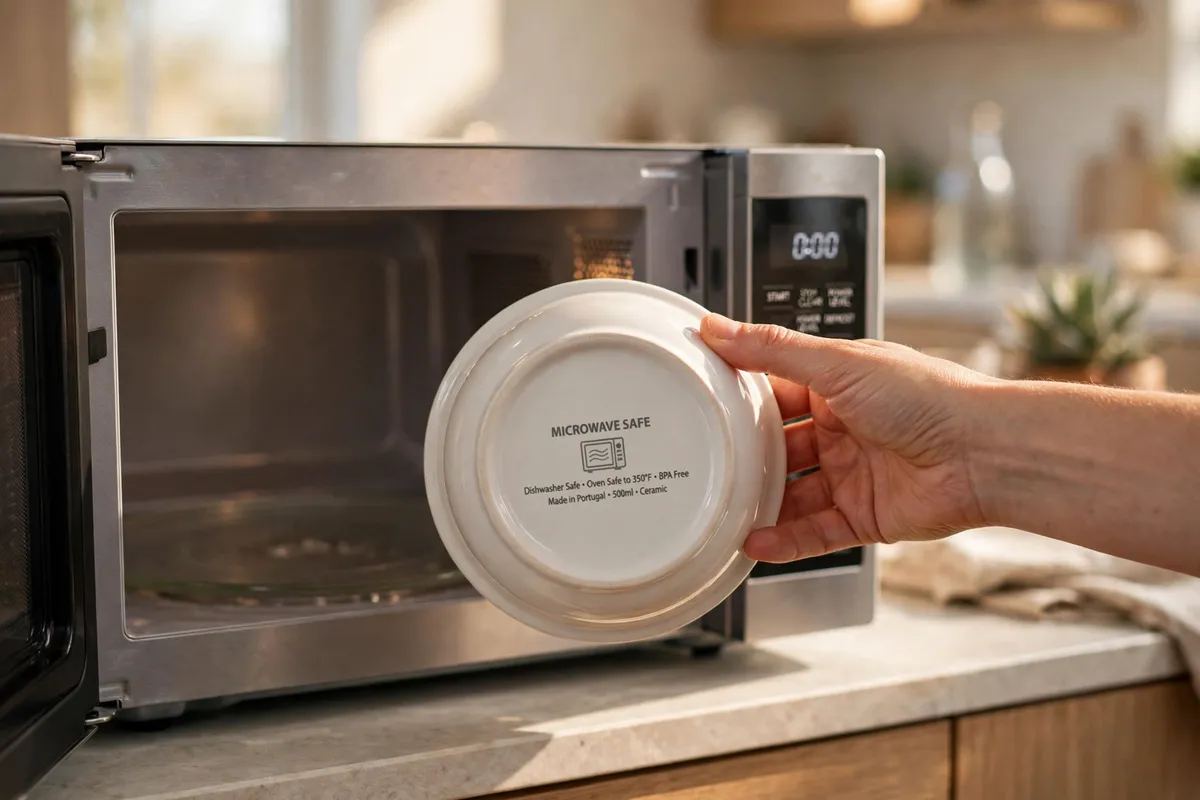
First, flip the container over and look at the bottom. You are hunting for three things: the words “microwave safe,” a microwave symbol (usually wavy lines), or a resin code number inside the triangle arrows. If you see “microwave safe” printed clearly, you are done. Use it normally.
Second, look for warning text. Phrases like “not for microwave use,” “remove from container before heating,” or a crossed-out microwave symbol are hard stops. The maker tested the product and is telling you no. Believe them.
Third, check the resin code if it is plastic. The number inside the triangle tells you the plastic type. Codes 2 (HDPE) and 5 (PP) are the ones most often made for microwave heat, and only when the container is also labeled for microwave use. Codes 1, 3, 4, 6, and 7 are not microwave plastics. If there is no label and no code you recognize, treat it as a no.
Fourth, scan for metal. Any gold rim, silver trim, metallic paint, twist tie, or foil lid ends the discussion. Metal and microwaves do not mix, and even a thin decorative line can arc. This check takes ten seconds once it becomes a habit, and it prevents nearly every microwave accident.
The One-Minute Water Test for Unmarked Containers
Some containers have no label at all: an old ceramic mug, a hand-me-down bowl, a storage container with the markings worn off. For these, food scientists use a simple test, and you can do it in your kitchen.
Fill a microwave-safe glass measuring cup with one cup of cold water. Put the empty test container in the microwave next to it. Microwave on high for one minute. Then carefully feel the empty container (not the water).
If the empty container is cool and the water is hot, the container lets microwaves pass through instead of absorbing them. That is what you want. If the empty container is hot, it is absorbing microwave energy itself, which means it can overheat, crack, or leach material into food. Do not use it in the microwave.
This test does not make an unsafe plastic safe. It only tells you whether a hard container like ceramic or glass absorbs energy. Plastic safety depends on the plastic type and the label, not on this test. When the test is unclear, default to a container you know is safe.
Plastic Resin Codes 1 to 7, Explained
The little number inside the triangle on plastic containers confuses almost everyone. Here is what each code means for the microwave, based on widely cited expert guidance.
| Code | Plastic name | Microwave verdict |
|---|---|---|
| 1 (PET/PETE) | Polyethylene terephthalate | No. Single-use bottles and food tubs; not made for heat |
| 2 (HDPE) | High-density polyethylene | Usually yes, but only when labeled microwave-safe |
| 3 (PVC) | Polyvinyl chloride | No. Can release harmful chemicals when heated |
| 4 (LDPE) | Low-density polyethylene | No. Soft films and squeeze bottles; not for heat |
| 5 (PP) | Polypropylene | Usually yes, but only when labeled microwave-safe |
| 6 (PS) | Polystyrene (styrofoam) | No, unless the piece is specifically labeled microwave-safe |
| 7 (Other) | Mixed and other plastics | No. This is a catch-all category; never assume safety |
Two things matter more than this table. First, the resin code identifies the plastic type, not its microwave rating. A code 5 tub made for cold storage is still not a microwave container. Second, the label beats the code every time. If the maker printed “microwave safe” on a code 5 container, trust the label. If there is no label, the code alone is not permission. For the full breakdown with label-reading steps, see can you microwave plastic.
What the Microwave-Safe Symbols Actually Mean
You will see three symbols most often. Wavy lines (usually three) mean microwave-safe. A crossed-out microwave or crossed-out wavy lines mean do not microwave. A snowflake or dish symbol with wavy lines usually indicates the item is freezer-to-microwave safe.
Here is the part most sites skip: there is no single universal standard behind these symbols. No government agency runs a formal testing program that every “microwave safe” label must pass. Makers apply the label based on their own testing, and standards vary. That does not make the label meaningless; it makes it a starting point, not a guarantee.
This is why the rest of this page exists. A label plus the material knowledge in the chart above is far more reliable than a label alone. Thin plastics can carry optimistic labels, and old containers can carry labels that predate current understanding. If a labeled container warps, stains permanently, or smells like chemicals after microwaving, retire it no matter what the bottom says. The complete symbol guide with every variant is at microwave-safe symbols decoded.
Why “Microwave Safe” on the Label Is Not a Guarantee
This deserves its own section because it surprises people. When you buy a container labeled “microwave safe,” you assume someone official verified it. In reality, there is no required formal testing process behind that phrase, and the results are not guaranteed across all uses.
The FDA explains that glass, paper, ceramic, and plastic containers are used in microwave cooking because microwaves pass through these materials, and it directs people to use cookware specifically manufactured for microwave use. That is guidance about material types, not a certification program. The USDA similarly says to use only cookware specially manufactured for microwave use, with glass, ceramic, and labeled plastics as the examples.
What this means for you: treat the label as the maker’s claim, then apply judgment. A thick, labeled code 5 meal-prep container from a reputable brand is a safe bet. A flimsy labeled container from a dollar store that warps on the first use is telling you something the label did not. Heat degrades plastic over time, so even good containers have a lifespan. When a container starts looking tired, replace it. Your caution is the real safety standard.
Foods That Explode, Spark, or Turn Dangerous
Containers are only half the story. Some foods themselves misbehave in the microwave, and no container choice fixes that.
Whole eggs in the shell are the classic case. Steam builds up inside the shell with no escape route, and the egg can explode, sometimes after you have already taken it out and bitten into it. Always crack eggs into a microwave-safe dish and pierce the yolk. The full explanation, including the delayed-explosion cases, is at can you microwave eggs in shell.
Sealed anything is the same physics: jars with lids on tight, sealed pouches, and unvented containers let pressure build until something gives. Always vent or open. Grapes cut in half the wrong way can produce sparks of plasma in the microwave, a party trick that can damage the oven. Whole dry hot peppers release capsaicin into the air as an aerosol, which is essentially homemade pepper spray in your kitchen. And cup noodle foam cups are a container problem disguised as a food problem: most are not labeled for the microwave, so the safe move is boiling water poured into the cup, not the cup into the microwave. Details at can you microwave cup noodles.
For the full danger list with the science behind each item, read things you should never put in a microwave. For metal specifically, including why even small pieces arc, see can you microwave metal.
What to Do If You Already Microwaved Something Unsafe
It happens. You zoned out, hit start, and now the kitchen smells like melted plastic. Here is the calm protocol.
First, stop the microwave and leave the door closed for a minute. This contains any fumes and lets hot surfaces cool slightly. Then open the door, ventilate the kitchen (fan on, window open), and remove the container with oven mitts. Do not touch melted plastic with bare hands.
Second, assess the food. If the container merely got warm and looks unchanged, the food is almost certainly fine. If the container warped, melted, discolored, or smells strongly of chemicals, throw the food out. This is not the moment for “it is probably fine.” Chemicals that migrate from overheated plastic into food are not something you can see or taste-test away.
Third, check the microwave. Wipe the interior with a damp cloth and mild soap. If there was arcing from metal, inspect for scorch marks; light marks are usually cosmetic, but deep pitting near the waveguide cover (the small panel inside) deserves a professional look before the next use. If anything caught fire, even briefly, unplug the oven and let it cool completely before touching anything inside.
The reassuring truth: a single accidental melt is very unlikely to cause lasting harm to you. The risk from one exposure is small; the risk comes from repeated habits. Fix the habit, keep the microwave, and move on.
Frequently Asked Questions
What materials are safe to microwave?
Heatproof glass, glass-ceramic, plain ceramic without metal trim, parchment paper, wax paper for short reheats, white paper towels and plates labeled for microwave use, food-grade silicone, oven cooking bags, and any plastic container clearly labeled microwave-safe. When a container has no label, the one-minute water test in this guide tells you whether a hard container absorbs microwave energy.
How do I know if a container is microwave safe?
Flip it over and look for the words “microwave safe,” a wavy-lines symbol, or a crossed-out microwave symbol. Check the resin code on plastics: 2 and 5 are the common microwave plastics, but only when the container is also labeled. Scan for any metal trim, foil, or twist ties, which are automatic disqualifiers. No label and no recognizable code means do not use it.
Can you microwave plastic?
Only plastic specifically labeled microwave-safe, and even then with care. Resin codes 2 (HDPE) and 5 (PP) are the plastics most often made for microwave heat, while codes 1, 3, 4, 6, and 7 are not microwave plastics. One-time-use plastics like margarine tubs and takeout containers should never go in, because the USDA warns they can warp and let chemicals migrate into food. The full guide is can you microwave plastic.
Is it safe to microwave styrofoam?
Only if the piece is specifically labeled microwave-safe, and most styrofoam is not. Unlabeled foam can melt and leach styrene into food, and it can catch fire if overheated. Cup noodle foam cups fall in the same category: the makers instruct you to pour in boiling water, not to microwave the cup. Full detail at can you microwave styrofoam.
Can you put paper plates in the microwave?
Plain white paper plates labeled for microwave use are fine for short reheats. The complications are coated, printed, or plastic-laminated plates, which can leach or melt, and microwaving a plate with nothing on it, which can scorch. USDA guidance specifies plain white paper. The breakdown by plate type is at can you microwave paper plates.
Why can’t you microwave metal?
Metal reflects microwaves instead of letting them pass through, so the energy bounces around the oven cavity and concentrates at edges and points, causing arcing (sparks). This can scorch food, damage the oven’s interior, and in bad cases start a fire. Thin pieces like foil and twist ties are actually worse than thick ones because their edges concentrate the energy. More at can you microwave metal.
Can you microwave aluminum foil?
The USDA’s own guidance is more nuanced than the flat “no” most sites give: small, smooth pieces of foil kept away from the oven walls can be used for shielding in some ovens, following the oven maker’s instructions. In practice, crumpled foil, large sheets, and foil near the walls cause arcing. Because the rules are fiddly and the upside is small, most people are better off skipping foil entirely. The shielding rules are at can you microwave aluminum foil.
What happens if you microwave something that isn’t microwave-safe?
Three things can happen, in rising order of seriousness: the container warps or melts and chemicals migrate into the food; the item sparks, smokes, or catches fire; or the oven itself is damaged by arcing. If it just got warm and looks fine, the food is almost certainly okay. If it melted, warped, or smells chemical, discard the food, ventilate, and wipe down the oven.
Can you microwave cardboard?
Plain paperboard, like a clean takeout box without grease or coating, is generally fine for short reheats. Greasy, wax-coated, or plastic-laminated cardboard is not, and neither are boxes with metal staples or handles. Pizza boxes are a no because of soaked-in grease. Transfer the food to a plate if you are unsure. Full guide: can you microwave cardboard takeout boxes.
Is it safe to microwave food in plastic wrap?
Only wrap labeled microwave-safe, and only if the wrap does not touch the food. Drape it loosely and leave a vent corner so steam escapes. Regular cling film not rated for heat can melt onto food. Wax paper or parchment paper is a simpler cover for most reheats. See can you microwave ziploc bags for the related rules on plastic bags.
Can you microwave paper towels?
Yes, white paper towels labeled for microwave use are one of the safest covers available. They catch splatters and can be dampened to steam vegetables. Avoid recycled or printed towels (inks), do not use them for long cooking sessions, and never microwave a towel with nothing under it. Details at can you microwave paper towels.
What do the microwave-safe symbols mean?
Wavy lines mean the item is rated for microwave use. A crossed-out microwave or crossed-out waves mean do not microwave it. There is no single universal testing standard behind these symbols; makers apply them based on their own testing. Treat the symbol as a good starting signal, then apply the material knowledge on this page. Every variant is decoded at microwave-safe symbols decoded.
Can you microwave eggs?
Not in the shell, ever. Steam builds inside with no escape and the egg can explode, sometimes after microwaving, when you bite into it. Crack the egg into a microwave-safe dish, pierce the yolk and white with a fork, and cover loosely. That gives you a cooked egg with none of the drama. Full explanation: can you microwave eggs in shell.
I already microwaved something unsafe. Is my food ruined?
If the container looks and smells unchanged, the food is almost certainly fine. If the container warped, melted, discolored, or smells strongly of chemicals, throw the food out. Ventilate the kitchen, wipe down the microwave interior, and check for scorch marks from any arcing. One accident is very unlikely to cause lasting harm; the real fix is not repeating it.
Conclusion
The microwave is one of the safest appliances in your kitchen once you know the material rules, and one of the most dramatic when you do not. The whole system fits in your head: labeled glass, ceramic, paper, and microwave-safe plastics are in; metal, foil, brown bags, newspapers, and unlabeled plastics are out; everything else gets the label check or the water test.
Bookmark this chart and use it the next time you are holding a mystery container. And when a specific material needs a deeper answer, the full guides are one click away, starting with the complete chart hub you just read. Safe zapping.

1 Comment
Pingback: Can You Microwave Bread? Safe Method + Times