

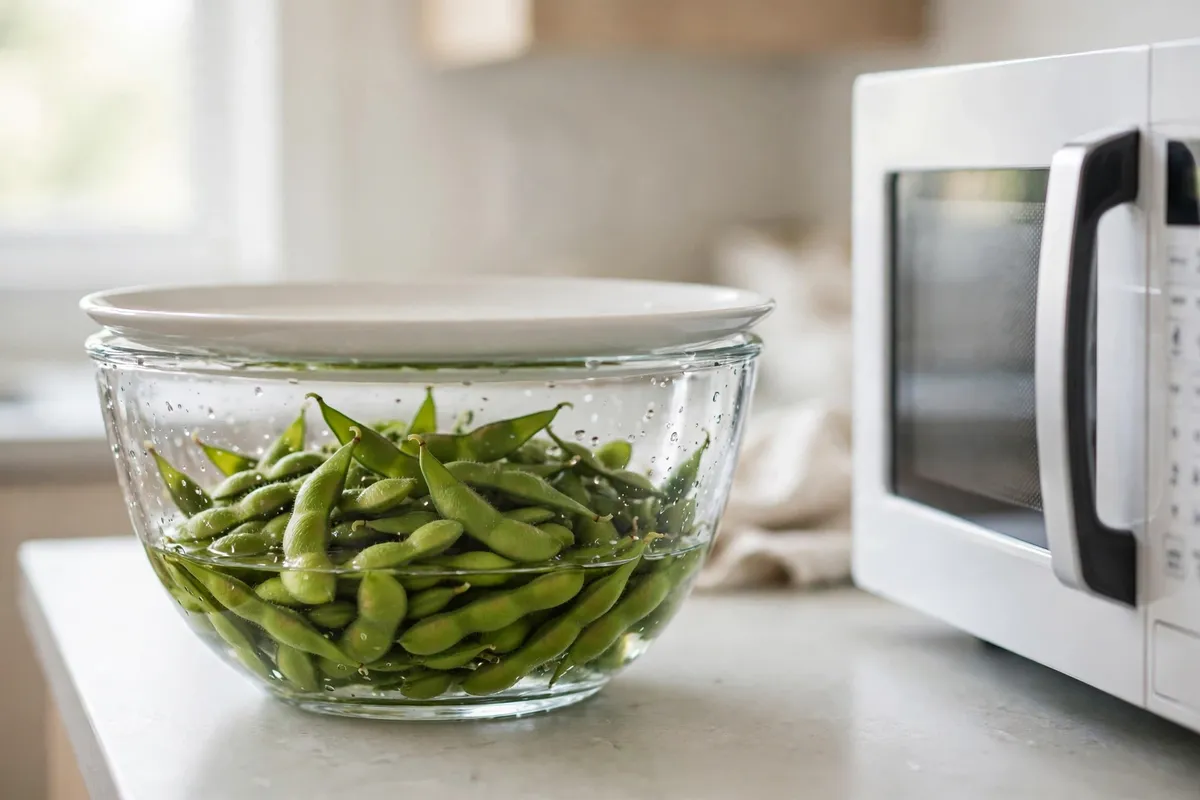
Yes, you can microwave edamame, and for a small batch it is one of the fastest ways to get a warm, salty, protein packed snack on the table. Frozen edamame in pods cooks in 3 to 5 minutes on high, shelled beans take about 2 minutes, and all you need is a microwave-safe dish, a tablespoon or two of water, and a loose cover. The microwave steams the beans in their own moisture, so you skip the pot, the steamer basket, and most of the cleanup. The method is simple, but the details matter: edamame goes from bright green and tender to dull and mushy in about 30 seconds, too much water turns the pods soggy, and raw soybeans need real heat before they are safe to eat. This guide covers the step by step method, timing charts by amount, type, and wattage, frozen and fresh edamame, shelled beans, steam-in-bag packs, the mushy and rubbery problems, what microwaving does to nutrients, reheating, seasoning ideas, and the safety rules that keep every batch safe.
Can You Microwave Edamame? The Short Answer
Yes. Put frozen edamame pods in a microwave-safe bowl, add 1 to 2 tablespoons of water, and cover loosely with a microwave-safe lid or plate. Cook on high for 3 to 5 minutes, stirring halfway through, then let the bowl rest covered for 1 to 3 minutes. Test a bean by squeezing it out of its pod. It should be bright green, hot all the way through, and tender with a slight bite, not soft all the way through. Drain any leftover water, sprinkle with salt, and serve right away.
That short answer works in most home kitchens, but the range of times you see online is wide for a reason. Some guides say 2 minutes, others say 6 minutes, and both can be right in their own kitchen. Pod or shelled, frozen or fresh, the amount you cook at once, and your microwave wattage all change the result. A single serving of shelled beans in a 1200-watt oven can be done in under 2 minutes, while a full pound of frozen pods in a 700-watt oven can need 6 minutes or more. The rest of this guide gives you starting times plus the checks that tell you when the beans are actually done, so you are not guessing.
If you are new to microwave cooking in general, our main guide to can you microwave it explains which foods and containers are safe and which ones to keep out of the oven. Edamame sits firmly in the safe group, and it is one of the snacks the microwave handles best, because it is really just a quick steam in a bowl.
Why the Microwave Works Well for Edamame
Edamame is a good match for microwave cooking because the beans are mostly water, and microwaves heat water directly. When you trap that heat under a loose cover, the pods steam in their own moisture in a few minutes. There is no pot of boiling water to watch, no colander to wash, and no long wait for a snack that is supposed to be fast.
Most frozen edamame is blanched before freezing, which means the beans were briefly heated and then cooled fast to lock in colour and texture. That head start is why frozen pods cook so quickly in the microwave. You are really just heating them through and finishing the job, not cooking a raw bean from scratch. Fresh edamame takes a little longer, because the beans have never been heated at all, but the same steam method still works.
The microwave also protects the colour. Edamame turns dull when it sits in heat too long, and a big pot of boiling water keeps cooking the beans even after you drain them. In the microwave you can stop at exactly 3 minutes, check one bean, and add 30 seconds only if you need it. That control is the difference between bright green beans and grey green beans.
There is one real limit. The microwave is a small batch tool. Two cups of pods cook beautifully. A full pound in one bowl cooks unevenly, with hot pods on the edges and cold pods in the middle. If you need a big bowl for a crowd, cook in two batches or use a pot. For a snack, a side dish, or a lunch bowl topping, the microwave wins on speed and cleanup.
How to Microwave Edamame Step by Step
This method works for frozen edamame in pods, which is the form most people buy. It takes about 5 minutes from freezer to table, and it needs no thawing at all.
Step 1: Put the pods in a microwave-safe bowl. Use a glass or ceramic bowl with room to spare. A shallow, wide bowl heats more evenly than a deep, narrow one, because the pods spread out instead of piling up. Do not use a plastic container unless it is labelled microwave-safe, and skip any bowl with a metallic trim.
Step 2: Add a little water. Add 1 to 2 tablespoons of water for a standard 8 to 10 ounce bag. The water is there to make steam, not to boil the beans. Too much water is the most common mistake with edamame, and it is the fastest way to get soggy pods. If you are cooking a single serving of about 1 cup, 1 tablespoon is enough.
Step 3: Cover loosely. Cover the bowl with a microwave-safe lid, a plate, or a damp paper towel. Leave a small gap or vent so steam can escape. A tight seal builds pressure and can make the cover pop off, and it also traps so much steam that the beans overcook after the timer stops.
Step 4: Microwave on high for 3 minutes. Set the timer for 3 minutes on full power. This is your starting point, not your finish line. Wattage varies, and your first batch is a test run for your own microwave.
Step 5: Stir and check. Carefully lift the cover away from your face, because the steam is hot. Stir the pods so the ones on the edges move to the middle, then test one bean. Squeeze it out of the pod and taste it. It should be hot all the way through and tender with a slight bite. If the centre is still cold or firm, add 30 seconds and check again.
Step 6: Rest, drain, and season. Let the bowl rest covered for 1 to 3 minutes. The heat evens out during this rest, and the beans finish cooking gently. Drain any water left in the bowl, then sprinkle with flaky sea salt while the pods are still hot so the salt sticks. Serve right away, because edamame dries out fast as it cools.
That is the whole method. Once you have done it twice, you will know your own microwave by heart, and you will stop watching the clock and start watching the beans.
How Long to Microwave Edamame
Timing depends on three things: whether the beans are frozen or fresh, whether they are in pods or shelled, and how powerful your microwave is. The tables below give starting times for a covered bowl on high power. Always check at the minimum time first. You can always add 30 seconds, but you cannot undo mushy beans.
Frozen edamame in pods
| Amount | 700 watts | 1000 watts | 1200 watts |
|---|---|---|---|
| 1 cup (single serving) | 3 to 4 minutes | 2 to 3 minutes | 2 minutes |
| 2 cups (half a bag) | 4 to 5 minutes | 3 to 4 minutes | 3 minutes |
| 8 to 10 ounce bag | 5 to 6 minutes | 4 to 5 minutes | 3 to 4 minutes |
| 1 pound (full bag) | 6 to 7 minutes | 5 to 6 minutes | 4 to 5 minutes |
Fresh edamame in pods
| Amount | 700 watts | 1000 watts | 1200 watts |
|---|---|---|---|
| 1 cup | 4 to 5 minutes | 3 to 4 minutes | 3 minutes |
| 2 cups | 5 to 6 minutes | 4 to 5 minutes | 3 to 4 minutes |
| 1 pound | 7 to 8 minutes | 6 to 7 minutes | 5 to 6 minutes |
Shelled edamame (mukimame)
| Amount | 700 watts | 1000 watts | 1200 watts |
|---|---|---|---|
| 1 cup frozen shelled | 2 to 3 minutes | 2 minutes | 1 to 2 minutes |
| 1 cup fresh shelled | 3 to 4 minutes | 2 to 3 minutes | 2 minutes |
If you do not know your microwave wattage, check the label inside the door or on the back of the oven. Most home microwaves sit between 700 and 1200 watts. If you cannot find the number, start at the 1000-watt column and check early. A lower wattage oven just needs more time, and a higher wattage oven needs less. The bean test matters more than the clock: hot all the way through, bright green, and tender with a slight bite.
Stirring halfway through matters more than most people think. Microwaves heat unevenly, and the pods on the outer edge of the bowl cook faster than the ones in the middle. One stir at the halfway mark fixes most of that. If you skip the stir, you get a bowl that is half perfect and half cold, and the only fix is more time, which overcooks the good half.
Microwaving Frozen Edamame in Pods
Frozen edamame in pods is the easiest form to microwave, and it is the one most people have in the freezer. Cook it straight from frozen. There is no need to thaw it first, and thawing actually makes the texture worse, because the beans start to soften before they ever see heat.
Most frozen edamame is blanched before freezing, which gives you a head start, but blanching is not the same as fully cooking. Always read your own bag. Some packs say ready to eat after heating, and some say cook before eating. If the label says cook before eating, heat the beans until they are steaming hot all the way through, not just warm on the outside. The package directions are the final word for that brand, and they beat any general guide, including this one.
Spread the pods in a single loose layer if you can. A shallow bowl helps here, because a deep pile traps cold pods in the centre. If you are cooking a full bag, split it into two batches. Two quick batches beat one uneven one, and the total time is about the same.
Watch the water. Frozen pods release some water as they heat, so start with less than you think you need. One tablespoon per cup is the right starting point. If the bowl looks dry at the halfway stir, add a teaspoon. If there is a puddle at the end, drain it right away, because sitting in hot water keeps cooking the beans and turns them soft.
One more frozen edamame detail: do not microwave the bag itself unless the packaging clearly says it is microwave-safe. Most frozen edamame bags are not made for the microwave, and a bag that melts or splits makes a mess and can leave plastic on your food. Tip the pods into a bowl instead. The only exception is a steam-in-bag product that is labelled for microwave use, and that kind is covered later in this guide.
Microwaving Fresh Edamame
Fresh edamame shows up in farmers markets and Asian grocery stores in summer, and it cooks the same way as frozen, just a little longer. Rinse the pods first, then trim the stem end if it looks rough. You do not need to shell them. The pod is the cooking vessel, and it protects the beans while they steam.
Fresh pods need 2 to 3 minutes more than frozen pods of the same amount, because they have never been blanched. For 2 cups of fresh pods in a 1000-watt microwave, start with 4 minutes, stir, and check. The beans should pop out of the pod easily when you squeeze it, and they should taste sweet and tender, not starchy or raw.
Fresh edamame is also the form where overcooking shows up fastest. The beans are young and delicate, and an extra minute turns them from bright and firm to dull and mealy. Check at the minimum time every time, and pull the bowl out as soon as the beans are done. The 1 minute rest under the cover finishes the job without extra heat.
If you buy fresh edamame and cannot cook it the same day, store it in the fridge in a perforated bag and use it within 3 to 4 days. Fresh pods lose sweetness fast. If you want to keep them longer, blanch them in boiling water for 2 to 3 minutes, cool them in ice water, drain them well, and freeze them in a sealed bag. Frozen this way, they keep for months, and you can microwave them straight from the freezer using the frozen times in this guide.
Microwaving Shelled Edamame
Shelled edamame, sold as mukimame, is the same bean without the pod. It cooks faster, because there is no pod slowing the heat down, and it is the form you want for rice bowls, salads, stir fries, and pasta, where nobody wants to shell beans at the table.
Use the same method, but cut the time. One cup of frozen shelled edamame needs about 2 minutes on high in a 1000-watt microwave, with 1 tablespoon of water and a loose cover. Fresh shelled beans need about 2 to 3 minutes. Check at the minimum time, because shelled beans go rubbery fast when they are overcooked, and there is no pod to protect them.
Use less water for shelled beans than for pods. The beans have more surface exposed to the steam, and they sit in any water you add. One tablespoon per cup is plenty, and for a small amount, half a tablespoon is enough. Drain right away when the timer stops.
Shelled edamame is also the form that works best as an ingredient rather than a snack. Microwave a cup, drain it, and toss it into fried rice, a noodle bowl, or a grain salad while it is still warm. The beans pick up the flavour of the dish, and they add protein and colour without any extra cooking step. If you are adding shelled edamame to a dish that will cook further, undercook it by 30 seconds in the microwave, because it will keep cooking in the hot food.
Steam-in-Bag Edamame
Some brands sell edamame in a bag that is made for the microwave. The bag has a vent, and the instructions are printed right on it. For these packs, follow the bag, not this guide. The manufacturer tested that exact bag, that exact weight, and that exact vent, and their time is the one that fits their product.
Place the bag in the microwave with the vent side up, exactly as the label shows. Microwave for the printed time, usually 3 to 4 minutes for a single serving bag. Let the bag rest for 1 minute before you open it, because the steam inside is very hot. Open the bag away from your face, tip the pods into a bowl, and season.
Do not reuse a steam bag, and do not microwave a regular frozen edamame bag that is not labelled for microwave use. The difference is the plastic and the vent. A steam bag is built to hold hot steam safely. A regular freezer bag is not, and it can melt, split, or leach chemicals into the food. If the bag does not say microwave-safe, use a bowl.
Steam bags are convenient for one person, but they cost more per serving than a bulk bag, and you cannot check the beans halfway through without letting all the steam out. For most people, the bowl method is just as fast and gives better control. Save the steam bags for the office or a hotel room, where a bowl is not handy.
Can You Eat the Pods?
No, do not eat the pods. The pod is tough, fibrous, and hard to digest, and it is not meant to be eaten. The right way to eat edamame is to hold one end of the pod, put the other end in your mouth, and squeeze or bite the beans out, letting the empty pod fall away. It takes a few pods to get the motion right, and then it becomes automatic.
This is the part that surprises first timers, because the pods look like snap peas or green beans, and those pods are eaten whole. Edamame pods are different. They are thick, fuzzy, and stringy, and chewing them is unpleasant. Restaurants serve edamame in pods on purpose, because shelling the beans at the table slows you down and makes a small portion feel like a real snack. If you want to skip the shelling, buy shelled edamame instead.
Empty pods go in the compost or the bin. If you have small children at the table, keep the pods away from them after shelling, because a pod can be a choking hazard for a toddler. Shelled, mashed edamame is the safer form for young children, and even then it should be soft and served in small amounts.
What Goes Wrong and How to Fix It
Most edamame problems come from time or water, and both are easy to fix. Here are the five complaints people report most, and what to change next time.
Mushy beans. This is overcooking, plain and simple. The beans were left in too long, or they sat in hot water after the timer stopped. Next time, check at the minimum time, pull the bowl out as soon as the beans are tender, and drain right away. Do not leave the lid on after cooking, because trapped steam keeps cooking the beans. If your current batch is already mushy, it still works mashed into a dip or stirred into soup, where texture matters less.
Rubbery beans. Rubbery usually means the beans were reheated, not cooked fresh, or they were cooked at low power for a long time. Low power heats slowly and dries the beans out before they are done. Cook on high in short bursts instead, and reheat leftovers at 50 percent power for 1 minute only. Fresh beans should never be rubbery if you check them early.
Tough or cold centres. This is uneven heating, and it usually means the bowl was too full or you skipped the stir. Microwave ovens heat unevenly and leave cold spots, which is why the USDA advises stirring or turning food midway through cooking. Stir at the halfway mark, spread the pods in a shallow bowl, and cook big amounts in two batches. If a few beans are still cold at the end, add 30 seconds and stir again.
Dull, grey green colour. Colour loss is a sign of overcooking. The green pigment breaks down with long heat, and the beans turn olive or grey. Check early, use the shortest time that works, and get the beans out of the hot bowl fast. A squeeze of lemon over the finished beans can brighten the look, but it cannot bring back colour that heat already took away.
Soggy pods. Too much water is the cause. The beans should steam, not swim. Use 1 tablespoon of water per cup, not a quarter cup, and drain the bowl the moment the timer stops. If you cook a large amount, remember that frozen pods release water as they thaw, so a full bag needs barely more water than a half bag.
Pods drying out. This happens when the bowl is left uncovered, or when the beans sit out after cooking. Always cover loosely while cooking, and serve right away. If the pods look dry, toss them with a teaspoon of sesame oil or a splash of soy sauce, which brings back moisture and flavour at the same time.
Is Microwaved Edamame Safe to Eat?
Yes, microwaved edamame is safe when it is cooked until it is steaming hot all the way through, and the microwave is a good tool for that, because it heats the beans fast and evenly when you stir halfway. There are three safety points worth knowing, and they all come from official guidance, not from guesswork.
First, raw soybeans are not safe to eat raw. Raw soybeans, including the young green form that edamame is, contain natural compounds called trypsin inhibitors and lectins, which interfere with digestion and can cause stomach discomfort. Cooking deactivates these compounds. That is why every frozen edamame pack tells you to cook it, and why you should never eat edamame straight from the freezer. Heating the beans until they are hot all the way through takes care of this.
Second, soy is a major allergen. The FDA lists soybeans among the nine major food allergens, and food labels must declare soy clearly. If you have a diagnosed soy allergy, do not eat edamame, cooked or not, because cooking does not remove the allergen. If you have never eaten soy before, try a small amount first and watch for symptoms such as itching, swelling, or trouble breathing. Severe symptoms need urgent medical help. You can read the FDA guidance on food allergies on the FDA food allergies page.
Third, treat cooked edamame like any cooked food. Do not leave it at room temperature for more than 2 hours, and refrigerate leftovers promptly in a sealed container. The USDA advises stirring or turning food midway through microwaving to remove cold spots, covering the dish loosely so steam can vent, and allowing standing time after cooking so the heat evens out. Those three habits are exactly what the method in this guide does. You can read the full guidance on the USDA page on cooking with microwave ovens.
One more safety note: do not microwave edamame in a plastic bag unless the bag is labelled microwave-safe, and never use a container with metallic trim or a sealed lid. The bag question matters because some plastics warp or release chemicals when they get hot, and a sealed container can build pressure. A glass or ceramic bowl with a loose cover is the safest setup, and it is the one this guide uses. Clemson Extension gives the same advice in its microwave food safety factsheet: use only microwave-safe containers, stir food during cooking, and check that it is heated all the way through before eating.
Does Microwaving Change the Nutrition?
Microwaving is one of the gentlest cooking methods for nutrients, because it is fast and it uses very little water. Vitamins that dissolve in water, such as folate and vitamin C, leak into cooking water when you boil vegetables. In the microwave you add only a tablespoon or two of water, and most of it turns to steam, so less washes away. Studies of microwave cooking generally find that it preserves nutrients as well as steaming, and better than boiling, for most vegetables.
Edamame itself is a strong food. One cup of shelled cooked edamame, about 155 grams, has roughly 18 grams of protein and 8 grams of fibre, according to USDA FoodData Central, along with folate, vitamin K, iron, and magnesium. That protein number is high for a plant food, and it is one reason edamame is popular with people who eat less meat. Microwaving does not change the protein or the fibre in any meaningful way. Heat can reduce some vitamin C, but the loss is small when the cooking time is short.
What changes the nutrition most is not the cooking method, but the seasoning. Plain edamame with a pinch of salt is a light, high protein snack. The same beans covered in a sugary glaze or a heavy sauce are a different food. If you want the healthiest version, season lightly, skip the butter, and let the beans speak for themselves. A drizzle of sesame oil adds flavour for very few calories, and chilli flakes add heat with none at all.
If you eat edamame often, the soy question comes up. Soy contains compounds called isoflavones, and some people worry about them. For most people, eating whole soy foods such as edamame and tofu in normal amounts is considered safe, and soy foods are a normal part of diets in many countries. If you have a thyroid condition or a hormone sensitive condition, or you take medication that interacts with soy, ask your clinician rather than guessing. That advice applies to all soy foods, not just microwaved edamame, and our guide to can you microwave tofu covers the same question for tofu.
Microwave vs Boiling vs Steaming vs Air Fryer
The microwave is not the only way to cook edamame, and it is not always the best way. Each method has a strength, and the right choice depends on how much you are cooking and what texture you want.
| Method | Time for 2 cups | Texture | Best for |
|---|---|---|---|
| Microwave | 3 to 4 minutes | Firm and buttery | Single servings, quick snacks |
| Boiling | 5 to 6 minutes | Soft, sometimes soggy | Large batches, salads |
| Steaming | 5 to 7 minutes | Crisp and tender | Best texture, dinner sides |
| Air fryer | 8 to 10 minutes | Crisp edges, chewy | Roasted style snack |
| Pan searing | 5 to 6 minutes | Charred, nutty | Flavour, appetisers |
For a quick snack, the microwave wins. It is the fastest, it needs the least cleanup, and the texture is good. For a dinner side where texture is the point, steaming wins by a small margin, because the heat is gentler and the beans stay bright. Boiling is the easiest for a big batch, but it is also the easiest to overcook, and it washes out the most flavour. The air fryer gives a roasted, chewy result that some people love, but it takes twice as long and the pods dry out if you forget them.
Most people who cook edamame often end up using two methods: the microwave for a fast snack, and steaming or pan searing when they want something special. There is no wrong choice here, only a trade between speed and texture. If you only learn one method, learn the microwave one, because it is the one you will actually use on a busy night.
Seasoning and Serving Ideas
Plain edamame with salt is the classic, and it is hard to beat. But the beans take seasoning well, and a few simple ideas turn a plain snack into something people ask for again.
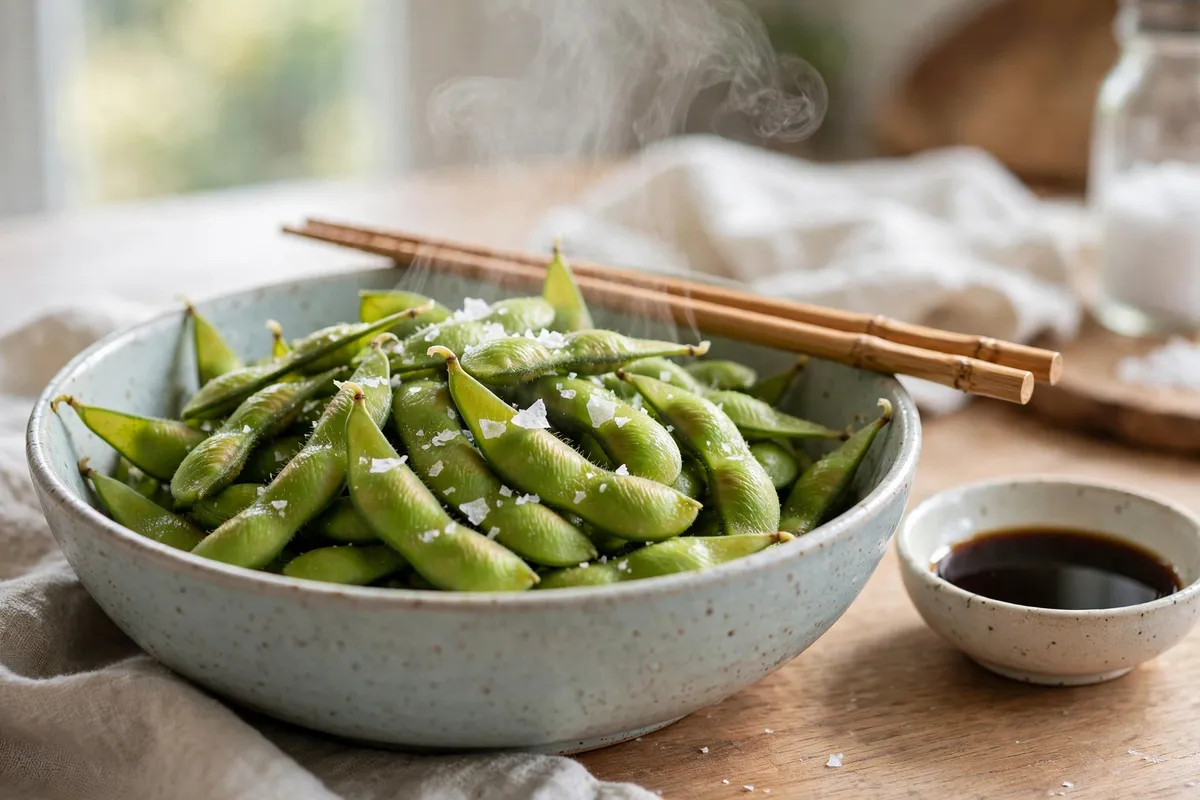
Classic sea salt. Sprinkle flaky sea salt over the hot pods and toss. The salt sticks to the damp pods and gives a clean, salty bite. This is how most Japanese restaurants serve it, and it needs nothing else.
Soy sauce and sesame. Toss the hot pods with a teaspoon of soy sauce and a teaspoon of toasted sesame oil, then sprinkle with sesame seeds. The oil adds richness and the soy adds depth. Serve with a small dish of extra soy sauce for dipping.
Chilli garlic. Toss with chilli flakes, a little garlic powder, and a squeeze of lime. This version has heat and brightness, and it works well as a snack with drinks. Go light on the chilli the first time, because the heat builds as you eat.
Smoky paprika. Toss with smoked paprika and a pinch of salt. The smoky flavour suits the nutty beans, and the red colour looks good in the bowl. Add a little olive oil if the pods look dry.
Lemon and parmesan. Toss shelled beans, not pods, with lemon zest, grated parmesan, and black pepper. This works best with shelled edamame over pasta or in a salad, where the cheese can coat the beans.
Serve edamame as a snack before dinner, as a side with rice and grilled chicken, or as a topping for noodle bowls and grain salads. Shelled edamame also works in the same kinds of dishes as other microwave friendly vegetables. If you like quick vegetable sides, our guides to can you microwave green beans and can you microwave broccoli use the same steam in a bowl method, and our guide to can you microwave frozen vegetables covers the mixed bags that sit next to edamame in the freezer aisle.
Storage and Reheating
Cooked edamame keeps well, but it loses texture fast, so storage matters. Let the pods cool completely, then put them in an airtight container and refrigerate. They keep for 3 to 4 days in the fridge. Shelled beans keep the same length of time, and they are easier to use cold in salads and grain bowls.
Do not leave cooked edamame at room temperature for more than 2 hours. This is the standard food safety rule for cooked foods, and it applies here too. If a bowl has been sitting out at a party for hours, throw the rest away rather than saving it.
To reheat, put the pods in a microwave-safe bowl, add a teaspoon of water, cover loosely, and heat at 50 percent power for 1 minute. Check, and add 30 seconds only if needed. Full power reheating makes the beans rubbery, and that is the most common reheating mistake. The beans will never be as good as fresh, because reheating softens them, but a gentle reheat keeps them pleasant.
Cold edamame is also good. Shelled beans straight from the fridge work in salads, wraps, and lunch boxes, and the texture holds up better cold than reheated. If you plan to eat them cold, undercook them by 30 seconds the first time, because they firm up as they cool, and the slight bite that feels underdone when hot feels just right when cold.
Do not refreeze cooked edamame. The beans go soft and watery after a second freeze, and the texture never comes back. Cook only what you will eat in the next few days, and keep the rest of the bag frozen until you need it.
Frequently Asked Questions
Can you microwave edamame? Yes, you can microwave edamame. Put the pods in a microwave-safe bowl with 1 to 2 tablespoons of water, cover loosely, and cook on high for 3 to 5 minutes, stirring halfway. The beans should be hot all the way through and tender with a slight bite.
How long do you microwave frozen edamame? Frozen edamame in pods takes 3 to 5 minutes on high in a 1000-watt microwave, depending on the amount. A single cup takes 2 to 3 minutes, and a full 8 to 10 ounce bag takes 4 to 5 minutes. Check at the minimum time and add 30 seconds only if needed.
Can you microwave edamame in the bag? Only if the bag is labelled microwave-safe, such as a steam-in-bag product. Do not microwave a regular freezer bag, because the plastic can melt or split. If the bag does not say microwave-safe, tip the pods into a microwave-safe bowl instead.
Do you need to thaw edamame before microwaving? No, you do not need to thaw edamame before microwaving it. Cook it straight from frozen. Thawing first can make the texture worse, because the beans start to soften before they see heat.
Can you microwave shelled edamame? Yes, shelled edamame microwaves faster than pods. One cup of frozen shelled edamame takes about 2 minutes on high in a 1000-watt microwave, with 1 tablespoon of water and a loose cover. Check early, because shelled beans go rubbery fast when overcooked.
Can you eat edamame raw? No, you should not eat edamame raw. Raw soybeans contain trypsin inhibitors and lectins, which can cause stomach discomfort and interfere with digestion. Cooking deactivates these compounds, so always heat edamame until it is hot all the way through.
Can you eat the pods? No, do not eat the pods. Edamame pods are tough, fibrous, and hard to digest. Squeeze the beans out of the pod and discard the empty pod.
Is microwaved edamame healthy? Yes, microwaved edamame is healthy for most people. One cup of shelled cooked edamame has roughly 18 grams of protein and 8 grams of fibre. Microwaving preserves nutrients well, because it is fast and uses very little water. Seasoning matters more than the cooking method, so keep salt and sauces light.
Can you microwave edamame twice? You can reheat edamame once, but the texture gets worse each time. Reheat at 50 percent power for 1 minute with a teaspoon of water and a loose cover. Do not reheat it a second time, and do not refreeze cooked edamame.
Why is my microwaved edamame mushy? Mushy edamame is overcooked, or it sat in hot water after the timer stopped. Check at the minimum time, drain right away, and take the lid off so trapped steam does not keep cooking the beans. Use less water next time, 1 tablespoon per cup.
Why is my microwaved edamame rubbery? Rubbery edamame is usually reheated too hard or cooked at low power for too long. Cook fresh beans on high in short bursts, and reheat leftovers at 50 percent power for 1 minute only.
Can you microwave edamame with salt? It is better to salt after cooking, not before. Salt sprinkled on hot pods sticks well, and you can control the amount. Salting before cooking does not help the beans cook, and it can draw out moisture and make the pods tougher.
How do you know when microwaved edamame is done? Squeeze a bean out of its pod and taste it. It should be hot all the way through, bright green, and tender with a slight bite. The pod should feel hot and the beans should pop out easily when you squeeze. If the centre is cold or firm, add 30 seconds and check again.
Is edamame safe for people with a soy allergy? No, edamame is not safe for people with a soy allergy. Edamame is a young soybean, and the FDA lists soybeans among the major food allergens. Cooking does not remove the allergen, so people with a diagnosed soy allergy should avoid edamame completely and check labels for soy.
The Bottom Line
Microwaving edamame is fast, simple, and safe when you follow a few basics. Use a microwave-safe bowl, add just 1 to 2 tablespoons of water, cover loosely, cook on high for 3 to 5 minutes for frozen pods, stir halfway, and rest the bowl for 1 to 3 minutes before you season and serve. Check the beans early, drain right away, and never eat them raw or straight from the freezer. Salt them while they are hot, eat them while they are bright green, and save the pods for the compost. Once you have the timing right for your own microwave, edamame becomes a five minute snack you can make without thinking, and that is exactly what a good microwave food should be.
