

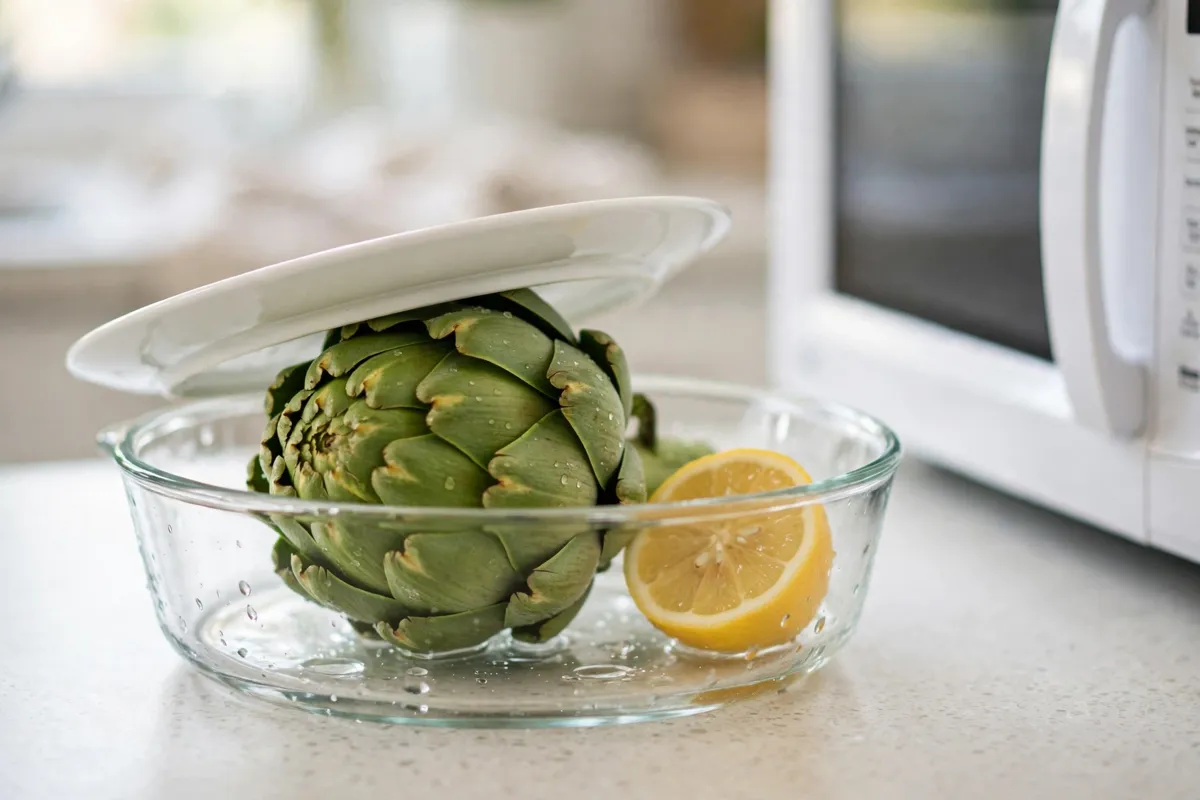
Yes, you can microwave artichokes, and it is one of the fastest ways to turn a tough, spiky globe into a tender side dish. A medium artichoke cooks in 5 to 10 minutes on high, and all you need is a microwave-safe dish, a few tablespoons of water, and a tight cover to trap the steam. The microwave works like a small steamer here, and it cuts a 40 minute stovetop job down to about 15 minutes from fridge to plate, including the rest time. The method is simple, but the details matter: artichokes go brown fast once they are cut, dry leaves turn leathery if the cover is loose, and the dense heart needs longer than the outer leaves.
This guide covers the step by step method, timing charts by size, number, and wattage, whole and halved artichokes, baby artichokes, frozen artichokes, how to stop browning, the leaf test for doneness, how to eat one properly, reheating, storage, the safety rules, and the mistakes that ruin the texture. Everything here follows the timing ranges used by tested recipe guides and the microwave safety advice published by the USDA and the FDA.
Can You Microwave Artichokes? The Short Answer
Yes. Trim the top inch off the artichoke, snip the sharp tips off the outer leaves, and set it in a microwave-safe dish with 2 to 3 tablespoons of water. Cover the dish tightly with a lid or a microwave-safe plate, then cook on high. A medium artichoke takes 5 to 10 minutes depending on size and microwave wattage. Let it rest, still covered, for 5 minutes so the steam finishes the heart, then test a leaf. If an outer leaf pulls off easily, it is done. If it resists, cook for another minute and test again.
The microwave suits artichokes because they are mostly water and fibre, and the trapped steam softens the tough layers from the inside out. Boiling can waterlog the heart and wash flavour into the pot. Steaming on the stove works well but takes 30 to 45 minutes. The microwave gives you the same steamed result in a quarter of the time, with less washing up and a brighter green colour, as long as you keep the steam in and give the heart its rest.
How Long to Microwave an Artichoke
Timing depends on size, number, and wattage, and the ranges below come from several tested guides that agree closely with each other. Start at the low end of the range, then add time in 1 minute bursts. Every microwave heats a little differently, and an artichoke that is overcooked goes mushy at the heart while the outer leaves turn limp, so checking early is always better than guessing long.
| Artichoke | Time on high (1000W) | Rest time |
|---|---|---|
| 1 small artichoke | 4 to 6 minutes | 5 minutes, covered |
| 1 medium artichoke | 6 to 8 minutes | 5 minutes, covered |
| 1 large artichoke | 10 to 12 minutes | 5 minutes, covered |
| 2 medium artichokes | 7 to 10 minutes | 5 minutes, covered |
| 4 medium artichokes | 15 minutes | 5 minutes, covered |
| Halved medium artichoke | 5 to 7 minutes | 3 to 5 minutes, covered |
| Baby artichokes (4) | 3 to 4 minutes | 3 minutes, covered |
If your microwave is 700 watts, add about 2 minutes to the times above. If it is 1200 watts or more, start checking after 5 minutes for a medium artichoke. The leaf test is more reliable than any timer, because artichokes vary in weight and density even when they look the same size. A heavy, tightly closed artichoke with squeaky leaves is fresh and dense, and it will need the full time. A lighter one with leaves starting to open will cook faster.
How to Microwave a Whole Artichoke Step by Step
Start with a fresh globe artichoke that feels heavy for its size, with leaves packed tight and a bright green colour. A few brown streaks on the outer leaves are normal, often caused by frost, and they do not affect the flavour. Avoid artichokes that feel light, look shrivelled, or have leaves splaying wide open, because those are past their best and will cook up tough no matter what you do.
Trim the artichoke first. Cut about an inch off the top with a sharp serrated knife, because the top leaves are the toughest part and they cook unevenly if left whole. Snip the sharp, thorny tips off the remaining outer leaves with kitchen shears, which makes the artichoke safe to handle and easier to eat later. Cut the stem down to about half an inch, and peel the tough outer skin off the stem with a vegetable peeler, because the stem is edible and tastes like the heart once the woody skin is gone.
Rinse the trimmed artichoke under cold running water, opening the leaves a little with your fingers so any grit trapped between them washes out. Rub every cut surface with half a lemon straight away, or drop the artichoke into a bowl of cold water with a squeeze of lemon juice while you get the dish ready. Artichokes oxidise fast once cut, and the lemon acid is what keeps the flesh pale green instead of brown.
Set the artichoke stem side down in a deep microwave-safe glass or ceramic dish. Pour 2 to 3 tablespoons of water into the bottom of the dish, or about half an inch of water if the dish is wide. The water is what makes the steam, so do not skip it, and do not drown the artichoke either. Cover the dish tightly with a microwave-safe lid or a plate that fits over the top, leaving no big gaps for the steam to escape. If you use plastic wrap, use wrap labelled microwave safe and leave one corner slightly vented so pressure cannot build up.
Microwave on high for the time in the chart above, rotating the dish halfway through if your microwave has no turntable. When the timer ends, leave the dish covered for 5 minutes. The artichoke is still cooking during this rest, and the heat evens out from the outer leaves into the dense heart. Then lift the cover away from you so the steam escapes safely, and test for doneness.
How to Tell When a Microwaved Artichoke Is Done
There are two reliable tests, and you should use both before you serve. First, tug gently on an outer leaf near the base of the artichoke. If it pulls away with almost no resistance, the artichoke is cooked. If you have to yank it, give the artichoke another minute and test again. Second, push a toothpick or the tip of a sharp knife into the base, right where the stem meets the heart. It should slide in with little resistance, the way a fork slides into a cooked potato. If you feel a hard spot, cook for another minute and retest.
Do not rely on colour alone. A microwaved artichoke can look bright green on the outside while the heart is still firm, especially a large one cooked whole. Do not rely on time alone either, for the same reason. The leaf test plus the toothpick test together take ten seconds and they are the difference between a tender heart and a crunchy one. When in doubt, rest it covered for another couple of minutes before you add more microwave time, because the resting steam often finishes the job on its own.
How to Microwave Artichoke Halves
Halving an artichoke before microwaving cuts the cooking time and solves the two hardest problems at once: the choke is easy to remove before cooking, and the heat reaches the heart directly instead of fighting through layers of leaves. This is the best method for large artichokes, which can otherwise end up with overcooked outer leaves and an undercooked centre.
Trim the artichoke the same way as for a whole one, then cut it in half from top to stem with a sharp knife. Use a metal spoon to scrape out the fuzzy choke from the centre of each half, along with the small purple-tipped leaves sitting over it. Rub all cut surfaces with lemon straight away, because a halved artichoke browns even faster than a whole one, with so much pale flesh exposed to the air.
Place the halves cut side down in a microwave-safe dish with 2 to 3 tablespoons of water. Cover tightly and microwave on high for 5 to 7 minutes for medium halves, then rest covered for 3 to 5 minutes. Test the heart with a knife tip. Halves are also the easiest shape to finish under the grill or in a hot pan with a little olive oil for a few minutes, which gives you a lightly browned cut face and a smoky edge that the microwave alone cannot produce.
Baby Artichokes in the Microwave
Baby artichokes are the small ones, usually about 2 ounces each, and they are the easiest type to microwave because they need almost no trimming. They have no developed choke to remove, the leaves are tender all the way through, and they cook in 3 to 4 minutes. Trim the stem, snip any sharp leaf tips, and rinse them well.
Place 4 baby artichokes in a single layer in a microwave-safe dish with 2 tablespoons of water, cover tightly, and microwave on high for 3 to 4 minutes. Rest covered for 3 minutes, then test one by pulling a leaf. Baby artichokes are excellent halved and tossed in olive oil and lemon, or served whole as a starter with a dipping sauce. Because they cook so fast, they are the best choice when you want artichokes on a weeknight and do not want to wait for a full globe.
Frozen Artichokes in the Microwave
Frozen artichokes come in two forms, and they need different handling. Frozen artichoke hearts, the quartered hearts sold in bags, are the common one. Tip them into a microwave-safe dish, add a tablespoon of water, cover loosely, and microwave on high for 4 to 6 minutes, stirring halfway through, until they are steaming hot all the way through. Check the packet instructions first, because brands differ, and use the packet time as your starting point rather than a guess.
A whole frozen artichoke takes much longer, around 12 to 15 minutes, because the dense frozen centre has to thaw and cook at the same time. Thawing it overnight in the fridge first gives a far more even result, and it brings the cooking time back close to a fresh artichoke. If you do cook one from frozen, use a lower power setting for the first few minutes so the outside does not overcook while the centre is still icy, then finish on high and rely on the leaf test.
Why Artichokes Turn Brown and How to Stop It
Artichokes brown fast because an enzyme in the flesh reacts with oxygen the moment the surface is cut. The colour change starts within a minute or two, and it is the single most common complaint from first time cooks. The good news is that browning is only cosmetic. A browned artichoke still tastes the same, and the colour often fades back once it is cooked. The bad news is that it looks unappetising on the plate, so it is worth preventing.
Lemon juice is the fix. Rub every cut surface with half a lemon the second you cut it, and keep trimmed artichokes in a bowl of cold water with lemon juice squeezed in until they go into the dish. This is called acidulated water, and it works because the acid slows the enzyme down. A teaspoon of vinegar in the water works too, but lemon is the standard because it adds flavour that suits the artichoke. Work quickly as well: trim one artichoke, lemon it, and get it covered, rather than trimming a batch and leaving them sitting open on the board.
Some browning can also happen during cooking if the cover is loose and the cut surfaces dry out in the hot air. A tight cover and enough water in the dish keep the steam around the artichoke, which limits browning and keeps the leaves supple. If the leaves still darken a little at the tips, that is normal and harmless, especially on artichokes that already had frost streaks before cooking.
How to Eat a Microwaved Artichoke
Eating an artichoke is half the pleasure, and it is simpler than it looks. Pull off one leaf at a time, starting from the outside. Dip the fleshy base of the leaf into melted butter, aioli, lemon butter, or vinaigrette, then scrape the soft flesh off with your teeth and discard the tough rest of the leaf. Work your way inwards, and the leaves get softer and meatier as you go. The innermost leaves are almost entirely tender and can be eaten whole once the choke is gone.
When you reach the centre, you will find a fuzzy layer sitting over the heart. This is the choke, and it is not edible. Scrape it out completely with a spoon, being careful to remove every bit of the fuzzy fibres, because even a little choke left behind feels unpleasant. Underneath it sits the heart, the prize of the whole vegetable. Cut the heart into pieces and eat it with the same dip. Do not forget the stem, which is an extension of the heart. Once the woody outer skin is peeled, the stem is tender and tastes just like the heart.
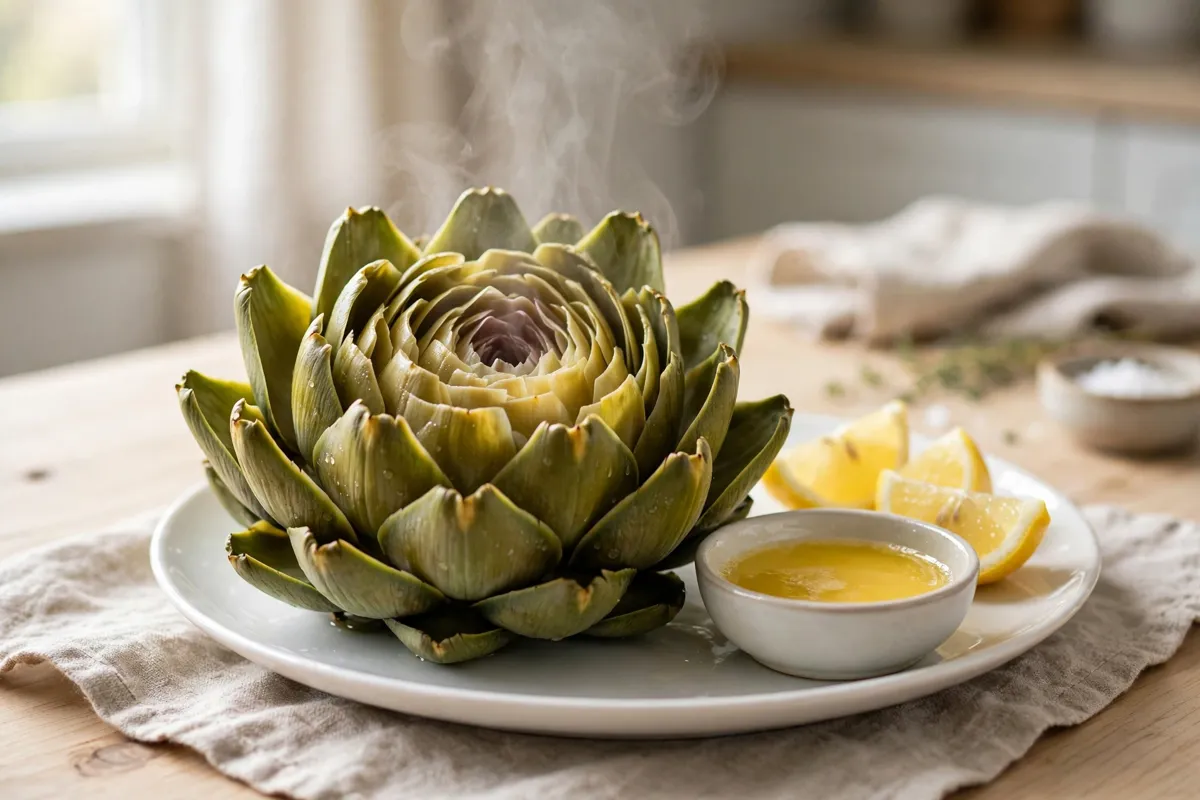
A classic serving is melted butter with lemon and a pinch of salt, but artichokes also suit garlic aioli, herby yoghurt, olive oil with lemon and black pepper, or a simple vinaigrette. Serve the artichoke warm, with a bowl on the table for the discarded leaves and a finger bowl of warm water with lemon for your hands. One artichoke per person is the usual serving as a starter, and two make a light lunch with bread and a salad.
Common Problems and Fixes
Tough, leathery leaves are the most common problem, and they almost always mean the steam escaped. The cover was loose, the dish was too shallow, or there was not enough water in the dish. Next time, use a deeper dish, add a little more water, and check that the lid or plate seals all the way around. A damp paper towel laid over the artichoke under the lid adds extra moisture insurance.
A dry heart with tender leaves usually means the artichoke was cooked whole and the heat never reached the centre. Halve large artichokes before cooking, rotate the dish halfway through, and do not skip the covered rest, because the rest is when the heart finishes. If the heart is still firm after the rest, cook in 1 minute bursts and test again rather than adding a long block of time.
Bitterness usually comes from the choke or from the woody stem skin, not from the cooking method. Make sure the choke is fully scraped out and the stem is peeled before serving. Bitterness can also come from an old artichoke, so choose heavy, tightly closed ones with squeaky leaves when you buy. A squeeze of lemon over the finished artichoke balances any remaining bitter edge.
Soggy, waterlogged leaves mean too much water in the dish, or a dish that is too deep with the artichoke sitting in the water instead of above it. Two to three tablespoons is enough for one artichoke. If the dish fills with liquid during cooking, drain it off before the rest so the artichoke steams instead of sitting in hot water.
Microwave Wattage and Timing Adjustments
Microwave wattage changes everything about timing, and most home microwaves sit between 700 and 1200 watts. The times in this guide assume a 1000 watt oven. If your microwave is 700 watts, add about 2 minutes to a medium artichoke and check with the leaf test. If it is 1200 watts, start checking a full minute early, because the outer leaves can dry out fast at high power.
Lower power can actually help with artichokes. Cooking at 70 percent power for a couple of minutes longer gives the heat more time to travel into the heart before the outer leaves dry out, which is useful for very large artichokes. If your artichokes keep coming out with dry leaves and a firm heart, try 70 percent power and add 2 minutes to the time. The USDA guidance on cooking with microwave ovens makes the same point for all foods: stir or rotate partway through, allow standing time, and check the temperature in more than one spot, because microwaves heat unevenly and leave cold spots.
What to Serve With Microwaved Artichokes
Artichokes are a starter or a side, not a main on their own, and the dip does most of the work. Melted butter with lemon is the classic, and it takes 30 seconds in the same microwave. Garlic aioli adds richness, and a lemon and herb yoghurt dip keeps things light. A sharp vinaigrette with Dijon mustard cuts through the earthy flavour and suits people who find butter too heavy.
As a side, microwaved artichokes go well with grilled fish, roast chicken, or a simple pasta with olive oil and garlic. As a starter, serve one per person with bread to mop up the butter. The leaves also make a good snack on their own, pulled off and dipped while you cook the rest of dinner. If you want to stretch one artichoke further, halve it after cooking and serve the halves as a shared plate with two or three dips.
Reheating Leftover Artichokes
Cooked artichokes reheat well in the microwave, and they only need a short burst. Place the leftover artichoke in a microwave-safe dish, add a tablespoon of water, cover loosely, and heat on high for 30 to 60 seconds for one artichoke, or about 90 seconds for a large one. Let it stand covered for a minute before serving. The texture will be softer than when it was freshly cooked, which is normal, but the flavour holds up well.
Do not reheat an artichoke more than once, and do not leave a cooked artichoke sitting at room temperature for more than 2 hours. Cool leftovers quickly, wrap them tightly, and get them into the fridge. If you only want the heart, remove it from the leaves before storing, because it reheats more evenly on its own and makes a quick addition to salads, pasta, or grain bowls.
Storing Microwaved Artichokes
Let the artichoke cool to room temperature, then wrap it tightly in cling film or place it in an airtight container and refrigerate it. Eat it within 2 to 4 days for the best texture and flavour. The leaves soften a little in the fridge, which is fine for reheating but less good for serving cold. If you plan to eat the leftovers cold, the heart holds up better than the leaves, so remove it and store it separately in a little olive oil and lemon juice.
Do not freeze a whole cooked artichoke, because the leaves turn limp and watery when thawed. Cooked artichoke hearts freeze better, and they can be stored in a freezer bag for up to 3 months, then thawed overnight in the fridge and added to cooked dishes. Fresh uncooked artichokes keep in the fridge for up to a week if you sprinkle them with a little water and store them in a bag in the crisper drawer.
Are Microwaved Artichokes Healthy?
Yes. Artichokes are low in calories and rich in fibre, vitamin C, folate, magnesium, and potassium, and they are a good source of inulin, a type of fibre that feeds gut bacteria. One medium artichoke has around 60 calories and about 7 grams of fibre, which is a large share of the daily fibre most people need. The health profile depends on what you dip them in, because a bowl of melted butter adds far more fat than the artichoke itself, so a yoghurt or vinaigrette dip keeps the dish light.
Microwaving is a good cooking method for keeping nutrients in. The FDA notes that foods cooked in a microwave may keep more of their vitamins and minerals, because microwaves cook quickly and without adding much water, and vitamins like vitamin C leak into cooking water when food is boiled. Steaming an artichoke in the microwave with just a few tablespoons of water keeps the nutrients in the vegetable rather than in the pot. For a full rundown of microwave basics, see our complete microwave guide.
Microwave vs Stovetop vs Oven
Each method has its place, and the right choice depends on how much time you have and what texture you want. The microwave wins on speed and simplicity. The stove gives the most even result for a big batch. The oven gives the best flavour, with roasted edges and a soft heart, but it takes the longest and needs the most attention.
| Method | Time for 1 medium artichoke | Texture | Best for |
|---|---|---|---|
| Microwave, covered | 5 to 10 minutes, plus 5 rest | Tender, steamed, bright green | Weeknights, one or two artichokes |
| Stovetop steaming | 30 to 45 minutes | Even, tender, classic | Large batches, traditional serving |
| Boiling | 25 to 35 minutes | Soft, can be waterlogged | When you have no steamer basket |
| Oven roasting | 45 to 60 minutes | Roasted edges, soft heart | Flavour first, weekend cooking |
If you like the microwave for speed but want roasted flavour, cook the artichoke in the microwave first, then halve it, brush the cut face with olive oil, and grill it cut side down in a hot pan for 2 to 3 minutes. You get the speed of the microwave and the browned flavour of the pan in one dish. For more vegetable timings in the same style, see our guides to microwaving asparagus, microwaving broccoli, microwaving cauliflower, and microwaving green beans.
Safety Rules for Microwaving Artichokes
Artichokes are a low risk food, but the same microwave safety rules apply to them as to any other food. Use a microwave-safe glass or ceramic dish, never metal, and never a plastic container that is not labelled microwave safe. Cover the dish so the steam stays in, but leave a small vent if you use plastic wrap, because a sealed container can build pressure. The FDA advises using cookware made for microwave use, and it warns that metal pans and foil reflect microwaves and cause uneven cooking.
Rotate the dish halfway through if your microwave has no turntable, and always allow the covered rest time, because the heat keeps spreading into the heart after the microwave stops. Open the cover away from your face, because the steam is hot enough to burn. Wash your hands and the knife and board after trimming raw artichokes, and do not leave a cooked artichoke at room temperature for more than 2 hours. These are the same habits the USDA recommends for all microwave cooking, and they are what keep a simple vegetable safe to eat. For a step by step look at the same rules applied to another vegetable, see our guide to microwaving frozen vegetables.
Mistakes to Avoid When Microwaving Artichokes
Skipping the trim is the first mistake. The top inch and the thorny leaf tips are tough and sharp, and leaving them on makes the artichoke hard to handle and uneven to cook. Forgetting the lemon is the second. An artichoke cut and left on the board for five minutes will be brown before it reaches the dish, so lemon every cut surface straight away.
Cooking uncovered is the third, and it is the one that ruins the most artichokes. Without a tight cover, the steam escapes, the leaves dry out and turn leathery, and the heart stays firm. Using too much water is the fourth. The artichoke should steam, not boil, so 2 to 3 tablespoons is enough. Skipping the rest is the fifth. The covered rest finishes the heart, and cutting it short is the usual reason for a firm centre.
The last mistake is trusting the timer instead of the leaf test. Artichokes vary, microwaves vary, and a timer cannot tell you whether the heart is tender. Pull a leaf, push a toothpick into the base, and only then decide whether it needs another minute. A minute of checking is cheaper than a ruined artichoke.
Frequently Asked Questions
Can you microwave a whole artichoke?
Yes, you can microwave a whole artichoke. Trim the top inch, snip the leaf tips, and cook it covered in a microwave-safe dish with 2 to 3 tablespoons of water. A medium artichoke takes 6 to 8 minutes on high, plus a 5 minute covered rest. Test an outer leaf before serving, and add time in 1 minute bursts if it resists.
How long does it take to microwave an artichoke?
A small artichoke takes 4 to 6 minutes, a medium one takes 6 to 8 minutes, and a large one takes 10 to 12 minutes on high in a 1000 watt microwave, with a 5 minute covered rest after. Two medium artichokes take 7 to 10 minutes, and halved artichokes take 5 to 7 minutes. These ranges match the timings in tested guides such as the Better Homes and Gardens artichoke guide, which gives 7 to 10 minutes for two artichokes in a covered dish.
Do you need to add water when microwaving artichokes?
Yes, add 2 to 3 tablespoons of water to the bottom of the dish. The water turns to steam, and the steam is what cooks the artichoke. Without water and a tight cover, the leaves dry out and turn leathery before the heart softens. Do not add so much water that the artichoke sits in it, because it will boil instead of steaming.
Can you microwave artichokes in plastic wrap?
Yes, if the wrap is labelled microwave safe. Cover the dish with the wrap and leave one corner slightly vented so steam can escape and pressure cannot build up. A microwave-safe lid or a plate that fits the dish works just as well and is easier to lift safely. Never use ordinary cling film that is not rated for microwave use, and never seal a container completely shut.
Why did my microwaved artichoke turn brown?
Artichokes oxidise quickly once cut, because an enzyme in the flesh reacts with air. Rub every cut surface with lemon juice the moment you cut it, and keep trimmed artichokes in cold water with lemon juice until they go into the dish. Browning is only cosmetic and does not change the flavour, but lemon keeps the artichoke pale green and appetising.
How do you know when a microwaved artichoke is done?
Pull an outer leaf near the base. If it comes away with almost no resistance, the artichoke is done. Then push a toothpick or knife tip into the base where the stem meets the heart. It should slide in easily, like a fork into a cooked potato. If either test fails, cook for another minute and test again. Do not judge doneness by colour or by the timer alone.
Can you microwave frozen artichokes?
Yes, but a whole frozen artichoke takes around 12 to 15 minutes, and the outside can overcook while the centre is still icy. Thawing it overnight in the fridge first gives a more even result. Frozen artichoke hearts are quicker: 4 to 6 minutes on high in a covered dish with a tablespoon of water, stirring halfway through, until steaming hot throughout.
Can you microwave artichoke hearts?
Yes. Fresh hearts cook in about 4 to 6 minutes on high in a covered dish with a little water, and frozen hearts take about the same time once stirred halfway through. Canned or jarred artichoke hearts are already cooked, so they only need 1 to 2 minutes to heat through. Drain them first and add a splash of water so they steam rather than dry out.
Is it safe to microwave artichokes?
Yes, microwaving artichokes is safe when you follow basic microwave rules. Use a microwave-safe dish, cover it to trap steam, rotate the dish if there is no turntable, and let the artichoke rest covered for 5 minutes so the heat evens out. Artichokes are a vegetable with no specific internal temperature target, so the test is that they are steaming hot and tender all the way through.
Can you reheat artichokes in the microwave?
Yes. Place the cooked artichoke in a microwave-safe dish with a tablespoon of water, cover loosely, and heat on high for 30 to 60 seconds, or about 90 seconds for a large one. Let it stand covered for a minute before serving. The texture will be softer than freshly cooked, which is normal. Do not reheat an artichoke more than once.
Do you eat the whole artichoke after microwaving it?
No, you eat the fleshy base of each leaf and the heart, and you discard the tough parts of the leaves and the fuzzy choke. Pull off one leaf at a time, scrape the soft flesh off with your teeth, and work inwards. Scrape out the fuzzy choke with a spoon before eating the heart. The peeled stem is edible and tastes like the heart.
Can you microwave baby artichokes?
Yes, baby artichokes are the easiest type to microwave. They have no developed choke to remove and they cook in 3 to 4 minutes on high, covered, with 2 tablespoons of water. Rest them covered for 3 minutes, then test a leaf. Serve them whole with a dip, or halve them and toss them in olive oil and lemon.
Why are my microwaved artichoke leaves tough?
Tough leaves usually mean the steam escaped, because the cover was loose or there was not enough water in the dish. Use a deeper dish, check the lid seals all the way around, and add a little more water next time. Old artichokes with splayed leaves also cook up tough, so choose heavy, tightly closed ones with squeaky leaves when you buy.
Can you microwave a stuffed artichoke?
It is possible, but the microwave is not the best tool for it. The breadcrumb stuffing often turns soggy before the heart is fully tender, because the stuffing absorbs steam while the dense heart still needs time. If you do try it, stuff the artichoke loosely, cook it covered on high, and check the heart with a toothpick before serving. For stuffed artichokes, steaming on the stove or baking in the oven usually gives a better result.
The Bottom Line
Microwaving an artichoke is fast, simple, and safe, and it turns a vegetable that looks intimidating into a tender starter in about 15 minutes. Trim it, lemon it, add a few tablespoons of water, cover it tightly, and cook a medium artichoke for 6 to 8 minutes on high. Rest it covered for 5 minutes, test a leaf and the base with a toothpick, and serve it warm with melted butter or aioli. Keep the steam in, do not skip the rest, and trust the leaf test over the timer, and the microwave will give you an artichoke that is every bit as good as one steamed on the stove, in a quarter of the time.
