

You come home tired, open the fridge, and there it is: last night’s leftover pasta, already packed in a zip-top bag. The laziest move in the world would be to toss the whole bag into the microwave and press start. But is that actually safe, or will the plastic melt into your dinner?
The question “can you microwave Ziploc bags” gets millions of searches because the answer sits in a gray area. Ziploc is not the same as a random plastic bag, and the maker has a specific official position. This guide gives you the full picture: the short answer, which bags qualify, the exact steps to do it safely, the foods to avoid, and what to do instead when you are unsure.
Can You Microwave Ziploc Bags? The Short Answer
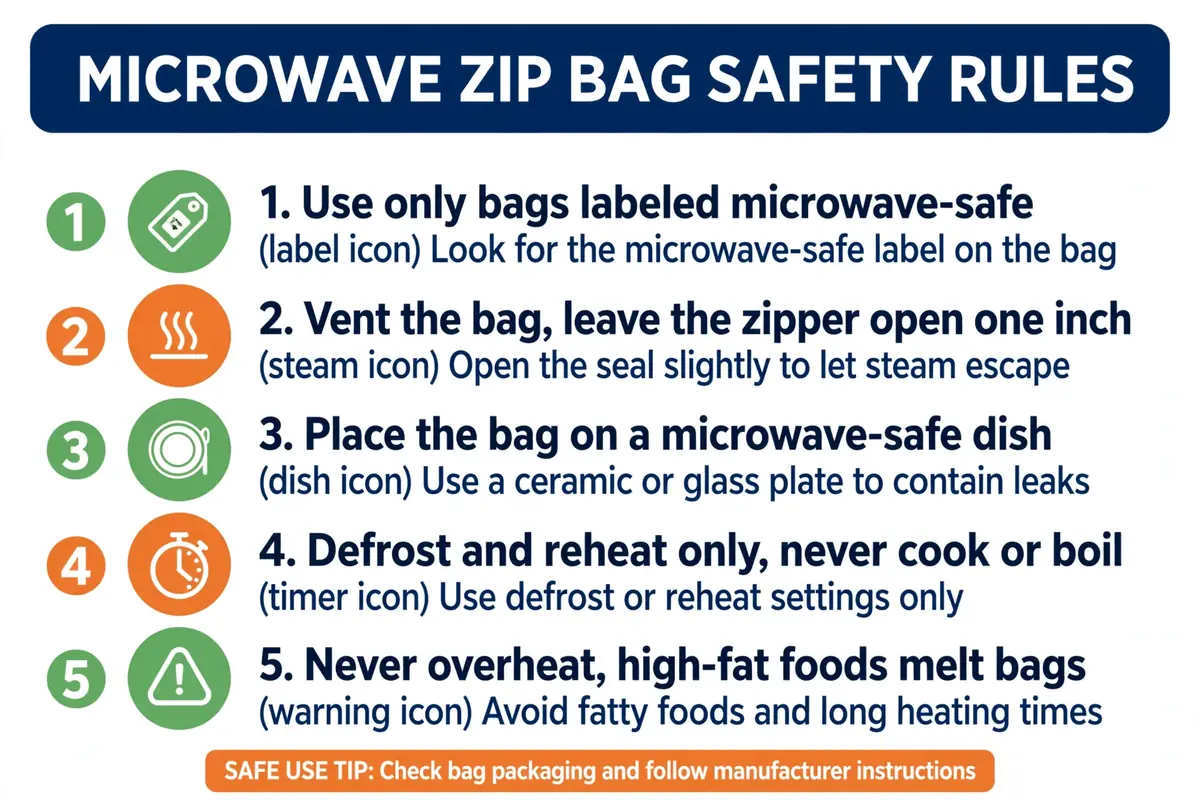
Yes, you can microwave Ziploc bags that are labeled microwave-safe, and only for defrosting and reheating, never for cooking. The bag must be left unsealed (the maker says to vent it one inch), placed on a microwave-safe dish, and you should never overheat the contents.
That is the official position from SC Johnson, the company that makes Ziploc. Their bags meet FDA safety requirements for the temperatures involved in defrosting and reheating. They are not designed for cooking temperatures, boiling water, or long heating cycles. If you follow the label directions, microwaving a Ziploc bag is straightforward. If you ignore them, you can melt the plastic into your food.
One thing matters more than anything else here: not every zip-top bag in your drawer is a real Ziploc. Generic sandwich bags, fold-top bags, and thin no-name bags are not built to the same standard. The rest of this guide breaks down exactly which bags qualify and how to use them right.
Which Ziploc Bags Can You Microwave? The Bag Type Breakdown
Ziploc bags labeled for microwave use can be microwaved; any bag without that label should be treated as unsafe for heat. The rule is simple: check the box or the bag itself before you heat anything.
Storage bags (quart and gallon) are the most common choice, and they carry the official microwave directions on the packaging: vent the bag one inch and place it on a microwave-safe dish. Freezer bags are thicker, and they are also covered by the same microwave directions, which makes them the best option for defrosting frozen food. Slider bags and double-zipper bags fall under the same product family and follow the same rules.
Sandwich and snack bags deserve more caution. These bags are thinner, and official SC Johnson spec sheets for seal-top bags have listed the sandwich bag as an exception to the microwave applicability. That does not mean every sandwich bag is dangerous, but it does mean you must read the label on your specific box. If it does not say microwave-safe, do not microwave it.
The comparison below summarizes how each bag type lines up. When in doubt, the safest move is to transfer the food to a bowl, since plastic has no business going in the microwave unlabeled.
| Bag type | Labeled microwave-safe? | Good for defrost? | Good for reheat? | Notes |
|---|---|---|---|---|
| Storage (quart, gallon) | Yes, on packaging | Yes | Yes | Vent 1 inch, place on a microwave-safe dish |
| Freezer bags | Yes, on packaging | Yes, best choice | Yes | Thicker plastic, ideal for frozen food |
| Slider / double-zipper | Yes, usually | Yes | Yes | Follow the same venting rules |
| Sandwich / snack bags | Varies, check the box | Only if labeled | Only if labeled | Thinner plastic, official specs excluded some variants |
| Zip ‘n Steam bags | Yes, purpose-built | Yes | Yes | Designed for steaming vegetables in the microwave |
| No-name zip bags | No | No | No | Not tested to the same standard, never microwave |
What SC Johnson Actually Says About Microwaving Ziploc Bags
SC Johnson says Ziploc bags are safe for microwaves only under specific conditions: defrosting and reheating, with the bag vented and resting on a microwave-safe dish. The company states that its bags and containers meet the safety requirements of the U.S. Food and Drug Administration for temperatures associated with defrosting and reheating food in microwave ovens, plus normal room, refrigerator, and freezer temperatures.
The packaging itself carries the caution in plain language. According to the official label shown on retail listings, the instructions read: for use in the microwave, place the bag on a microwave-safe dish, vent the bag one inch, and do not overheat the contents because the bag may melt. You can read the caution printed on official Ziploc packaging on retail listings of the product, which repeat the maker’s instructions word for word. This is not a suggestion from a blog; it is the manufacturer’s own instruction.
There is also a hard limit the company repeats everywhere: these bags are for reheating and defrosting, not for cooking. Reheating means warming already-cooked food. Cooking means preparing raw food with long exposure to high heat. That distinction matters because polyethylene, the plastic Ziploc bags are made from, softens and melts at temperatures well below boiling. High-fat and high-sugar foods are the hidden trap here, because they heat faster than watery foods and can push past the plastic’s safe range. SC Johnson warns against overheating for exactly this reason, as Tasting Table explains in its coverage of the maker’s stance: foods packed with sugar or fat heat much faster than watery foods and can damage the bag.
For broader context on which containers belong in a microwave at all, the LSU AgCenter’s guidance on microwave-safe containers lays out the same core principle: only use plastics that are labeled for microwave use, and never assume a generic storage bag qualifies.
How to Microwave Ziploc Bags Safely, Step by Step
You can microwave Ziploc bags safely if you follow four steps: confirm the label, vent the bag, set it on a dish, and heat gently in short bursts. Skip any one of these and you are guessing with hot plastic.
Step 1: Check the label on the box
Before anything goes into the microwave, confirm your specific bags are marked microwave-safe. Look for the microwave symbol (usually wavy lines) or the words “microwave safe” on the box or bag. If you cannot find the label, treat the bag as unsafe and transfer your food to a bowl. Generic bags, old bags without visible labeling, and bags meant for non-food storage should never be microwaved.
Step 2: Vent the bag one inch
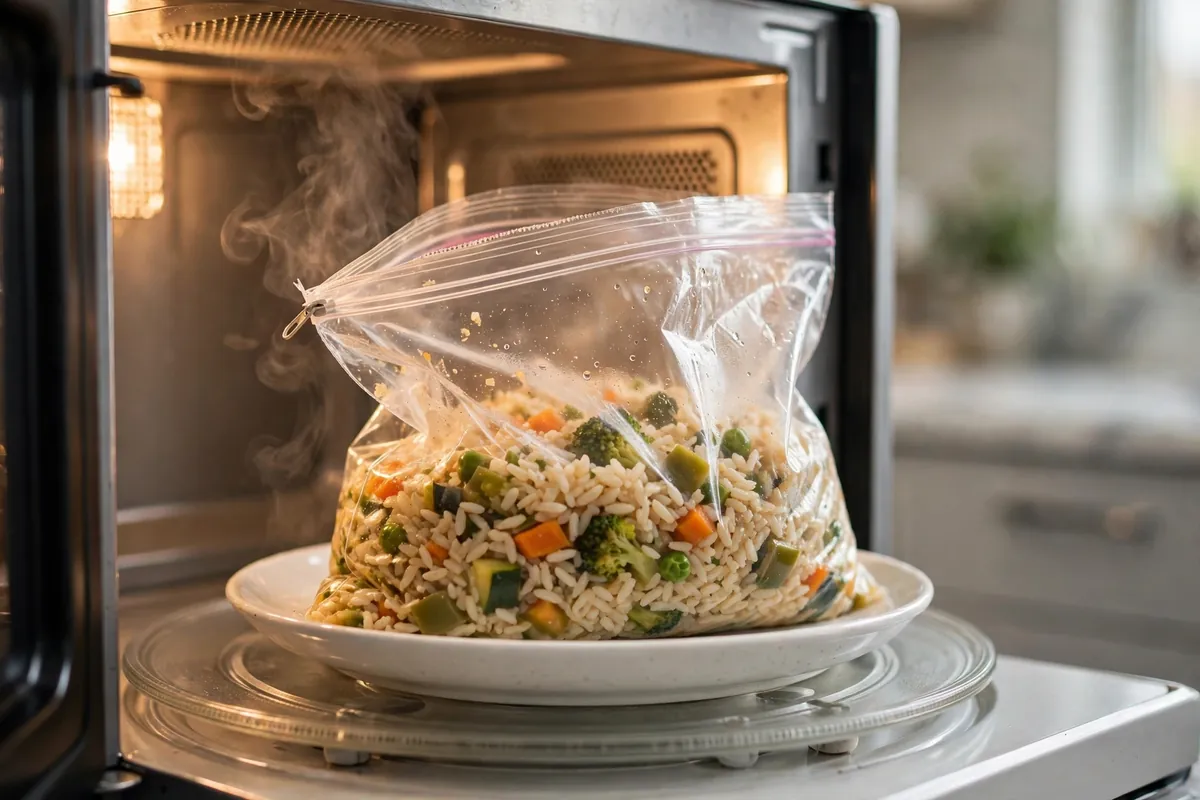
Open the zipper about one inch to let steam escape. This is the step most people get wrong, and it is the one the manufacturer repeats everywhere. A sealed bag traps steam, pressure builds, and the bag can pop open or burst, throwing hot food around your microwave. Venting is what keeps the bag intact during heating.
Step 3: Place the bag on a microwave-safe dish
Set the vented bag on a microwave-safe plate or in a shallow bowl before heating. This does two things: it catches any leaks, and it protects your microwave tray if the bag sags under the weight of hot food. The official packaging instructions say this explicitly, and it is the easiest step to skip and the one that prevents the messiest failures.
Step 4: Heat gently in short bursts
Use medium power (50 to 70 percent) and heat in short bursts of 30 seconds to one minute, checking between rounds. Microwaves heat unevenly, so a quick stir or a flip of the bag between bursts keeps any single spot from overheating. This is especially important with dense foods like rice or casserole pieces, where the edges can get much hotter than the center.
Step 5: Let it rest, then open carefully
When the timer stops, leave the bag in the microwave for about a minute. Hot steam is still inside, and opening a hot bag right away can give you a steam burn on your hand or face. Pull the dish out, open the vent wider, and pour or slide the food onto a plate. Never grab the bag by a single corner, because the plastic is soft when hot and can tear.
What You Should Never Do When You Microwave Ziploc Bags
Can you microwave Ziploc bags for cooking raw chicken, boiling water, or blasting leftovers on high? No, and these are the mistakes that melt bags. The plastic handles gentle reheating fine, but it fails fast outside its limits.
Never cook raw food in a Ziploc bag. Raw meat, raw eggs, and raw vegetables need sustained high heat, and polyethylene cannot handle it. If you are preparing raw food, use an oven-safe dish or cook it properly first, then store the leftovers in the bag. The bag is a reheating tool, not a cooking vessel.
Never boil liquids in a Ziploc bag. Boiling water hits 212 degrees Fahrenheit, which is past the point where the plastic softens and melts. If you try to boil soup or water in a bag, you can end up with melted plastic stuck to your microwave and in your food. Heat liquids in a microwave-safe bowl or mug instead.
Never microwave high-fat or high-sugar foods in a bag on full power. Cheese-heavy dishes, fried foods, chocolate, and sugary sauces heat much faster than watery foods. The fat or sugar can reach temperatures that melt the bag even while the rest of the food is only warm. Transfer these to a ceramic or glass dish, which handles hot spots without any risk.
Never seal the bag fully and never reuse a bag that held raw meat. A fully sealed bag builds steam pressure and can burst, and Ziploc itself says not to reuse bags after storing raw meat, fish, eggs, or foods that trigger allergies. When bacteria meet a greasy reused bag, you do not want that near your next meal.
Do Ziploc Bags Release Chemicals in the Microwave?
Ziploc bags are made from polyethylene, which is BPA-free and phthalate-free, but heating any plastic beyond its limits can damage it. This is the honest answer, and it is where the official guidance and the chemistry line up.
SC Johnson states that its bags are not formulated with BPA or phthalates. That covers two of the chemicals people worry about most with plastics. At the temperatures the bags are rated for, which means gentle defrosting and reheating, the company and the FDA safety requirements it follows treat the bags as safe for food contact.
The concern starts when the plastic gets too hot. Polyethylene softens and melts at temperatures well below boiling, and overheated plastic can leach additives or shed microplastic particles into food. A 2023 study in Environmental Science and Technology found that heated plastic food containers release large numbers of microplastic and nanoplastic particles per square centimeter. This is why the manufacturer’s rules are so strict: stay within reheat temperatures, avoid high-fat and high-sugar foods, and stop before the plastic softens. If you respect the limits, exposure stays low; if you melt the bag, throw the food out.
For a deeper look at which plastics belong in a microwave and why, our guide on whether you can microwave plastic explains the different plastic types and what their labels actually mean.
Better Alternatives When You Microwave Ziploc Bags Feels Risky
If microwaving Ziploc bags still feels uncertain, the simplest alternative is a microwave-safe glass or ceramic bowl. Glass does not care about hot spots, fat, or sugar, and it never melts at microwave temperatures. For leftovers, a bowl with a microwave-safe cover or a paper towel on top does the same job as a bag with zero plastic risk.
Reusable silicone bags are the middle ground. Products like silicone storage pouches are designed for the microwave and freezer, handle higher temperatures than polyethylene, and can be washed and reused hundreds of times. They cost more up front but pay off if you reheat in bags often.
Whatever you choose, learn to read the labels. Our guide to microwave-safe symbols decoded shows you the exact marks that separate heat-tested products from ordinary storage items. And if you are wondering about the worst offenders, our list of things you should never put in a microwave covers containers and materials that are genuinely dangerous, from foam to metal.
For the full picture of what can and cannot go in your microwave, the complete safety chart at Can You Microwave It? The Complete Safety Chart covers dozens of common materials in one place.
Frequently Asked Questions
These are the questions people ask most about microwaving Ziploc bags, answered with the manufacturer’s own guidance first.
Can you microwave Ziploc bags safely?
Yes, you can microwave Ziploc bags safely if they are labeled microwave-safe. Follow the official rules: vent the bag one inch, place it on a microwave-safe dish, and use it only for defrosting and reheating. Do not use them for cooking, boiling, or overheating, because the bag may melt.
Do you need to vent a Ziploc bag before microwaving?
Yes, you must vent the bag before microwaving. Open the zipper about one inch so steam can escape. A sealed bag traps steam and builds pressure, which can make the bag pop open or burst inside your microwave.
Can you microwave a Ziploc bag with the seal fully closed?
No, never microwave a Ziploc bag with the seal fully closed. Steam needs a way out, and a closed bag turns into a pressure pocket. The manufacturer’s directions require a one-inch vent every single time.
Are Ziploc freezer bags microwave safe?
Yes, Ziploc freezer bags are microwave safe when you follow the label directions. They are thicker than storage bags, which makes them the best option for defrosting frozen food. Vent the bag one inch, use the defrost setting or low power, and check the food often.
Can you microwave Ziploc sandwich bags?
Only if your specific sandwich bags are labeled microwave-safe. Some official spec sheets have listed the sandwich bag as an exception, so you cannot assume it qualifies. Check the box; if the label is missing, transfer the food to a dish instead.
How long can you microwave a Ziploc bag?
There is no single safe time limit because microwaves vary in power, but short bursts are the rule. Heat in 30-second to 1-minute intervals on medium power, stirring or flipping between rounds. Stop as soon as the food is warm; long continuous heating is what pushes the plastic past its limits.
Can you cook raw food in a Ziploc bag in the microwave?
No, you should not cook raw food in a Ziploc bag. SC Johnson’s official position is that the bags are for defrosting and reheating only, not cooking. Raw foods need sustained high heat that the polyethylene cannot handle, so use an oven-safe dish or proper cookware.
Can you defrost meat in a Ziploc bag in the microwave?
Yes, you can defrost meat in a Ziploc bag using the microwave’s defrost setting. Use low power, vent the bag one inch, place it on a dish, and flip the bag every couple of minutes for even thawing. Do not reuse a bag that held raw meat; throw it away after use.
Can you microwave Ziploc bags with high-fat or high-sugar food?
You can, but with serious caution, because these foods heat faster and can melt the bag. Cheese, fried food, chocolate, and sugary sauces develop extreme hot spots even when the rest of the food is just warm. The safer choice is to transfer high-fat and high-sugar foods to a glass or ceramic dish before microwaving.
Do Ziploc bags release chemicals or microplastics when microwaved?
Ziploc bags are made without BPA or phthalates, and they are tested for food contact at defrost and reheat temperatures. Research shows that heated plastics release more particles when overheated, so chemical release depends on how you use the bag. Stay within the limits (vented, gentle heat, short bursts) and exposure stays low; melt the bag and you should discard the food.
Are Ziploc bags BPA free?
Yes, according to the manufacturer’s product labeling, Ziploc bags are not formulated with BPA or phthalates. Polyethylene, the plastic they are made from, does not require BPA in its production. Check your box if you want to confirm, since formulations can vary by product line.
Can you boil water in a Ziploc bag in the microwave?
No, never boil water in a Ziploc bag. Boiling water reaches 212 degrees Fahrenheit, which is past the point where the plastic softens and melts. Boil water in a microwave-safe mug, glass measuring cup, or kettle instead.
Can you microwave a Ziploc bag twice, or reuse it after heating?
You can reuse Ziploc bags for cold storage after washing, but reusing a bag that has been microwaved is not recommended. Heat stress can weaken the plastic and create thin spots, and greasy residue hides in the corners where bacteria grow. Treat heated bags as single-use, and never reuse any bag that held raw meat, fish, eggs, or allergy-triggering foods.
Is it safe to eat food if the Ziploc bag melted in the microwave?
No, throw the food away if the bag melted. Melted plastic can shed particles and additives into the food, and there is no way to remove them once they are mixed in. This is the manufacturer’s own logic too: do not overheat the contents because the bag may melt. Clean the microwave before using it again.
The Bottom Line on Can You Microwave Ziploc Bags
So, can you microwave Ziploc bags? Yes, when the bag is labeled microwave-safe and you follow the maker’s rules: vent it one inch, set it on a microwave-safe dish, and use it only for defrosting and reheating. That short list keeps the plastic within its tested limits and your food safe.
Remember the three takeaways that matter most. First, the label decides everything, because generic bags are not built to the same standard. Second, venting and short, gentle heating cycles prevent the two big failures: bursting from steam pressure and melting from overheating. Third, high-fat and high-sugar foods, cooking, and boiling are outside the bag’s job description, so move those to glass or ceramic. When any step feels uncertain, transferring your food to a dish is always the safer call.
