

You flip the container over. There is a triangle with a number in it, three little wavy lines, maybe a snowflake, maybe some letters. You have thirty seconds before the kids start complaining about lunch. Is this thing safe to microwave, or are you about to melt plastic into the mac and cheese?
Microwave safe symbols meaning is simpler than it looks once someone decodes it for you, and that is exactly what this guide does. You will learn the wavy-line symbol and its variations, the crossed-out versions that mean stop, what the numbered resin codes actually tell you (and the common myth about them), why “microwave safe” has no single universal standard, and a 60-second test for any container with no label at all. For the quick yes-or-no on specific foods and materials, keep Can You Microwave It? The Complete Safety Chart handy.
What Does the Microwave Safe Symbol Look Like?
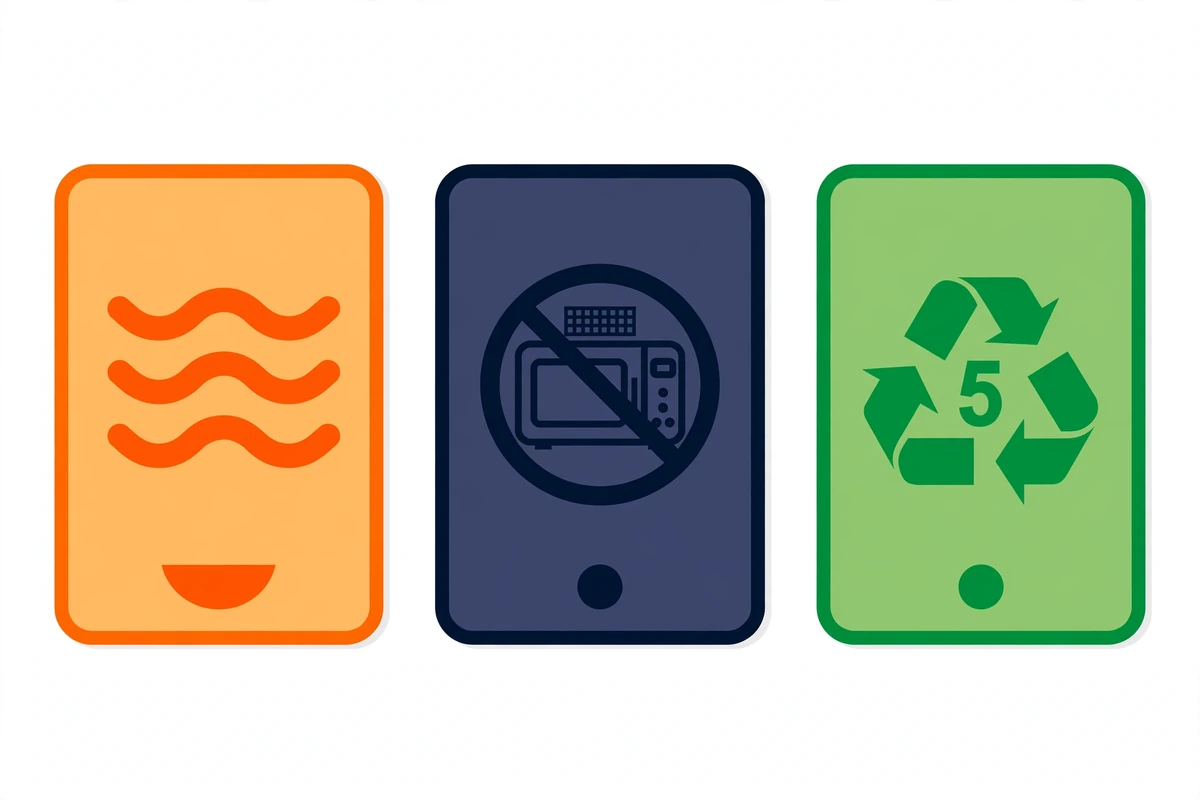
Direct answer: look for three wavy horizontal lines, sometimes shown with a small microwave icon, a dish, or the words “microwave safe.”
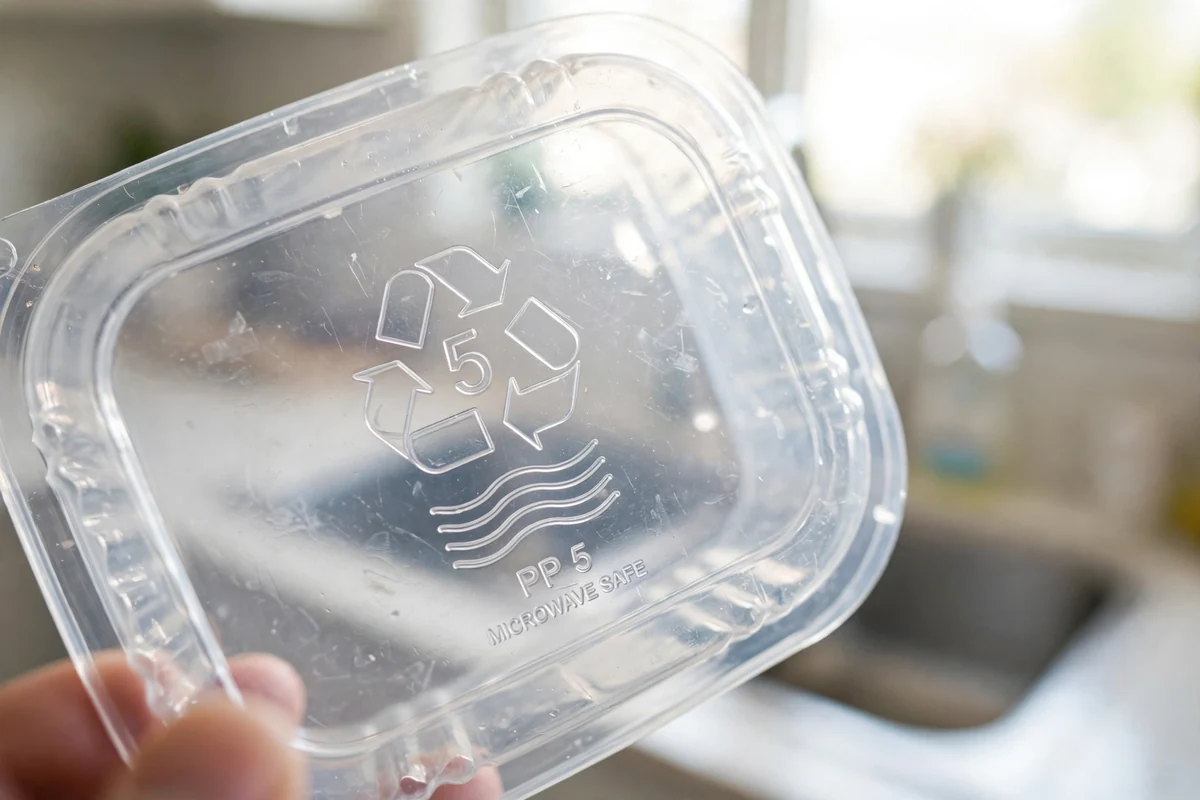
The wavy lines are the heart of almost every microwave-safe mark in the world. They represent microwave energy radiating as waves, and manufacturers use them in a few common arrangements. You might see the three wavy lines alone, stamped small on the bottom of a container. You might see them above or below a little dish icon, which emphasizes “safe for reheating food in this dish.” You might see them next to a tiny microwave oven drawing. All of these mean the same thing: the manufacturer tested this item for microwave use and considers it safe under normal conditions.
Some containers skip the picture and just say “microwave safe” or “microwavable” in words, sometimes with extra instructions like “reheat only” or a time limit. Words count exactly as much as symbols here. If the manufacturer printed it, that is their tested claim about their product.
One practical tip: these marks live on the bottom of the container, often embossed in the same color as the plastic, which makes them genuinely hard to read in a dim kitchen. Hold the container at an angle under a bright light, or run your thumb over the bottom to feel the embossing. If you meal-prep regularly, it is worth checking your containers once in daylight and retiring the ones with no marks at all.
The “Do Not Microwave” Symbols You Must Recognize
Direct answer: a microwave icon or wavy lines with a diagonal line or X through them means the item must never go in the microwave.
The warning symbols mirror the safe ones, which is both helpful and a little treacherous if you glance too fast. The most common is the wavy lines with a bold diagonal slash or X across them. Another shows a little microwave oven with a line through it. Some containers just say “not microwave safe” in plain text. All three are hard stops, not suggestions.
This is where a quick look saves real trouble. A container can look exactly like its microwave-safe sibling from the same brand and carry the opposite mark. Takeout containers are the classic trap: the black plastic base might be fine while the clear lid is not, or vice versa. Check both pieces, because lids and bases are often made from different plastics with different heat tolerance.
Pay special attention to decorative tableware. A ceramic mug with a metallic gold rim, or a plate with silver trim, may carry no microwave symbol at all, and the metal decoration is the reason. Metal in a microwave causes arcing (sparks), which can damage the oven or start a fire. Our guide to microwaving metal covers exactly why, but the short version is: if it shines like metal, keep it out. When you see any crossed-out microwave mark, or no mark plus metal decoration, transfer the food to a plain glass or ceramic dish.
Resin Codes 1 to 7: What the Number in the Triangle Really Means
Direct answer: the number identifies the plastic type for recyclers, and while codes 2 and 5 are usually the safer bets for microwaving, the number alone does not certify microwave safety.
That little triangle of chasing arrows with a number inside is called a resin identification code. Almost everyone misreads it, so let us fix the most common myth first: these codes were created for recycling sorting, not for telling you what is microwave safe. The number tells a recycling plant what polymer the item is made of. It was never designed as a consumer safety rating, and treating it as one is how people end up microwaving the wrong thing with confidence.
That said, the plastic type does affect heat tolerance, so the codes are still useful clues when combined with the actual microwave symbol. Here is the full rundown:
| Code | Plastic | Common items | Microwave verdict |
|---|---|---|---|
| 1 | PET (polyethylene terephthalate) | Water bottles, soda bottles, condiment jars | No, single-use only, deforms with heat |
| 2 | HDPE (high-density polyethylene) | Milk jugs, sturdy food tubs | Usually okay if labeled microwave safe |
| 3 | PVC (polyvinyl chloride) | Cling wraps, some trays | No, can release harmful chemicals when heated |
| 4 | LDPE (low-density polyethylene) | Squeeze bottles, bread bags | Not for microwaving, softens easily |
| 5 | PP (polypropylene) | Yogurt tubs, takeout containers, reusable meal-prep boxes | Usually the safest plastic for microwaves, if labeled |
| 6 | PS (polystyrene) | Foam cups, foam takeout boxes | No, melts and can release styrene |
| 7 | Other (mixed, incl. polycarbonate) | Some bottles, large water jugs | No, category is a grab bag, avoid |
The Myth Worth Killing: Codes Are Not Safety Ratings
Because this confusion is so widespread, it deserves its own callout. A container stamped with 5 is not automatically microwave safe, and a container with no number is not automatically dangerous. The resin code tells you the material. Only the microwave-safe symbol or wording tells you the manufacturer tested it for microwave use. Always look for both: the right material plus the actual claim. Either one alone is an incomplete answer.
Why Codes 2 and 5 Get the Nod
Polypropylene (#5) has the highest heat tolerance of the common food plastics, which is why so many reusable microwave containers are made from it. It is also generally BPA-free. HDPE (#2) is sturdy and widely approved for food contact. But even these have limits that labels sometimes spell out: do not overheat them, do not use them for very fatty or oily foods at high power (hot fat gets far hotter than boiling water and breaks plastic down faster), and retire any container that is cloudy, warped, deeply scratched, or stained. Heat plus damage plus time is the combination that increases chemical movement into food.
Why “Microwave Safe” Has No Single Universal Standard
Direct answer: there is no one global test every brand must pass, so one company’s “microwave safe” can mean something stricter or looser than another’s, which is why reading the fine print matters.
This is the uncomfortable truth most symbol guides skip. Unlike, say, electrical certification marks with tightly defined testing, microwave-safe labeling is largely manufacturer-driven. A brand tests its container under its own chosen conditions and prints the symbol. Those conditions might be full power for five minutes, or they might be gentle reheating at half power. The symbol looks identical either way.
Food journalists who have investigated this, including a well-reported piece in The Kitchn on what every microwave-safe symbol means, land on the same practical advice: treat the symbol as a good starting signal, then read any accompanying instructions. Time limits, power levels, and “reheat only” notes are part of the claim. A container rated for reheating soup may not survive cooking raw chicken from scratch at full power for ten minutes.
This also explains why experts keep repeating the USDA’s core rule: “Only use cookware that is specially manufactured for use in the microwave oven.” Glass, ceramic, and labeled plastics are the safe list. Everything else is a guess, and the microwave is a bad place for guesses. When a label is vague, or the symbol looks like it was added by a third-party seller rather than the manufacturer, default to glass.
The 60-Second Water Test for Unmarked Containers
Direct answer: microwave the empty container next to a cup of water for one minute; if the container stays cool while the water heats, it is likely microwave safe.
Every kitchen has mystery containers: no symbol, no wording, inherited from a takeout order or a relative. Before you trust one with your lunch, run this simple test, which food safety educators have recommended for years.
Place the empty container in the microwave next to a microwave-safe cup filled with water. Heat on high for exactly one minute. Then carefully touch the container. If it is cool or barely warm while the water is hot, the container is not absorbing microwave energy and is likely safe to use. If the container itself is hot, it is absorbing energy, which means it can overheat, warp, or leach chemicals, so do not use it for food.
Three cautions keep this test honest. First, it is a screening test, not a certification; a container that passes can still be wrong for very long or very hot cooking. Second, never run the microwave completely empty, which is why the cup of water is in there (an empty microwave can damage its own magnetron). Third, if the container is foam, thin single-use plastic, or has any metal decoration, skip the test entirely and do not use it. Some things do not need testing; they need the recycling bin. Our styrofoam guide and paper plates guide cover the most common cases.
Materials Cheat Sheet: Always Safe, Sometimes Safe, Never Safe
Direct answer: plain glass and plain ceramic are always safe; labeled #2 and #5 plastics and parchment are sometimes safe; metal, foam, and unlabeled single-use plastics are never safe.
When you are in a hurry, this is the list to remember:
Always safe: plain tempered glass, plain ceramic and stoneware with no metallic decoration, and microwave-safe silicone. These do not care about power levels or time.
Sometimes safe (check the label): polypropylene (#5) and HDPE (#2) containers with the microwave symbol, parchment paper, wax paper, and paper towels used briefly as covers. Follow any time and power notes on the label.
Never safe: any metal including foil and metallic trim, foam (polystyrene, #6), single-use plastics like water bottles (#1) and yogurt cups used beyond their purpose, brown paper bags and newspaper (inks and glues can release fumes, and bags can catch fire), and melamine dishes, which can break down under microwave heat even when they look sturdy.
Tape this mental list to the inside of a cabinet door and you will handle 95 percent of microwave decisions in five seconds. For the other 5 percent, the full safety chart has you covered.
What About the Other Symbols on Your Container?
Direct answer: the snowflake means freezer safe, the wine-glass-and-fork means food safe, and the oven icon means oven safe, and none of them automatically means microwave safe.
The bottom of a container is often a small gallery of marks, and mixing them up causes real mistakes. The snowflake or snowflake-with-lines symbol means the container is rated for freezer temperatures. The wine glass and fork symbol (sometimes just a cup and fork) means the material is approved for contact with food. A little oven icon, or an oven with wavy heat lines, means oven safe, usually with a maximum temperature printed nearby. A square with a circle inside relates to tumble drying, which has nothing to do with your kitchen at all.
The critical point: these symbols are independent. A container can be freezer safe and food safe while being completely wrong for the microwave. Freezer rating tests cold brittleness, not heat tolerance. Food-safe approval tests chemical contact at room temperature, not under microwave energy. Only the wavy lines or explicit microwave wording answer the microwave question. When you see a cluster of symbols, read each one for what it actually certifies instead of letting one good mark bless the whole container.
Reading Labels Is a Superpower
Microwave safe symbols meaning comes down to three habits: look for the wavy lines or the words, cross-check the resin code as a clue rather than a verdict, and respect the crossed-out versions as hard stops. Remember that no universal standard sits behind the symbol, so the fine print about time and power is part of the safety claim, and when a container has no marks at all, the 60-second water test or a plain glass dish settles the question. Labels are the manufacturer telling you what they tested. Listening to them is the easiest kitchen safety habit you will ever build.
Frequently Asked Questions
What does the microwave safe symbol look like?
It is usually three wavy horizontal lines, sometimes shown with a small microwave icon, a dish icon, or the words “microwave safe.” All variations mean the manufacturer tested the item for microwave use. The mark is typically embossed on the bottom of the container, so hold it under bright light at an angle if you cannot see it.
What do the wavy lines on plastic mean?
The wavy lines represent microwave energy and indicate the container is designed to be microwaved without melting, warping, or releasing harmful chemicals under normal conditions. They are the most universal microwave-safe mark. If the lines have a slash or X through them, the meaning flips: do not microwave the item.
What does a microwave symbol with an X through it mean?
It means the item must never go in the microwave. The crossed-out microwave icon or crossed-out wavy lines are the standard “not microwave safe” warning. Using the item anyway risks melting, chemical release, sparking (if metal is involved), or fire. Transfer the food to a labeled safe container instead.
Which plastic numbers are microwave safe?
Codes 2 (HDPE) and 5 (PP) are usually the safer choices, but only when the container also carries a microwave-safe symbol or wording. Codes 1, 3, 4, 6, and 7 should not be microwaved. Remember that resin codes were designed for recycling sorting, not as microwave safety ratings, so the number alone is never the full answer.
Is number 5 plastic microwave safe?
Generally yes, if it is labeled microwave safe. Polypropylene (#5) has the highest heat tolerance of common food plastics and is widely used for reusable microwave containers. Still, follow the label’s time and power guidance, avoid very fatty foods at high power, and replace containers that are warped, cloudy, or deeply scratched.
Is number 1 plastic microwave safe?
No. PET (#1) is designed for single-use items like water and soda bottles. It softens and deforms with heat and is not tested for microwave cooking. Never microwave a disposable water bottle or reuse one as a microwave container. Transfer the contents to glass or a labeled microwave-safe container.
What does PP mean on plastic?
PP stands for polypropylene, the plastic behind resin code 5. It is heat-resistant, generally BPA-free, and the most common material for containers actually designed for microwave use. Seeing “PP” is a good sign, but you should still look for the microwave-safe symbol, since the letters alone describe the material, not the testing.
Can I microwave plastic without a microwave-safe symbol?
You should not. Without the symbol or wording, you have no evidence the manufacturer tested the container for microwave heat. Unlabeled plastics can warp, melt, or leach chemicals. Either run the 60-second water test as a rough screen, or skip the guesswork and transfer your food to glass or ceramic.
Does microwave safe mean zero chemicals leach?
Not exactly zero. “Microwave safe” means the container passed testing for its intended use without melting, deforming, or releasing harmful amounts of chemicals. Tiny amounts of chemical movement can still occur, especially with old, damaged, or overheated containers. For the absolute lowest exposure, glass and ceramic remain the gold standard.
What is the triangle with a number on the bottom of plastic?
That is the resin identification code, a number from 1 to 7 inside chasing arrows. It identifies the plastic type so recyclers can sort it. It does not certify microwave safety, despite the widespread myth. Use it as a material clue alongside the actual microwave-safe symbol, never as a standalone verdict.
Are all glass containers microwave safe?
Almost, but check for two exceptions. Tempered glass labeled for food use is excellent in the microwave. Avoid glass with metallic decoration or gold trim, and be careful with very thin or non-tempered glass that can crack under rapid temperature changes. When in doubt, look for the microwave-safe wording many glass brands print on the bottom.
What does the snowflake symbol on a container mean?
The snowflake means freezer safe, not microwave safe. Many containers carry both symbols, but one does not imply the other. A container can be fine in the freezer and still warp in the microwave. Check for the wavy lines separately before microwaving anything with a snowflake mark.
How do I test if a container is microwave safe?
Use the water test: put the empty container in the microwave next to a cup of water and heat on high for one minute. If the container stays cool while the water gets hot, it is likely safe. If the container gets hot, do not use it. Skip the test for foam, thin single-use plastics, and anything with metal decoration, which should never be microwaved regardless.
Can microwave-safe plastic go in the dishwasher?
Usually yes, but the dishwasher is rougher on plastic than the microwave. High heat and harsh detergents wear containers down faster, and worn plastic is more likely to leach chemicals later. Put plastics on the top rack away from the heating element, and retire any container that comes out warped or cloudy. When a container looks tired, replace it rather than demoting it to microwave duty.
