

You pull a glass container of last night’s pasta out of the fridge, and for a second you hesitate. Can you microwave glass straight from cold storage, or will it crack right in your hands? That pause is smart, because glass is one of the safest things you can put in a microwave, but only when you know the rules.
Here is the quick version: plain, undamaged glass labeled microwave-safe handles the microwave just fine. Glass with metal trim, gold rims, paint, or deep chips does not belong in there. And the number one thing that actually breaks glass in a microwave is not the microwaves at all. It is the shock of going from cold to hot too fast.
In this guide, you will get straight answers to every version of the question. Which types of glass are safe? Can you microwave a glass jar or a Pyrex dish from the fridge? How do you test an unlabeled dish? Keep reading, and that container in your hand will stop being a question mark.
Can You Microwave Glass? The Short Answer
Yes, you can microwave glass when it is plain, free of damage, and made to handle heat. Glass with metal trim, gold or silver rims, paint, or cracks and chips should never go in the microwave.
This is not just kitchen folklore. The FDA’s microwave oven safety guidance recommends using glass containers labeled for microwave oven use, because microwaves pass through glass instead of being absorbed the way food absorbs them. That is exactly why a glass dish can hold boiling-hot soup while a plastic tub warps next to it.
The USDA Food Safety and Inspection Service guidance, quoted by LSU AgCenter, gives the same rule in plain terms: use only cookware specially manufactured for microwave oven use, and make sure glass and ceramic containers carry a microwave oven label. Two separate authorities, one message. The label is the thing that matters most.
So what does that little microwave-safe label actually promise? It means the maker designed the dish to let microwave energy pass through without absorbing much of it, to hold up under normal reheating heat, and not to release anything into your food. If you want to learn what the wavy-lines symbol and the other markings on the bottom of your dish mean, our guide to microwave-safe symbols decoded walks through each one.
One honest caveat before we go further: there is no single government testing process every dish must pass to earn a microwave-safe label. It is a manufacturer claim. That is why this article also shows you the simple water test further down, so you can check an unlabeled dish yourself instead of guessing. This article is part of our complete Can You Microwave It? The Complete Safety Chart, where you can look up dozens of materials in one place.
Why Some Glass Cracks in the Microwave: Thermal Shock Explained
Glass cracks in the microwave because of thermal shock, which is stress caused by fast, uneven temperature change. The microwaves themselves do not break glass; the sudden swing from cold to hot does.
Here is what happens in plain terms. Glass expands as it heats up. If one part of a dish gets hot while another part stays cold, the two parts pull against each other. A thick base with cold food sitting in it, suddenly blasted with heat, is the classic setup for a crack. The glass is not melting or reacting. It is being pulled apart by its own uneven expansion.
That is why the fridge-to-microwave move is the riskiest thing most people do with glass. A dish at fridge temperature meeting food that is heating fast creates the biggest temperature gap in the shortest time. The same risk shows up in reverse, too. Setting a steaming-hot glass dish on a cold, wet countertop can crack it just as easily.
Microwaves also heat unevenly by nature, which adds hot spots to the picture. One corner of your food can be scalding while another is lukewarm, and the glass under the hot corner takes the stress. Stirring halfway through is not just about even cooking. It protects the dish, too.
When glass fails from thermal shock, it usually cracks with a sharp sound, and sometimes it shatters. Either way, you now have hot food mixed with broken glass, which is a mess and a burn risk at once. The good news is that every habit in this guide exists to keep that temperature gap small, and they are all easy.
Which Types of Glass Can You Microwave Safely?
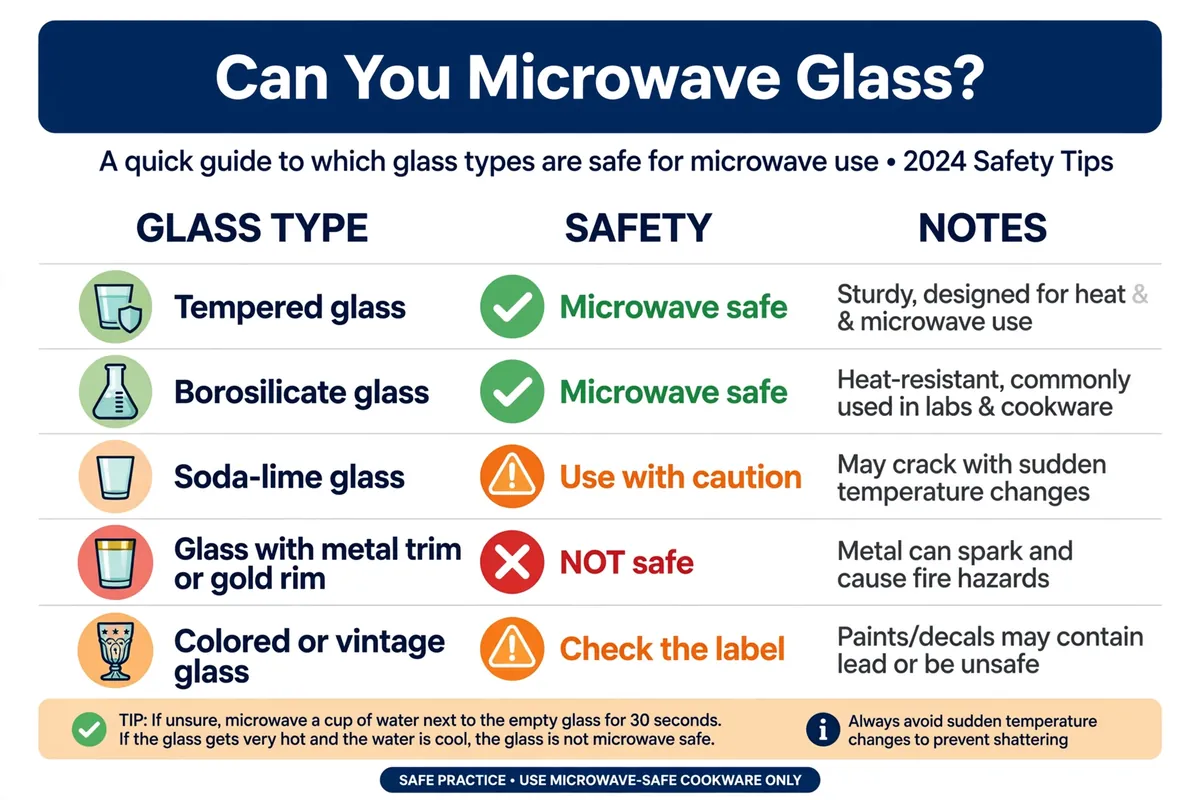
Tempered glass and borosilicate glass labeled microwave-safe are the safest choices for the microwave. Plain soda-lime glass is riskier, and glass with metal trim, paint, or gold rims is never safe.
The word glass covers several very different materials, and they do not behave the same under heat. This quick table sorts the common types, and the sections below explain each one so you can judge the dishes in your own kitchen.
| Glass type | Microwave safety | What you should know |
| Tempered glass | Safe when labeled microwave-safe | Heat-treated for strength, common in bakeware and food storage |
| Borosilicate glass | Safe | Made to resist sudden temperature change, the classic lab and kitchen glass |
| Soda-lime glass | Use with caution | The most common glass, weakest against thermal shock |
| Glass with metal trim or gold rim | Not safe | Metal causes sparks that can crack the glass and damage the microwave |
| Colored, painted, or vintage glass | Check the label | Dyes and metallic finishes may contain metals |
Tempered Glass
Tempered glass is regular glass that has been heated and cooled quickly to make it stronger against impacts. Most modern glass bakeware and glass food storage containers are tempered, and the vast majority carry a microwave-safe label. If yours does, you can use it with confidence.
Tempering helps with drops and knocks, but it only partly helps with thermal shock. A tempered dish is still glass, so the fridge-to-microwave rule still applies. Let it come to room temperature, and it will serve you for years.
Borosilicate Glass
Borosilicate glass is the material built for temperature swings. It barely expands when heated, which is why labs and quality kitchenware have used it for decades. If your dish is borosilicate and labeled microwave-safe, it is about as safe a choice as exists.
This is also where the Pyrex name gets confusing, so here is the straight story. Vintage American Pyrex was borosilicate. Modern Pyrex sold in the United States is tempered soda-lime glass, while Pyrex made in France and sold in Europe is still borosilicate. Both versions are fine when their labels say microwave-safe, but the brand name alone does not tell you which one you own. Read the label on your specific dish instead of trusting the logo.
Soda-Lime Glass
Soda-lime glass is the everyday glass used for drinking glasses, jars, bottles, and window panes. It is the least resistant to thermal shock of the types on this list. That does not make it automatically dangerous, but it makes it the type most likely to crack when heated fast or unevenly.
Many soda-lime items were never designed for the microwave at all. Thin walls, no heat testing, and unknown dyes are common. If a soda-lime dish carries a microwave-safe label, follow the label. If it does not, either run the water test described below or choose a different dish.
Glass With Metal Trim, Gold Rims, or Paint
Any glass decorated with metal is an automatic no. Gold rims, silver bands, metallic paint, and foil details all contain real metal, and metal in a microwave causes arcing, which means visible sparks. Those sparks can scorch the dish, crack the glass, and damage the inside of your microwave.
Metal behaves badly in microwaves as a rule, which is why aluminum foil has its own strict set of rules. The same thinking applies here. If you see shine that looks like metal on the rim or the pattern, keep that piece on the shelf and use a plain dish.
Colored, Vintage, or Decorative Glass
Colored glass, milk glass, carnival glass, and vintage pieces fall into the check-the-label category. Some are perfectly fine. Others use metallic oxides for color or metallic paints for decoration, and those can heat unpredictably or spark. Vintage pieces add another worry, which is tiny flaws and stress from decades of use.
If a decorative piece is labeled microwave-safe, the maker has tested it and you can follow the label. If there is no label and you cannot verify what the color or decoration contains, do not microwave it. Serve in it, store in it, but heat the food in something you trust.
Can You Microwave Glass Straight From the Fridge?
Do not microwave glass straight from the fridge. Let the dish sit on the counter for 15 to 20 minutes until it reaches room temperature, then heat it.
This single habit prevents more broken dishes than any other tip in this article. A fridge-cold dish starts around 4 degrees Celsius, and microwave heating can push parts of it far past boiling in a couple of minutes. That gap is the largest thermal shock your kitchen will ever ask a dish to survive, and it is completely avoidable.
Manufacturer guidance backs this up directly. The Kitchn’s guide to using Pyrex notes the maker’s advice to let the dish reach room temperature before it goes into the microwave or the oven, just as you would before baking with it. The rule is the same for every brand. Room temperature in, heat on, no drama.
The freezer is even worse, so never move a dish from the freezer to the microwave. If you forgot to take dinner out in time, transfer the food to a room-temperature microwave-safe dish instead of heating the frozen one. It takes thirty seconds and removes the risk entirely.
One more edge case worth knowing: do not pour cold liquid into a hot glass dish, or hot liquid into a cold one, even outside the microwave. Thermal shock does not care where the heat comes from. Keep temperature changes gradual and your glassware will last for years.
The One-Minute Water Test: How to Check Any Glass Dish
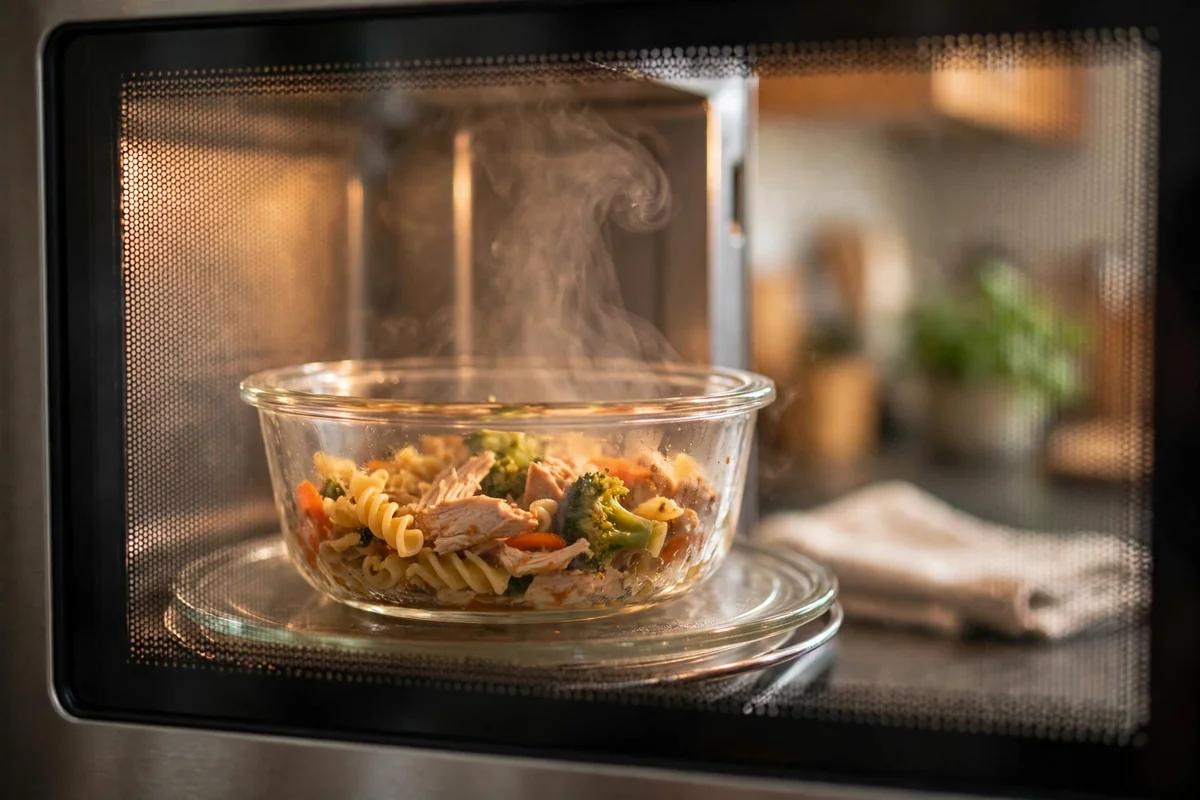
The USDA-suggested water test is simple: microwave the empty dish next to a cup of water for one minute. If the dish stays cool while the water gets hot, it is likely microwave-safe; if the dish itself gets hot, it absorbs energy and you should not use it.
This test works because of how microwaves heat. They are meant to pass through the dish and be absorbed by the food or water inside. A dish that stays cool is doing its job. A dish that heats up is absorbing energy itself, which means hot spots, stress, and a higher chance of cracking. You are checking the material, not the food.
Here is exactly how to run it:
- Fill a mug or measuring cup you know is microwave-safe with about one cup of plain water.
- Place the water next to the empty dish you want to test. If the dish is large, set the cup inside it.
- Microwave on high for one minute. Do not run the microwave with a truly empty cavity, because the water gives the energy somewhere safe to go.
- Carefully touch the dish. Cool dish plus hot water means it is likely safe. A warm or hot dish means it absorbs energy, so keep it out of the microwave.
A detailed walkthrough of this check is laid out in this dish water test for microwave safety, which uses the same one-minute method. A few cautions apply. Very thin or delicate glass can crack during the test itself, so handle it gently. Never test plastic this way, since the method was designed for glass and ceramic. And remember the test checks whether the dish absorbs microwaves, not whether it survives thermal shock, so the room-temperature rule still applies to dishes that pass.
Glass Items People Ask About Most: Jars, Lids, and Drinking Glasses
Mason jars, glass lids, drinking glasses, and measuring cups each have their own quirks. Most are fine with careful handling, but lids and seals need a separate check from the glass itself.
These are the items that generate the most questions, because they sit in a gray zone. They are glass, but they were not always made for the microwave. Here is how to handle each one.
Mason Jars and Other Glass Jars
You can microwave a mason jar with caution, but jars deserve more respect than bakeware. Most mason jars are soda-lime glass with low thermal shock resistance, which is exactly the weak point this article keeps coming back to. Heat them gently and never straight from the fridge.
Remove the metal lid and band completely before the jar goes in. Metal lids spark, and a sealed jar traps steam that builds pressure as the contents heat. Leave the lid off, or rest it loosely on top so steam can escape. Short bursts of a minute or two with a stir in between are much safer than one long blast.
Pasta sauce jars, jam jars, and other repurposed food jars follow the same rules. They were designed to hold food on a shelf, not to take microwave heat. Room temperature, no lid, short intervals, and a quick check for chips around the rim will keep you safe.
Glass Lids and Plastic Seals
A plain glass lid from a microwave-safe container is usually fine in the microwave, but vent it. Trapped steam builds pressure, and pressure is what turns a safe dish into a cracked one. Leave a corner open or use a lid with a built-in steam vent.
The seal is the part people forget. Many glass containers come with plastic lids or silicone and plastic seals, and those follow plastic rules, not glass rules. A plastic lid can warp, and a tight seal can trap steam. When the lid is plastic, the rules change, so check our guide on whether you can microwave plastic before you heat it with the cover on.
Drinking Glasses and Wine Glasses
Thin drinking glasses are the riskiest everyday glass in the microwave. Most were never tested for heat, many have printed or metallic decoration, and thin walls heat unevenly. Unless a drinking glass is clearly labeled microwave-safe, treat it as not safe and use a mug or bowl you trust.
Wine glasses deserve a special warning. They are thin, often have delicate stems, and many carry metallic trim or painted decoration. Reheating mulled wine or a hot drink in a wine glass is not worth the crack risk. Pour the drink into a microwave-safe mug, heat it there, and pour it back if you like the presentation.
Glass Measuring Cups
Glass measuring cups are the happy exception among thin glassware. The classic heatproof measuring cups from brands like Pyrex and Anchor are designed for hot liquids and almost always carry a microwave-safe label. Melting butter or heating a cup of milk in one is exactly what they are for.
The same cautions still apply in milder form. Avoid taking a measuring cup from the fridge straight to full power, and do not boil water in it for far longer than needed. Super-heated water, which is water heated past boiling without visibly bubbling, can erupt when disturbed, so drop in a wooden stirrer or heat in shorter bursts when you are just heating plain water.
How to Microwave Glass Safely: Habits That Prevent Breaks
Vent the lid, heat in short bursts, stir halfway through, and always use oven mitts. These small habits remove almost all the risk of microwaving glass.
None of this is complicated. Breakage almost always comes from rushing, from skipping the label check, or from trapping steam. Build these nine habits and your glassware will outlast your microwave.
- Check the label first. Flip the dish over and look for the microwave-safe marking before it goes in. No label means you run the water test or pick another dish.
- Inspect for chips and cracks. A small chip on the rim is a weak point that heat will find. Retire damaged pieces to cold storage duty only.
- Let cold glass reach room temperature. Fifteen to twenty minutes on the counter after the fridge, and never straight from the freezer.
- Vent every lid. Leave a corner open, crack the lid, or use a vented cover. Steam needs an exit, or pressure does the damage for you.
- Heat in short intervals and stir. Two minutes, stir, two more minutes beats six straight minutes for both the food and the dish.
- Stop if the dish itself gets very hot. A microwave-safe dish should stay relatively cool while the food heats. A scorching dish is absorbing energy and telling you to stop.
- Use oven mitts or a thick towel. Glass holds heat well and can surprise you with a hot spot you cannot see. Protect your hands every time.
- Do not set hot glass on a cold or wet surface. A cold stone countertop or a wet dish towel can shock hot glass into cracking. Use a dry trivet or a wooden board.
- When in doubt, transfer the food. Moving leftovers into a dish you trust takes seconds and ends the guessing completely.
For a broader look at what belongs in the microwave and what never does, see things you should never put in the microwave. Glass done right is one of the safest choices in your kitchen. Glass done carelessly is one of the messiest.
Frequently Asked Questions
These are the questions people ask most about microwaving glass, answered straight with no hedging.
Can you microwave Pyrex glass?
Yes, you can microwave Pyrex glass when the dish is labeled microwave-safe. Most modern Pyrex is tempered soda-lime glass in the United States and borosilicate in Europe, but both are fine if the label says so. Let the dish reach room temperature first, vent the lid, and it will handle reheating without trouble.
Is it safe to microwave glass straight from the fridge?
No, do not microwave glass straight from the fridge. The jump from fridge temperature to microwave heat is the most common cause of thermal shock cracks. Let the dish sit on the counter for 15 to 20 minutes until it reaches room temperature, then heat it normally.
Can you microwave a glass jar?
You can microwave a glass jar with caution, but jars are not ideal microwave vessels. Most jars are soda-lime glass with weak thermal shock resistance, so start at room temperature and heat in short bursts. Remove any metal lid, leave the jar unsealed so steam escapes, and check the rim for chips first.
Can you microwave mason jars?
Yes, with the same cautions as any glass jar. Take off the metal lid and band completely, since metal sparks in the microwave. Do not heat a mason jar straight from the fridge, keep heating times short, and loosen or remove the lid so pressure cannot build inside.
How can you tell if glass is microwave safe?
Flip the dish over and look for a microwave-safe label or the wavy-lines symbol on the bottom. If there is no marking, run the one-minute water test: microwave the empty dish next to a cup of water for one minute, and if the dish stays cool while the water heats, it is likely safe. When you are still uncertain, check the label or simply use a different dish.
Why did my glass break in the microwave?
Almost always, the cause is thermal shock from heating cold glass too fast or unevenly. A pre-existing chip or crack is the second most common cause, because heat stress finds the weak point first. In rarer cases, metal trim on the dish causes arcing that cracks the glass, which is why decorated pieces need a label check.
Can you microwave glass with a metal lid?
No, never microwave glass with a metal lid on it. Metal reflects microwave energy and causes sparks that can crack the glass, scorch food, and damage the microwave interior. Remove metal lids, bands, and twist ties entirely, and heat the dish uncovered or with a microwave-safe cover instead.
Can you microwave cold glass?
Avoid microwaving cold glass whenever you can. Cold glass facing sudden microwave heat is the exact setup for thermal shock, which is how most microwave glass breakage happens. Give the dish 15 to 20 minutes on the counter to reach room temperature, or transfer the food to a room-temperature dish.
Can you microwave a wine glass?
It is not recommended unless the wine glass is clearly labeled microwave-safe. Wine glasses are thin, heat unevenly, and often carry metallic trim or painted decoration that can spark. Heat your drink in a microwave-safe mug and pour it into the wine glass afterward if you want the presentation.
Is colored or decorative glass microwave safe?
Treat colored or decorative glass as not microwave-safe unless it carries the label. Dyes and metallic finishes can contain metals that heat unpredictably or cause arcing in the microwave. Vintage and handmade pieces add the extra risk of tiny flaws from age and use, so when the label is missing, admire them on the shelf and heat food in a plain dish.
How long can you microwave glass?
A truly microwave-safe glass dish can handle normal reheating times, but heat in short bursts of one to two minutes and stir between them. Long uninterrupted heating builds hot spots that stress the glass and overcook the food. If the dish itself becomes very hot to the touch, stop and let everything cool before continuing.
Can you microwave glass with a gold rim?
No, keep any glass with a gold or silver rim out of the microwave. Those rims contain real metal, and metal in a microwave produces sparks that can crack the dish and harm the appliance. Use a plain glass dish for heating and save the rimmed pieces for serving at the table.
Can you microwave a glass measuring cup?
Yes, most glass measuring cups are designed for heat and labeled microwave-safe. They are made for tasks like melting butter and heating milk, so normal use is exactly what they are built for. Still avoid fridge-to-microwave swings, and be careful with plain water, which can super-heat past boiling without bubbling and erupt when moved.
What happens if you microwave glass that is not microwave-safe?
The dish may absorb microwave energy and become dangerously hot while the food stays cool, or it can crack or shatter from thermal shock. Glass with metal trim can spark and damage the microwave. In every case the fix is the same: stop the microwave, let everything cool, and switch to a labeled microwave-safe dish.
The Bottom Line on Microwaving Glass
Can you microwave glass? Yes, and it is one of the best materials for the job, as long as you respect three rules. First, use plain, undamaged glass that is labeled microwave-safe. Second, keep metal trim, gold rims, and damaged pieces out. Third, never send cold glass straight into the heat. Give it time to reach room temperature.
That is the whole system. The FDA points to labeled glass containers as a go-to choice, the one-minute water test covers unlabeled dishes, and steady handling covers the rest. Do those three things, and your glass containers will reheat dinner after dinner without a single crack.
