

Quick answer: Yes, you can microwave butter. It is safe as long as you use a microwave-safe dish, set the power low (about 30 to 50 percent), and heat it in short 10 to 15 second bursts, stirring between rounds. One cold stick of butter (113 g) usually melts in 30 to 60 seconds of total heating time. Cover the dish loosely with a paper towel to keep splatter off the microwave walls.
You probably landed here after a small kitchen accident. Maybe you dropped a stick of butter in the microwave, walked away for a minute, and came back to a greasy mess coating the inside of the door. Or maybe you are mid-recipe, the butter is rock hard, and you need it softened right now. Either way, this guide walks you through the whole thing: the safe way to melt butter, the gentler way to soften it for baking, why butter pops in the first place, and the mistakes that cause most of the mess. Everything below follows guidance from butter manufacturers and food safety sources, so you are working with advice you can trust, not random kitchen folklore.
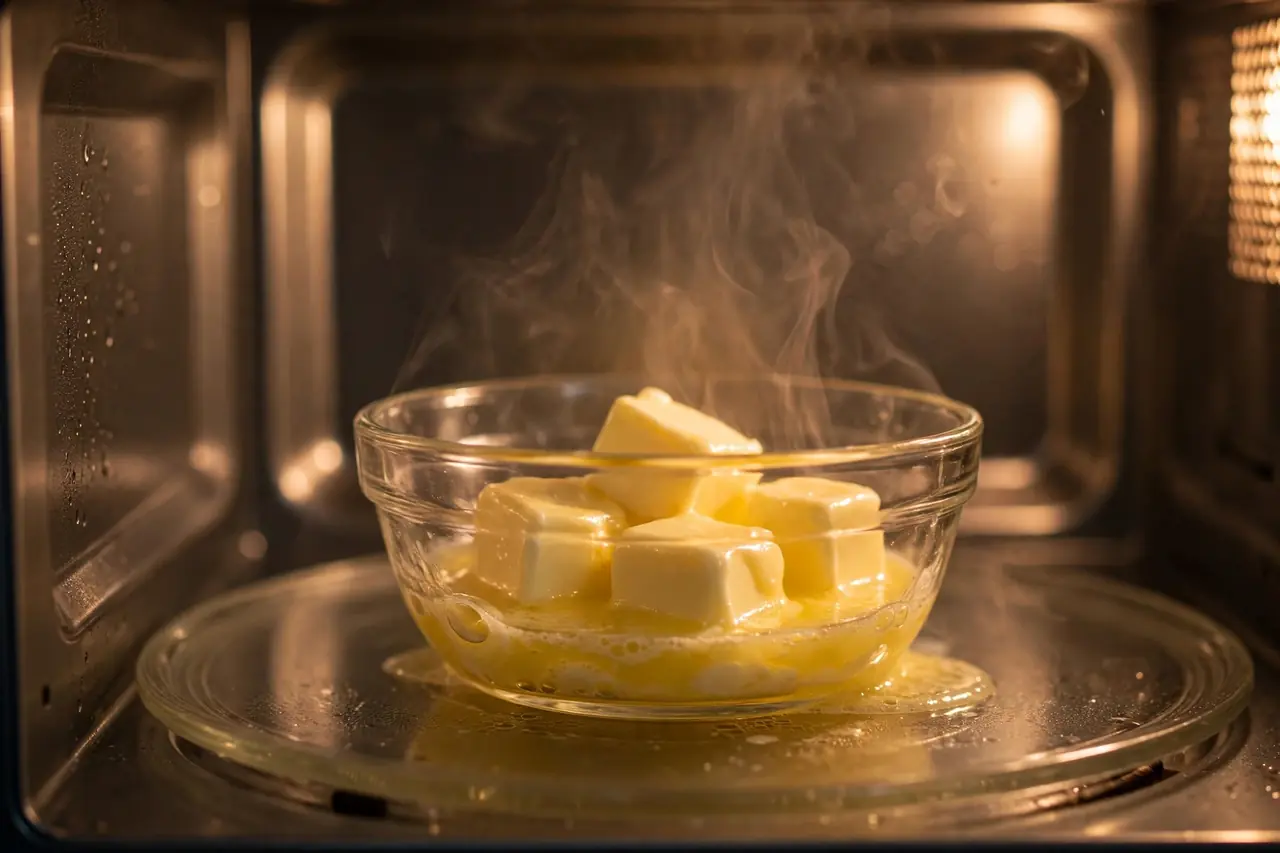
Why Butter Pops and Splatters in the Microwave
Butter looks like a solid block of fat, but it is actually a water-in-fat emulsion. Standard butter is about 80 percent fat, with the rest being water and a small amount of milk solids. When the microwave heats it, the fat melts while the trapped pockets of water turn to steam. Steam takes up far more space than liquid water, so pressure builds inside the softening butter until it bursts through the fat layer. That burst is the pop you hear, and the splatter on the microwave walls is the result.
This is also why melting butter on full power almost always ends badly. High power heats the outside of the stick much faster than the center, so steam forms unevenly and the whole thing can erupt before the middle has even softened. Salted and unsalted butter behave the same way here, since the salt content does not change how the water and fat separate under heat.
Understanding this one fact (butter pops because trapped water flashes to steam) makes every tip below easier to remember. Slow, low heat gives steam a chance to escape gently instead of building up and blowing out.
How to Melt Butter in the Microwave, Step by Step
Here is the method that works reliably for a full stick or a partial stick. The whole process takes about a minute of active attention.
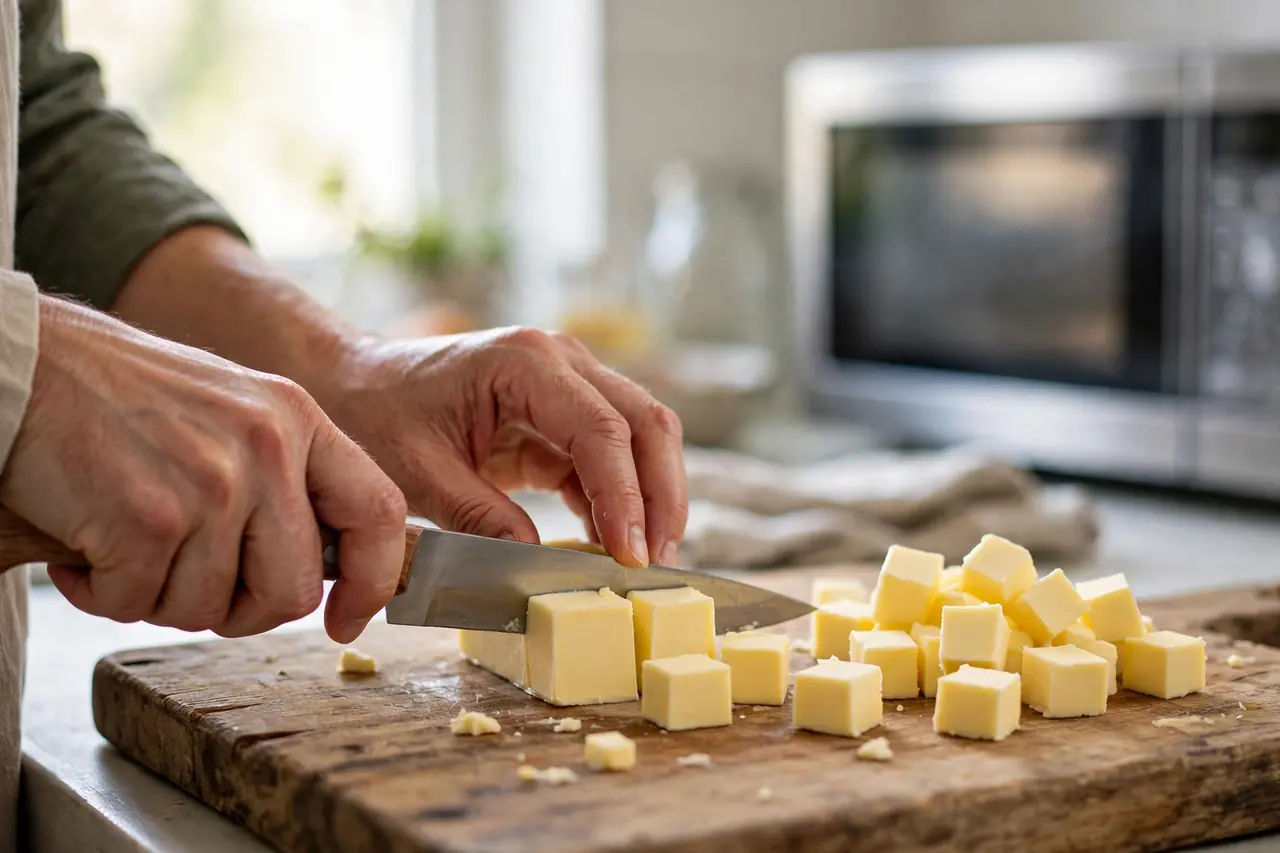
Step 1: Cut the butter into pieces. Cut the cold butter into half-inch cubes or tablespoon-sized pats. Smaller pieces heat more evenly, so the outside does not overheat while the center stays cold. If you only need a tablespoon or two, place the pats in a small microwave-safe cup instead of a wide bowl.
Step 2: Choose a microwave-safe dish. Glass or ceramic dishes are the best choices. They handle hot fat well and do not warp. Check the bottom of any plastic container for a microwave-safe symbol before using it, since thin plastic can soften or warp under hot butter. Never use metal bowls or anything with a metallic trim, because metal causes sparking in the microwave.
Step 3: Cover loosely. Place a paper towel or a microwave-safe lid loosely over the dish. This catches splatter while still letting steam escape. A sealed lid is a bad idea, because trapped steam builds pressure. For more on which coverings are safe, see our guide to microwaving paper towels.
Step 4: Use low power in short bursts. Set the microwave to 30 to 50 percent power (the defrost setting works well on many models). Heat for 10 to 15 seconds, then stop and stir. Repeat until most of the butter is melted. Stop while a few soft lumps remain and stir, because the residual heat will finish the job. This is the single most important habit: short bursts and stirring prevent almost every butter explosion.
Step 5: Watch the finish. Do not walk away. Butter goes from almost done to overheated in seconds. As soon as it is mostly liquid, take it out. Overheated butter separates, the milk solids can brown or burn, and the flavor turns harsh.
The Right Power Setting and Timing
Power setting matters more than total time. A butter manufacturer, Land O’Lakes, advises using the defrost setting (30 percent power) and checking butter every 5 seconds when softening it, which shows how quickly things can go wrong at full power. Here are practical starting points for an average 1000-watt microwave:
- 1 tablespoon: 10 seconds at 50 percent power, check and stir.
- Half stick (57 g): 20 to 30 seconds total at 30 to 50 percent power, in 10 second bursts.
- Full stick (113 g): 30 to 60 seconds total at 30 to 50 percent power, in 10 to 15 second bursts with stirring.
- Two sticks: 60 to 90 seconds total, same low power and short bursts, stirring often.
If your microwave runs hotter or colder than average, treat these as starting points and adjust by feel. Underheating is always safer than overheating, because you can add another 10 seconds, but you cannot un-splatter the microwave.
How to Soften Butter in the Microwave Without Melting It
Melting and softening are different jobs. Melted butter is liquid, while softened butter is pliable but still holds its shape, around 65 to 68°F (18 to 20°C). For baking jobs like creaming butter with sugar, softened butter matters: melted butter cannot trap the air pockets that give cakes and cookies their lift, and your bakes can come out flat or greasy.
To soften butter in the microwave, use the same low power approach but even shorter bursts. Land O’Lakes recommends the defrost setting (30 percent power) and checking sticks every 5 seconds so they do not over-soften or melt. Dairy Farmers of Canada gives similar guidance: cut the butter into small pieces, spread them on a microwave-safe plate, cover loosely with a paper towel, and use medium-low power, checking every 5 to 10 seconds.
The window between soft and melted is narrow, so stay close and press a piece gently with your finger between bursts. When it gives slightly under pressure but still holds its shape, you are done. If you do overshoot and melt it, save it for a different use, like drizzling over vegetables or melting for a sauce, and start over with a fresh piece for baking.
The Wrapper Trick and Other Mess-Free Methods
One clever hack from The Daily Meal solves the covering problem without extra dishes: use the butter wrapper itself as a loose lid. First, cut the butter into tablespoon-sized pieces and place them in a microwave-safe bowl large enough to hold the melted butter. Then tent the butter’s paper wrapper loosely over the bowl. The wrapper catches splatter, lets steam vent, and costs nothing. One important check: make sure the wrapper is plain paper, not the metallic or foil-lined type. Foil and metal cause sparking, so a metallic wrapper must never go in the microwave.
A few other low-mess approaches work well. Some cooks place a cup of water in the microwave alongside the butter, because the water absorbs some of the energy and the butter melts more gently. Others microwave in a tall mug, which naturally contains splatter. And if your microwave has a dedicated soften or melt preset, many newer models do, you can use it, but still check the butter early, because presets are tuned for average quantities.
Which Dish Should You Use
The container matters because hot fat is harder on dishes than most reheated foods. Glass measuring cups are a favorite for this job: they are microwave-safe, pourable, and have measurement marks so you can see exactly how much melted butter you have. Small ceramic bowls and ramekins work just as well.
If you want to double-check any container before heating, look for the microwave-safe symbol on the bottom. Our guide to microwave-safe symbols explains what the wavy-lines mark and other labels actually mean. Ceramic dishes in general are a safe bet, as explained in our ceramic microwave safety guide.
Avoid thin disposable plastic containers, which can warp or soften under hot butter, and never use dishes with metallic paint or gold trim. Also skip sealed containers and jars: the same pressure problem that makes butter pop can turn a sealed jar into a small steam hazard.
Salted vs Unsalted: Does It Matter in the Microwave
For microwaving purposes, salted and unsalted butter behave the same. The salt in salted butter (usually around 1 to 2 percent) does not meaningfully change how the water and fat separate under heat, and both types pop and splatter in the same way. Use whichever your recipe calls for.
The difference that actually matters is storage after softening. Salt acts as a mild preservative, so salted butter is more forgiving if it sits on the counter. The USDA advises that butter is safe at room temperature for one to two days, and advises only leaving out what you will use in that window, with unsalted butter being the more perishable of the two. If you soften more butter than you need, get the leftover back in the fridge promptly rather than leaving it out for days.
Safety Rules to Follow Every Time
Microwaving butter is low risk when you follow a few consistent rules. First, always use a microwave-safe container and confirm any container you are unsure about instead of guessing. Second, never microwave butter in a metallic wrapper or a dish with metallic trim, because metal reflects microwave energy and causes arcing. Third, cover loosely, never sealed, so steam can escape. Fourth, use low power and short intervals with stirring, which is what prevents the steam-burst splatter described above. Fifth, treat hot melted butter like any hot liquid: let it stand a moment before handling, and pour carefully, because melted fat holds heat and can burn skin.
These same principles apply across the kitchen. Our main guide, Can You Microwave It, covers the general rules for what goes in the microwave and what does not.
Common Mistakes That Cause a Buttery Mess
Most microwave butter disasters trace back to one of a handful of habits. The most common is full power for a full minute, which overheats the outside of the stick while the center stays cold and almost guarantees an eruption. Next is microwaving the whole stick unwrapped and uncovered, which gives splatter a free path to every wall. Another frequent mistake is skipping the stirring step, since stirring releases trapped steam before pressure builds. People also forget to remove metallic-foil wrappers, which spark, and they sometimes melt butter in a container that is too small, so the liquid overflows once it turns fluid. Finally, walking away is its own mistake: butter changes state in seconds, and a 30-second distraction is the difference between perfect and scorched.
If your microwave already looks like a crime scene, do not worry. Wipe it down with a damp cloth and a little dish soap while the splatter is fresh, because butter fat is much harder to remove once it bakes on over repeated uses. For stuck-on spots, heat a bowl of water with a squeeze of lemon for two minutes and let the steam loosen the residue before wiping.
What About Ghee and Clarified Butter
Ghee and clarified butter are actually easier to microwave than regular butter, because most of the water and milk solids have been removed. With far less water to flash into steam, they rarely pop or splatter. The same low power and short burst method still applies, mostly to avoid overheating and changing the flavor. Keep in mind that ghee melts at a lower temperature than butter softens, so it can turn fully liquid before you expect it. For this reason, use even shorter bursts, around 10 seconds, and check between each one. If you buy ghee in a glass jar, never microwave the sealed jar; transfer what you need to a small bowl first, following the same rule as any sealed container.
Frequently Asked Questions
Is it safe to melt butter in the microwave?
Yes. Melting butter in the microwave is safe when you use a microwave-safe dish, keep the power low (30 to 50 percent), and heat in short 10 to 15 second bursts with stirring. Avoid metal containers, metallic wrappers, and sealed lids.
How long do you microwave butter to melt it?
For one cold stick (113 g), plan on 30 to 60 seconds of total heating time at 30 to 50 percent power, split into 10 to 15 second bursts with stirring between each. A tablespoon takes about 10 seconds at 50 percent power. Wattage and starting temperature change the exact time, so check early.
What power setting is best for melting butter?
Low to medium-low power, around 30 to 50 percent, or your microwave’s defrost setting. Low power melts the fat gently and gives trapped steam time to escape, which is what prevents popping and splatter. Full power works only with very short bursts and constant attention, and it is much more likely to make a mess.
Why does butter explode or pop in the microwave?
Butter is a water-in-fat emulsion. Microwaves heat the trapped water faster than the surrounding fat, the water flashes to steam, and pressure builds until it bursts through the fat layer. Uneven heating on high power makes this worse, which is why low power and stirring prevent most explosions.
How do you soften butter in the microwave without melting it?
Cut the butter into small pieces, spread them on a microwave-safe plate, cover loosely with a paper towel, and use 30 percent power (defrost) in 5 to 10 second bursts. Check by pressing a piece with your finger between bursts. Stop when it gives slightly but still holds its shape. This is the method Land O’Lakes recommends in its product FAQ.
Can you microwave butter in its wrapper?
Only if the wrapper is plain paper. Many butter wrappers are paper and can be tented loosely over the bowl as a splatter guard. Never microwave foil-lined or metallic wrappers, because metal causes sparking and can damage the microwave or start a fire. When in doubt, unwrap the butter and use a paper towel instead.
Can you microwave salted butter the same way as unsalted?
Yes. Salted and unsalted butter melt and splatter the same way in the microwave. The small amount of salt does not change the heating behavior. Choose based on your recipe, not on the microwave method.
Can you microwave frozen butter?
Yes, but give it more time and keep the bursts short. Cut frozen butter into pieces, use 30 percent power in 15 to 20 second bursts, and stir between rounds. Grating frozen butter on a box grater first speeds things up, because the thin shreds melt quickly and evenly.
Can you microwave margarine or plant-based butter instead?
Yes, the same method works: low power, short bursts, loose cover. Margarine and plant-based spreads have different fat-to-water ratios, so watch them closely, because some melt faster than dairy butter. As with dairy butter, avoid any metallic packaging.
Does microwaving butter ruin it for baking?
Microwaving does not ruin butter itself, but using fully melted butter where a recipe calls for softened butter can hurt your bake. Melted butter cannot trap air when creamed with sugar, so cakes and cookies can turn out flat or greasy. If a recipe needs softened butter, use the gentle softening method above and stop before it melts.
Why did my butter spark in the microwave?
Sparking, called arcing, usually means metal was involved. The most common cause is a foil-lined butter wrapper or a dish with metallic trim or gold paint. Remove anything metallic and the sparking stops. If sparking happens with a plain dish and unwrapped butter, stop the microwave and inspect the cavity for foil scraps or damaged spots.
Can you melt butter in a plastic container in the microwave?
Only in containers clearly labeled microwave-safe. Thin disposable plastic can warp or soften under hot butter, and some plastics can leach chemicals when overheated. Glass or ceramic is the safer default. When checking any container, our microwave-safe symbols guide shows which marks to look for.
How do you melt a small amount of butter, like one tablespoon?
Place the tablespoon of butter in a small microwave-safe cup or ramekin, cover loosely with a paper towel, and heat at 50 percent power for about 10 seconds. Check and stir, then add another 5 to 10 seconds only if needed. Small amounts overheat fast, so err on the short side.
Can you re-melt butter that cooled and re-solidified?
Yes. Melted butter that cooled down can be re-melted with the same method: low power, short bursts, stirring. Each reheat can slightly change the texture and separate more of the milk solids, so for best results melt only what you need. Re-melted butter is still fine for cooking and baking where melted butter is called for.
The Bottom Line
Microwaving butter is completely fine once you respect how butter behaves under heat. Cut it small, use a microwave-safe dish, keep the power low, work in short bursts, stir between rounds, and cover loosely. Do that, and you get smooth melted butter or perfectly softened butter with no explosion and no cleanup. Once you have the technique down, it takes less than a minute and works the same way every single time. Try it with your next batch of microwave mug cake, where properly melted butter is the difference between fudgy and rubbery.
Sources: Land O’Lakes product FAQ on softening butter in the microwave; Dairy Farmers of Canada guide to softening butter; Chowhound guide to preventing butter splatter in the microwave; The Daily Meal butter wrapper hack; USDA room-temperature butter guidance (one to two days) as reported by Chowhound.

3 Comments
Pingback: Can You Microwave Mushrooms? Times and Safety
Pingback: Can You Microwave Cauliflower? Times and Safety
Pingback: Can You Microwave Spinach? Times and Safety