

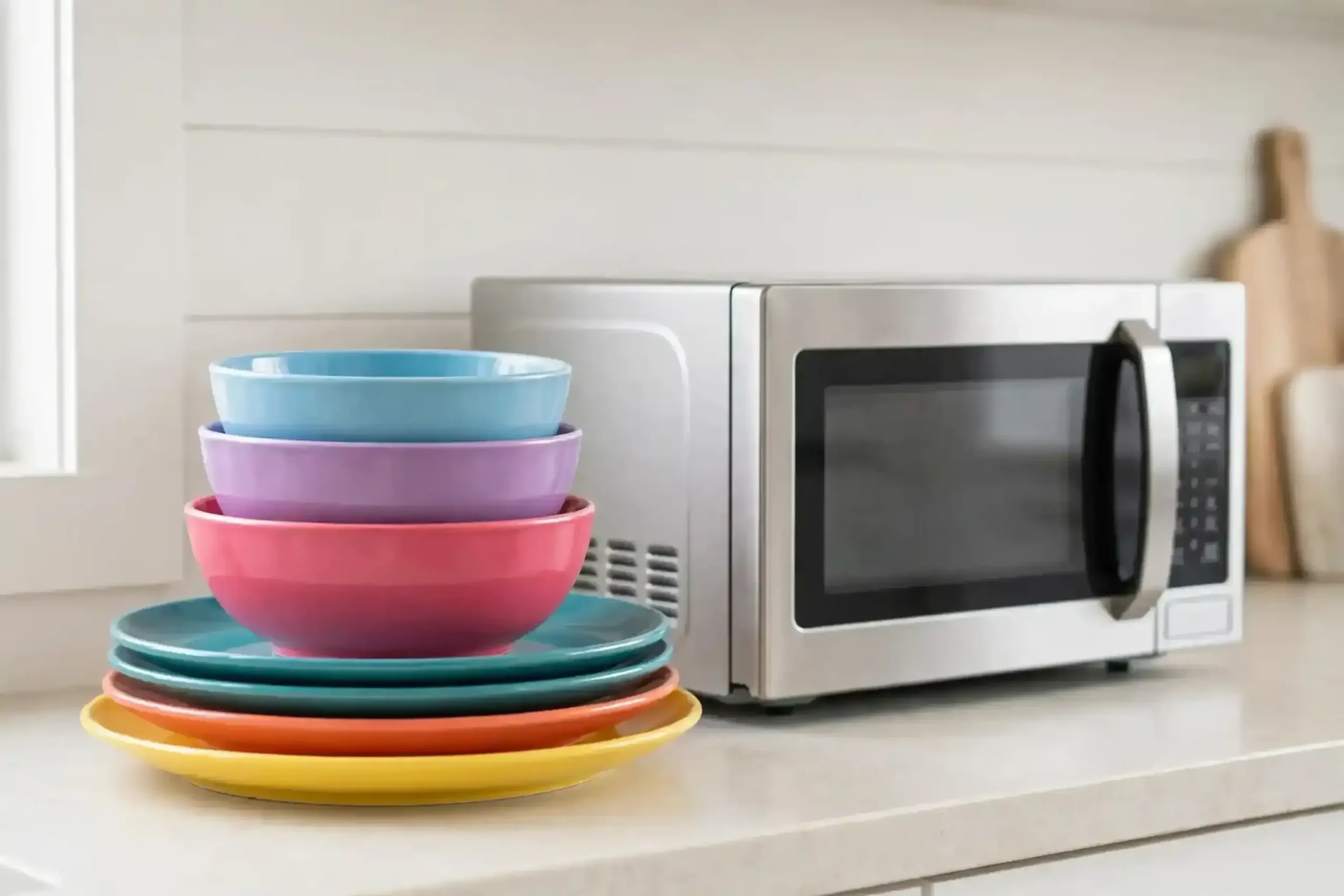
Melamine plates are everywhere: the colorful kids’ dishes, the unbreakable camping set, the poolside bowls, the cheerful plates at the family barbecue. They look like ceramic, they survive drops that would shatter real china, and they cost a fraction of the price. So when it is time to reheat leftovers, the melamine plate is right there, and the question feels natural: can you microwave melamine?
The answer is no, and it is one of the clearest no’s in microwave safety. The U.S. Food and Drug Administration says directly that foods and drinks should not be heated on melamine-based dinnerware in microwave ovens. This is not a gray area or a matter of opinion. Melamine absorbs microwave energy in a way that glass and ceramic do not, and that absorbed energy breaks the material down and pushes chemicals into your food.
This guide explains what melamine actually is, why it fails in the microwave when it handles everything else so well, what the FDA’s testing found about chemical migration, which situations make leaching worse, how to tell melamine apart from ceramic, what to do if you already microwaved it, and the best alternatives for reheating. You will also learn where melamine is perfectly safe, because the plate is not the enemy. The microwave is just the wrong job for it.
The Short Answer
No, never microwave melamine plates, bowls, or cups. The FDA’s position is explicit: do not heat food or drinks on melamine-based dinnerware in microwave ovens. Melamine absorbs microwave energy, which overheats the dish itself rather than just the food. That overheating can warp, blister, or crack the plate and accelerates the migration of melamine and formaldehyde from the resin into your food, especially with hot, acidic, or fatty foods.
The safe routine is simple: transfer the food to a microwave-safe glass or ceramic dish for heating, then serve it on the melamine plate if you like. Melamine is perfectly fine for serving, for cold foods, and for the picnic table. It is only the heating step that is off limits.
What Melamine Actually Is
Melamine dinnerware is made from melamine-formaldehyde resin, a hard plastic formed by reacting melamine compound with formaldehyde under heat and pressure. The result is a dense, rigid material that looks and feels like ceramic but weighs much less and barely breaks when dropped. That combination made it a hit for children’s dishes, outdoor dining, camping, dorm rooms, and restaurants that need stackable, chip-resistant plates. A materials scientist’s breakdown of every plate type puts melamine’s appeal down to its dense polymer chains, which give it that ceramic look with near-indestructible toughness.
The key detail is in the name: melamine-formaldehyde resin. The finished plate is mostly stable, but trace amounts of the starting chemicals remain locked in the resin, and heat can coax them out. Under normal serving conditions at room temperature, that migration is negligible. The FDA tested 19 commercially available melamine plates and cups and found measurable migration from only 3 of them, and only into acidic foods under exaggerated conditions: food held in the dish at 160 degrees Fahrenheit for two hours. Under realistic conditions, the migration was less than 10 parts per billion, which is 250 times lower than the 2,500 parts per billion level the FDA considers acceptable. That is why the FDA considers melamine tableware safe for serving.
But the microwave is not a normal serving condition. It is an extreme heating condition, and the FDA draws the line exactly there. The full Q and A, including the migration numbers, is published at the FDA’s melamine tableware page.
Why Melamine Is Not Microwave Safe
Most microwave-safe materials are transparent to microwaves: the energy passes through the dish and heats the food. Melamine does the opposite. It absorbs microwave energy directly, which means the plate itself gets hot, sometimes hotter than the food on it. Anyone who has microwaved a melamine bowl by accident knows the sign: the food is lukewarm and the dish is scorching. That backwards heating is the root of every problem below.
First, the absorbed energy overheats the resin. The intense, focused heat breaks down the chemical bonds in the melamine-formaldehyde resin, and as those bonds break, melamine monomers and formaldehyde migrate out of the plate and into the food. Studies show this migration increases significantly with microwave heat, and it gets worse with acidic foods like tomato sauce or citrus and with fatty foods, which pull more of the chemicals out. Research cited in materials safety reviews found that the chemical transfer can approach regulatory limits after only a few short microwave cycles.
Second, the plate itself degrades. Repeated microwave use makes melamine brittle, and the surface can discolor, blister, warp, or develop fine cracks. Once the surface is compromised, the plate’s resistance to chemical migration drops further, so a damaged plate leaches more than a new one. A warped or blistered melamine plate is done and should be retired, not just kept away from the microwave.
Third, there is a burn and handling hazard. Because the dish absorbs the energy, a melamine plate can come out of the microwave hot enough to burn your hands while the food on it is still cool. That surprises people who are used to cool ceramic plates, and it is another reason the material and the appliance are a bad match.
What the FDA Says About Melamine in the Microwave
The FDA’s guidance is short and unambiguous: foods and drinks should not be heated on melamine-based dinnerware in microwave ovens. Only cookware that is specified as microwave-safe should be used for heating. The food may then be served on melamine tableware. In other words, the microwave step and the melamine plate must never meet, but serving already-heated food on melamine is fine.
The FDA’s testing also puts the risk in perspective. Melamine does not migrate into most foods at all under normal conditions. The migration the FDA measured happened with highly acidic foods held at 160 degrees for two hours, which is far beyond a normal meal. But the FDA also notes that when highly acidic foods are heated to extreme temperatures, the amount of melamine migrating out of the plastic can increase, which is exactly what a microwave does. The agency’s line is practical: serving is safe, heating is not.
One thing the FDA does not do is ban melamine tableware, and it should not. At normal serving temperatures, the exposure is a tiny fraction of the safety threshold. The people who get this wrong are usually not worried enough, microwaving kids’ bowls daily, or worried too much, throwing out perfectly good plates used only for sandwiches. The science supports the middle path: use melamine for what it is good at, and keep it out of the microwave.
Can Melamine Leach Chemicals When Heated?
Yes, and the hotter and longer the heating, the more it leaches. The two migrants are melamine itself and formaldehyde, both left over from the resin manufacturing. Heat breaks the resin’s bonds and frees them, and microwave heat does it faster than any normal serving condition because the dish absorbs the energy directly.
The conditions that make leaching worse are well documented. Acidic foods, like tomato sauce, citrus, and vinegar dressings, significantly increase migration even at lower temperatures. Fatty and oily foods pull out more as well. Prolonged contact matters: a quick serving of hot food is very different from soup sitting in the bowl for an hour. And damage matters enormously: scratched, chipped, or worn plates leach more because the degraded surface exposes more resin. A Taiwanese study found that melamine levels in urine rose more than eightfold after people ate hot noodle soup from melamine bowls compared with ceramic bowls, which shows the effect is measurable in real use, not just in laboratories. That study is summarized in this melamine safety review.
A note on the scary headlines: you may have heard about the 2008 incident in China where melamine was deliberately added to infant formula and milk products, sickening hundreds of thousands of babies with kidney damage. That was deliberate adulteration at massive doses, thousands of times higher than anything that migrates from a plate. It is not what happens with tableware, and it does not mean your plates are poisoning you. But it is a reminder of why the microwave rule exists: heat is the one thing that turns a negligible exposure into a meaningful one.
Melamine and Children: Extra Caution
Children’s dishes are one of melamine’s biggest markets, which makes this section the most important one for parents. Kids’ bowls and plates get microwaved more than any other melamine in the house, because reheating a toddler’s meal in the bowl it was served in feels efficient. It is also the highest-risk use: small bodies, developing kidneys, and daily repetition.
Children are more vulnerable to chemical exposures because of their lower body weight, which means the same migration is a larger dose for them. The 2008 adulteration crisis hit infants hardest for exactly this reason. No one is saying a melamine kids’ plate used for serving is dangerous. The FDA’s numbers show serving is safe. But microwaving a child’s melamine bowl turns a safe product into an unsafe practice, and it is worth building the transfer habit early: heat in glass or ceramic, serve in the fun plate.
Also retire kids’ melamine at the first sign of wear. Children chew on rims, bang plates on tables, and run them through dishwashers constantly, all of which degrade the surface faster. A scratched, faded, or warped kids’ plate has given its service. Replace it, and keep the new one out of the microwave from day one.
How to Tell If a Dish Is Melamine
Confusion is common because good melamine looks like ceramic. Here is how to tell. Flip the dish over and read the bottom. Melamine is usually stamped or printed with the word “melamine” or “mel,” sometimes with a “do not microwave” warning right on it. Ceramic will typically say stoneware, porcelain, or just carry a maker’s mark. Weight is a clue: melamine is noticeably lighter than a ceramic plate of the same size. Sound is another: tap the rim with a fingernail, and melamine gives a dull plastic click while ceramic rings.
If the dish came in a colorful set marketed as unbreakable, kid-friendly, outdoor, or camping dinnerware, assume melamine until the stamp says otherwise. When in doubt, treat it as melamine and keep it out of the microwave. The microwave-safe symbols guide shows what a genuine microwave-safe mark looks like, and melamine will never carry one honestly.
What to Do If You Already Microwaved Melamine
Do not panic over a single accident. One short, accidental heating is unlikely to cause harm, because the concern is repeated exposure, not a one-time event. But treat it as a warning and inspect the dish. Look for warping, especially a base that no longer sits flat, discoloration or yellowing, blistering or bubbling on the surface, fine cracks, or a rough texture where it used to be smooth. Any of these means the resin has been damaged, and the plate should be retired from all food use, not just from the microwave.
If the plate looks completely fine after one short incident, you can keep using it for serving cold or room-temperature foods, but do not microwave it again. The damage from microwave heating is cumulative: each cycle breaks down the resin a little more, so “it survived once” is not a reason to repeat it. And if the food was in the dish during the accident, use your judgment. A few seconds of accidental heating is not a reason to throw out dinner, but if the dish got very hot, warped, or smells of chemicals, discard the food.
What to Use Instead of Melamine in the Microwave
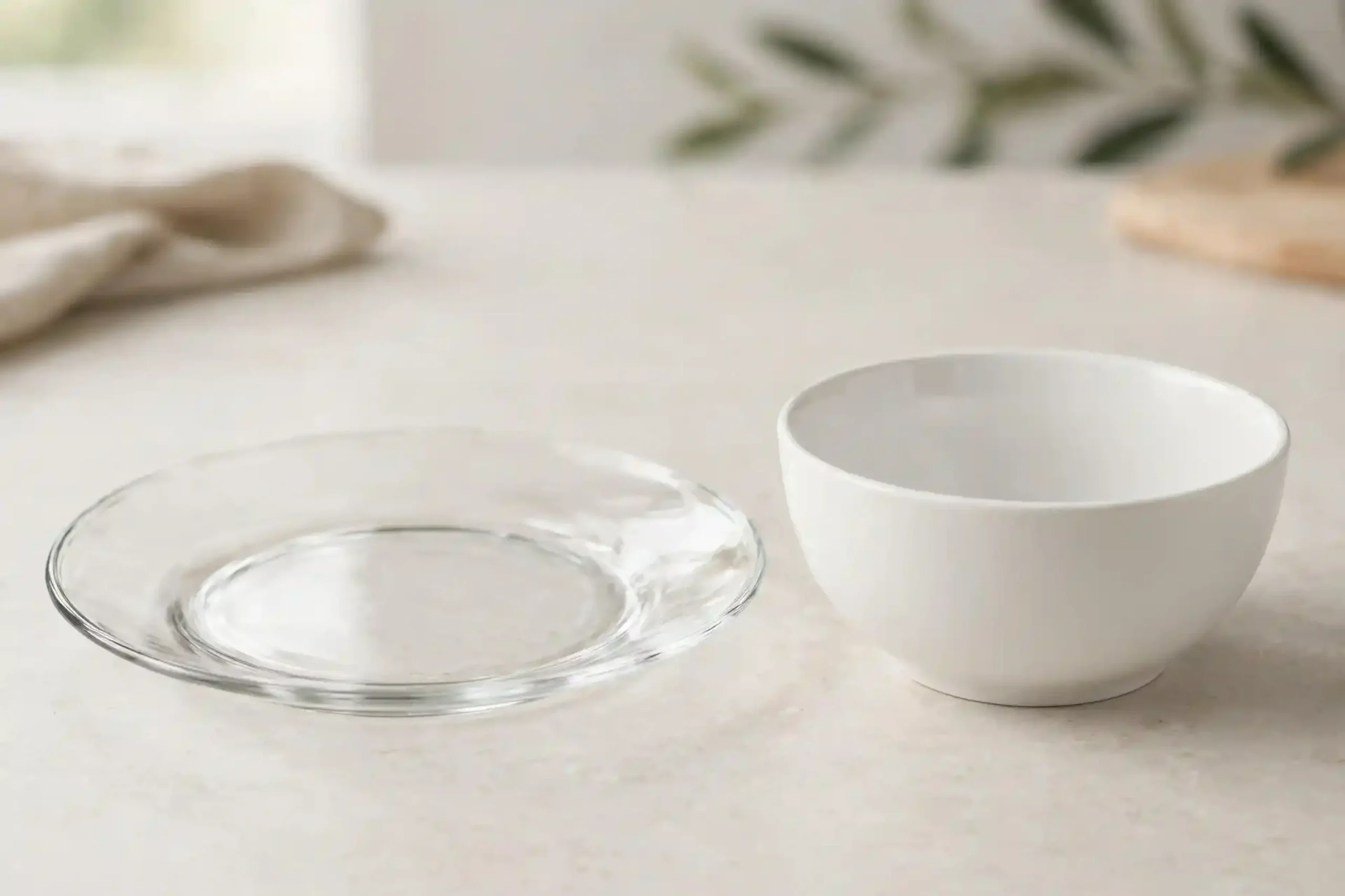
The best replacements are the materials that are transparent to microwaves and do not react with food. Microwave-safe glass is the top choice: it heats evenly, you can see the food, and it handles any temperature a microwave can produce. Tempered glass plates, like the well-known Corelle style, are lightweight, stackable, and nearly as practical as melamine for everyday use, and they go straight from microwave to table. High-fired ceramic and porcelain are equally good, as long as they have no metallic trim or decoration.
For a quick reheat, a plain ceramic dinner plate or a glass storage dish covers nearly every job. If you want the full breakdown of which materials pass the test, the complete microwave safety chart lists them container by container, and our glass guide covers the details. The routine to build is transfer, heat, serve: move the food to glass or ceramic, microwave it there, and then serve it on the melamine plate if you want the color and the unbreakable convenience at the table. You keep everything you like about melamine and skip the one thing it cannot do.
Caring for Melamine So It Lasts
Kept away from the microwave, melamine lasts for years. Most quality melamine is dishwasher safe, and the top rack is gentler than the bottom because it is farther from the heating element. Avoid abrasive scouring pads, which scratch the surface and increase future leaching. For stubborn stains from curry or tomato sauce, soak in warm soapy water rather than scrubbing hard.
Do not put melamine in a conventional oven either, and keep it away from stovetop heat and open flame. Serve hot foods on it without worry, but do not use it as a cooking vessel, do not leave it holding very hot, acidic foods for hours, and do not cut food on it with sharp knives any more than necessary, since cuts degrade the surface. When a plate is scratched, stained through, warped, or faded, retire it. Melamine is inexpensive, and a fresh plate is cheaper than wondering about a worn one.
Frequently Asked Questions
Direct answers to the melamine questions people ask most.
Can you microwave melamine plates?
No. Never microwave melamine plates, bowls, or cups. The FDA explicitly says foods and drinks should not be heated on melamine-based dinnerware in microwave ovens. Melamine absorbs microwave energy, overheats, and accelerates the migration of melamine and formaldehyde into food. Transfer the food to a microwave-safe glass or ceramic dish for heating, then serve it on the melamine plate if you like.
Why is melamine not microwave safe?
Because it absorbs microwave energy instead of letting it pass through to the food. The dish itself gets hot, sometimes hotter than the food, and that intense heat breaks down the melamine-formaldehyde resin. The breakdown warps, blisters, or cracks the plate and releases melamine and formaldehyde into the food. Glass and ceramic do not absorb the energy this way, which is why they are safe and melamine is not.
What does the FDA say about melamine in the microwave?
The FDA says foods and drinks should not be heated on melamine-based dinnerware in microwave ovens, and that only cookware specified as microwave-safe should be used. The agency’s testing found that melamine migration into food is negligible under normal serving conditions, less than 10 parts per billion versus a 2,500 parts per billion acceptable level, but that migration increases when highly acidic foods are heated to extreme temperatures. The full findings are at the FDA’s melamine Q and A.
Can melamine leach chemicals when heated?
Yes. Heat breaks the bonds in the melamine-formaldehyde resin and releases melamine and formaldehyde into food, and microwave heat does this faster than normal serving conditions because the dish absorbs the energy directly. Acidic foods like tomato sauce, fatty foods, prolonged hot contact, and scratched or worn surfaces all increase the leaching. At room temperature with normal serving, the migration is negligible.
What should you use instead of melamine in the microwave?
Microwave-safe glass or high-fired ceramic. A plain glass plate, a tempered glass dish in the Corelle style, or a ceramic bowl handles every reheating job safely. They do not absorb microwave energy, they do not leach anything into food, and they go straight from the microwave to the table. Keep the melamine for serving, for cold foods, and for outdoor use, which is what it does best. For labeled plastics, check our plastic guide.
Is melamine safe for serving food?
Yes, for serving at normal temperatures. The FDA’s testing showed migration well below safety thresholds under realistic serving conditions, and the agency considers melamine tableware safe for its intended use. Cold foods, room-temperature foods, and normally hot meals served and eaten promptly are all fine. The line is heating: do not microwave on it, do not bake on it, and do not use it as a cooking vessel.
Can you put hot food on a melamine plate?
Serving hot food on melamine is fine. There is a difference between serving temperature and microwave heating: a hot meal served on a plate cools as you eat, while a microwave drives intense energy into the dish itself. Avoid leaving very hot, acidic foods like tomato soup sitting in a melamine bowl for a long time, and never reheat the food while it is on the plate. Heat elsewhere, serve on melamine.
Are melamine dishes safe for children?
For serving, yes, and that is why kids’ dish sets are so popular. But children’s melamine should be kept out of the microwave without exception, because kids are more vulnerable to chemical exposure by body weight and their dishes get reheated most often. Build the transfer habit: warm the food in glass or ceramic, then serve it in the fun plate. Retire kids’ melamine at the first sign of scratches, warping, or fading.
What happens if you accidentally microwaved a melamine plate?
One short accident is unlikely to cause harm, so do not panic. Inspect the dish for warping, discoloration, blistering, or cracks. If you find any damage, retire the plate from all food use. If it looks fine, keep using it for serving but never microwave it again, because the resin damage is cumulative. If the dish got very hot or smells of chemicals, discard the food that was in it.
Can melamine go in the dishwasher?
Most quality melamine is dishwasher safe, and the top rack is the gentler choice since it sits farther from the heating element. Avoid abrasive pads and harsh scouring, which scratch the surface and increase future chemical migration. Over many cycles, dishwasher heat and detergents gradually erode the surface, which is one more reason to retire old, faded plates rather than using them indefinitely.
How can you tell if a plate is melamine or ceramic?
Check the bottom stamp: melamine is usually marked “melamine” or “mel,” often with a no-microwave warning. Melamine is noticeably lighter than ceramic of the same size, and tapping the rim gives a dull plastic click instead of ceramic’s ring. Colorful, unbreakable sets marketed for kids, camping, or outdoor use are almost always melamine. When in doubt, assume melamine and keep it out of the microwave.
Is bamboo fiber dinnerware microwave safe?
No. Bamboo fiber plates are typically melamine blended with bamboo fiber, and they follow the same rule: not microwave safe. The “bamboo” label makes them sound natural, but the binding resin is still a formaldehyde-based plastic with the same heat behavior. Treat bamboo fiber dinnerware exactly like melamine: fine for serving, never for the microwave.
Does melamine from plates cause kidney damage or cancer?
Not at the levels that migrate from tableware used normally. The kidney damage cases came from the 2008 adulteration crisis, where melamine was deliberately added to formula at enormous doses, thousands of times higher than any plate migration. The FDA’s testing found tableware migration at less than 10 parts per billion under realistic conditions, 250 times below the acceptable level. The risk appears only when heat, especially microwave heat, drives migration far above normal serving levels.
When should you throw away melamine plates?
Retire them when they are scratched, chipped, warped, discolored, blistered, or faded, because surface damage increases chemical migration. Also retire any plate that has been microwaved repeatedly, even if it looks okay, since resin breakdown is cumulative and invisible at first. Melamine is inexpensive, so replacing worn pieces every few years is the practical rule. For the full list of materials that never belong in a microwave, see things you should never microwave.
Can you microwave food on a melamine plate for just 30 seconds?
No. There is no safe short time. Even brief microwave exposure starts breaking down the resin, and the damage accumulates with repetition. The “just 30 seconds” habit is exactly how plates get microwaved daily for years. Transferring the food to a glass dish takes the same 30 seconds and removes the risk entirely.
The Bottom Line
Can you microwave melamine? No, and the FDA says so directly. Melamine absorbs microwave energy, overheats, and breaks down, pushing melamine and formaldehyde into your food, and the damage builds with every cycle. But melamine is not a bad material. It is safe for serving, great for cold foods, ideal for kids and the outdoors, and it lasts for years when treated right.
The entire rule fits in one habit: transfer, heat, serve. Move the food to microwave-safe glass or ceramic, heat it there, and serve it on the melamine plate if you want. You keep the unbreakable convenience and the cheerful colors, and the microwave never touches the resin. Check the stamp on the bottom of your dishes, retire the worn ones, and keep the kids’ bowls out of the microwave from day one. That is the whole system, and it takes less effort than cleaning a warped plate.
