

Canned soup is one of the most common things people heat in a microwave, and also one of the most misunderstood. The soup itself is perfectly fine in the microwave. The can is not. That single distinction is where almost every mistake, every scary pop, and every ruined bowl begins.
This guide answers the question the way the labels, the USDA, and real kitchen experience answer it. You will learn why a soup can can never go in the microwave, what the directions on actual soup cans say, the exact steps that give you hot soup without eruptions or rubbery noodles, and honest answers to the lining, BPA, and reheating questions people keep asking on Reddit and in kitchen forums.
The short answer
Yes, you can microwave canned soup, but only after you pour it out of the can and into a microwave-safe bowl. Never put the metal can in the microwave, not even for a few seconds. Heat the soup in a covered microwave-safe bowl on high for 2 to 4 minutes, stir halfway through, let it rest for 1 minute, and check that it is steaming hot throughout. That is the method printed on the labels of major brands, and it works for almost every canned soup.
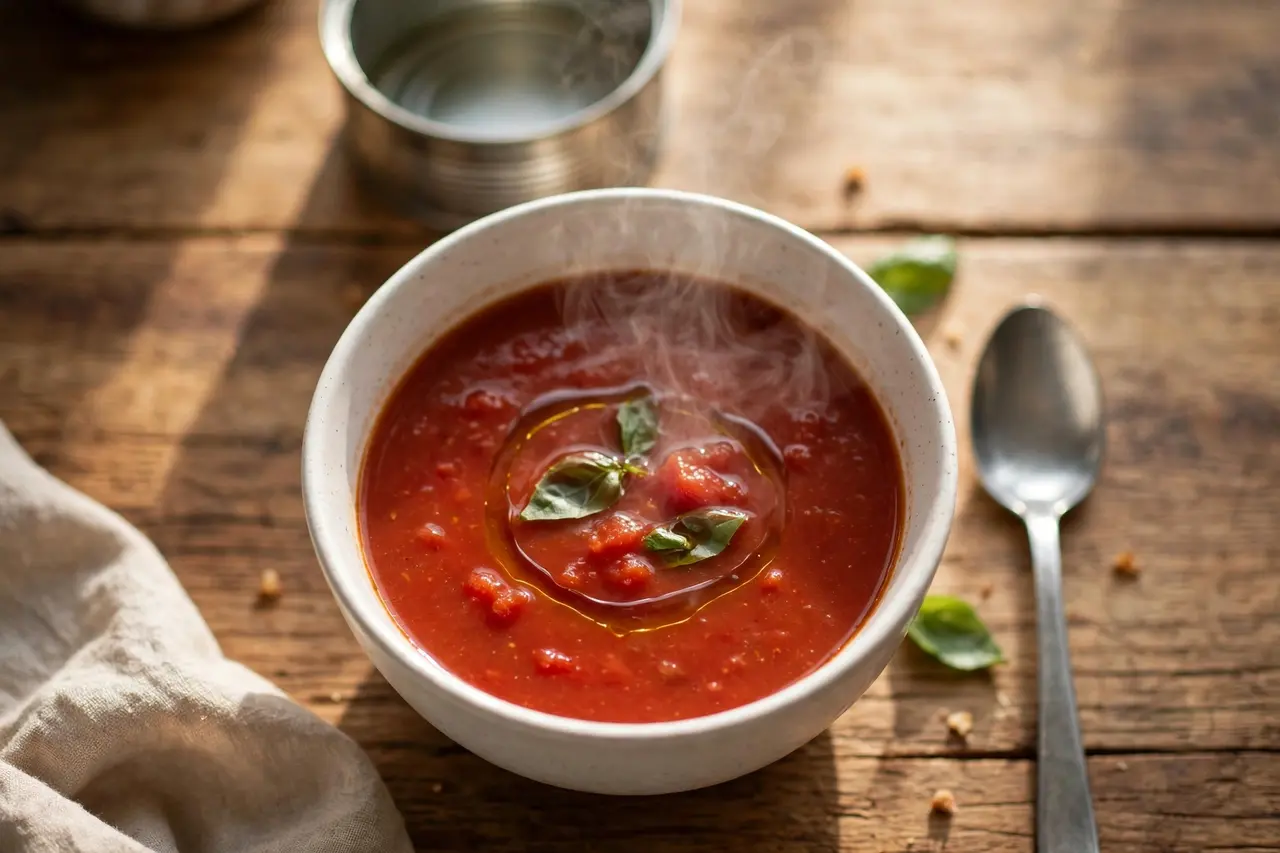
Why the can must never go in the microwave
Soup cans are made of steel or aluminum, and metal is the one material that truly does not belong in a microwave oven. Microwaves heat food by making water molecules vibrate. Metal reflects those waves instead of absorbing them. When the reflected energy builds up on a metal surface, it creates electrical arcs, the bright blue sparks you sometimes see. That arcing can scorch the inside of your microwave, damage the magnetron, and in the worst case start a fire.
The shape of a can makes the problem worse. A smooth metal cylinder can act like an antenna, concentrating the microwave energy at the edges and seams. Even a can that looks harmless can spark within seconds. This is the same reason you should never microwave foil, and if you want the full breakdown of which metals are dangerous and why, our guide to whether you can microwave metal and our look at microwaving aluminum foil cover the science in detail.
There is a second danger that has nothing to do with sparks. A sealed can is a pressure vessel. If you somehow heated a closed can, the liquid inside would expand, pressure would build, and the can could burst. Heating companies even warn against heating sealed cans on a stovetop for the same reason. So the rule is absolute: the soup leaves the can before the microwave door closes.
What the soup labels actually tell you to do
Before trusting any blog, including this one, check what the manufacturers print on their own cans. The directions are remarkably consistent. Progresso’s label for its ready-to-serve soups reads: “Microwave: Heat in covered microwavable bowl on high 2-4 min. Careful, leave in microwave 1 min; stir. Refrigerate leftovers.” That one sentence contains the entire safe method: a covered bowl, 2 to 4 minutes, a rest, and a stir.
Campbell’s gives similar directions on its microwavable soup bowls: microwave on high for about 1 minute, leave the bowl in the microwave for 1 minute after heating, then stir before serving. The company also warns that uneven microwave heating can cause popping and splattering, which is why the cover and the rest matter.
One label detail people miss: condensed soups are different from ready-to-serve soups. A condensed can is a concentrate, and the label expects you to add water or milk when you heat it. If you microwave condensed soup without adding the liquid, you get a thick, oversalted paste that scorches at the edges. Always read the label on the specific can you are holding.
How to microwave canned soup safely, step by step
Follow these steps and you will get evenly heated soup with no drama. The method works for chicken noodle, tomato, minestrone, chowder, and nearly every other canned variety.
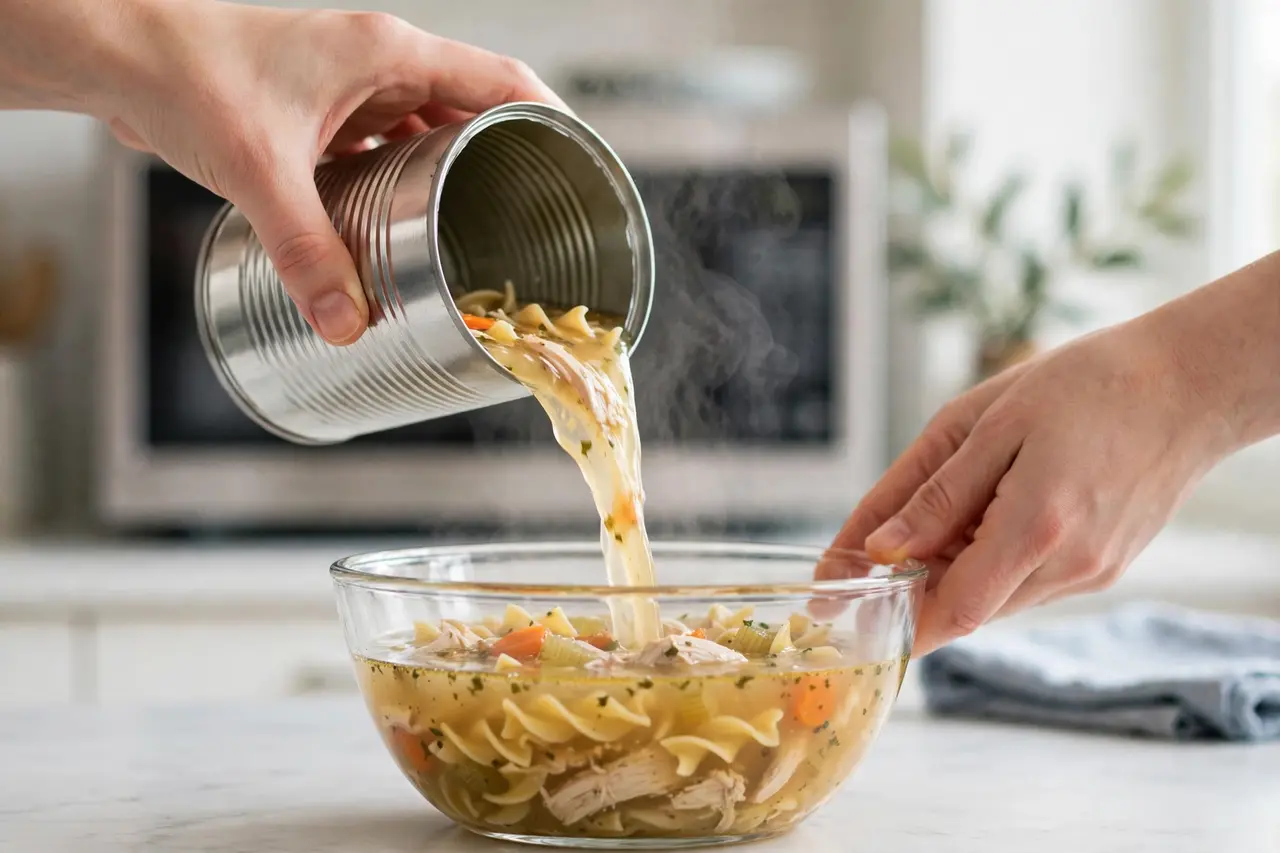
Step 1: Open the can and pour the soup into a microwave-safe bowl. Glass, ceramic, and microwave-safe plastic all work. If you are not sure a container is safe, check the bottom for a microwave-safe symbol. Our guide to decoding microwave-safe symbols shows exactly what to look for. If the bowl is plastic and has no symbol, move the soup to glass or ceramic instead. Our article on whether plastic is safe in the microwave explains why the symbol matters.
Step 2: If it is condensed soup, add the liquid now. Mix in the water or milk the label calls for and stir well before the bowl goes in. Cold milk straight from the fridge is fine; the microwave will bring it up to temperature.
Step 3: Cover the bowl loosely. Use a microwave-safe lid, a plate, or a damp paper towel, but leave a vent for steam to escape. A tight seal traps steam and can cause the cover to pop off. A loose cover keeps the heat in, stops splatters, and lets pressure release safely.
Step 4: Microwave on high in intervals. For one can of soup, start with 2 minutes. Pull the bowl out, stir thoroughly, and heat for another 1 to 2 minutes. Stirring is the step most people skip, and it is the step that matters most, because microwaves heat unevenly and leave cold spots. The USDA’s own reheating guidance, echoed by university food-safety programs, says to cover and stir or rotate food when reheating in a microwave so it heats evenly throughout (University of Illinois Extension, based on USDA FSIS guidance).
Step 5: Let it rest for 1 minute. This is on nearly every soup label for a reason. The heat keeps distributing after the microwave stops, which evens out hot and cold spots. It also protects your mouth from the deceptive first spoonful, which can be scalding while the center is still lukewarm.
Step 6: Stir once more and check the temperature. The soup should be steaming and uniformly hot. For food safety, the USDA recommends reheating leftovers and prepared foods to 165°F (74°C) throughout, checking in a couple of spots with a food thermometer because of those cold spots (guidance courtesy of the USDA Food Safety and Inspection Service). Canned soup is commercially sterile when you open it, so the risk is lower than with leftovers, but the 165°F target is still the gold standard for “definitely hot enough.”
How long to microwave canned soup
Timing depends on the soup type, the portion size, and your microwave’s wattage. Most home microwaves run between 700 and 1200 watts. Use this table as a starting point and adjust based on your own oven.
| Soup type | Portion | Time on high | Notes |
|---|---|---|---|
| Ready-to-serve broth soup (chicken noodle, minestrone) | 1 can (about 2 cups) | 2 to 4 minutes | Stir at the halfway mark |
| Ready-to-serve tomato or vegetable soup | 1 can | 2 to 4 minutes | Thicker soups need the full 4 minutes |
| Cream or chowder soup | 1 can | 2 to 3 minutes | Use 50 to 70% power to prevent splitting; stir often |
| Condensed soup (with added liquid) | 1 can plus liquid | 3 to 4 minutes | Stir well before and during heating |
| Single-serve microwavable bowl | 1 bowl (7 to 15 oz) | 1 to 2 minutes | Follow the package; rest 1 minute |
| Half a can (leftovers) | 1 cup | 1.5 to 2.5 minutes | Reheat to 165°F throughout |
Two practical notes on timing. First, chowders and cream soups do better at reduced power. High heat can make dairy-based soups separate or develop a grainy texture, so 50 to 70 percent power with an extra minute gives a smoother result. Second, a full can always takes longer than you expect because the dense center of the bowl heats last. If the edges are bubbling and the middle is still cool, that is normal microwave behavior, not a broken oven. Stir and continue.
The can lining question: is it safe to eat soup heated in the can?
This question comes up constantly, and the honest answer is that the guidance is mixed. Most modern soup cans have an interior lining, historically made with BPA-based epoxy, and many brands have moved to BPA-free linings in recent years. The concern is that heating food directly in the can could increase the migration of lining chemicals into the food. Manufacturers themselves say cans are designed for storage, not for heating. The standard advice from food-safety writers is simple: do not heat canned food in the can, on the stove or anywhere else, because the can was not designed or tested for that use.
Here is the balanced view. No major food-safety authority says that the tiny amount of contact during a quick transfer is a problem. The concern is specifically about heating food while it sits in the can. Since you should be pouring the soup into a bowl anyway (the can cannot go in the microwave at all), you sidestep the entire issue without any extra effort. Transfer the soup, and the lining question becomes irrelevant to your meal.
One more practical point: always inspect the can before you open it. Discard cans that are bulging, deeply dented, rusted, or leaking. Those are signs of compromised seals or bacterial growth, and no amount of microwaving makes that soup safe.
What about pull-tab lids and pop-top cans?
Pull-tab lids do not change anything. The lid is still metal, the can is still metal, and the whole thing still cannot go in the microwave. Some people ask whether they can microwave the can with the lid fully removed, thinking the open top solves the problem. It does not. The metal walls of the can still reflect microwaves and can arc, and heating food in the can is still against manufacturer guidance. Remove the lid, pour the soup into a bowl, recycle the can. That is the whole procedure.
Microwavable soup bowls are not cans, and they have their own rules
Many soups now come in plastic microwavable bowls with a peel-off seal, and these are designed to go straight into the microwave. The rules are printed on the package and are worth following exactly. Campbell’s directions for its bowls are: remove the cap, peel back the cover, replace the cap, microwave on high for 1 to 2 minutes, then leave the bowl in the microwave for 1 minute before carefully removing it and stirring.
Two warnings from the manufacturers apply here. First, do not reuse or reheat these bowls. They are single-use packaging, not storage containers. If you have leftover soup, move it to a proper container before refrigerating. Second, the metal edges on some seals are sharp, so peel carefully. Cup-style instant soups follow similar logic; our guide to whether you can microwave cup noodles covers the cases where the cup itself is or is not microwave-safe, because that varies by brand.
Mistakes that ruin canned soup in the microwave
Most bad microwave soup experiences come from a short list of avoidable errors. Forums and Reddit threads about soup disasters repeat the same stories, so here is what actually goes wrong and how to prevent it.
Skipping the stir. Microwaves do not heat evenly. Without stirring, you get a bowl that is scalding at the rim and lukewarm in the middle. The fix takes ten seconds: stop halfway, stir from the center outward, and continue.
Heating too long in one blast. Four straight minutes on high can make soup erupt over the bowl’s edge, especially thicker varieties. Shorter intervals with stirring give the same total heat with far less mess. Covering the bowl loosely catches most splatter.
Superheated eruptions. Very smooth soups, particularly creamy ones heated without stirring, can become superheated: hotter than boiling without actually bubbling. The moment you disturb the bowl, the soup can erupt violently. This is the same phenomenon behind exploding water in a mug. Stirring between intervals and letting the soup rest before touching it prevents it.
Rubbery noodles and mushy vegetables. Overcooking is the cause. Pasta and rice in canned soup were already fully cooked during canning. They only need to be brought back to serving temperature, not cooked further. Once the soup is steaming, stop.
Split or grainy cream soup. Dairy-based soups separate when they get too hot too fast. Lower the power to 50 or 70 percent, heat in shorter bursts, and stir between each one. If a chowder has already split slightly, a vigorous stir usually brings it back together.
Forgetting the condensed soup needs liquid. Microwaving condensed soup straight from the can gives you salty, scorched paste. Add the water or milk first, every time.
Storing leftover canned soup after microwaving
Only heat what you plan to eat. Once a can is opened, the sterile seal is broken, and the clock starts. Move any leftover soup into a covered glass or plastic container and refrigerate it within 2 hours. Eat refrigerated leftovers within 3 to 4 days. When you reheat them, bring the soup back to 165°F throughout, stirring well, just like the first time.
Do not store leftover soup in the opened can. Once open, the metal interior is exposed to air and moisture, which can give the soup an off metallic taste and, over time, allow corrosion. The can did its job on the shelf; a proper container does the job in the fridge. For longer storage, most soups freeze well for 2 to 3 months, though cream-based soups may separate slightly when thawed. A good stir after reheating usually fixes the texture.
Frequently asked questions
Can you microwave a can of soup directly in the can?
No. Never put a metal soup can in the microwave. The metal reflects microwaves, which causes arcing, sparks, and possible fire or damage to the oven. Always pour the soup into a microwave-safe bowl first.
Is it safe to heat soup in the can on the stove instead?
Manufacturers do not recommend it. Cans are designed for storage, not heating, and a sealed can can build dangerous pressure when heated. Open the can, pour the soup into a saucepan or microwave-safe bowl, and heat it there.
How long do you microwave canned soup?
Most canned soups need 2 to 4 minutes on high for one full can, with a stir halfway through and a 1-minute rest afterward. Cream soups do better at 50 to 70 percent power for 2 to 3 minutes. Single-serve bowls usually need only 1 to 2 minutes; follow the package directions.
Do you need to add water to condensed soup before microwaving?
Yes. Condensed soup is a concentrate, and the label expects you to add water or milk. Stir the liquid in before the bowl goes into the microwave, or the soup will come out thick, oversalted, and scorched at the edges.
Can you microwave soup in a plastic container?
Only if the container is labeled microwave-safe. Check the bottom for the microwave-safe symbol. If there is no symbol, transfer the soup to glass or ceramic. Thin disposable containers can warp or leach chemicals when heated.
Why did my soup explode in the microwave?
Almost always because of trapped steam or superheating. Heating too long without stirring, covering the bowl too tightly, or heating very smooth soup without interruption can cause a sudden eruption. Heat in intervals, stir between them, vent the cover, and let the soup rest before moving the bowl.
Can you microwave canned soup twice?
Yes, as long as the soup was handled safely between heatings. Refrigerate leftovers within 2 hours in a covered container, keep them no more than 3 to 4 days, and reheat to 165°F throughout. If the soup sat out at room temperature for more than 2 hours, discard it instead of reheating.
Is canned soup already cooked?
Yes. Commercial canning heats the soup to sterilization temperatures during processing, so it is fully cooked and safe to eat straight from the can. Microwaving is about serving temperature and taste, not about making it safe.
Can you eat canned soup cold, without heating it at all?
Yes. Because canned soup is commercially sterile, it is safe to eat cold right out of the can. Many people eat it cold while camping or during power outages. Heating improves the flavor and texture, but it is not required for safety.
Does microwaving destroy the nutrients in soup?
Not significantly more than any other heating method. All cooking causes some nutrient loss, and microwaving is actually gentler than prolonged stovetop simmering because the heating time is shorter. The difference between microwave and stovetop reheating is small enough that it should not drive your decision.
Can you microwave Campbell’s soup bowls?
Yes. Campbell’s microwavable bowls are specifically designed for it. Remove the cap, peel back the inner seal, replace the cap, microwave on high for 1 to 2 minutes, rest 1 minute, then stir. Do not reuse or reheat the bowl afterward; transfer leftovers to a proper container.
Why does my cream soup separate or look grainy after microwaving?
Dairy-based soups split when heated too fast at full power. Use 50 to 70 percent power, heat in short bursts, and stir between each burst. A vigorous stir at the end usually smooths out minor separation.
Can the pull-tab lid go in the microwave if the can is open?
No. An open can is still a metal can, and the metal walls can arc and spark in the microwave. The pull tab does not make any difference. Pour the soup into a bowl and recycle the can.
How do you know when microwaved soup is hot enough?
Stir it and check that it is steaming uniformly, with no cool pockets. For certainty, use a food thermometer: the USDA recommends 165°F throughout for reheated foods, checked in two or three spots because microwaves leave cold spots.
The bottom line
Canned soup and microwaves are a great match as long as the can stays out of the picture. Pour the soup into a microwave-safe bowl, cover it loosely, heat 2 to 4 minutes with a stir in the middle, rest 1 minute, and check that it is steaming hot. Follow the label on your specific can, especially for condensed varieties, and you will get a hot bowl with no sparks, no eruptions, and no rubbery noodles. If you are still building your microwave safety instincts, our complete can you microwave it hub covers dozens of foods and materials with the same label-first approach.

1 Comment
Pingback: Can You Microwave Canned Beans? Safe Steps and Times