

Your favorite mug is ceramic, your dinner plates are ceramic, and the bowl you reach for every morning is ceramic. So when someone warns you that ceramics and microwaves do not mix, it feels wrong, because you have been microwaving ceramic for years without a problem. Most of the time, that instinct is right.
Plain, well-glazed ceramic is one of the safest materials you can put in a microwave. But ceramic is a big family, and a few members of it genuinely do not belong in there: mugs with metallic gold rims that spark on contact, handmade pottery that soaks up water and comes out scorching hot, and cracked pieces that can split under heat. This guide sorts the safe from the risky. You will learn why some ceramic gets hot while other ceramic stays cool, how to run the 30-second water test on any unlabeled piece, what metallic trim does inside a microwave, how to judge handmade pottery, and the simple habits that keep your ceramics and your microwave happy for years.
The Short Answer
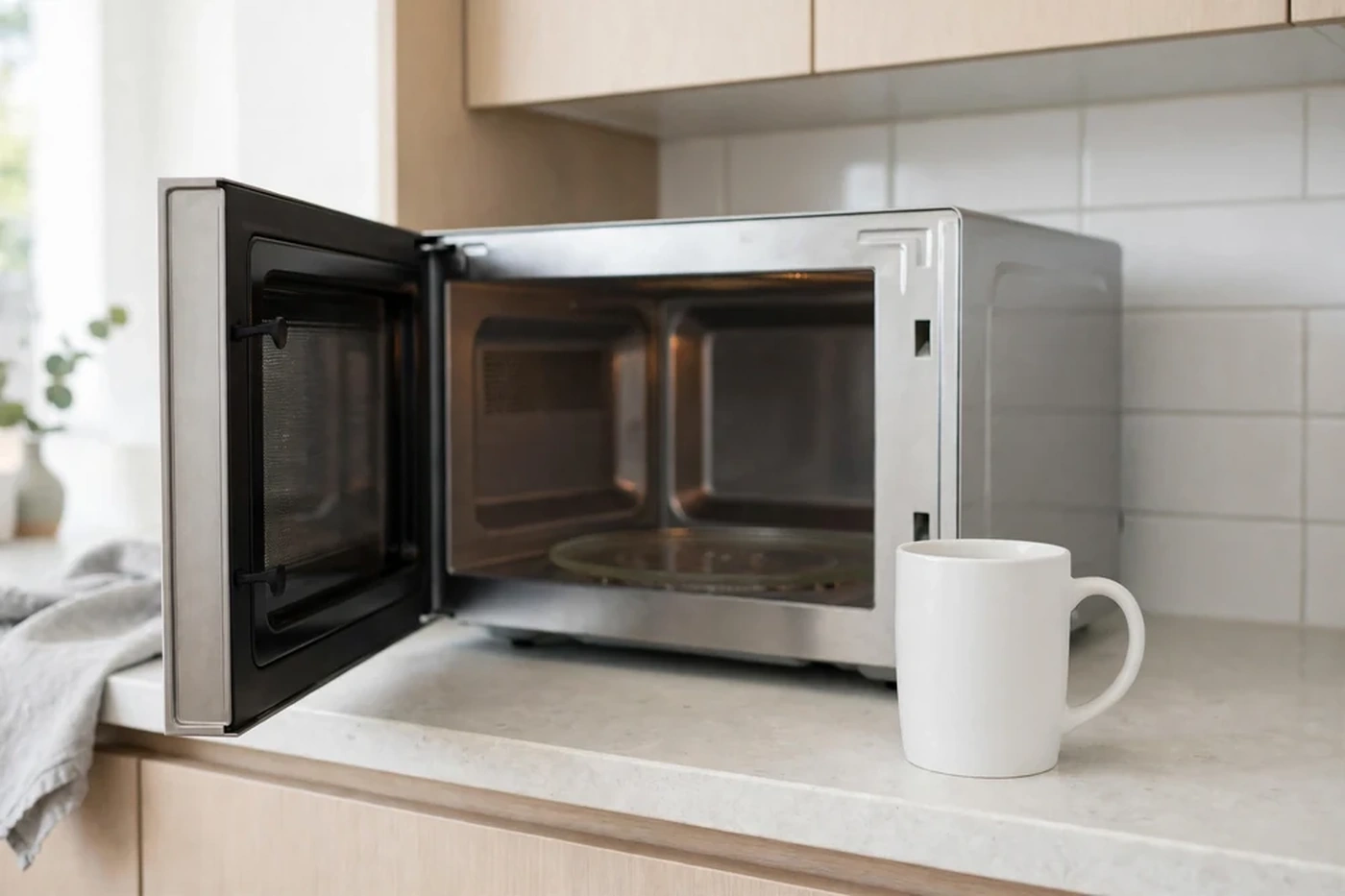
Yes, you can microwave ceramic, as long as it is plain glazed ceramic with no metallic decoration, no cracks, and a “microwave safe” label or a passed water test. A plain ceramic mug or plate is one of the best containers for reheating food.
The two instant disqualifiers are metallic trim and damage. Any gold, silver, platinum, or copper rim or painted metallic detail can spark and damage your microwave, so those pieces stay out, no exceptions. Cracked or chipped ceramic can fail under heat and should be retired from microwave duty. For the full container-by-container rundown, see Can You Microwave It? The Complete Safety Chart.
Why Your Ceramic Mug Gets Hot (And What It Means)
Here is the physics in one paragraph. Microwaves heat food by agitating water, fat, and sugar molecules. A perfect ceramic glaze contains almost none of those, so the microwaves pass through the mug and heat the coffee instead, and the mug only gets warm from touching the hot liquid. That is the normal, safe behavior: hot drink, merely warm mug.
When the mug itself comes out too hot to hold, something in the ceramic is absorbing microwave energy directly. The usual culprit is the clay body underneath the glaze. Low-fire earthenware and porous handmade pottery can hold tiny amounts of water in the clay itself, and that trapped moisture heats up fast. Some glazes also contain minerals that absorb microwaves more readily than a standard food-safe glaze does.
So a hot mug is a message, not a mystery. It tells you that particular piece is soaking up energy it should be letting through. It will still heat your drink, but it heats unevenly, it can become a burn risk, and repeated thermal stress shortens its life. If a mug consistently comes out scorching while the drink is only lukewarm, that piece is a poor microwave performer. Use it for serving, not for reheating, or replace it with a denser, properly glazed mug.
There is one more reason a mug feels hot that has nothing to do with the ceramic: time. Even a perfectly microwave-safe mug gets hot if you heat a large, very hot portion in it, because heat conducts from the food into the walls. The diagnostic question is whether the empty mug heats up on its own, which is exactly what the water test below checks.
The 30-Second Water Test: Check Any Unlabeled Ceramic
No label on the bottom? No problem. This simple test tells you whether a ceramic piece absorbs microwave energy, and it takes less than a minute.
Here is the method:
- Fill the mug or bowl you want to test about two-thirds full with plain water. Use water, not an empty vessel, because running a microwave empty can damage it.
- Place it in the microwave and heat on high for 30 seconds.
- Carefully feel the ceramic (not the water) right after the microwave stops.
Reading the result is straightforward. If the water is hot and the mug is cool or only slightly warm, the piece passes: it is letting microwaves through to the water instead of absorbing them, and it is fine for microwave use. If the mug itself is hot while the water is barely warm, the ceramic is absorbing the energy, and that piece should not go in the microwave.
A few notes for a fair test. Test each piece individually, because two mugs from the same set can behave differently, especially handmade ones. Let the piece cool to room temperature before testing if it was just washed in hot water. And if you want an even more thorough check, some guides recommend a longer version: an empty mug next to a separate glass measuring cup of water, heated for one minute, with the same pass-fail reading. A detailed walkthrough of the water test covers that one-minute variant step by step. The 30-second version is enough for everyday decisions.
One important limitation: the water test checks heat absorption, not glaze safety or metallic content. A mug can pass the water test and still be wrong for the microwave if it has a metallic gold rim (sparking risk) or a damaged glaze. Run the visual checks in the next sections too.
Metallic Gold Rims, Silver Trim, and Painted Metal: The Hard No
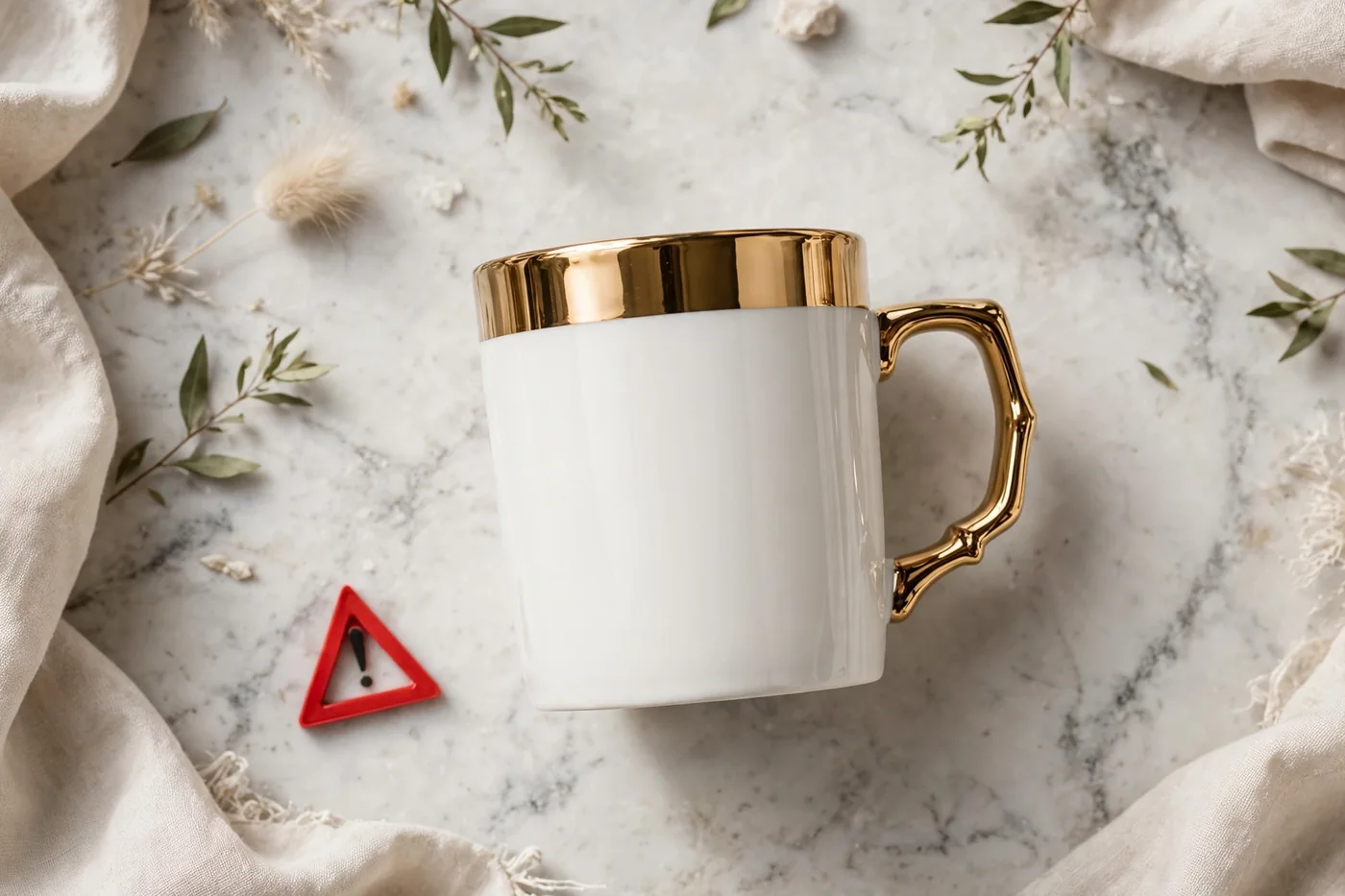
This is the rule with no exceptions: any ceramic with metallic decoration stays out of the microwave. That includes gold rims, silver or platinum bands, copper accents, metallic-painted patterns, and even metallic-looking foil in printed lettering. As one promotional mug manufacturer’s FAQ puts it plainly, a gold metallic rim and foil in the letters make the mug unfit for microwave use.
The reason is simple physics. Metal reflects microwaves instead of letting them pass through, and thin metallic films on ceramic heat up extremely fast at edges and points. The result is arcing: visible sparks that can scorch the rim, pit the microwave’s interior, and in bad cases damage the magnetron. It does not take long, and it does not need a full sheet of metal. A hairline gold pinstripe is enough.
How to spot metallic decoration before it sparks: look at the rim, handle edges, and any decorative bands in good light and tilt the piece. Real metallic lusters shine with a mirror-like reflective quality that regular colored glaze does not have. If the decoration looks like actual metal, treat it as metal. When in doubt, keep it out.
Note that this rule covers the microwave only. A gold-rimmed mug is perfectly fine for serving coffee poured from a kettle; it just cannot go in the microwave or, usually, the dishwasher, since harsh detergents dull metallic lusters over time. Our guide to metal in the microwave explains the arcing mechanism in more detail, and the aluminum foil guide covers the one narrow exception people always ask about.
Reading the Bottom of the Mug: Labels and Stamps
Before you test anything, flip the piece over. Most modern commercial ceramics carry care instructions stamped on the base, and they settle the question instantly.
Look for the words “microwave safe” or the microwave-safe symbol, usually a small microwave icon with wavy lines above it. That stamp is the manufacturer’s statement that the piece was designed and tested for microwave heating, and you can trust it. For a visual tour of every version of the symbol, see our guide to decoding microwave-safe symbols.
Also obey negative stamps. “Hand wash only” or “do not microwave” means the maker knows something you do not, usually a heat-sensitive glaze, metallic overglaze, or a body that cannot take thermal stress. Those pieces stay out regardless of how sturdy they feel.
No stamp at all is common on handmade pottery, vintage pieces, and cheap imports. That is exactly when you run the 30-second water test and the visual checks. An unstamped piece is not automatically unsafe; it is just untested, and now you are the tester.
Is Handmade Pottery Microwave Safe? The Honest Answer
Handmade pottery is the gray area of this whole topic, and it deserves a careful answer because the piece you love most is often the handmade one.
The concern with handmade pottery comes down to three things: the clay body, the glaze, and the firing. Many studio potters work with earthenware or stoneware fired at lower temperatures than industrial porcelain. Lower-fired clay stays slightly porous, and porous clay absorbs water. In the microwave, that absorbed moisture heats up, which is why a handmade mug can come out surprisingly hot and why repeated microwaving can eventually crack it through thermal stress.
The glaze is the second question. Reputable studio potters use food-safe glazes, but handmade and imported pottery, especially older or decorative pieces, can carry glazes with lead or cadmium. Those heavy metals are a concern for acidic foods and long storage more than for a quick microwave reheat, but a mug you cannot verify is a mug you should not heat food in repeatedly. If you bought it directly from the potter, ask them: “Is this microwave safe?” They will know their clay and glaze.
The practical routine for handmade pieces: run the 30-second water test on each piece individually, since handmade items vary even within a set. If it passes and the glaze is intact and from a trusted maker, short reheats are fine. If it comes out hot, or you cannot verify the glaze, use it for serving and choose a commercial microwave-safe mug for reheating. Never microwave handmade pottery with visible cracks or crazing (the fine network of cracks in old glaze), because those flaws concentrate stress.
Stoneware, Porcelain, and Bone China: The Ceramic Family Guide
Not all ceramics are built the same, and it helps to know where your piece sits in the family.
Stoneware is dense, high-fired, and generally excellent in the microwave. Most modern stoneware dinnerware is labeled microwave-safe and handles daily reheating without complaint. Its weight is the only downside: a big stoneware bowl of soup gets heavy when hot.
Porcelain is the refined sibling: high-fired, non-porous, and typically great in the microwave. Plain white porcelain is one of the best reheating surfaces you can own.
Bone china is porcelain’s delicate cousin, and the rule splits on decoration. Plain bone china with no metallic trim is microwave-safe. Bone china with a gold or platinum rim, which is extremely common on formal dinnerware, is not, because the metal trim will arc. Many fine china sets live their whole lives never seeing the inside of a microwave, and that is the correct treatment for the decorated ones.
Earthenware is the porous, low-fired member of the family: think terracotta, many handmade mugs, and rustic dinnerware. It is the most likely to absorb water, get hot, and crack under thermal stress. Some earthenware is perfectly usable for short reheats, but test each piece and keep expectations modest.
The pattern: denser and higher-fired is better, plain beats decorated, and the label beats guessing. Broader microwave-safe materials lists consistently rank plain ceramic and porcelain among the safest choices for reheating.
Cracks, Chips, and Crazing: When Ceramic Retires From the Microwave
Even a perfect ceramic has a lifespan in the microwave, and damage is the thing that ends it. Heat makes materials expand, and a crack focuses all that expansion stress into one weak line.
Small chips on the rim are mostly a comfort and hygiene issue, but chips that reach the glaze’s inner layers or expose the clay body mean the piece is compromised. Cracks, even hairline ones, are worse: microwaving a cracked mug can turn a hairline into a full split, sometimes while you are lifting a hot drink. Crazing, that fine spiderweb of cracks in old glaze, creates thousands of tiny stress points and can harbor bacteria in a way intact glaze does not.
The rule is simple: cracked ceramic does not go in the microwave. It does not matter if it was labeled safe when new; damage voids the label. Retire cracked pieces to pencil-holder duty or recycle them.
Thermal shock deserves a mention too. Moving ceramic straight from the freezer to a full-power microwave, or pouring boiling liquid into a cold mug, can crack even healthy pieces. Let refrigerated ceramic sit for a few minutes before microwaving, and avoid the most extreme temperature jumps.
Glaze Safety: Lead, Cadmium, and What Actually Matters
This question comes up constantly: does microwaving ceramic leach lead or cadmium from the glaze into food? The grounded answer is that properly manufactured modern ceramics from reputable brands use lead-free, cadmium-free glazes and are not a leaching risk in the microwave.
The risk concentrates in specific categories: very old vintage pieces, handmade pottery with unverified glazes, and cheap imported decorative ware that was never meant for food. With those, the concern is less about the microwave specifically and more about the piece itself: acidic foods like tomato sauce or orange juice can pull lead from a bad glaze during any contact, and heat speeds the process up.
Practical guidance: buy food ceramics from reputable makers, and treat decorative, vintage, or unknown-origin pieces as display, not dinnerware. If you have a beloved old piece you want to use, lead test swabs sold at hardware stores can screen the glaze surface, though they are a rough screen, not a lab test. When a glaze is damaged, flaking, or powdery, stop using the piece for food entirely.
For everyday modern mugs and plates from established brands, this is a non-issue. The microwave does not create a lead problem in a properly glazed modern mug; it only slightly accelerates a problem that would already exist in a bad glaze.
The Right Way to Microwave in Ceramic: Habits That Protect Both
A few habits get you the best performance and the longest life from your ceramic.
First, match the piece to the job. Use your tested, labeled, plain pieces for reheating, and keep the handmade, metallic-trimmed, and sentimental pieces for serving. This one habit prevents nearly every ceramic microwave mishap.
Second, stir and rest. Microwaves heat unevenly, and ceramic’s job is to hold the food while it heats, not to fix hot spots. Stir halfway through, and let the food rest a minute after the microwave stops so heat evens out.
Third, cover wisely. A microwave-safe lid or a plain paper towel over the bowl keeps splatters down and helps food heat evenly. Our paper towels in the microwave guide covers which towels are safe.
Fourth, handle with care coming out. Even microwave-safe ceramic gets hot through contact with hot food, so use a cloth or handle and set the hot piece on a trivet, not a cold stone countertop, to avoid thermal shock.
Fifth, wash gently. Most modern ceramic is dishwasher safe, but hand washing extends the life of any piece you care about, and it is mandatory for metallic-trimmed and handmade items.
Frequently Asked Questions
Direct answers to the ceramic questions people ask most.
Is ceramic microwave safe?
Yes, plain glazed ceramic with no metallic decoration is microwave-safe and is one of the best materials for reheating. Check the bottom for a “microwave safe” stamp; if there is none, run the 30-second water test. Keep ceramic with gold or silver trim, metallic paint, cracks, or chips out of the microwave.
Why does my ceramic mug get hot in the microwave?
The ceramic is absorbing microwave energy instead of letting it pass through to the drink. This usually means the clay body is porous (common in earthenware and handmade pottery) or the glaze contains minerals that absorb microwaves. A hot mug is a sign of a poor microwave performer: use that piece for serving and reheat in a mug that stays cool in the water test.
Can you microwave ceramic with a metallic gold rim?
No, never. Metallic gold, silver, platinum, or copper trim can arc and spark inside the microwave, scorching the rim and potentially damaging the oven. This applies to any metallic decoration, including thin pinstripes and metallic foil lettering. Use gold-rimmed pieces for serving only, and reheat the drink in a plain mug first.
How do you test if ceramic is microwave safe?
Fill the piece two-thirds full with water, microwave on high for 30 seconds, then feel the ceramic. If the water is hot and the mug is cool, it passes. If the mug is hot and the water is lukewarm, the ceramic absorbs energy and should stay out of the microwave. Also check for metallic decoration and damage, which the water test alone does not catch.
Is handmade pottery microwave safe?
It depends on the piece. Dense, high-fired handmade stoneware from a reputable potter is often fine, while porous low-fired earthenware tends to get hot and can crack. Test each handmade piece individually with the 30-second water test, ask the maker about the clay and glaze if you can, and never microwave handmade pieces with cracks, crazing, or unverified glazes.
Can you microwave stoneware?
Yes, in most cases. Modern stoneware dinnerware is dense, high-fired, and frequently labeled microwave-safe, making it excellent for reheating. Check the bottom stamp, keep metallic-decorated stoneware out, and avoid extreme temperature jumps like freezer-to-microwave. Handmade or rustic stoneware should get the water test first.
Can you microwave porcelain and bone china?
Plain porcelain is excellent in the microwave: dense, non-porous, and heat-tolerant. Plain bone china is also fine. The exception is decorated bone china with gold, silver, or platinum rims or bands, which is very common on formal sets; the metal trim will arc, so those pieces never go in the microwave.
Why did my ceramic plate crack in the microwave?
Thermal stress is the usual cause: a flaw, thin spot, or existing micro-crack concentrated the expansion from heating until the ceramic gave way. Rapid temperature changes, like a cold plate under a very hot portion or a long high-power run, make it more likely. Once a piece has cracked, retire it from microwave use entirely, since the crack will only grow.
Can you microwave a cracked or chipped ceramic mug?
No. Cracks focus heat stress and can split open during microwaving, sometimes while you are holding a hot drink. Chips that expose the clay body are also a sign the piece is compromised. Damage voids any microwave-safe label the piece once had. Retire cracked mugs to non-food uses.
Does the glaze on ceramic leach lead in the microwave?
Modern ceramics from reputable brands use lead-free glazes and are not a leaching risk. The concern applies to vintage pieces, handmade pottery with unverified glazes, and cheap decorative imports, where acidic foods and heat together can pull heavy metals from a bad glaze. If you cannot verify a glaze, do not heat food in the piece.
Can you microwave ceramic with metallic paint decorations?
No. Metallic paint behaves like any other metal in the microwave: it can arc, spark, and scorch. This includes metallic gold stars, silver snowflakes, copper geometric patterns, and any decoration with a mirror-like metallic luster. Regular non-metallic colored glaze is fine; it is the actual metal content that causes the problem.
Is vintage or imported ceramic safe in the microwave?
Treat it as guilty until proven innocent. Vintage and unknown-origin imported ceramics may have lead or cadmium glazes, low-fire porous bodies, and hidden metallic overglazes. Run the water test, inspect for metallic luster under bright light, and consider a lead test swab for anything you want to eat from regularly. When in doubt, display it and reheat in a modern labeled mug.
Can you put cold ceramic straight into the microwave?
A refrigerated mug or plate is generally fine, but give it a few minutes on the counter first if you can. The real danger is extreme jumps: freezer-cold ceramic into a full-power microwave, or boiling liquid into a cold mug, can crack even healthy pieces through thermal shock. Gentle transitions keep ceramic alive longer.
How long can ceramic stay in the microwave?
Ceramic has no meaningful time limit for normal reheating; it is built for heat. A few minutes at normal power is completely comfortable for any microwave-safe piece. For very long sessions, like ten-plus minutes of cooking, glass is the slightly better choice because it handles sustained heat with less thermal stress, but ceramic will not fail you in any ordinary reheating job.
The Bottom Line
Can you microwave ceramic? For the plain glazed mug in your hand right now, almost certainly yes. Ceramic is one of the most reliable microwave materials ever made: stable, non-reactive, and honest about its limits.
The entire decision fits on an index card. Plain and labeled, or plain and water-test-passed, means go. Metallic trim of any kind means no, forever. Cracks and chips mean retired. Handmade and vintage mean test first and verify the glaze. Follow those four lines and you will never spark a gold rim, scorch a good mug, or wonder about a thrift-store find again. And when the question is about any other material, the complete microwave safety chart has the answer.
