

Can You Microwave Tortillas? Yes, and Here Is Exactly How
You are standing in the kitchen with a stack of cold tortillas and tacos to make in ten minutes. The skillet is in the sink, the oven takes forever to preheat, and the microwave is right there. So you ask the obvious question: can you microwave tortillas without turning them into rubber discs that crack the moment you fold them?
Yes, you can microwave tortillas. It is fast, it is safe, and when you do it right the tortillas come out warm, soft, and flexible. The entire trick fits in one sentence: wrap the tortillas in a lightly damp paper towel and heat them in short bursts. Tortilla maker Mission Foods gives the same official advice on its tortilla FAQ page. Once you know the times and the two or three ways people mess it up, you will never eat a rubbery tortilla again.
Why Microwaved Tortillas Turn Rubbery (and How to Fix It)
The rubbery texture is not random. It is physics. A tortilla is basically a thin sheet of starch and water. Microwaves heat by exciting water molecules, so they drive moisture out of the tortilla as steam. When that moisture escapes and the starch cools, the starch firms up and tightens. That is the chewy, leathery bite people hate.
The fix is to give the steam somewhere helpful to go. A damp paper towel wrapped around the stack releases a little extra steam as it heats, and that steam settles on the tortilla surfaces instead of escaping into the microwave. The surfaces stay moist, the starch stays relaxed, and the tortillas come out pliable. Two things matter most: the towel must be damp, not soaking wet, and the heating time must be short. A sopping towel makes tortillas gummy. Too much time makes them tough no matter what you wrap them in.
Resting matters too. When the microwave stops, the tortillas are still steaming. Leave them wrapped for 30 to 60 seconds and the moisture redistributes through the stack. Unwrap them immediately and the surfaces dry out before you even get the fillings ready. Keep them covered until the moment you serve.
How to Microwave Flour Tortillas: Step by Step
Flour tortillas are the forgiving kind. They are soft to begin with, so the microwave method works beautifully on them.
- Dampen a paper towel. Run a clean paper towel under the tap, then wring it out until it is just damp. It should feel moist, not dripping.
- Stack 4 to 6 tortillas. That is the sweet spot for even heating. More than that and the middle stays cold while the edges overcook.
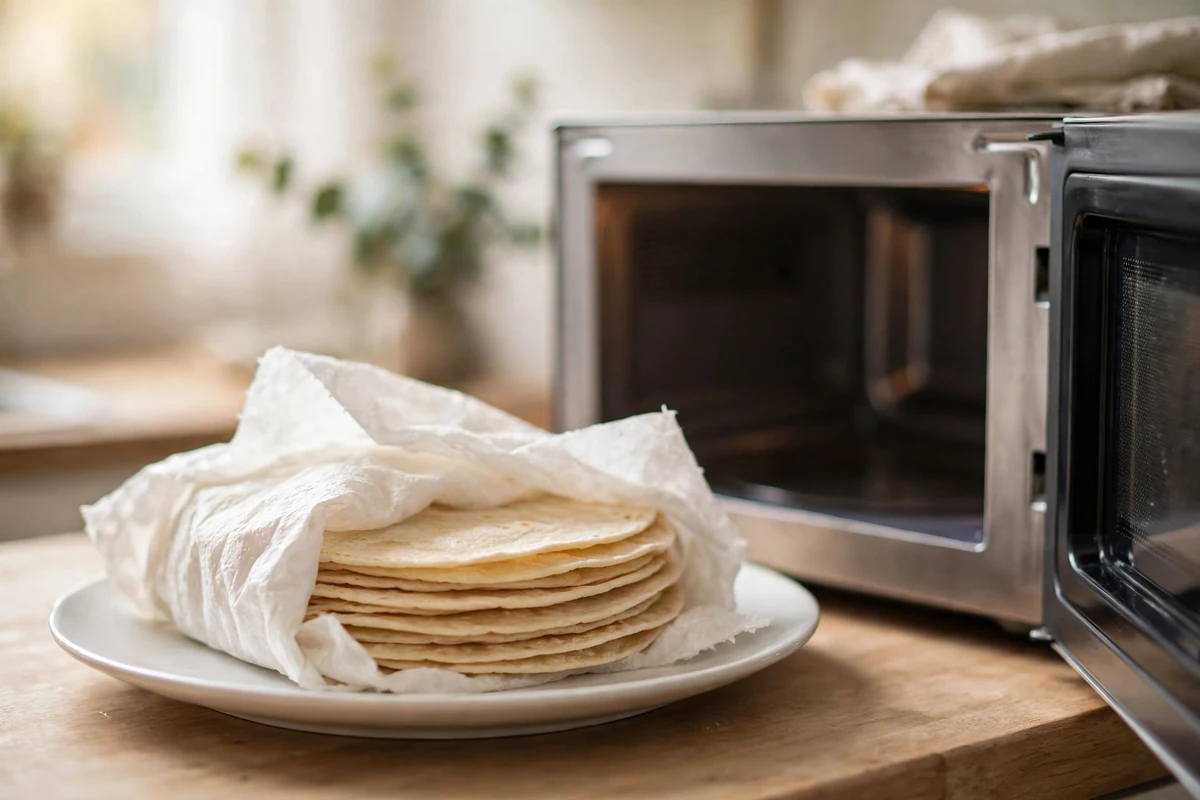
- Wrap the stack. Lay the tortillas in the center of the damp towel and fold it over them, or sandwich the stack between two damp towels.
- Place on a microwave-safe plate. A plain ceramic or glass plate is perfect. Skip anything metal or with metallic trim.
- Heat 30 to 45 seconds on high. For 1 or 2 tortillas, 20 to 30 seconds is enough. Start at the low end; you can always add 10 seconds.
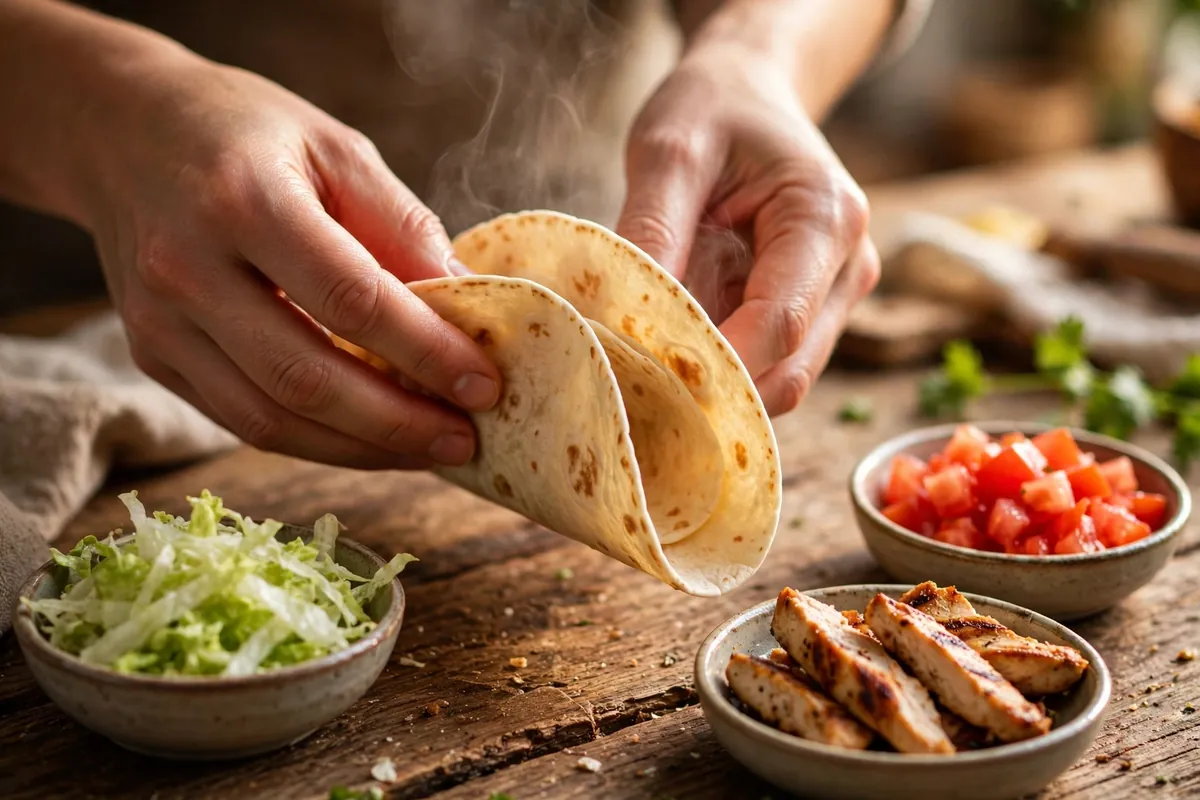
- Rest wrapped, then serve. Let the bundle sit 30 to 60 seconds, then unwrap and serve immediately. Keep the stack covered with the towel until everyone has one.
How to Microwave Corn Tortillas Without Cracking
Corn tortillas are trickier. They are thinner, drier, and lower in fat than flour tortillas, so they lose moisture faster and crack when they dry out. The method is the same but the details shift a little.
First, make the towel slightly damper than you would for flour tortillas. Corn tortillas need the extra steam. Second, give them a touch more time: 5 to 6 corn tortillas need 45 to 60 seconds on high, versus 30 to 45 for the same number of flour tortillas. Third, and this matters most, let them rest wrapped for a full minute after heating. That rest lets the steam soften the corn tortillas all the way through, which is what keeps them from cracking when you fold them.
If a corn tortilla still cracks, it was either overheated or under-wrapped. Next time, add 10 seconds less time and a damper towel. Dry heat is the enemy of corn tortillas. Some people warm corn tortillas two at a time for the most even results, and that works well if you are making tacos for one or two people.
Corn vs Flour Tortillas in the Microwave
Here is how the two compare side by side, so you can adjust on the fly.
| Flour Tortillas | Corn Tortillas | |
|---|---|---|
| Best batch size | 4 to 6 | 4 to 6 |
| Time on high | 30 to 45 seconds | 45 to 60 seconds |
| Towel dampness | Lightly damp | Noticeably damp |
| Rest time | 30 to 60 seconds | About 1 minute |
| Forgiveness | High: stays soft even if slightly overdone | Low: cracks if dried out |
| Best for | Burritos, wraps, quesadillas | Tacos, enchiladas |
The takeaway is straightforward. Flour tortillas are the easy win and the best choice if you are microwaving for a crowd. Corn tortillas reward a little extra attention to moisture, and they punish overheating faster. Neither type needs oil, water baths, or special equipment. The damp towel is the whole technique.
How Long to Microwave Tortillas: Time Chart
Microwave wattages vary, so treat these times as starting points. Begin at the low end, check, and add 10 second bursts. The tortilla is done when it is warm and flexible, not hot and stiff.
| Tortillas | Type | Time on High |
|---|---|---|
| 1 to 2 | Flour (any size) | 20 to 30 seconds |
| 3 to 4 | Flour (large/burrito size) | 30 to 45 seconds |
| 4 to 6 | Flour (small/taco size) | 30 to 45 seconds |
| 5 to 6 | Corn (standard) | 45 to 60 seconds |
| 1 | Corn (single) | 20 to 30 seconds |
These ranges line up with both the manufacturer package directions and the times reported by cooking sites that tested the method. If your microwave is under 900 watts, add about 10 seconds to each range. If it is a powerful 1200 watt model, start 10 seconds lower. After one or two tries you will know your own microwave’s timing by heart.
Can You Microwave Frozen Tortillas?
This is where you should listen to the package, because the official advice is stricter than most blogs admit. Mission Foods states clearly in its FAQ that flour and corn tortillas should never be defrosted in the microwave, and that the right move is to let them thaw in the refrigerator for a day or two before using them. The reason is texture. Microwaves thaw unevenly, so the edges of a frozen tortilla can start cooking while the center is still icy. That gives you a tortilla that is half rubbery and half cold, and no amount of rewrapping fixes it.
So the honest answer has two parts. Can you microwave a tortilla straight from frozen in an emergency? Technically yes, it will get warm. Should you? No. Plan ahead and move the bag from the freezer to the fridge the day before taco night. Once thawed, warm them with the normal damp towel method and they will taste like you just bought them. For storage, keep this in mind too: the manufacturer advises refrigerating tortillas after opening to keep them fresh, and that single habit does more for texture than any reheating trick.
Reheating Burritos and Quesadillas: The 165°F Rule
Warming a plain tortilla is one thing. Reheating a burrito stuffed with chicken or a quesadilla with meat is a food safety question, and here the rules are firmer. The USDA guidance on leftovers is clear: reheated food should reach 165°F (74°C) all the way through, measured with a food thermometer. Michigan State University Extension repeats this exact guidance in its safe leftovers reheating guide, adding that you should cover the food, rotate it, and check the temperature in several spots because microwaves heat unevenly and leave cold spots.
In practice, that means a plain cheese quesadilla just needs to be hot and melty, but a chicken burrito needs real attention. Microwave it for 1 to 2 minutes, flip it halfway, let it rest a minute, and check that the center is steaming hot. Thick burritos are the classic cold spot trap: the outside can be scalding while the middle is lukewarm. Cutting the burrito in half and heating the halves cut side up solves this neatly. If you reheat tortilla-based leftovers often, our article on reheating rice safely covers the same 165°F principle with more detail on cold spots.
One more safety note from the USDA guidance, via Food Safety News: do not reheat leftovers more than once, and refrigerate anything you do not finish within two hours. A burrito that has been reheated, cooled, and reheated again is a texture disaster anyway, so this rule costs you nothing.
Microwave vs Skillet vs Oven: Which Method Wins?
The microwave is the fastest method, but it is not the best at everything. Here is an honest comparison so you can pick the right tool for the moment.
Microwave wins on speed and softness. Nothing beats 30 seconds for warming a small stack, and the steam method keeps tortillas pliable. What you do not get is flavor. There is no browning, no char, no toasted spots. If you want restaurant style tacos with blistered tortillas, the microwave alone will not get you there.
Skillet or comal wins on flavor and texture. Fifteen to 30 seconds per side in a dry hot pan gives you light brown spots and a slightly chewy bite that the microwave cannot copy. The downside is hands on time. You are standing at the stove flipping tortillas one by one, which gets old when you are feeding six people.
Oven wins for crowds. Wrap a big stack in foil and warm at 350°F for about 10 minutes. Every tortilla comes out evenly warm with zero babysitting. The tradeoff is time: preheating plus 10 minutes is slow for a weeknight.
The smart move is combining methods. Microwave the stack to warm it through, then finish individual tortillas for 10 seconds per side in a dry skillet if you want those toasted spots. You get speed plus flavor, and it takes barely longer than microwaving alone.
7 Mistakes That Ruin Microwaved Tortillas
Almost every rubbery tortilla story comes down to one of these seven mistakes. Run through the list and you will know exactly what went wrong last time.
1. Skipping the damp towel. This is the number one mistake by a mile. A bare tortilla in the microwave loses its surface moisture in seconds. The towel is not optional decoration. It is the technique.
2. Using a soaking wet towel. The opposite error. A dripping towel steams the tortillas into soggy, gummy discs that fall apart. Wring the towel out until it is just damp. If you are unsure, err on the drier side.
3. Microwaving too long. Two minutes on high will destroy any tortilla. Start short. You can always add 10 seconds, but you cannot reverse starch damage once it happens.
4. Heating too many at once. A stack of 12 tortillas heats unevenly no matter what you do. The outer ones overcook while the center stays cold. Stick to 4 to 6 per batch.
5. Wrapping in plastic wrap that is not microwave-safe. Regular plastic wrap can melt or trap too much heat, giving tortillas a gummy texture. Only use wrap labeled microwave-safe, and even then a damp towel works better. Our guide on which plastics are microwave-safe explains what the labels actually mean.
6. Reheating the same tortillas twice. Every heating cycle drives out more moisture. A tortilla microwaved, cooled, and microwaved again will be noticeably tougher. Warm only what you will eat.
7. Leaving them uncovered after heating. Tortillas keep losing moisture to the air after they come out. If they sit naked on a plate for five minutes while you chop toppings, they will stiffen. Keep them wrapped until serving.
How to Keep Tortillas Warm After Microwaving
Getting tortillas warm is only half the battle. Keeping them warm and soft while everyone serves themselves is the other half. The simplest method is to leave them wrapped in the damp towel and then wrap that bundle in a dry kitchen towel. The dry outer towel insulates while the damp inner towel keeps the steam in. This holds tortillas nicely for 15 to 20 minutes.
If you warm tortillas often, a tortilla warmer is worth the few dollars. These are lidded containers, usually ceramic or plastic, designed to hold a stack and trap steam. Serve the tortillas on a microwave-safe plate if you want to reheat the plate later without transferring everything; our article on microwaving paper plates covers which disposable plates can handle the job. Avoid the temptation to hold tortillas in a warm oven for a long time. Past 20 minutes or so, even covered tortillas start drying out.
How to Revive Stale Tortillas in the Microwave
Day old tortillas that have gone a bit stiff are not dead. The microwave is actually good at bringing them back, because the problem with a stale tortilla is lost surface moisture, which is exactly what the steam method replaces. Wrap the stale tortillas in a damp paper towel, slightly damper than usual, and microwave in 15 second bursts. Check after each burst by trying to fold one. The moment it bends without cracking, stop.
Be realistic about the limits. This works for tortillas that are merely stiff or dry around the edges. It does not work for tortillas that are brittle, smell off, or show any mold. And per the package guidance, refrigerate tortillas after opening so they go stale slower in the first place. If your tortillas are past saving, crumble them: stale corn tortillas make excellent chilaquiles, and stale flour tortillas cut into strips crisp up nicely in a skillet for soup toppings.
Storing Tortillas So They Stay Soft Longer
The best microwaving trick in the world cannot fix a tortilla that was stored badly. Tortillas go stale through moisture loss and starch firming, both of which start the moment the bag is opened. Press the air out of the bag and seal it tightly after every use. The manufacturer advises refrigerating tortillas after opening, which slows staling noticeably compared to leaving them on the counter.
For longer storage, the freezer works well. Stack tortillas with small squares of parchment between them so they do not freeze into a solid block, slide the stack into a freezer bag, and press out the air. Remember the rule from earlier: thaw frozen tortillas in the refrigerator for a day or two rather than in the microwave. And always check the date on the package. A tortilla that is past its prime will fight you no matter how perfect your technique is.
Frequently Asked Questions About Microwaving Tortillas
These are the questions people actually ask about microwaving tortillas, answered directly.
Can you microwave tortillas?
Yes, you can microwave tortillas safely. Wrap them in a lightly damp paper towel and heat in short bursts: 20 to 30 seconds for 1 or 2 tortillas, or 30 to 45 seconds for a stack of 4 to 6. The damp towel creates steam that keeps them soft and flexible instead of rubbery.
How long do you microwave tortillas?
Heat 1 to 2 flour tortillas for 20 to 30 seconds, 4 to 6 flour tortillas for 30 to 45 seconds, and 5 to 6 corn tortillas for 45 to 60 seconds, all on high and wrapped in a damp paper towel. Start at the low end of the range, check, and add 10 second bursts if needed. Lower wattage microwaves need about 10 extra seconds.
Why do my tortillas get hard and rubbery in the microwave?
Overheating is the cause. Microwaves drive water out of the tortilla as steam, and once the moisture is gone the starch firms up into a chewy, leathery texture. Heating too long, skipping the damp towel, or using full power on a thin tortilla all cause it. Use a damp towel, keep the time short, and stop as soon as the tortillas are warm and flexible.
Do you need a damp paper towel to microwave tortillas?
Yes, a damp paper towel makes the difference between soft tortillas and ruined ones. The towel releases steam that keeps the tortilla surfaces moist while they warm. Use a plain white towel, wring it until just damp, and wrap the stack loosely. A dry towel does nothing and a soaking wet towel makes tortillas soggy.
Can you microwave corn tortillas?
Yes, you can microwave corn tortillas, but they need slightly more moisture and time than flour tortillas. Wrap 5 to 6 in a damp paper towel and heat 45 to 60 seconds, then rest them wrapped for about a minute. Corn tortillas crack when they dry out, so do not overheat them and keep them covered until serving.
Can you microwave flour tortillas?
Yes, flour tortillas are the easiest kind to microwave. They are naturally soft and flexible, so they forgive small timing mistakes. Wrap up to 6 in a damp paper towel and heat 30 to 45 seconds on high. They come out warm and pliable and ready to fold.
How many tortillas can you microwave at one time?
Heat 4 to 6 tortillas per batch for the most even results. Larger stacks warm unevenly: the outside overcooks while the middle stays cold. If you need more, do two quick batches. Each batch takes under a minute, so it is still faster than the oven.
Can you microwave frozen tortillas?
You should not defrost tortillas in the microwave. The manufacturer advises thawing them in the refrigerator for a day or two instead, because microwaves thaw unevenly and leave tortillas half rubbery and half cold. Plan ahead, thaw in the fridge, then warm with the normal damp towel method.
Is it safe to microwave tortillas in plastic wrap?
Only if the wrap is labeled microwave-safe. Regular plastic wrap can melt, trap too much heat, and give tortillas a gummy texture. A damp paper towel works better and has none of these risks. Never use plastic wrap that is not labeled for microwave use.
Can you microwave a burrito?
Yes, you can microwave a burrito. Heat it 1 to 2 minutes, flipping halfway through, and let it rest a minute before eating. For burritos with meat, poultry, or egg filling, make sure the center reaches 165°F, since microwaves leave cold spots. Cutting a thick burrito in half and heating the halves cut side up warms the middle faster.
Can you microwave a quesadilla?
Yes, a quesadilla microwaves well because the cheese melts fast. Heat it 30 to 60 seconds until the cheese is fully melted. The tortilla will be soft rather than crispy. If you want a crisp exterior, finish it 30 seconds per side in a dry skillet after microwaving.
Do microwaved tortillas taste as good as skillet warmed tortillas?
Honestly, not quite. The microwave wins on softness and speed, but a dry skillet adds light browning and a toasted flavor the microwave cannot create. For the best of both, microwave the stack to warm it through, then give each tortilla 10 seconds per side in a hot dry skillet for those toasted spots.
How do you keep tortillas soft after microwaving?
Keep them wrapped. Leave the stack in the damp towel, then wrap that bundle in a dry kitchen towel or place it in a tortilla warmer with the lid on. This holds them warm and soft for 15 to 20 minutes. Do not leave them uncovered on a plate, because they start stiffening within a couple of minutes.
Can you microwave tortillas without a paper towel?
You can, but they will dry out and turn chewy fast. If you have no paper towels, a clean damp kitchen towel works the same way. A microwave-safe lid or an inverted microwave-safe bowl over the plate also traps steam, though the towel method gives more even results.
Can you reheat tortillas in the microwave more than once?
You can, but each round drives out more moisture and makes the tortilla tougher. It is better to warm only what you will eat. From a food safety angle, the USDA guidance is to reheat leftovers only once and discard what is not eaten, which lines up neatly with the texture advice.
The Bottom Line
Can you microwave tortillas? Absolutely. Wrap 4 to 6 in a lightly damp paper towel, heat 30 to 45 seconds, rest them wrapped, and serve. That is the whole method, and it comes straight from the manufacturer’s own package directions. Flour tortillas are forgiving, corn tortillas want a little more moisture and patience, and frozen tortillas should thaw in the fridge first.
The microwave will never give you the char of a comal, but for speed and softness nothing beats it. Keep the towel damp, keep the time short, and keep the stack covered until serving, and you will never eat a rubbery tortilla again. For more answers in this series, start with our complete can you microwave it safety chart.
