

It is 8 pm and you are standing in the kitchen, staring at last night’s pasta in a plastic tub. Dinner needs to be hot in two minutes, and the easiest move is to peel back the lid, slide the whole tub into the microwave, and press start. Then the doubt hits. Can you microwave plastic without chemicals leaking into your food? Every headline seems to disagree with the last one, and the tub in your hand says nothing helpful.
Here is the honest version of the answer. Can you microwave plastic? Yes, some of it, but only when the container was made for that job and clearly labeled for it. Yogurt cups, takeout trays, and margarine tubs should never see the inside of your microwave. This guide shows you how to tell the difference in seconds, which resin codes you can trust, why heat changes the rules, and the exact steps that keep your reheating routine safe. For the quick version across every material, keep our Can You Microwave It? The Complete Safety Chart bookmarked.
Can You Microwave Plastic? The Short Answer
Can you microwave plastic that carries a microwave-safe label? Yes, you can. The FDA requires food-contact plastics to be tested for their intended use, so a container labeled microwave-safe was evaluated for microwave heating before it reached the shelf.
Anything without that label is a gamble. The safe move is to transfer the food to glass or ceramic and reheat it there. This single habit removes almost all of the risk people worry about, because it takes the questionable container out of the equation entirely.
Why does this question cause so much confusion? Because “plastic” is not one material. A sturdy reusable container made from polypropylene and a flimsy yogurt cup are both plastic, but they behave very differently under heat. One was engineered for it. The other was engineered to be cheap and disposable. Treating them the same is where most mistakes happen.
The label is the deciding factor, not the look or feel of the container. A thick, expensive-looking tub can still be unsafe if it was designed only for cold storage. Anyone asking “can you microwave plastic” based on how sturdy a tub feels is asking the wrong question. Flip it over, read the bottom, and let the label make the decision for you.
What “Microwave-Safe” Actually Means on Plastic
Microwave-safe means the manufacturer tested the container for microwave use and it passed FDA food-contact requirements for that intended use. It is a tested claim, not a guess.
According to KitchPrep’s explanation of FDA premarket review, food-contact materials must be authorized by the FDA before they go on the market, and for products meant for the microwave, the review covers whether the material stays physically durable and does not release harmful substances under microwave conditions. That is the regulatory backbone behind the label.
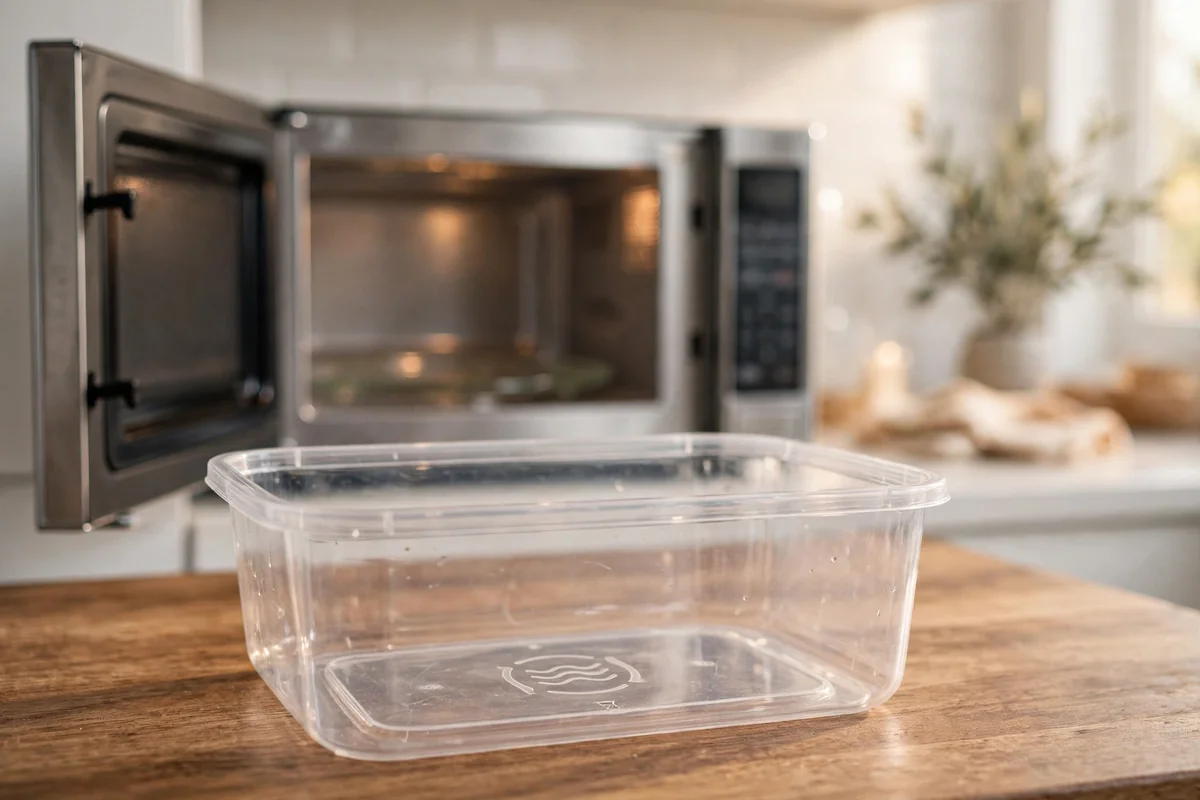
Look for the microwave-safe symbol on the bottom of the container. It usually looks like wavy lines, sometimes inside a small microwave icon, and it may be paired with the words “microwave safe.” Our guide to microwave-safe symbols decoded shows every version of this mark so you can spot it at a glance.
One honest caveat is worth knowing. The label means the container passed tests for typical microwave use when handled as directed. It does not mean the container survives every situation. Overheating food for a very long time, microwaving with the lid sealed tight, or reheating extremely oily food on maximum power can still damage it. Use the container the way the label describes, and replace it when it starts to look worn.
Can You Microwave Plastic by Resin Code? The 1-7 Chart
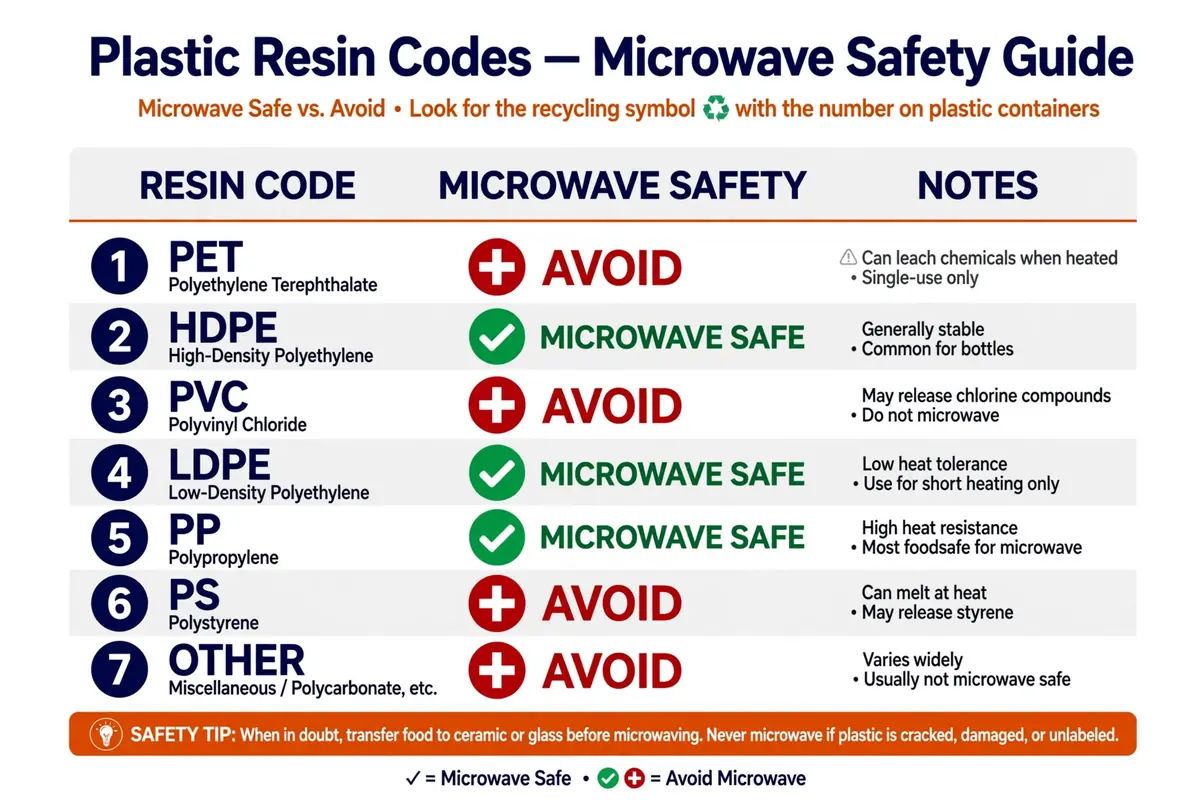
Can you microwave plastic based on the little number inside the recycling triangle? Sort of. Resin codes are a useful backup clue, but they never replace the microwave-safe label. Codes 2 and 5 are generally the safer bets, while codes 1, 3, 6, and 7 should stay out of the microwave unless the item is specifically labeled safe.
Here is the full chart:
| Code | Plastic name | You usually find it in | Microwave guidance |
|---|---|---|---|
| 1 | PET or PETE | Water bottles, salad containers, peanut butter jars | Avoid. Not made for heat; it can warp and soften. |
| 2 | HDPE | Milk jugs, detergent bottles, some food tubs | Safer type, but only microwave it if labeled microwave-safe. |
| 3 | PVC | Some cling wraps, blister packaging, older containers | Avoid. Can release harmful substances when heated. |
| 4 | LDPE | Squeeze bottles, bread bags, some lids | Not designed for microwaving; check the label. |
| 5 | PP (polypropylene) | Reusable meal-prep containers, microwave meal trays | The best choice for microwaving, but still check the label. |
| 6 | PS (polystyrene) | Foam cups, takeout clamshells, disposable plates | Avoid. It can break down and leach styrene under heat. |
| 7 | Other (includes polycarbonate) | Large water jugs, some reusable bottles | Avoid unless labeled microwave-safe; may contain BPA. |
How do you read the code? Turn the container over and look for the triangle of chasing arrows with a number in the middle, often with letters like “PP” or “PET” underneath. Tom’s Guide’s expert roundup on microwaving plastic confirms this same ranking, noting that plastics 2 and 5 are usually safe while 1, 3, 6, and 7 are not.
Remember the limit of this system. If you ask “can you microwave plastic” and answer by code alone, you are only halfway there. A resin code tells you what the plastic is, not what it was tested for. A code 5 container that was manufactured as a cold-storage tub is still not a reheating container. The code narrows the field; the microwave-safe label makes the final call.
Why Heat Makes Plastic a Different Story
Heat speeds up chemical migration, which is why a tub that stores food safely in the fridge can become a problem in the microwave. This is the single most important idea behind the whole topic.
Two groups of chemicals drive most of the concern. Bisphenol A (BPA) is used to harden some plastics, and phthalates are used to make plastics flexible. Both are considered endocrine disruptors, meaning they can interfere with hormone systems in the body. Heat loosens the chemical bonds in plastic, so more of these substances can move from the container into your food.
Microplastics are the newer worry. Recent research has found that heating plastic containers can release huge numbers of tiny plastic particles into food. Scientists are still studying what these particles do inside the human body, and the honest answer is that nobody knows the full picture yet. That uncertainty is exactly why cheap precautions make sense.
Wear makes everything worse. Containers that are scratched, stained, cracked, or warped release more chemicals than new ones. Scrubbing with steel wool, repeated dishwasher cycles, and years of use all break down the surface. When a container looks tired, retire it instead of microwaving it again.
Acidic foods add another wrinkle. Tomato sauce, citrus, and vinegar-based dishes interact more aggressively with plastic surfaces, especially when hot. If your container is stained orange from pasta sauce, that staining is a visible sign of this interaction. It does not automatically mean the container is dangerous, but it is a good signal that the container is aging and should be replaced before you keep microwaving plastic in it.
Expert guidance points the same direction. The American Academy of Pediatrics has advised against microwaving food in plastic containers and against putting plastic containers in the dishwasher, noting that children may be especially sensitive to these chemicals. Digital Trends’ report on the AAP research summarizes the findings clearly. You do not need to panic, but the guidance from pediatric researchers is worth taking seriously.
How to Microwave Plastic Safely: 7 Rules That Matter
Can you microwave plastic safely with the right technique? Yes, when the container is labeled microwave-safe and you follow these seven rules. They take seconds and remove nearly all of the risk.
1. Check the label before anything else. Flip the container over and confirm the microwave-safe symbol or wording. No label means no microwave. When the label is worn off or you cannot read it, treat the container as unsafe and check the label guidance.
2. Vent the lid or leave it loose. Sealed lids trap steam, build pressure, and can warp the container or pop off violently. Set the lid ajar or use a microwave-safe cover instead. Steam needs an escape route.
3. Never let plastic wrap touch the food. This is one of the most repeated rules in food safety guidance, and people still get it wrong. Drape microwave-safe wrap loosely over the dish so steam can escape, and keep a gap between the wrap and the food. Some wrap labels specify at least one inch of space. If you want a simpler option, cover food with a paper towel in the microwave instead.
4. Use short intervals and stir halfway. Microwaves heat unevenly, and hot spots can overheat one area of the container. Heating in one to two minute bursts with a stir in between keeps temperatures even and avoids scorching the plastic.
5. Be careful with fatty and sugary foods. Oil, cheese, and sugary sauces get much hotter than watery foods, sometimes hot enough to soften plastic that would otherwise be fine. For these foods, glass or ceramic is the smarter choice even when your plastic container is labeled safe.
6. Retire old, scratched, or stained containers. If the container is cloudy, deeply scratched, warped, or holds onto food smells and stains, its surface has broken down. A worn container releases more chemicals under heat, so replace it. This applies even to containers that were microwave-safe when new.
7. When in doubt, transfer the food. This rule overrides all the others. A glass or ceramic dish removes the question completely. Keep one microwave-safe glass container near the microwave so the easy choice is also the safe choice.
Can You Microwave Plastic for Cooking, or Only Reheating?
Can you microwave plastic for full cooking, not just a quick reheat? Reheating is the safer use. Most microwave-safe containers were tested for short reheating cycles, not for cooking raw food from scratch over long times.
Time and temperature are what drive chemical migration. A two-minute reheat of leftovers exposes the plastic to far less heat stress than cooking raw chicken for fifteen minutes. The longer plastic stays hot, and the hotter it gets, the more the material is stressed. This is why manufacturers test containers for specific uses, and why a label sometimes says reheating rather than cooking.
Fatty, sugary, and oily foods raise the stakes further. Oil can reach temperatures well above the boiling point of water in a microwave, which pushes plastic closer to its limits. If you are cooking something rich or cooking for a long time, glass or ceramic handles it without any question. Save the plastic containers for short, simple reheats.
The practical rule is simple. Can you microwave plastic to warm up yesterday’s soup? Yes, if it is labeled safe. Can you microwave plastic to cook a meal from raw ingredients? That asks more of the material than it was tested for, so choose glass or ceramic instead. Match the job to the container, and you stay on the safe side of the label.
Plastic You Should Never Put in the Microwave
Never microwave single-use plastics, foam containers, or any plastic that is cracked, warped, melting, or giving off a chemical smell. These are the hard lines, and they are not negotiable.
Single-use containers top the list. Yogurt cups, margarine tubs, sour cream containers, and disposable takeout trays were designed for one job: holding cold food briefly. They are thin, they soften fast under heat, and they were never tested for reheating. Transfer the food to a proper dish first. The USDA’s food safety guidance lists cold-storage containers and foam trays among items that should not be used for microwave cooking, a point summarized well in The Kitchn’s USDA-based rules for plastic in the microwave.
Foam deserves its own warning. Polystyrene foam cups and clamshells can break down when heated, and the material can leach styrene into food. Some foam containers carry a microwave-safe label and were tested for it, but unmarked foam should never go in. This is also why cup noodles in their foam cups need care: check the cup before you heat it.
Water bottles and thin disposable bottles are another clear no. PET plastic softens at relatively low temperatures, and a bottle can deform, leak, or release substances when heated. Never microwave a water bottle to warm its contents.
Watch for the warning signs during heating. If plastic starts melting, bubbling, warping, or giving off a sharp chemical smell, stop the microwave, let it cool, and throw the food away. Do not try to salvage a meal that sat in melting plastic. For the full list of danger items beyond plastic, see our guide to things you should never put in the microwave.
Frequently Asked Questions
These are the questions people actually ask about microwaving plastic, answered directly.
Can you microwave plastic containers?
Yes, but only containers specifically labeled microwave-safe. Flip the container over and look for the microwave-safe symbol or wording on the bottom. If there is no label, transfer the food to glass or ceramic before heating.
What plastic is microwave safe?
Plastic labeled microwave-safe is microwave safe, regardless of type. As a general guide, resin codes 2 (HDPE) and 5 (PP, polypropylene) are the safer choices, while codes 1, 3, 6, and 7 should be avoided for microwaving. The label always outranks the code, so check the label first.
Can you microwave Tupperware?
Most modern Tupperware and similar reusable containers are designed to be microwave-safe, but you still need to check each piece. Look for the microwave-safe symbol on the bottom, vent the lid during heating, and retire pieces that are scratched, stained, or warped. So can you microwave plastic storage containers from big brands without worry? Yes, with the same label check every single time. Older or worn pieces should be replaced rather than microwaved.
Can you microwave plastic wrap?
Yes, but only plastic wrap labeled microwave-safe, and it must not touch the food. Drape it loosely over the dish so steam can escape, keeping a gap between the wrap and the food. If the wrap is not labeled for microwave use, use a paper towel or a microwave-safe lid instead.
Can you microwave Ziploc bags?
Standard Ziploc storage bags are not designed for microwave cooking, though the brand’s official guidance allows defrosting and reheating in some bags when used as directed with ventilation. The safest approach is to follow the package instructions exactly. For a deeper look, read our full guide on can you microwave Ziploc bags.
Can you microwave yogurt cups or margarine tubs?
No. These are single-use containers designed for cold storage, not reheating. They are thin, soften quickly under heat, and were never tested for microwave use. Scoop the food into a microwave-safe dish before heating.
Can you microwave a plastic water bottle?
No. Most water bottles are made from PET (code 1), which softens at relatively low temperatures and is not designed for heat. Microwaving a water bottle can warp it and increase chemical migration into the water. Warm the water another way or transfer it to a microwave-safe mug.
Can you microwave Styrofoam?
Only if it is specifically labeled microwave-safe. Unmarked foam containers can break down under heat and leach styrene into food. Many takeout foam containers carry no such label, so the default answer is no. When in doubt, transfer the food to a safe dish.
What does the microwave-safe symbol look like?
It usually looks like wavy horizontal lines, sometimes shown on a small microwave icon, and it may appear with the words “microwave safe.” You will find it molded into the bottom of the container or printed on the packaging. Our microwave-safe symbols guide shows every version so you can recognize them all.
Is BPA-free plastic safe to microwave?
BPA-free is better, but it is not an automatic green light. Can you microwave plastic safely just because it says BPA-free? Not automatically. BPA-free plastics can contain substitute chemicals with similar concerns, and the container still needs to be designed for heat. A BPA-free label plus a microwave-safe label is the combination you want. Either label alone is not enough.
What happens if you accidentally microwaved plastic?
First, check the container. If it looks unchanged, the food is most likely fine, since one short accidental heating is a low exposure. If the plastic melted, warped, bubbled, or smells like chemicals, throw the food away rather than eating it. Then make a habit of checking labels before heating to avoid a repeat.
Can you microwave plastic plates?
Only disposable or reusable plastic plates that are labeled microwave-safe. Most cheap disposable plastic plates are not designed for heat and can soften or warp. Melamine plates, which look like plastic, should generally not be microwaved because they can crack and overheat. Can you microwave plastic plates with no label at all? No, and the same rule covers plastic bowls and lids. Check the label on every piece.
Can you microwave black plastic takeout trays?
Usually no. Most black plastic takeout trays are single-use containers with no microwave-safe labeling, and black plastic is also difficult to recycle. Unless the tray is clearly labeled microwave-safe, transfer the food to a proper dish before reheating.
How can you tell if a plastic container is microwave safe?
Turn it over and look for the microwave-safe symbol (wavy lines) or the words “microwave safe” on the bottom or packaging. You can also check the resin code: 2 and 5 are the safer types, but the code alone never proves safety. If you cannot find any labeling, assume it is not safe and use glass or ceramic instead.
The Bottom Line on Can You Microwave Plastic
Can you microwave plastic? Yes, when the container is labeled microwave-safe, you vent it properly, and you retire it once it looks worn. That is the whole system in one sentence, and it covers nearly every situation in a real kitchen.
Three takeaways to remember. First, the label decides, not the thickness or the brand name; no label means no microwave. Second, codes 2 and 5 are your safer bets, while single-use tubs, foam, and water bottles should never be heated. Third, heat increases chemical migration, so short heating times, vented lids, and keeping wrap off the food all matter. When any doubt remains, a glass dish ends the debate in five seconds.

1 Comment
Pingback: Can You Microwave Tortillas? The Right Way (2026)