

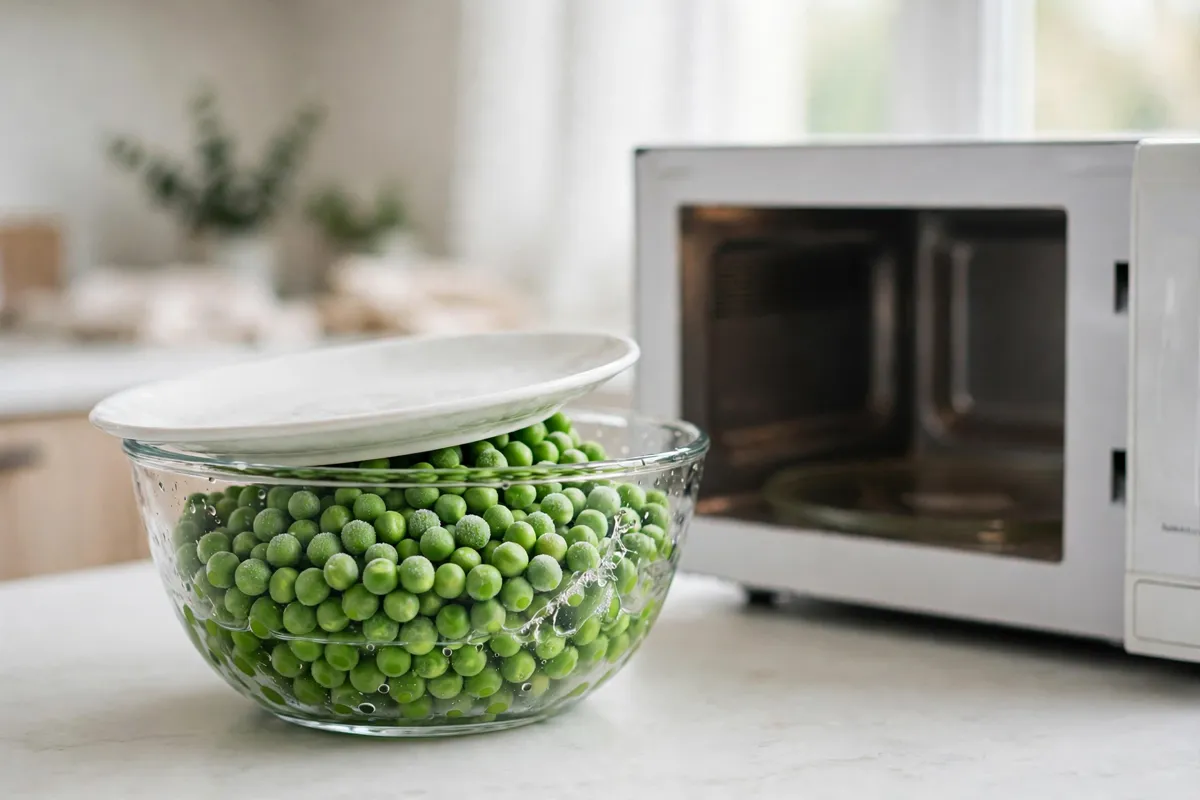
Yes, you can microwave peas, and for a small batch it is one of the fastest ways to get a bright green side dish on the table. Frozen peas cook in 2 to 4 minutes on high, fresh peas take about the same, and all you need is a microwave-safe dish, a tablespoon or two of water, and a loose cover. The microwave steams the peas in their own moisture, so you skip the pot, the colander, and most of the cleanup. The method is simple, but the details matter: peas go from bright green and tender to dull and mushy in about 30 seconds, too much water turns them waterlogged, and different types of peas need different handling.
This guide covers the step by step method, timing charts by amount, type, and wattage, fresh and frozen peas, snow peas and snap peas, canned peas, steam-in-bag packs, dried peas, the mushy and wrinkled problems, what microwaving does to nutrients, reheating, seasoning ideas, and the safety rules that keep every batch safe.
Can You Microwave Peas? The Short Answer
Yes. Put frozen peas in a microwave-safe bowl, add 1 to 2 tablespoons of water, and cover loosely with a microwave-safe lid or plate. Cook on high for 2 to 4 minutes, stirring halfway through, then let the bowl rest covered for 1 minute. Test a pea from the center of the bowl. It should be bright green, hot all the way through, and tender with a slight pop, not soft all the way through. Drain any leftover water, add butter and salt, and serve right away.
That short answer works in most home kitchens, but the range of times you see online is wide for a reason. Some guides say 90 seconds, others say 5 minutes, and both can be right in their own kitchen. Frozen or fresh, shelled or in the pod, the amount you cook at once, and your microwave wattage all change the result. A single serving of frozen peas in a 1200-watt oven can be done in under 2 minutes, while a large bowl in a 700-watt oven can need 5 minutes or more.
The rest of this guide gives you starting times plus the checks that tell you when the peas are actually done, so you are not guessing.
If you are new to microwave cooking in general, our main guide to can you microwave it explains which foods and containers are safe and which ones to keep out of the oven. Peas sit firmly in the safe group, and they are one of the vegetables the microwave handles best, because the whole job is really just a quick steam in a bowl.
Why the Microwave Works Well for Peas
Peas are a good match for microwave cooking because they are mostly water, and microwaves heat water directly. When you trap that heat under a loose cover, the peas steam in a small pocket of moisture, which is exactly how you want to cook something this delicate. A pot of boiling water is easy to overdo, and peas only need a few minutes of heat before their cell walls break down and they turn mushy. The microwave gives you short, controlled bursts instead.
Frozen peas have another advantage. They are blanched before freezing, which means they are already partly cooked at the processing plant. Your job in the microwave is not really cooking them from raw, it is heating them through and waking up their color and flavor. That is why the times are so short, and why starting low and adding 30-second bursts is the safest way to get them right.
The microwave also protects nutrients better than boiling. When you boil peas, water-soluble vitamins leak into the cooking water, and most of that water goes down the drain. Microwaving uses only a tablespoon or two of water, so far less leaves the peas. The difference is not huge, but for a vegetable you cook in two minutes, it is a real bonus on top of the speed.
There is one weakness to respect. Microwaves heat unevenly, and a bowl of peas is full of cold spots if you never stir it. The peas on the edge can be piping hot while the ones in the center are still cold. Stirring halfway through fixes most of that, and it is the single most important habit in this whole guide.
How to Microwave Frozen Peas Step by Step
Frozen peas are the most common way people cook peas, and the method below works for any brand, including store brand bags and steam-in-bag packs that you open into a bowl. Use a microwave-safe glass or ceramic bowl, not a metal one, and keep the steps in order.
Step 1: Measure the peas into the bowl. One cup makes a side dish for one or two people. Two cups feeds a small family. Spread them in a single layer if you can, because a deep pile heats less evenly than a shallow one.
Step 2: Add a small splash of water. One tablespoon per cup of peas is enough. The water is there to make steam, not to boil the peas, so do not submerge them. If the peas are already wet with frost, you can use even less.
Step 3: Cover loosely. A microwave-safe lid, a plate, or a damp paper towel all work. The cover traps steam and keeps the peas from drying out. Leave a small gap or lift one edge so steam can escape, because a fully sealed cover can build pressure and pop off.
Step 4: Microwave on high. Start with the time from the chart below for your amount. For one cup in an 800 to 1000-watt microwave, that is 2 to 3 minutes.
Step 5: Stir halfway through. Stop the microwave, lift the cover away from your face so the steam escapes safely, stir the peas from the edges into the center, then cover and finish the time. This one stir is what keeps the batch even.
Step 6: Rest, then drain. Let the bowl stand covered for 1 minute after the timer stops. The heat keeps spreading during this rest, and the peas finish cooking gently. Then drain off any water left in the bowl, because peas left sitting in hot water keep softening and turn mushy.
Step 7: Season and serve. Add butter, olive oil, salt, and pepper right away, while the peas are hot enough to melt the butter. Taste one pea from the center before you serve the bowl. If it is still cold in the middle, give the bowl another 30 seconds.
How Long to Microwave Frozen Peas
The amount in the bowl sets the clock. The times below are starting points for a covered dish in an 800 to 1000-watt microwave, and they match the consensus across the cooking guides we checked. Start at the low end, taste a pea from the center, and add 30-second bursts only if you need them.
| Amount of frozen peas | Water to add | Time on high | Notes |
|---|---|---|---|
| Half a cup | 1 teaspoon | 60 to 90 seconds | Stir once |
| 1 cup | 1 tablespoon | 2 to 3 minutes | Stir halfway through |
| 2 cups | 2 tablespoons | 3 to 4 minutes | Stir halfway through |
| 4 cups | 3 tablespoons | 5 to 6 minutes | Stir twice |
A 700-watt microwave may need a minute longer than these times, while a 1200-watt model may finish sooner. The wattage section later in this guide explains how to adjust. What matters most is the doneness check, not the clock: the peas should be bright green, hot all the way through, and tender with a little pop when you bite one. If they are pale and starchy in the middle, they need more time. If they are dull olive green and soft all the way through, they were overcooked, and no extra step will bring them back.
Do not thaw frozen peas before microwaving them. Thawing first is one of the most common reasons peas turn mushy, because thawed peas are already soft when the heat hits them, and the extra time in the microwave finishes breaking them down. Cooking straight from frozen keeps the texture firm and the color bright. The same rule applies to most frozen vegetables, and our guide to can you microwave frozen vegetables explains why thawing hurts more than it helps across the whole freezer aisle.
How to Microwave Fresh Peas
Fresh peas need shelling first, because the pod is too tough to eat and it blocks even heat. Snap the pod open along its seam, run your thumb down the inside, and drop the peas into a bowl. A cup of shelled peas takes about 2 to 3 minutes on high, and two cups take about 3 to 4 minutes, using the same method as frozen peas: a tablespoon of water per cup, a loose cover, and a stir halfway through.
Fresh peas cook a little differently from frozen ones. Frozen peas are already blanched, so they only need reheating. Fresh peas are truly raw, so they need a touch more time to lose their starchy bite, and they benefit from a full minute of rest after cooking. Purdue Extension’s green peas guide gives the same basic method: shelled peas in a microwave-safe container with a little water, covered, checking every couple of minutes for doneness. Taste one at the end of the time. A fresh pea is done when it is sweet, bright green, and tender with a slight bite. If it still tastes raw or chalky, give the bowl another 30 seconds.
One thing the microwave is not good for is blanching fresh peas before freezing. The National Center for Home Food Preservation says microwave blanching may not be effective, because the heat does not reach every pea evenly enough to stop the enzymes that cause freezer damage. If you are putting fresh peas in the freezer for later, blanch them in boiling water instead, following the center’s boiling-water instructions. The microwave is for cooking peas you plan to eat now, not for preserving them.
Fresh peas are also the only type where peeling matters. Some guides suggest peeling the thin skin off each pea for a smoother texture, but that is a restaurant step, not a home one. For a weeknight side dish, shell them, microwave them, and eat them as they are.
How to Microwave Snow Peas and Sugar Snap Peas
Snow peas and sugar snap peas have edible pods, so you cook them whole, and they need even less time than shelled peas. Their pods are thin and full of water, which means they go limp fast. The goal is to heat them just enough to brighten the color and soften the crunch slightly, while keeping a real snap.
Trim the ends and pull off any tough string along the seam first. Put the pods in a shallow microwave-safe dish in a single layer, add a tablespoon of water, and cover loosely. Microwave on high for 1 to 2 minutes, then check. Snow peas are done when they are bright green and still crisp. Sugar snap peas are done when they are hot and just tender, with the pod still holding its shape.
If you cook them for 3 or 4 minutes, the way you would cook shelled peas, you will get soft, wrinkled pods with no snap left. That is the most common mistake with this type, and it is the reason some people think snow peas do not work in the microwave. They do work, they just need about half the time. If you want them as a stir-fry ingredient, stop at 1 minute and finish them in the pan, so they keep their bite.
How to Microwave Canned Peas
Canned peas are already fully cooked, so microwaving them is just reheating. Drain the can first, because the liquid inside is starchy and salty, and heating the peas in it makes them taste flat. Rinse them briefly under cold water if you want a cleaner flavor, then put them in a microwave-safe bowl with a tablespoon of fresh water.
Cover loosely and microwave on high for 1 to 1 and a half minutes for one can, stirring halfway through. That is all they need. Canned peas are the type most likely to turn mushy in the microwave, because they are already soft, so never give them the full frozen-pea time. If they are still cool in the center after 90 seconds, add 30 seconds and stop there.
Never microwave peas in the can itself. Metal cans can spark and damage the oven, and the can is not designed to be heated that way. Tip them into a bowl, and the job takes less than two minutes.
Can You Microwave Peas in the Bag
Steam-in-bag peas are made for the microwave, and they are the easiest option of all. The bag is designed to trap steam and vent at a controlled rate, so you do not need a bowl, water, or a cover. Follow the directions printed on the bag, including whether to leave it sealed or to pierce it first, because the bag maker tested that exact pack.
Do not microwave peas in a regular freezer bag or a shopping bag. Only bags that say they are microwave-safe, and specifically steam-in-bag packs, should go in the oven. A normal plastic bag can melt, split, or release chemicals when it heats up, and a sealed bag that is not designed to vent can burst. If your bag does not say it is microwave-safe on the label, tip the peas into a bowl and use the normal method instead.
After the bag finishes, let it stand for 1 minute before you open it, and open it away from your face. The steam inside a steam-in-bag pack is very hot, and it escapes fast when you tear the corner. Pour the peas into a bowl, season them, and serve them right away.
Can You Microwave Dried Peas or Split Peas
No, dried peas and split peas are the one type that does not belong in the microwave. Dried peas need plenty of liquid and a long, slow simmer to soften, usually 45 minutes or more on the stove, and a microwave cannot hold that steady simmer without boiling over or cooking unevenly. A bowl of dried peas in the microwave will give you hard centers, split skins, and a mess of starchy water.
Split peas are even worse, because they are meant to break down completely into a thick soup or dal. That needs slow, even heat and regular stirring, which a microwave does not do well. If you want split pea soup, use the stove or a slow cooker. Save the microwave for fresh, frozen, canned, and steam-in-bag peas, where it is fast and reliable.
The same warning applies to dried whole peas that you have soaked overnight. Soaking helps, but they still need a long simmer to become tender, and the microwave will not get you there in a reasonable time. Soak them, then boil them on the stove.
What Wattage Does to Your Timing
Microwave wattage is the reason two people can follow the same recipe and get different results. Most home microwaves run between 700 and 1200 watts, and that spread changes pea cooking time by a minute or more. The times in this guide assume an 800 to 1000-watt oven, which covers most kitchens.
If your microwave is 700 watts, add about 30 to 60 seconds to the times in the chart, and check at the low end first. If it is 1200 watts, start about 30 seconds under the chart time, because a strong oven can take peas from perfect to mushy in one extra burst.
You can find your wattage on a label inside the door or in the manual. If you cannot find it, the water test gives a rough answer: a cup of cold tap water that boils in about 2 minutes is close to 1000 watts, while one that takes 3 minutes is closer to 700.
Power level matters as much as wattage. Full power is fine for peas because the cooking time is so short, but if your microwave runs hot and you keep getting mushy peas, try 70 percent power for a slightly longer time. The gentler heat gives the peas time to warm evenly without the edges overcooking. For reheating leftover peas, 50 percent power in 30-second bursts is the safest setting, because it warms them without drying them out.
Why Peas Go Mushy, Wrinkled, or Dull
Three different problems can spoil a bowl of microwave peas, and each one has a different cause. Once you know which one you are looking at, the fix is simple.
Mushy peas were cooked too long, or thawed before cooking. The heat breaks down the cell walls inside the pea, the starch spills out, and the pea loses its shape. There is no way to firm a mushy pea back up, so the fix is prevention: cook straight from frozen, start at the low end of the time, and stop as soon as the peas are hot and tender. If you catch them early, a mushy batch still works in a blended soup, where the texture does not matter.
Wrinkled peas lost moisture. They look shriveled and feel tough, even though they are hot. This happens when the peas cook uncovered, when they sit in the microwave too long after the timer stops, or when the batch had too little water. A loose cover and a tablespoon of water per cup prevent most of it. Badly shriveled peas will not plump back up with more water, so do not try to rescue them that way.
Dull olive-green peas were overcooked, or had acid added too early. Heat makes the natural acids inside the pea react with its chlorophyll, turning the bright green pigment into a dull olive compound. Lemon juice or vinegar added before cooking speeds that up. Keep the cooking short, and add any acid, like lemon juice, right before serving, not before the peas go in the microwave.
Cold peas in an otherwise hot bowl mean the heat did not spread evenly. Stir halfway through cooking, especially with a large batch, and spread the peas in a shallow dish so the microwaves reach more of them. A pea from the center of the bowl is the one to taste, because the edges always cook first.
Can You Microwave Peas Without Water
Yes, you can, and some cooks prefer it. Frozen peas carry enough ice and moisture on their own to make steam, so a covered bowl with no added water can work, especially for a small batch. Put the peas in a ceramic or glass bowl, cover tightly with a microwave-safe plate, and microwave on high for about 2 minutes for one cup. Let the bowl stand covered for another minute, and the carry-over steam finishes the job.
The no-water method has one clear advantage: the peas never sit in liquid, so they cannot turn waterlogged. It has one clear risk: with no water to make steam, the peas can dry out and wrinkle if you overshoot the time by even 30 seconds. That makes it a good method for a single serving you are watching closely, and a risky one for a large batch you might forget about.
For most people, a tablespoon of water per cup is the safer default. The extra moisture gives you a margin of error, and you drain it off at the end anyway. If your peas keep coming out watery, switch to the no-water method and shorten the time. If they keep coming out wrinkled, go back to adding water.
What Microwaving Does to Pea Nutrients
Peas are a solid source of fiber, plant protein, vitamin C, vitamin K, and folate, and microwaving them is one of the gentler ways to cook them. The short cooking time and the small amount of water mean fewer nutrients leak away than in a pot of boiling water, where vitamins dissolve into water that gets thrown away. Steaming and microwaving both beat boiling for keeping water-soluble vitamins in the food.
That said, no cooking method keeps every nutrient, and the differences between microwave, steamer, and stovetop are small for a vegetable that cooks in two minutes. The bigger factor is how long you cook them. Overcooked peas lose more vitamin C and more color than peas that are stopped while still bright green. So the nutrient advice and the texture advice point the same way: cook them as briefly as you can, and stop as soon as they are hot and tender.
Peas also keep most of their fiber no matter how you cook them, because fiber is not water-soluble and does not break down at these temperatures. If you are eating peas for fiber and plant protein, the cooking method barely matters. If you are eating them for vitamin C, the microwave with a little water is one of the best choices in the kitchen.
Reheating Leftover Peas in the Microwave
Leftover peas reheat well if you are gentle with them. Put them in a microwave-safe bowl, add a teaspoon of water, and cover loosely. Microwave at 50 percent power in 30-second bursts, stirring between bursts, until they are hot all the way through. That usually takes 60 to 90 seconds for a single serving.
Full power is the mistake people make here. Leftover peas are already cooked, so full power just dries them out and makes them rubbery. The lower power and short bursts let the heat spread without overcooking the outside. Taste a pea from the center before serving, because the edges of the bowl heat first.
Store leftover peas in a covered container in the refrigerator and use them within 3 days. Do not leave cooked peas at room temperature for more than 2 hours, because bacteria grow fastest in that window. Do not refreeze cooked peas. The texture turns grainy and soft after a second freeze, and the pleasant pop that makes peas enjoyable is gone for good. If you have more leftover peas than you can eat in 3 days, blend them into a soup instead of freezing them.
Seasoning and Serving Ideas
Plain microwaved peas with butter and salt are good on their own, but peas take seasoning well, and a few simple additions turn a basic side dish into something worth serving to guests. The rule is to season after cooking, not before, because salt added before microwaving can toughen the peas slightly, and acid added early dulls their color.
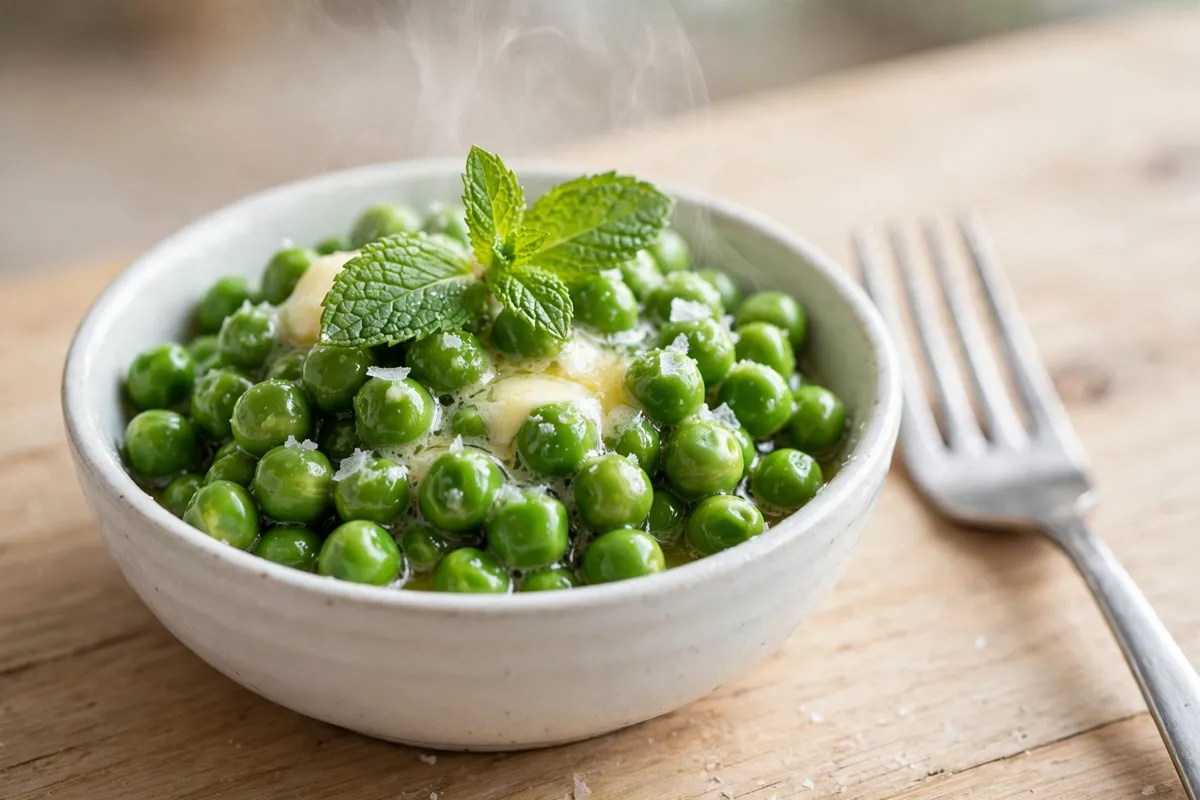
Butter and mint is the classic pairing. Toss the hot peas with a knob of butter, a pinch of flaky salt, and a few torn mint leaves. The mint stays bright because it never sees the heat of the microwave, and it lifts the sweetness of the peas. Lemon zest and a squeeze of lemon juice work the same way, but add the juice at the table, not in the bowl before cooking.
For a richer side, toss the peas with olive oil, grated Parmesan, and cracked black pepper. For a sharper flavor, add crumbled feta and a little chopped dill. For a warm, savory version, stir in a spoonful of cream cheese while the peas are still hot, so it melts into a light sauce. Peas also work in a mug for a single serving: a third to a half cup of frozen peas in a microwave-safe mug, a teaspoon of water, and 60 to 90 seconds on high, then butter and salt.
Peas pair well with almost any main dish, from roast chicken to fish to pasta. They also work as an ingredient: stir microwaved peas into cooked pasta, fried rice, or a simple soup in the last minute, so they warm through without overcooking. Our guide to can you microwave green beans uses the same quick-steam method, so if you liked this one, green beans are the natural next vegetable to try.
Safety Rules for Microwaving Peas
Peas are a low-risk food in the microwave, but the same safety rules that apply to all microwave cooking apply here. The US Department of Agriculture’s microwave guidance covers the habits that matter most: use a microwave-safe dish, cover the food loosely with a vent, stir or rotate the food halfway through, and let it stand for a short time after cooking so the heat evens out. Those four habits prevent cold spots, and cold spots are the one real safety risk with microwave cooking.
Use glass or ceramic dishes, not metal, and never put a sealed container in the microwave. A container with no vent can build pressure and pop its lid off, spraying hot peas and steam. Check that any plastic wrap or lid you use is labeled microwave-safe, and keep it from touching the food where you can. For the full official guidance, see the USDA page on cooking with microwave ovens.
Be careful with steam when you lift the cover. Open the lid away from your face and hands, and let the steam escape before you stir. A bowl of peas straight out of the microwave is hot enough to burn, so use oven mitts or a folded towel to carry it. And keep the peas hot until serving, or refrigerate them promptly. Cooked peas left sitting on the counter for hours are not safe to eat, no matter how good they look.
Peas and Allergies: What to Know
Peas are legumes, the same plant family as peanuts, beans, and lentils. They are not one of the nine major food allergens the US Food and Drug Administration requires on labels, but some people with a peanut allergy also react to peas and other legumes. If you have a peanut allergy, or a known legume allergy, check with your doctor before trying peas, and read the label on any frozen pea product for allergen warnings about shared equipment.
That cross-reaction does not affect most people, and for the general population peas are a safe, everyday food. But allergies are one area where generic advice is not enough, and a short check with a clinician beats guessing. The FDA page on food allergies explains the nine major allergens and how they must be labeled, which is a useful starting point if you are cooking for someone with an allergy.
One more label note: frozen peas sometimes contain nothing but peas, but seasoned or buttered pea products can contain milk, wheat, or soy. Read the ingredient list on the bag if you are cooking for someone with an allergy, and do not assume a plain-looking product is free of allergens.
Microwave Peas vs Stovetop vs Steamer
The microwave is not the only way to cook peas, and it is not the best way for every situation. Here is how the three common methods compare, so you can pick the right one for the meal you are making.
| Method | Time for 1 cup frozen peas | Best for | Watch out for |
|---|---|---|---|
| Microwave | 2 to 3 minutes | Small batches, quick sides, single servings | Uneven heating if you skip the stir |
| Stovetop boiling | 2 to 3 minutes in boiling water | Large batches, peas for soup | Easy to overcook, vitamins leak into the water |
| Steamer basket | 3 to 4 minutes | Keeping color and nutrients, cooking with other vegetables | Slower setup and more cleanup |
For one or two servings, the microwave wins on speed and cleanup. For a big family dinner, the stovetop is easier, because a pot holds more peas than a microwave bowl, and you can drain them in one go. For the best color and nutrient retention, a steamer basket has a small edge, but the difference is minor when the microwave time is this short. If you cook a lot of vegetables in the microwave, our guide to can you microwave broccoli and our can you microwave edamame guide use the same covered-bowl steam method, so the habits transfer directly.
Common Mistakes to Avoid
Most bad bowls of microwave peas come from one of five mistakes, and all five are easy to avoid once you know them. First, thawing the peas before cooking. Cook them straight from frozen, or they turn mushy. Second, adding too much water. A tablespoon per cup is enough, and the peas should never be submerged. Third, skipping the stir. Without it, the edges overcook while the center stays cold. Fourth, cooking them for the full time without checking. Start low, taste a pea from the center, and add 30-second bursts only if needed. Fifth, leaving the peas in the bowl after cooking.
Drain them right away, because peas sitting in hot water keep softening.
Two more mistakes are worth naming. One is seasoning before cooking, especially salt and lemon juice, which can toughen the peas and dull their color. Season after, when the peas are hot and ready to absorb the flavor. The other is microwaving peas in their original can or in a bag that is not labeled microwave-safe. Both are safety risks, not just texture problems, and both are avoidable by tipping the peas into a glass or ceramic bowl first.
Frequently Asked Questions
Can you microwave peas? Yes, you can microwave peas. Put them in a microwave-safe bowl with 1 to 2 tablespoons of water, cover loosely, and cook on high for 2 to 4 minutes, stirring halfway through. The peas should be bright green, hot all the way through, and tender with a slight pop.
How long do you microwave frozen peas? Frozen peas take 2 to 4 minutes on high in an 800 to 1000-watt microwave, depending on the amount. One cup takes 2 to 3 minutes, half a cup takes 60 to 90 seconds, and 2 cups take 3 to 4 minutes. Stir halfway through and check at the minimum time.
Do you need to thaw frozen peas before microwaving? No, you do not need to thaw frozen peas before microwaving them. Cook them straight from frozen. Thawing first is one of the main reasons peas turn mushy, because they are already soft when the heat hits them.
Can you microwave fresh peas? Yes, you can microwave fresh peas. Shell them first, then cook 1 cup in a microwave-safe bowl with 1 tablespoon of water and a loose cover for 2 to 3 minutes on high. Fresh peas need a full minute of rest after cooking, and they are done when they are sweet and tender with a slight bite.
Can you microwave snow peas? Yes, you can microwave snow peas, but give them only 1 to 2 minutes on high. Trim the ends, cook them whole in a single layer with a tablespoon of water and a loose cover, and stop while they are still bright green and crisp. Longer cooking makes the pods limp and wrinkled.
Can you microwave canned peas? Yes, you can microwave canned peas, but only to reheat them. Drain the can, put the peas in a microwave-safe bowl with a tablespoon of fresh water, and microwave on high for 1 to 1 and a half minutes. Never microwave peas in the can itself.
Can you microwave peas in the bag? Only if the bag is labelled microwave-safe, such as a steam-in-bag product, and only if you follow the directions printed on the bag. Do not microwave peas in a regular freezer bag or shopping bag, because the plastic can melt or split. If the bag does not say microwave-safe, tip the peas into a bowl instead.
Can you microwave dried peas? No, dried peas and split peas do not work in the microwave. They need plenty of liquid and a long, slow simmer on the stove, usually 45 minutes or more. A microwave cannot hold that steady simmer, so dried peas come out hard in the center with split skins.
Why are my microwaved peas mushy? Mushy peas were cooked too long, thawed before cooking, or left sitting in hot water after the timer stopped. Cook straight from frozen, start at the low end of the time, stir halfway through, and drain the peas as soon as they are done.
Why are my microwaved peas wrinkled? Wrinkled peas lost moisture, usually because they cooked uncovered, sat too long after the timer stopped, or had too little water. Use a loose cover and a tablespoon of water per cup, and serve the peas right away. Badly shriveled peas will not plump back up with more water.
Can you microwave peas without water? Yes, you can microwave frozen peas without water, because the ice on the peas makes enough steam on its own. Use a covered ceramic or glass bowl, cook 1 cup on high for about 2 minutes, and let it stand covered for 1 minute. The no-water method works best for small batches you are watching closely.
Is it safe to microwave peas? Yes, microwaving peas is safe when you follow the basic rules: use a microwave-safe dish, cover loosely with a vent, stir halfway through so there are no cold spots, and let the peas stand for 1 minute after cooking. Never use a metal container or a sealed container in the microwave.
Can you reheat peas in the microwave? Yes, you can reheat leftover peas in the microwave. Use 50 percent power in 30-second bursts with a teaspoon of water and a loose cover, stirring between bursts. That usually takes 60 to 90 seconds for a single serving. Do not reheat peas more than once, and do not refreeze cooked peas.
How long do microwaved peas last? Store leftover peas in a covered container in the refrigerator and use them within 3 days. Do not leave cooked peas at room temperature for more than 2 hours. If you have more leftovers than you can eat in 3 days, blend them into a soup instead of freezing them.
The Bottom Line
Yes, you can microwave peas, and it is one of the easiest wins in the kitchen. Frozen peas take 2 to 4 minutes, fresh peas take about the same, and the whole method comes down to a few small habits: a tablespoon of water per cup, a loose cover, a stir halfway through, and a taste test from the center of the bowl before you serve.
Cook straight from frozen, stop as soon as the peas are bright green and hot all the way through, and drain them right away. That is the difference between a bright, sweet side dish and a dull bowl of mush.
Peas reward a light touch more than almost any other vegetable, so start short and add time in 30-second bursts. Once you have the timing right for your microwave, you can cook peas in less time than it takes to boil a kettle, with one bowl to wash and no pot to scrub. Keep this guide nearby the first few times, note the time that works for your oven, and it will become a two-minute habit you never have to think about again.
