

You have been there. Dinner is a bowl of leftover spaghetti, the microwave is humming, and your hand is hovering over the paper towel roll. You tear off a sheet, drape it over the bowl, and wonder for half a second: can you microwave paper towels without setting something on fire? It feels like a normal thing to do, because nearly everyone does it. Almost every kitchen has a roll of paper towels, and almost every microwave owner has used one as a quick cover for reheating food.
But is it actually safe, and are there types of paper towels you should keep far away from your microwave? In this guide, you will get a clear answer, learn exactly which paper towels are safe and which ones can spark or scorch, and pick up the simple habits that keep your kitchen safe. We cover the 2-minute rule, the damp towel trick, the best foods to pair with a paper towel, and what to do if things go wrong. Everything here follows official microwave safety guidance, so you can heat with confidence.
Can You Microwave Paper Towels? The Short Answer
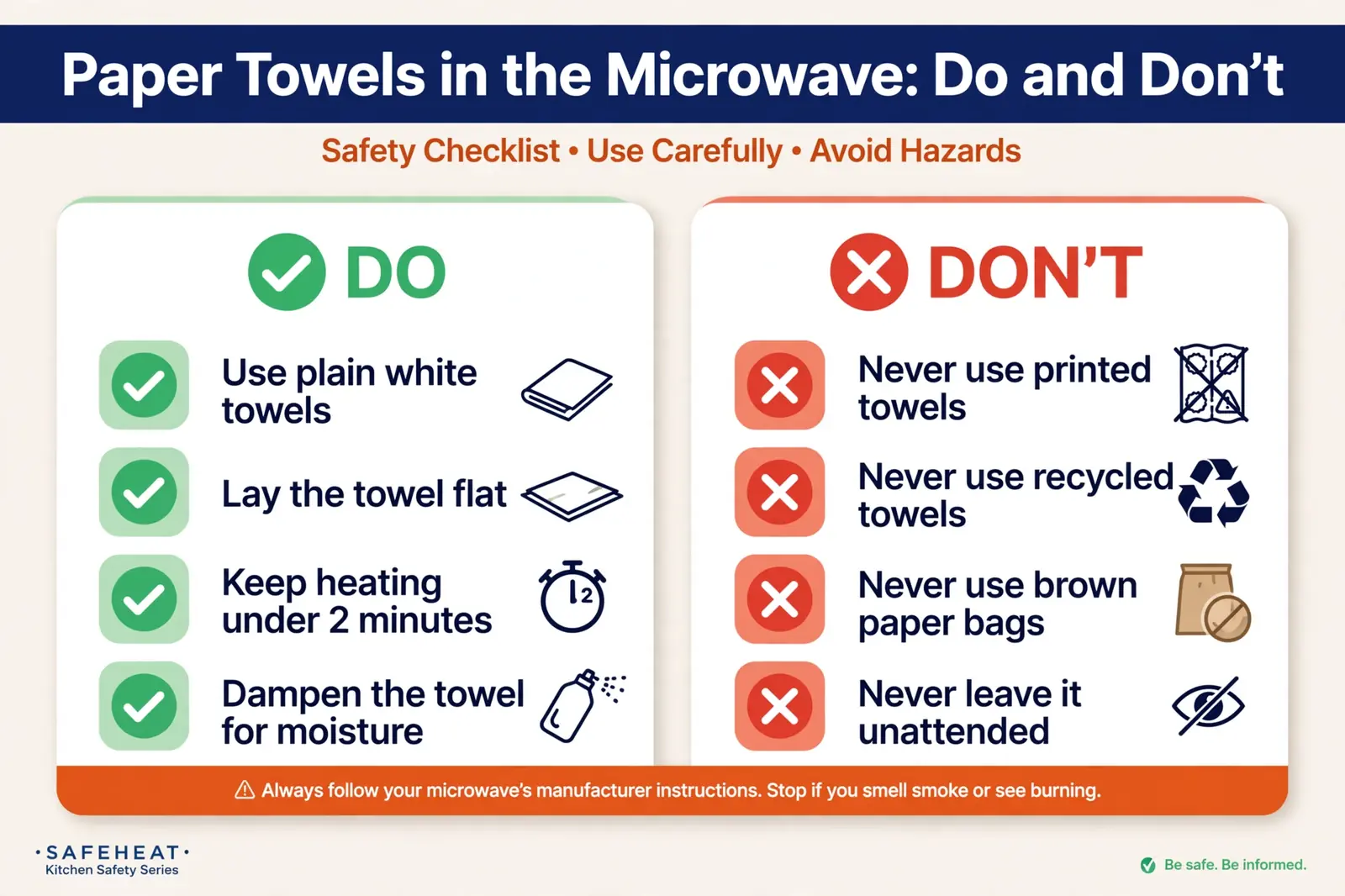
Yes, you can microwave paper towels. Most plain white paper towels are microwave-safe when you use them for short heating times to cover or wrap food. USDA guidance lists white microwave-safe paper towels as safe to use, as summarized in this USDA-based microwave safety guide from Kansas State University Extension, right alongside wax paper, parchment paper, and cooking bags. That makes paper towels one of the safer paper products you can put in a microwave.
The catch is that not every paper towel is equal. Printed or colored towels, recycled towels, and brown paper bags are a different story, and even a safe towel can burn if you heat it too long. The real danger is not chemicals leaching into your food. It is overheating. Dry paper can ignite if it gets hot enough, and microwaves can push paper past that point faster than you expect. Follow the rules below and you will be fine.
Which Paper Towels Can You Microwave Safely?
You can microwave most paper towels, but the type you grab matters a lot. Some towels are built for this job, and some should never go near your microwave. Here is how to tell them apart.
Plain White Paper Towels
Plain white, unprinted paper towels are the safest choice. They contain no dyes or inks that could transfer to your food when heated. The USDA specifically advises using white, unprinted materials in the microwave for optimal safety. If your roll has no pattern, no color, and no coating, you are holding the right towel.
This is the towel most people picture when they think of the kitchen roll. If you are asking, can you microwave paper towels from the roll under your own sink, this plain white type gives you the clearest yes. Use it to cover food, line a plate, or wrap items for quick reheating. It will do its job and stay out of trouble.
Paper Towels Labeled Microwave-Safe
Some brands print a “microwave-safe” label right on the packaging. These towels have been tested for microwave use, and they are your safest bet of all. If you see the label, you can use them with confidence.
If your roll does not mention microwave use anywhere, do not panic. Most plain white towels are still fine for short covering and wrapping. When you are unsure about a specific brand, check the label on the packaging or the manufacturer’s website. If the packaging is silent and the towel looks unusual, coated, or textured in a strange way, switch to a different covering or learn to decode the microwave-safe symbols on your packaging.
Printed or Colored Paper Towels
Skip the pretty ones. Paper towels with printed patterns, colors, or decorative designs can contain inks and dyes that are not meant to be heated. When microwaved, these inks can release chemicals or bleed into your food. That is not a risk worth taking for a nicer looking towel.
The USDA advises against printed materials in the microwave for this reason. If your towels have any print at all, save them for wiping counters and grab plain white towels for microwave duty instead.
Recycled Paper Towels
Avoid recycled paper towels in the microwave unless the package explicitly says they are microwave-safe. Recycled paper products can contain tiny metal flecks from the recycling process. When a microwave runs, those flecks can spark and cause small flames.
Fire safety experts at UC Davis warn against microwaving recycled paper products for exactly this reason. Recycled towels are fine for drying your hands or cleaning spills, but keep them out of the microwave.
Brown Paper Towels and Brown Paper Bags
This is where people get confused. Unbleached or brown-looking paper towels are not the same as brown paper bags, but both deserve caution. Brown paper grocery bags should never go in a microwave. They can catch fire and release fumes, because they are not made or tested for cooking use.
A brown or unbleached paper towel might be acceptable if it is plain, unprinted, and labeled microwave-safe, but white unprinted towels remain the safer, better-documented choice. When in doubt, stick with white.
How to Use Paper Towels in the Microwave Safely
Yes, you can microwave paper towels with total confidence if you follow five simple habits. These rules come from official guidance and from real kitchen experience, and they take almost no effort.
Follow the 2-Minute Rule
Never heat a paper towel in the microwave for more than 2 minutes at a stretch. This is the single most useful rule for this topic. Stopping at or before the 2-minute mark lets you check your food and your towel, and it prevents heat from building up to the point where paper can scorch or ignite.
If your food needs more time, open the door, check the towel, and restart. This habit also helps you track how your food is cooking, so you get better results along with better safety.
Lay the Towel Flat, Never Crumpled
Heat spreads evenly across a flat paper towel, but it builds up in the folds of a crumpled one. Tests have shown that a crumpled paper towel can catch fire while a flat one under the same conditions stays fine. The dense spots in folds heat faster than the rest and can reach ignition temperature.
So lay your towel flat whether it goes above your food or under it. Do not bunch it, wrinkle it, or roll it into a ball. Flat and smooth is the whole trick.
Dampen the Towel for Extra Safety
A slightly damp paper towel is safer than a dry one, and it does a better job too. Moisture keeps the towel cooler, because the microwave energy goes into the water first. As a bonus, the damp towel creates steam that keeps your food from drying out.
This is the secret behind perfectly reheated pizza, soft tortillas, and fluffy rolls. Run the towel under the tap, wring it out so it is damp but not dripping, and drape it over your food. The towel also stays in place better, since the microwave fan can sometimes blow a dry towel around.
Use One Layer and Keep It Away From the Walls
One layer is enough. Piling on multiple layers traps heat and raises the fire risk without giving you any real benefit. A single flat sheet covers splatter just fine.
Also keep the towel away from the microwave walls and door. The edges of the cavity can get hotter, and metal trim or sharp edges in older models can interact badly with paper. Center your dish on the turntable and let the towel rest on the food or the plate.
Never Leave the Microwave Unattended
This rule applies to everything in a microwave, and it matters twice as much with paper products. Stay nearby while the microwave runs. If you smell smoke or see scorching, stop the microwave right away.
It takes only seconds for a problem to start and only seconds to stop it. Do not walk off to answer the door or check your phone in another room. Your food will wait, and your kitchen will thank you.
Can You Microwave Paper Towels With These Common Foods?
You can microwave paper towels with most foods. The towel is a tool, and like any tool it works better for some jobs than others. Here are the most common uses, with tips for each.
Bacon
Bacon and paper towels are a classic pair. Lay two paper towels flat on a microwave-safe plate, arrange bacon strips in a single layer without overlapping, and cover them with another paper towel. The bottom towels soak up grease while the top one stops splatter.
Microwave in short bursts, about 1 minute per strip as a starting point, and check often. Different microwaves and different bacon thicknesses need different times. The result is less greasy, evenly cooked bacon with almost no cleanup.
Leftover Pizza and Pasta
Cold pizza is where the damp towel trick shines. Drape a damp paper towel over your slices and heat for 30 to 60 seconds. The steam keeps the crust from turning into cardboard and the cheese melts evenly.
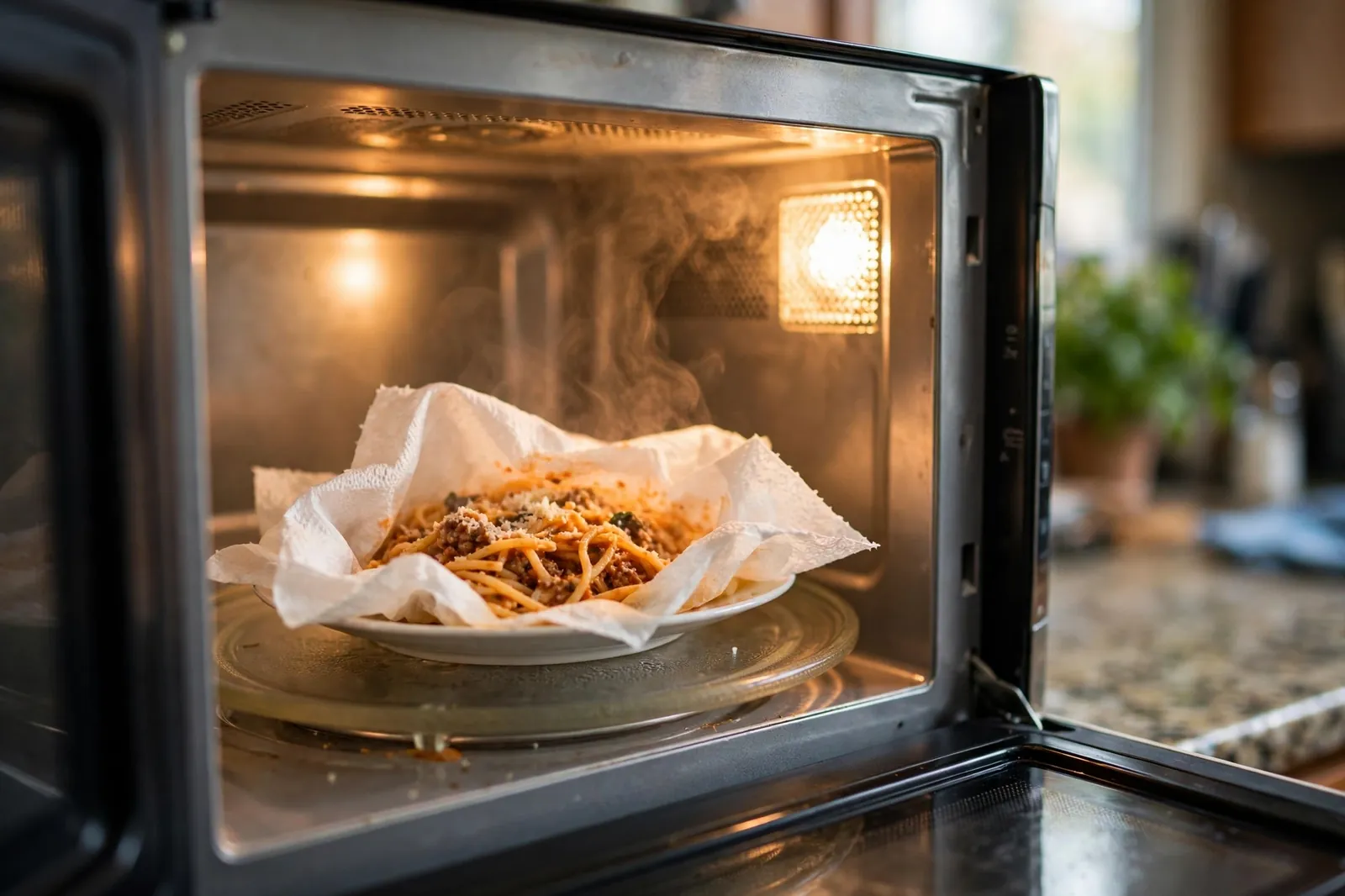
For pasta and rice dishes, cover the bowl loosely with a paper towel to stop sauce splatter while letting some steam escape. Stir halfway through for even heating, and replace the towel if it gets soaked.
Bread, Tortillas, and Rolls
Bread products dry out fast in a microwave, which is why a damp paper towel is perfect for them. Wrap tortillas, rolls, or a bagel in a damp towel and heat for 20 to 30 seconds. The moisture turns to steam and softens the bread instead of hardening it.
This works for a stack of tortillas too. Wrap the whole stack loosely and heat in short bursts, checking between rounds. Soft, warm bread in under a minute beats a toaster for speed.
Steaming Vegetables
Wrapping vegetables in a damp paper towel creates a mini steam chamber. Broccoli florets, green beans, and sliced carrots cook quickly this way while keeping their color and nutrients. Wet the towel, wrap the vegetables loosely, and microwave for 2 to 3 minutes, checking at the halfway point.
This method is faster than boiling and uses no extra dishes. Just be careful with the hot steam when you unwrap the towel.
Covering a Plate to Stop Splatter
The simplest use is also the most popular. Drape a paper towel loosely over any plate or bowl of leftovers before you press start. It catches splatter, keeps your microwave clean, and saves you from scrubbing dried sauce off the walls later.
Do not seal it tight like a lid. Let steam escape around the edges. For soups and saucy dishes, this one habit will cut your microwave cleaning time to almost nothing.
Paper Towels vs. Other Microwave Coverings
Once you know you can microwave paper towels, it helps to see how they stack up against other coverings. Each option has its own strengths, and knowing the differences helps you pick the right one for the job.
| Covering | Best For | Watch Out For |
|---|---|---|
| Plain white paper towel | Quick splatter cover, bacon, reheating bread | Keep under 2 minutes, never leave unattended |
| Paper napkin | Light covering for small dishes | Thinner than paper towels, tears when damp |
| Paper plate (as a lid) | Covering large bowls and plates | Use only unprinted plates labeled microwave-safe; learn more in our guide to how to microwave paper plates safely |
| Parchment paper | Steaming vegetables, wrapping food for even heating | More expensive, but very heat-resistant |
| Wax paper | Wrapping sandwiches, covering dishes | Do not use for long cooking times |
For everyday reheating, a paper towel wins on convenience and cost. For longer cooking or delicate foods, parchment paper is the sturdier choice. Wax paper sits in the middle. Napkins work in a pinch but tear easily when they get wet. Whichever you choose, the same basic rules apply: plain and unprinted, short heating times, and never walk away.
What to Do If a Paper Towel Starts Smoking or Catches Fire
If you smell smoke or see the towel browning, act fast but stay calm. Press stop on the microwave and keep the door closed. A closed microwave starves a small fire of oxygen, and most paper towel fires go out on their own within seconds once the microwaves stop.
Never open the door right away to grab the towel. Opening the door feeds oxygen to the flames and can make things worse. Wait until all smoke and glowing stops, then open the door, remove the towel with care, and let the microwave air out. If flames continue or grow, unplug the microwave and call your local emergency number.
After any smoking incident, inspect your microwave for damage before using it again. And if your model ever has you second-guessing basics, remember the general rule: when metal is involved, check our guide on why aluminum foil and microwaves do not mix before you try anything risky.
Frequently Asked Questions
Here are the questions people ask most often about microwaving paper towels, answered directly.
Can you microwave paper towels safely?
Yes, you can microwave paper towels safely. Use plain white, unprinted paper towels, keep heating times under 2 minutes, and never leave the microwave unattended. Dampen the towel and lay it flat for extra safety. Avoid printed, colored, and recycled towels.
Is it safe to put a paper towel in the microwave to cover food?
Yes, covering food with a paper towel is one of the safest and most useful things you can do in a microwave. A single flat sheet stops splatter, traps a little steam, and keeps your microwave clean. Just keep it loose so steam can escape around the edges.
How long can you microwave a paper towel?
Keep it to 2 minutes or less at a time. If your food needs longer, stop at 2 minutes, check the towel and the food, then restart. This simple habit prevents the heat buildup that causes scorching. Most reheating jobs finish well under this limit anyway.
Can paper towels catch fire in the microwave?
Yes, they can, but only under the wrong conditions. A dry paper towel heated too long, especially if it is crumpled or folded, can scorch and ignite. Paper ignites at high temperatures that microwaves can reach if heat has nowhere to go. Flat towels, short times, and a little moisture make this very unlikely.
Can you microwave colored or printed paper towels?
You should not. Printed and colored paper towels can contain inks and dyes that are not made for heating. These can release chemicals or bleed into your food when microwaved. Save printed towels for cleaning and use plain white ones in the microwave.
Can you microwave recycled paper towels?
Avoid them. Recycled paper products can contain tiny metal flecks from the recycling process, and those flecks can spark in a microwave. Unless the package clearly says the recycled towels are microwave-safe, keep them out of the oven.
Can you microwave a wet paper towel?
Yes, and a damp towel is actually the best option. Moisture keeps the towel cooler and creates steam that improves your food. Wring the towel out so it is damp but not dripping, then drape or wrap it as usual. A soaking wet towel works too, but it can make food soggy.
Can you use paper towels to cook bacon in the microwave?
Yes, this is one of the most popular uses. Put paper towels below and above the bacon strips to absorb grease and stop splatter. Start with about 1 minute per strip on high and check often, because thickness and microwave power change the timing. Change the towels if they get soaked with grease.
Are big-name paper towel brands microwave safe?
Most major brands make plain white towels that work fine in the microwave, but the safest move is to check the label on your specific roll. Look for a “microwave-safe” statement on the packaging. If the label says nothing and the towel is plain and white, it is still generally fine for short covering use.
Can you microwave a napkin instead of a paper towel?
Yes, a plain paper napkin works as a microwave cover. Napkins are thinner than paper towels, so they tear more easily when damp and offer less splatter protection. For a quick cover on a small dish they are fine. For bacon or greasy foods, a paper towel does a better job.
Is a damp or dry paper towel better in the microwave?
Damp is better for both safety and food quality. The moisture keeps the towel cooler, which lowers the fire risk, and the steam keeps food from drying out. A dry towel is acceptable for very short heating, but damp wins in almost every situation.
Can you put a paper towel under food in the microwave?
Yes, placing a paper towel under food is safe and useful. It absorbs grease from bacon, catches drips from reheated pizza, and keeps plates from sliding. Lay it flat in a single layer under the food. Do not fold it into a thick pad, because dense folds heat unevenly.
What happens if you microwave a paper towel for too long?
The towel can dry out completely, then start to brown, smoke, and eventually catch fire. This is exactly why the 2-minute rule exists. If you ever open the microwave and the towel looks browned or smells scorched, throw it away and use a fresh one for the next round.
Are unbleached brown paper towels microwave safe?
They can be, but they are a gray area. A plain, unprinted, unbleached towel that is labeled microwave-safe is acceptable. But never confuse brown paper towels with brown paper bags, which are never safe in a microwave. When you have the choice, white unprinted towels have the clearest safety guidance behind them.
Can you microwave food wrapped in a paper towel?
Yes, wrapping food in a paper towel is safe for short heating. A loose wrap around a burrito, a sandwich, or a corn cob holds in steam and prevents splatter. Use a damp towel for the best results, wrap loosely rather than tightly, and keep the heating time short.
The Bottom Line on Paper Towels and Microwaves
Can you microwave paper towels? Yes, and it is one of the handiest microwave habits you can build. Stick with plain white, unprinted towels, follow the 2-minute rule, and lay the towel flat and slightly damp whenever you can. Keep printed, colored, and recycled towels out of the microwave, and never use brown paper bags.
If you want to see how paper towels fit into the bigger picture, check Can You Microwave It? The Complete Safety Chart, which covers dozens of materials in one place. And if you are rethinking other kitchen habits too, our guide on what happens when you microwave the wrong plastic is worth a read. Stay near the microwave, stop at the first sign of smoke, and your paper towel will stay a helper, never a hazard.
