

You know the moment. Last night’s lo mein or a half-eaten burger sits in a white foam clamshell on the fridge shelf, and now you want it hot. The box is right there, so the obvious question pops into your head: can you microwave styrofoam, or do you have to dirty a plate first?
The short answer is that most of the time, you should move the food first. The longer answer depends on the label, and this guide walks you through all of it. You will learn what your foam container is actually made of, how to read its microwave-safe label in ten seconds, what happens when foam meets microwave heat, why fatty foods deserve extra caution, and the simple routine for reheating foam-box takeout safely every time. By the end, you will never have to guess again, and your leftovers will taste just as good on a proper plate.
Can You Microwave Styrofoam? The Short Answer
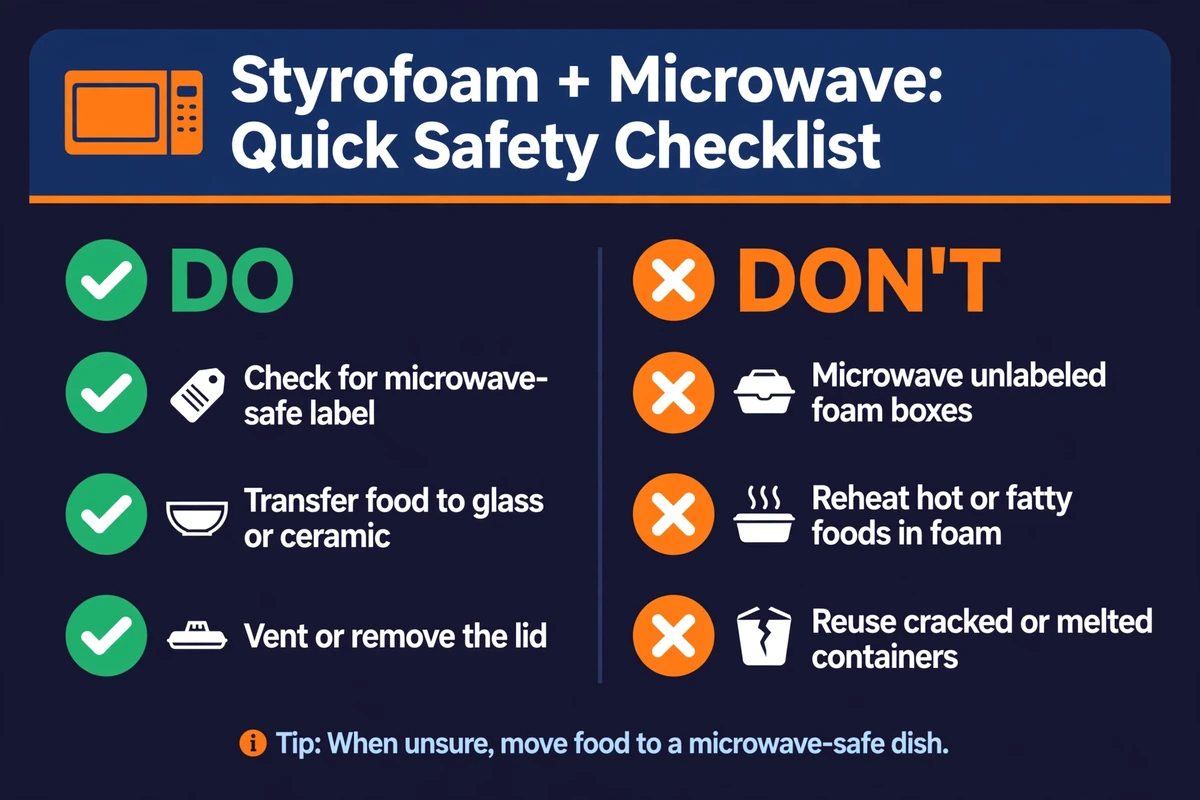
No, you should not microwave styrofoam unless the container is clearly labeled microwave-safe. The USDA rule is simple: only heat food in containers that are made for the microwave, and most foam takeout boxes and cups carry no such label.
Here is the rule to memorize: no label, no microwave. Foam takeout containers are designed for one job, which is keeping food hot or cold for the trip home. They were not built for the extra heat of a microwave, and they have not been tested for it. That matters because heat changes how the foam behaves, and a container that is perfectly fine holding a warm burger on your counter can soften, warp, or break down when you blast it with microwaves.
The safest move is always the same. If the foam container has a microwave-safe label, follow whatever the label says. If it does not, slide the food onto a microwave-safe glass or ceramic dish and heat it there. It takes thirty seconds of extra effort and removes the entire question. If you want a broader view of which containers pass the test, see Can You Microwave It? The Complete Safety Chart for the full container-by-container breakdown.
What Styrofoam Really Is (And Why Your Takeout Box Has a Different Name)
Your foam takeout box is not technically Styrofoam, even though everyone calls it that. Styrofoam is a trademarked brand name for a rigid insulation foam used in buildings, and it was never made into food containers. What holds your leftovers is expanded polystyrene foam, usually shortened to EPS, a lightweight plastic foam made from the chemical styrene.
EPS is roughly 95 percent air trapped in tiny plastic beads, which is why it feels so light and keeps hot food warm. You will recognize it by the triangle of chasing arrows on the bottom with the number 6 inside. That is resin code 6, the code for polystyrene, and it tells you the material, not whether the container can go in the microwave. A number 6 on the bottom is not a safety pass for heating, and this is the single most common misunderstanding with foam containers.
So why does microwave heat bother it? EPS starts to soften at about 212 degrees Fahrenheit, which a microwave reaches easily, and polystyrene melts near 464 degrees Fahrenheit, according to Tom’s Guide’s rundown of items that do not belong in a microwave. Long before it melts, the softened foam can sag, and heat speeds up the movement of styrene from the container into the food. Fatty and very hot foods pull more of it out, which is why a greasy takeout box deserves extra caution. If you want the full picture of which kitchen materials survive microwave heat, see our list of things you should never put in a microwave.
How to Tell If a Foam Container Is Microwave-Safe
Flip the container over and read the bottom, because the answer is printed there. A foam container that is approved for the microwave carries a microwave-safe symbol, usually a small microwave icon with wavy lines above it, or the words “microwave safe” printed on the base.
This ten-second check is the whole decision process. Look at the bottom of the clamshell, cup, or plate for the wavy-lines symbol. Some containers also print a short heating instruction, like a maximum time or wattage, and you should follow it exactly. The symbol is your green light, but only for that specific container, not for all foam containers that look like it.
Now here is what does not count as a green light. The recycling triangle with the number 6 only identifies the plastic resin, and it says nothing about heat safety. A container that feels thicker or sturdier than usual is not automatically safe either, because sturdiness does not mean the manufacturer tested it for microwave heating. When in doubt, check the label, and if there is no label, treat the container as not safe. For a visual tour of every version of the symbol you might find, read our guide to decoding microwave-safe symbols.
A few fast-food coffee cups and some newer foam products are labeled for the microwave, but most takeout clamshells and foam bowls are not. Restaurants buy the cheapest containers that do the job of carrying food, and microwave testing costs extra, so the safe default is to assume your takeout box is not labeled unless you read the label yourself.
What the Label Check Looks Like in Practice
Make it a habit every time you bring home takeout. Open the box, flip it over, and look at the bottom before the food goes back in the fridge. If you see the wavy-lines mark, you can reheat right in the box later. If you see nothing, plan to transfer the food to a real dish before reheating, and you can even leave yourself a sticky note on the box as a reminder.
What Happens When You Microwave Styrofoam That Isn’t Labeled Safe
When unlabeled foam meets microwave heat, it can soften, warp, or melt, and the heat pushes more styrene from the container into your food. That is the entire risk in one sentence, and everything below is the detail behind it.
Start with the physical damage, because it is the part you can see. The container may sag, the lid may fuse to the base, and in bad cases the bottom can develop a thin spot or a hole. Hot food can then leak through or spill when you lift the box, which is a burn risk on top of a food-safety problem. Even when nothing looks wrong, the foam’s structure may have weakened in ways you cannot see.
The invisible part is chemical migration. Styrene is the building block of polystyrene, and the International Agency for Research on Cancer classifies styrene as Group 2A, meaning probably carcinogenic to humans. Heat increases how much styrene moves into food, and fatty, oily, or very hot foods pull out more than cool, low-fat foods. One reheating is very unlikely to make anyone sick, but repeated microwaving of unlabeled foam adds up, which is why the habit matters more than any single incident.
The USDA’s position backs this up. The Food Safety and Inspection Service warns against using foam trays and containers that are not heat stable in the microwave, because melting and warping can let harmful chemicals migrate into food. The University of Nebraska’s microwave safety guidance, which is based on that USDA advice, says the same thing in plain terms: use only cookware labeled for microwave use, because other containers can warp or melt.
If the foam actually melted into your food, do not try to salvage it. Throw the food out, because melted plastic in a meal is not something you can fix by picking out the visible pieces. And if the container is cracked, damaged, or already warped from a previous round in the microwave, retire it. Never microwave cracked or melted foam containers, no matter what the original label said.
Foam Containers and Microwave Safety: A Quick Comparison
Not all foam containers are the same, so here is a side-by-side view. The label on the bottom is what decides, not the shape of the container or how sturdy it feels.
| Container type | Usually labeled microwave-safe? | Can it go in the microwave? | Notes |
|---|---|---|---|
| Takeout clamshell (unlabeled) | No | No | The most common case. Transfer the food to glass or ceramic. |
| Foam coffee or soup cup (unlabeled) | No | No | Heat plus hot liquid speeds up softening. Use a mug instead. |
| Foam container labeled microwave-safe | Yes, check the label | Yes, with limits | Follow the printed time and wattage instructions exactly. |
| Foam plate labeled microwave-safe | Yes, check the label | Yes, for reheating | Best for short reheats, not for cooking raw food. |
| Cracked, warped, or melted foam | Label no longer counts | Never | Damaged foam is done. Retire it even if it was labeled safe once. |
| EPS meat or produce tray | No | No | These are cold-storage trays, never meant for any heating. |
The pattern in the table is simple. Unlabeled foam is a no, labeled foam is a yes with limits, and damaged foam is a never. That middle row is the one people get wrong, because a microwave-safe foam cup looks almost identical to a regular one. Only the mark on the bottom tells them apart, which is why the ten-second label check from the section above is worth making automatic.
One more thing the table hints at: labeled does not mean unlimited. A microwave-safe foam container is approved for reheating within the manufacturer’s instructions, usually a few minutes at normal power. It is not approved for cooking raw meat, for long high-power sessions, or for foods that get screaming hot like melted cheese and bubbling sauces. When the job is bigger than a quick reheat, reach for glass or ceramic anyway.
The Safe Way to Reheat Food That Arrived in a Foam Box
Move the food into a microwave-safe glass or ceramic dish, cover it loosely, and reheat. That one sentence is the whole method, and the steps below just make it foolproof.
First, scoop or slide the food out of the foam box and into your dish. Glass and ceramic do not react with food, they handle microwave heat easily, and they reheat more evenly than foam. If the food stuck to the foam in spots, leave the stuck bits behind rather than scraping foam into your meal.
Second, cover the dish loosely. A microwave-safe lid left slightly ajar works, or you can lay a microwave-safe paper towel over the top. Covering traps steam so the food heats evenly and does not dry out, while the loose fit lets pressure escape. Never seal a container tight in the microwave, because trapped steam can pop the lid or splatter hot food.
Third, heat in short bursts and stir halfway through. Microwaves heat unevenly, so stirring evens things out and removes cold spots where bacteria can survive. For leftovers with meat, poultry, or fish, the target is 165 degrees Fahrenheit throughout, measured with a food thermometer. The USDA’s advice on reheating leftovers to 165°F explains why that number matters and how to check it in several spots.
Fourth, handle the dish with care when it comes out. Use an oven mitt or a folded towel, because a hot dish and rising steam can burn you faster than the foam box ever would. Let the food rest for a minute before eating, which also lets the heat finish spreading evenly.
Finally, deal with the foam box itself. If it is clean and undamaged, you can reuse it for cold storage, but do not put it back in the microwave later. If it warped during its one trip through the heat, toss it. Foam and similar containers also blur together in people’s minds, so it helps to know the difference between storing food in a container and heating food in it. Storage containers are built to keep food fresh in the fridge or on the counter, while microwave containers are built to survive heat. Mixing up those two jobs is how most foam-in-the-microwave accidents happen, and the fix is simply to decide the job before you press start. Heating means glass or ceramic unless the foam is labeled safe, and storage can stay in the foam box.
Frequently Asked Questions
Can I microwave food in styrofoam containers?
Only if the container is labeled microwave-safe. Unlabeled foam takeout containers are not made or tested for microwave heat, and the USDA says to use only cookware specially made for the microwave. Without a label, assume the container is not safe and transfer the food to a microwave-safe dish.
What happens if you accidentally microwave styrofoam?
The container may soften, warp, or melt, and heat can push styrene from the foam into the food. One short accidental heating is very unlikely to cause harm, so do not panic. Let the container cool, inspect it for warping or melted spots, and throw out the food if any foam melted into it.
I already microwaved styrofoam. Will I be okay?
Almost certainly yes. A single short reheating in a foam container is not a medical emergency, and food-safety experts worry about repeated exposure, not one-time accidents. Just do not make it a habit, check the label next time, and switch to glass or ceramic for reheating going forward.
Is styrofoam microwavable if it says microwave-safe on the bottom?
Yes, but follow the label’s instructions. The manufacturer tested that specific container for microwave use, usually for short reheating at normal power. Stay within the printed time limits, do not use it for cooking raw food or extremely hot dishes, and retire the container if it ever cracks or warps.
Can you microwave styrofoam cups?
Only the ones labeled microwave-safe, and most foam cups are not. An unlabeled foam coffee or soup cup can soften quickly because it holds hot liquid while the microwave adds more heat. Pour the drink into a ceramic mug or a microwave-safe glass before reheating, which takes seconds and removes the risk.
Can you microwave styrofoam plates?
The same rule applies: only if the plate carries a microwave-safe label. Labeled foam plates are generally fine for a short reheat of a normal meal. Unlabeled foam plates can sag under hot food, so move the food to a real plate if there is no label on the bottom.
Does microwaving styrofoam cause cancer?
No single reheating has been shown to cause cancer. The concern is styrene, which the International Agency for Research on Cancer classifies as probably carcinogenic to humans, and heat increases how much of it can migrate into food. That is a reason to avoid the habit, not a reason to panic over one takeout box.
How long can you microwave styrofoam?
Only as long as the label allows. A microwave-safe foam container is tested for short reheats, typically a few minutes, not for long cooking sessions. If the label gives no time limit and you are unsure, keep it under two to three minutes or just use a glass dish for longer heating.
Can you put styrofoam in the microwave for 30 seconds?
Thirty seconds is a short burst, but the label rule does not change. An unlabeled container is still not approved for the microwave, even briefly, because heat begins softening foam quickly. For a 30-second warm-up, transferring the food to a mug or small dish takes the same amount of time.
What is the microwave-safe symbol on foam containers?
It is usually a small microwave icon with wavy lines above it, printed on the bottom of the container, sometimes with the words “microwave safe.” The recycling triangle with the number 6 is not the same thing, and it does not mean the container can go in the microwave. If you cannot find the wavy-lines mark, the container is not labeled, so do not heat it.
What is styrofoam made of?
Food-container foam is expanded polystyrene, or EPS, a plastic foam made from the chemical styrene and filled with tiny air pockets. That air is what makes it light and insulating, and resin code 6 on the bottom identifies the material. The code tells you what it is made of, not whether it is safe to heat.
Can you microwave styrofoam cup noodle cups?
Check the cup’s own instructions, because instant noodle brands differ. Many instruct you to boil water separately and pour it in rather than microwaving the cup, and the safest routine is to move the noodles and seasoning to a microwave-safe bowl before heating. Our guide to microwaving cup noodles walks through the brand-by-brand details.
Why does styrofoam melt in the microwave?
Because it was built for insulation, not for heat. EPS begins softening around 212 degrees Fahrenheit, a temperature microwaves reach easily, and the foam structure breaks down as the plastic beads loosen. Fatty and very hot foods make it worse by drawing more chemicals out of the softened foam.
What should I use instead of styrofoam in the microwave?
Microwave-safe glass or ceramic is the best choice, since neither reacts with food and both handle heat well. A plain dinner plate or a glass storage dish covers nearly every reheating job. For covering food, use a microwave-safe lid left ajar or a paper towel, and keep risky materials out of the microwave altogether.
Conclusion: Can You Microwave Styrofoam? Final Verdict
So, can you microwave styrofoam? The honest answer is that it depends on the label, and for most takeout boxes the answer is no. Remember three things: only heat foam that is clearly labeled microwave-safe, always check the bottom of the container before you heat, and when there is no label, move the food to glass or ceramic. That ten-second label check protects both your meal and your microwave, and it is the one habit that makes the whole question disappear. Damaged foam never gets a second chance, and fatty or very hot foods always deserve a real dish. Reheat smart, and enjoy those leftovers without the worry.
