

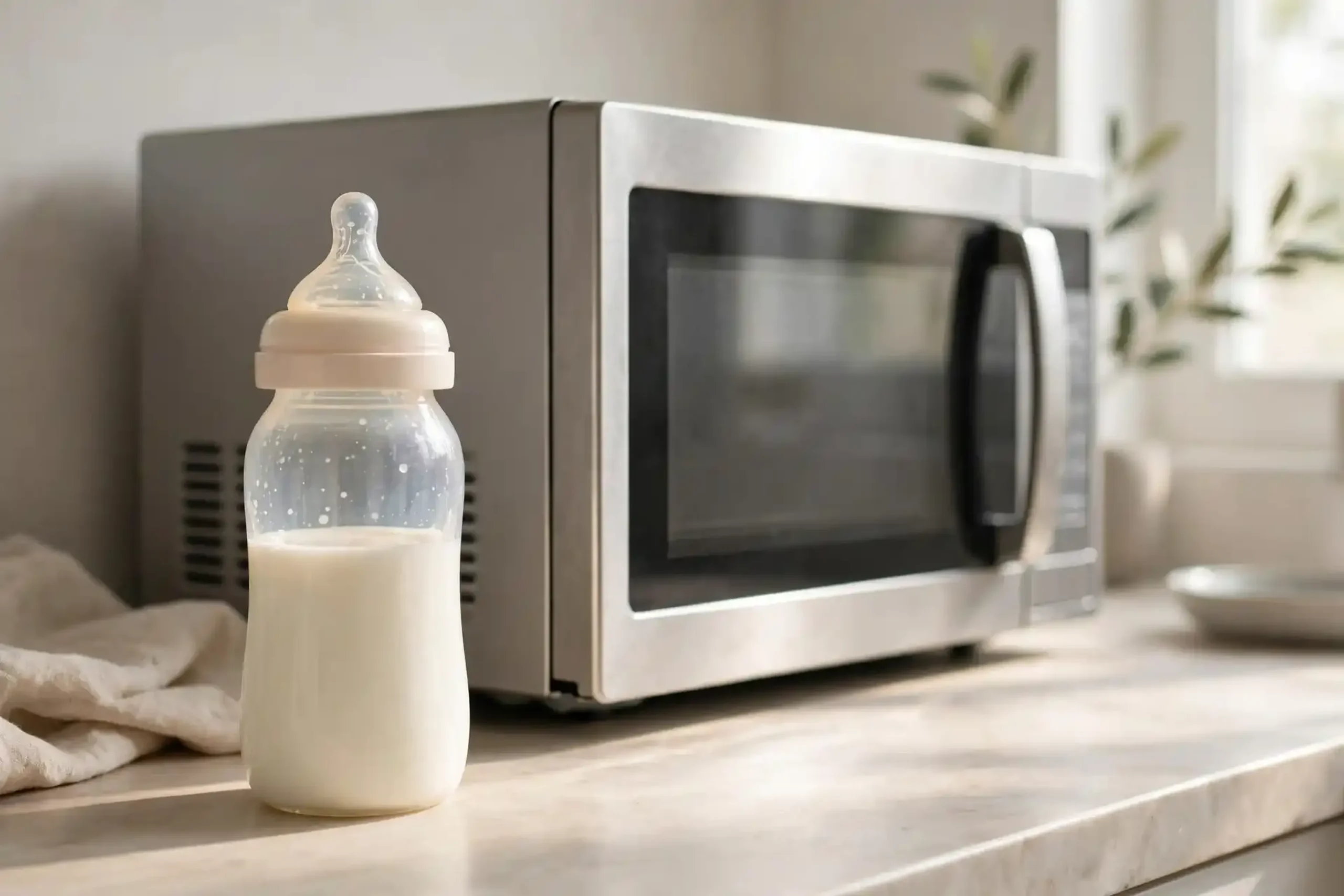
It is 3 a.m., the baby is crying, and the bottle of formula or pumped milk is cold from the fridge. The microwave is right there, and 30 seconds feels like the obvious fix. Every exhausted parent has had this thought. But this is one shortcut you should never take: no major health authority in the world considers it safe to microwave a baby’s bottle, and the reasons are about physics that you cannot see or feel from the outside of the bottle.
The danger is hot spots. Microwaves heat liquids unevenly, so a bottle can feel comfortably warm in your hand while containing pockets of milk hot enough to seriously burn your baby’s mouth and throat. Babies cannot tell you the milk is too hot before it hurts them, and a wrist test on the outside of the bottle will not catch a scalding pocket deep inside. On top of the burn risk, microwaving degrades the protective components in breast milk that make it so valuable.
This guide covers the full picture: why you should never microwave a baby bottle of milk or formula, what the AAP, CDC, and FDA actually say, how to warm a bottle safely without a microwave, how to check the temperature before every feeding, whether glass bottles change anything, the difference between heating milk and steam-sterilizing empty bottles (one is dangerous, the other is fine), and how to handle the 3 a.m. bottle as fast as safely possible.
The Short Answer
No, never microwave a baby bottle containing breast milk or formula. The American Academy of Pediatrics, the CDC, and the FDA all warn against it. Microwaving creates hot spots in the liquid that can burn your baby’s mouth even when the bottle feels cool, and the intense, uneven heat destroys nutrients and immune components in breast milk.
Warm the bottle instead in a bowl of warm water or under warm running water for a few minutes, swirl it gently, and test a few drops on the inside of your wrist before feeding. It should feel warm, not hot. And here is the reassurance tired parents need: bottles do not need warming at all. Formula and breast milk are both safe served cold or at room temperature, and many babies accept them that way happily.
Why You Should Never Microwave a Baby Bottle
There are three separate reasons, and any one of them would be enough.
The first is burns from hot spots, and it is the reason every authority leads with. Microwaves heat by exciting water molecules, and they do it unevenly, creating zones of very different temperatures in the same bottle. The FDA explains the specific trap: microwaving can allow the bottle to remain cool while hot spots develop in the formula that can burn the baby’s mouth. You can shake the bottle and test it on your wrist and still miss a superheated pocket, because the heat is distributed in patches, not evenly. A study published in the journal Pediatrics highlighted this danger for microwaved liquids given to infants. An adult can blow on hot soup or spit out a scalding sip. A baby just swallows, and the burn happens in the mouth and throat before anyone realizes.
The second is nutrient destruction in breast milk. Breast milk is a living fluid containing antibodies, white blood cells, and enzymes like lysozyme that protect the baby from infection. The CDC states plainly that microwaving can destroy nutrients in breast milk, and the rapid, intense heat degrades immunoglobulin A, the antibody that coats the baby’s gut, along with heat-sensitive vitamin C. Pumping breast milk takes real effort, and microwaving it wastes the very components that make it worth the effort.
The third is the container. Many plastic bottles and storage bags are not rated for microwave heating, and the intense, uneven heat can warp them or encourage chemicals to leach into the milk. Even with a microwave-safe bottle, the first two problems remain, so the container is never the thing that makes microwaving okay.
The AAP’s guidance for powdered formula preparation says it in bold: never warm infant formula in a microwave, because microwaving creates hot spots which can burn your baby’s mouth. The AAP and CDC preparation guide walks through every step of safe bottle prep, and the FDA’s formula handling page gives the same warming warning with the bottle-stays-cool explanation.
How to Warm a Baby Bottle Without a Microwave
The safe method is simple and takes only a few minutes. Fill a bowl with warm water, not hot, and stand the sealed bottle in it for a few minutes. Alternatively, hold the sealed bottle under warm running water, rotating it so all sides warm evenly. Keep water out of the bottle and off the nipple, since tap water getting into the milk can contaminate it.
The water temperature matters. It should feel comfortably warm on the inside of your wrist, never hot. Water that is too hot defeats the purpose: it can damage breast milk’s components just like the microwave does, and it can overheat formula. Think warm bath, not hot tea.
Once the bottle feels warm, swirl it gently to mix the milk and even out the temperature. Do not shake it vigorously. Swirling mixes without creating a foamy mess or breaking down the milk’s components. Then test the temperature, which the next section covers in detail.
If you use a bottle warmer, choose one designed for baby bottles, which heats gently and evenly with controlled water temperature. It is the same principle as the bowl of warm water, just automated. What you should never do is heat the bottle directly on the stove or in boiling water, which creates the same hot-spot and overheating problems as the microwave.
For the 3 a.m. feed, the fastest safe routine is to keep it simple: many parents find their baby accepts room-temperature or cold milk just fine, which skips warming entirely. If your baby insists on warm milk, run warm tap water over the bottle while you change the diaper. By the time the diaper is done, the bottle is ready.
How to Check Bottle Temperature Before Feeding
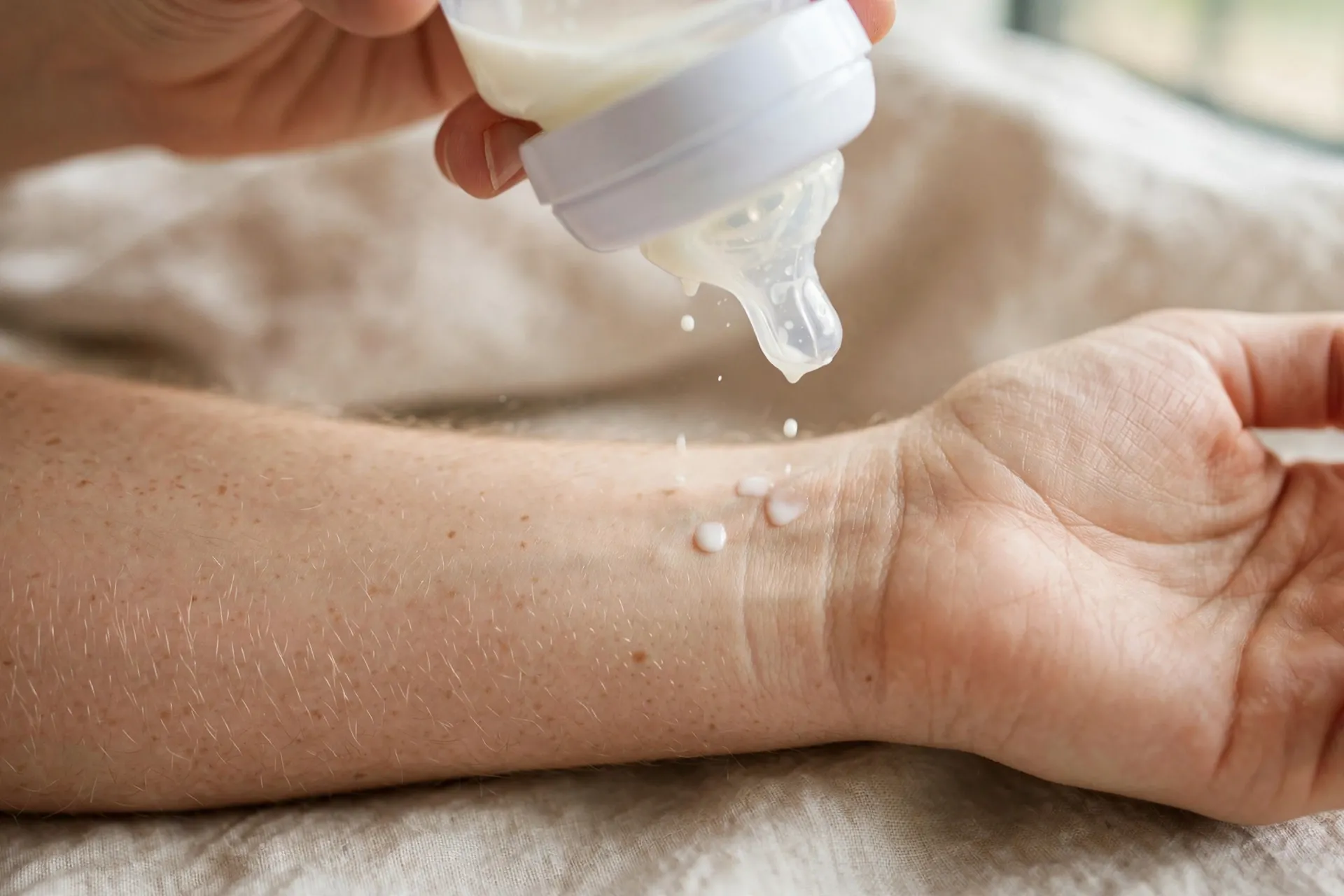
Test every bottle, every time, even if you are sure it is fine. Shake a few drops of the milk onto the inside of your wrist. The inside of the wrist is thin-skinned and sensitive, which makes it a good thermometer. The milk should feel lukewarm, close to body temperature, never hot. If it feels hot on your wrist, it is too hot for the baby. Cool it under cold running water and test again.
This test works because you are testing the milk itself, not the bottle. Feeling the outside of the bottle tells you almost nothing, which is exactly the trap the FDA warns about: the bottle can feel cool while the milk inside has scalding pockets. The wrist test on expressed drops is the standard recommended by the AAP, the CDC, and the FDA alike.
For breast milk, there is one more check. Swirl the bottle first, because the fat in stored breast milk separates and rises to the top, and an unmixed bottle gives you a misleading test. After swirling, the milk should look uniform, and the drops on your wrist tell you the true temperature.
Can You Microwave Glass Baby Bottles?
Glass being microwave-safe does not make microwaving the milk safe. This is the most common misunderstanding on this topic. A glass baby bottle will not warp or leach chemicals in the microwave, and many are labeled microwave-safe as objects. But the milk or formula inside still heats unevenly, the hot spots still form, and the burn risk to the baby is exactly the same. The AAP and FDA warnings are about the liquid, not the container, so switching to glass changes nothing about the safety of microwaving a bottle of milk.
Glass has one additional risk: thermal shock. Moving a cold glass bottle straight into intense microwave heat can crack or shatter the glass, especially if it has any chips or flaws. Always inspect glass bottles for cracks before use, and never microwave a damaged one.
Where glass bottles and microwaves do meet safely is sterilizing, which is a completely different job. Microwave steam sterilizers use the microwave to boil water into steam that sterilizes empty bottles, nipples, and pump parts, and that is perfectly fine because there is no milk involved and no baby drinking the result. For the general rules on glass containers in the microwave, see our guide to microwaving glass. Tommee Tippee’s sterilizing guide explains the steam method, which typically takes a few minutes and kills the vast majority of germs. Sterilizing empty bottles with steam: yes. Heating milk in a bottle with microwaves: never. Keep those two jobs separate and the rules are simple.
Breast Milk vs. Formula: What Changes
The no-microwave rule covers both, but the details differ slightly. For breast milk, the nutrient argument is strongest. The CDC’s guidance is explicit: never thaw or heat breast milk in a microwave, because microwaving can destroy nutrients and create hot spots that burn the baby’s mouth. Thaw frozen breast milk in the refrigerator overnight or in lukewarm water, warm it in a bowl of warm water, and use it within 2 hours once warmed or brought to room temperature. Never refreeze thawed breast milk. The CDC’s breast milk handling page is the definitive reference.
For formula, the burn argument leads, with nutrient concerns behind it. Formula does not need warming at all, and the AAP notes that many babies drink it cold or at room temperature without complaint. If you do warm it, the bowl-of-warm-water method applies exactly the same way. Measure the water first, add the exact amount of powder the label calls for, and never dilute formula with extra water to stretch it, which can make a baby seriously ill. Use prepared formula within 2 hours at room temperature, refrigerate what you do not use immediately and use it within 24 hours, and discard any formula left in the bottle after a feeding, since the baby’s saliva introduces bacteria.
One thing both share: never reheat a half-finished bottle later. Once a baby has drunk from it, the clock starts, and leftovers get discarded, not saved. It feels wasteful, but it is the rule for a reason.
Choosing a Safe Bottle in the First Place
The bottle material matters for everyday safety, even though no material makes microwaving the milk okay. The three common options are glass, plastic, and silicone. Glass is the most inert: it does not leach anything, it handles heat well, and it is easy to clean, though it is heavier and can break if dropped. Plastic bottles should be BPA-free and made from food-grade polypropylene, and you should check the manufacturer’s guidance for temperature limits. Silicone bottles are soft, lightweight, and heat-tolerant, and they are growing in popularity.
Whatever you choose, check that every part, including nipples, rings, and caps, is rated for how you plan to use it. Nipples are usually silicone or latex, and they should not be microwaved either; sterilize them with steam or boiling water instead. Avoid bottles with printed decorations on the inside surface, which can degrade. And retire any bottle that is cracked, deeply scratched, or warped, since damage compromises both safety and cleaning.
For a broader look at which plastics handle heat and which do not, our plastic guide breaks it down, and the symbols guide shows how to read the marks on the bottom of any container.
The 3 A.M. Bottle: A Fast, Safe Routine
When the baby is screaming and you are half asleep, you need a routine that is fast and impossible to get wrong. Here is one. If you prep bottles ahead, store the measured water in the bottle and the powder separately, then mix when needed, which is faster than warming a pre-mixed cold bottle. If the baby takes room-temperature milk, you are done in the time it takes to shake the bottle.
If the baby wants it warm, hold the sealed bottle under warm tap water while you do the diaper change. Two minutes of running water brings a fridge-cold bottle to comfortable warmth. Swirl, wrist-test, feed. Keep a small bowl by the sink if you prefer the still-water method, but running water is faster because the constant flow carries cool water away.
What you do not do, no matter how tired you are, is microwave it. Tired parents make mistakes, and this is the one mistake with a burn unit at the end of it. Tape the rule inside a cabinet door if you need to: no microwave for bottles, ever. The warm-water method adds two minutes. Those two minutes are the whole price of doing it safely.
Frequently Asked Questions
Straight answers for tired parents, with the detail behind each one.
Can you microwave baby bottles?
Never microwave a baby bottle containing breast milk or formula. The AAP, CDC, and FDA all warn against it because microwaves heat liquids unevenly, creating hot spots that can burn your baby’s mouth and throat even when the bottle feels cool. The intense heat also destroys nutrients and immune components in breast milk. Warm the bottle in a bowl of warm water or under warm running water instead.
Why should you not microwave baby formula?
Because of hot spots. The FDA explains that microwaving can leave the bottle feeling cool while scalding pockets develop inside the formula, and a baby cannot warn you before swallowing. A study in the journal Pediatrics highlighted this burn danger specifically for infants. Formula also loses some heat-sensitive nutrients to the intense, uneven heating. The safe method is a bowl of warm water for a few minutes, then a wrist test before feeding.
How do you warm a baby bottle without a microwave?
Stand the sealed bottle in a bowl of warm, not hot, water for a few minutes, or hold it under warm running water, rotating it for even warming. Keep tap water out of the bottle and off the nipple. Swirl gently to mix, then test a few drops on the inside of your wrist. It should feel lukewarm, never hot. A bottle warmer designed for baby bottles does the same job automatically. Never heat a bottle directly on the stove or in boiling water.
Can you microwave glass baby bottles?
The glass being microwave-safe does not make the milk inside safe. Hot spots form in the liquid regardless of the container, so the burn risk is identical in glass and plastic. Glass adds a thermal shock risk: a cold bottle blasted with microwave heat can crack, especially if it has chips or flaws. Glass bottles are excellent for serving and for steam sterilizing, but never microwave milk or formula in them.
How do you check bottle temperature before feeding?
Shake a few drops onto the inside of your wrist before every feeding. The milk should feel lukewarm, close to body temperature, never hot. Feeling the outside of the bottle is not a valid test, because the bottle can feel cool while the milk inside has scalding pockets. For breast milk, swirl the bottle first so the separated fat mixes back in, then test. If the drops feel hot on your wrist, cool the bottle under cold water and test again.
Can you microwave breast milk?
No. The CDC says never thaw or heat breast milk in a microwave, because microwaving destroys nutrients and creates hot spots that can burn the baby’s mouth. The uneven heat degrades antibodies, the antibacterial enzyme lysozyme, and vitamin C, which are the components that make breast milk uniquely valuable. Thaw frozen milk in the refrigerator or in lukewarm water, warm it in a bowl of warm water, and use it within 2 hours.
Can you sterilize baby bottles in the microwave?
Yes, and this is completely different from heating milk. Microwave steam sterilizers use the microwave to boil water into steam, which sterilizes empty bottles, nipples, and pump parts in a few minutes. There is no milk involved and no baby drinking the result, so the hot-spot danger does not apply. Wash everything in hot soapy water first, then follow the sterilizer’s instructions. Sterilizing empty bottles with steam is safe; microwaving milk in a bottle is not.
What happens if you accidentally microwaved a bottle of formula?
Discard it and prepare a fresh bottle. It feels wasteful, but you cannot verify that no scalding pocket formed, and the wrist test cannot guarantee the whole bottle is safe. The formula may also have lost nutrients to the uneven heat. One accident is not a disaster as long as the baby did not drink it, so just remake the bottle with the warm-water method and move on.
Can you microwave water to mix with formula?
It is not recommended. Microwaved water heats unevenly and can superheat, erupting when disturbed, which is a burn risk while you are holding a baby. It can also come out far hotter than you expect, which damages formula nutrients when mixed. Boil water in a kettle or on the stove if you need sterile water for powdered formula, let it cool to a safe temperature, then mix. For everyday prep with safe tap water, no heating is needed at all.
Which bottles are safest: glass, plastic, or silicone?
All three are safe when used as directed; the choice is about trade-offs. Glass is the most inert and easiest to clean but heavier and breakable. BPA-free polypropylene plastic is light and shatterproof but should be replaced if warped or scratched. Silicone is soft, light, and heat-tolerant. No material makes microwaving the milk safe, so choose based on handling and cleaning, check every part’s temperature ratings, and retire damaged bottles.
Can you microwave bottle nipples?
No. Nipples are usually silicone or latex, and microwaving them can degrade the material, create hot spots, and warp the shape so it no longer seals properly. Sterilize nipples with a microwave steam sterilizer, which uses steam rather than direct microwaving of the item in liquid, or boil them in water on the stove. Inspect nipples regularly and replace any that are sticky, discolored, cracked, or torn.
How long does warmed formula last?
Use warmed formula within 2 hours, and discard whatever the baby does not finish. Once the baby has drunk from the bottle, saliva introduces bacteria, so leftovers cannot be saved for later, even in the refrigerator. Prepared formula stored in the fridge before warming keeps for 24 hours. These time limits are about bacterial growth, not about the warming method, so they apply whether you used warm water or a bottle warmer.
Do you need to warm a baby’s bottle at all?
No. Formula does not need warming, and breast milk can be served cold or at room temperature. The CDC and AAP both note that warming is optional and many babies accept unwarmed milk happily. If your baby refuses cold milk, warm it gently with the water method. Skipping warming entirely is the fastest and safest option, especially for night feedings.
Can you reheat a half-finished bottle later?
No. Once a baby has fed from a bottle, discard the remainder within 2 hours and do not reheat it later. The baby’s saliva seeds the milk with bacteria that multiply at room temperature, and reheating does not make it safe. Make smaller bottles if you find yourself throwing a lot away. Fresh formula or a fresh thawed portion of breast milk is always the safe choice.
What is the fastest safe way to prepare a night bottle?
Skip warming if your baby accepts room-temperature milk, which most do once they are used to it. Otherwise, store measured water in the bottle and powder separately, mix on demand, and warm the sealed bottle under warm running tap water while you change the diaper. Two minutes of running water, a swirl, and a wrist test, and you are feeding. Keep the microwave out of the routine entirely, no matter how tired you are.
The Bottom Line
Can you microwave baby bottles? Never when they contain milk or formula. The hot spots that microwaves create can burn your baby’s mouth even when the bottle feels cool, and the uneven heat destroys the nutrients and immune factors that make breast milk special. The AAP, the CDC, and the FDA are unanimous on this, and it is one of the clearest safety rules in infant feeding.
The safe routine is just as easy once it is a habit: warm water, a swirl, and the wrist test. Bottles do not even need warming, and many babies drink them cold without a second thought. For the 3 a.m. feed, warm tap water while you change the diaper beats the microwave on both speed and safety. And remember the distinction that confuses people: steam-sterilizing empty bottles in the microwave is perfectly fine, because there is no milk and no baby involved. Heat the bottle with steam all you want. Just never microwave the milk. For the full container-by-container safety picture, browse the complete microwave safety chart.
