

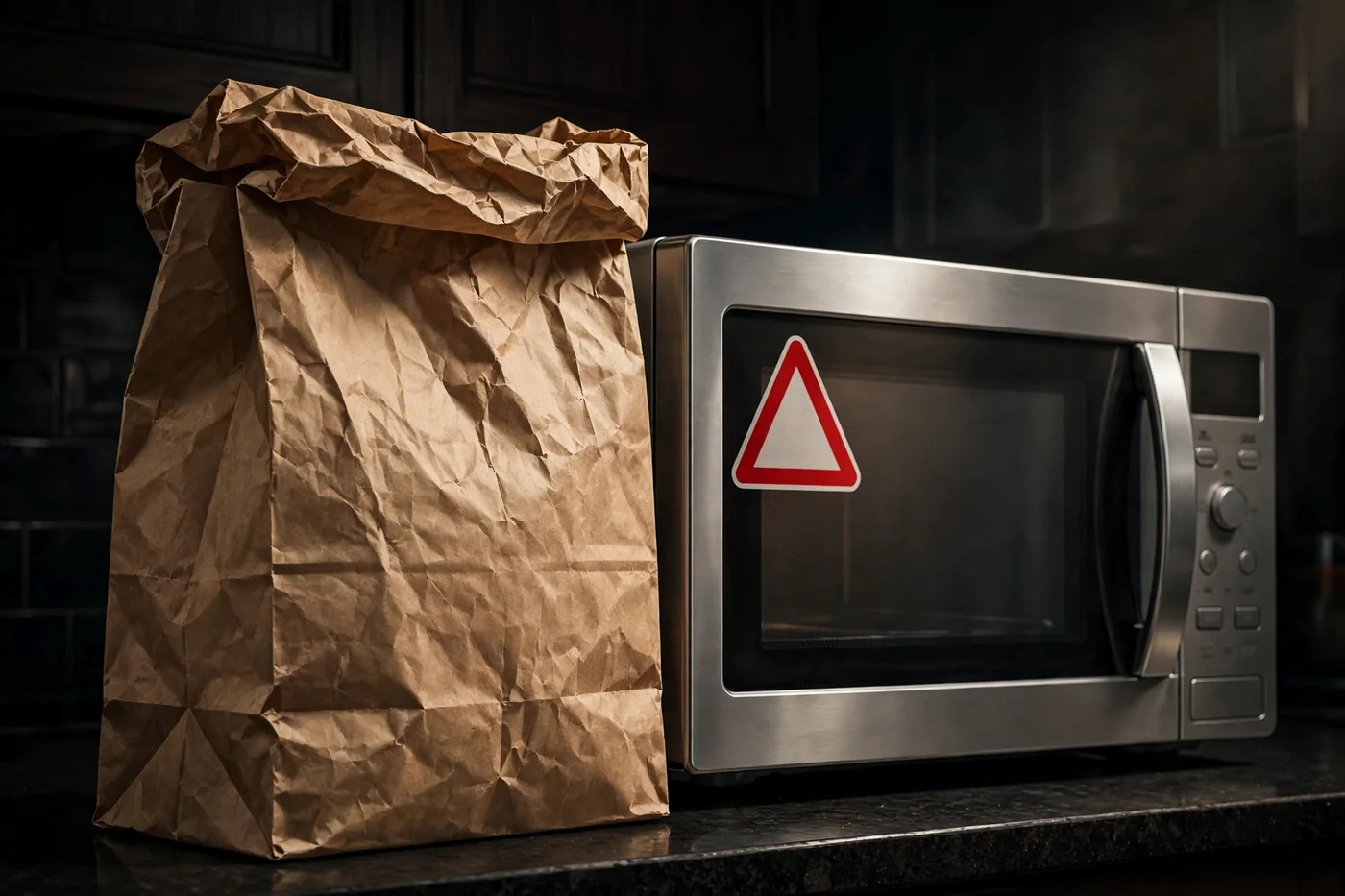
Let us be completely clear from the first sentence: do not put a brown paper bag in the microwave. Not for ten seconds, not to warm a sandwich, not to pop popcorn, not as a trick you saw online. This article is a safety warning, not a how-to, because there is no safe how-to here.
Paper bags seem harmless. They are just paper, and paper towels go in the microwave all the time, so what could go wrong? Quite a lot, it turns out. The USDA’s Food Safety and Inspection Service warns that brown paper bags “are not sanitary, may cause a fire, and may emit toxic fumes,” adding that intense heat may cause a bag to ignite and start a fire in the oven. That is about as blunt as a food safety agency gets.
This guide explains exactly why paper bags are dangerous in the microwave, what happens inside the oven when you try it, why store-bought popcorn bags are a completely different product, what to do if a bag ever does catch fire, and the safe alternatives that do the job better. Read it once, and you will never be tempted.
The Short Answer
No. Never microwave a brown paper bag. Brown paper bags are not designed for microwave heat: they can catch fire, they can release toxic fumes from inks and recycled fibers, and they are not sanitary for food heating. If you need to reheat food, transfer it to a microwave-safe glass, ceramic, or labeled paper plate instead.
There is no safe time limit, no safe power level, and no folding trick that makes a paper bag microwave-safe. The only paper bags that belong in a microwave are products specifically manufactured and labeled for it, like store-bought microwave popcorn bags, which are engineered completely differently. For the full list of what belongs and what does not, see Can You Microwave It? The Complete Safety Chart and things you should never put in a microwave.
Why Brown Paper Bags Catch Fire in the Microwave
Three things about a brown paper bag add up to a fire risk, and understanding them makes the warning stick.
First, the bag is dry. Microwaves heat water molecules, and a dry paper bag has almost no moisture to absorb the energy gently. Instead, the energy concentrates in the paper fibers themselves, and dry paper heats fast. Microwave safety researchers note that dry paper is far more ignition-prone than moist paper, because there is no water to soak up the energy and keep temperatures down.
Second, the bag is thin with lots of surface area and folded edges. Folds and crinkled edges create points where electric field intensity spikes, and thin spots heat faster than the rest. A bag does not heat evenly; it develops hot spots, and a hot spot on dry thin paper is where ignition starts.
Third, time works against you quickly. Paper ignites around 451 degrees Fahrenheit (yes, like the book title), and a microwave can push thin dry paper past that point in far less time than people expect, especially at full power. The bag does not need to burst into open flame to be dangerous, either: smoldering and charring produce smoke and carbon monoxide in your kitchen.
This is also why the USDA uses the word “sanitary” in its warning. Grocery and lunch bags are manufactured for carrying, not for food heating. Recycled brown paper can contain inks, adhesives, and residues from its previous life, and heating drives those chemicals out as fumes. As Woman & Home’s microwave safety guide notes, the USDA warns that heated paper bags may emit toxic fumes from exactly these inks and residues. You would not cook food in a shopping bag on the stove; the microwave version is no better.
What Happens If You Microwave a Paper Bag: The Timeline
People imagine the bag instantly bursting into flames, but the real progression is sneakier, which is part of the danger.
In the first seconds, nothing visible happens. The bag sits there, the microwave hums, and you start to think the warnings were exaggerated. Inside the paper, though, hot spots are already forming at folds and thin areas.
Within a minute or so at full power, you may notice a hot, papery smell. That smell is the paper scorching. The bag may discolor, turning brown at the edges or developing dark spots. If you open the door at this point, you will feel intense heat coming off the bag.
Push further and the scorching turns to smoldering: the paper chars, smoke appears, and the bag can ignite. An ignited bag inside a microwave is a genuine kitchen fire. The confined space feeds it, the microwave’s own components can be damaged, and opening the door feeds it oxygen.
Even in the “lucky” version where you stop before flames, you have filled your kitchen with acrid smoke, possibly released toxic fumes from inks, and scorched the inside of your microwave. There is no version of this experiment with a good outcome, which is why every credible source, from Tom’s Guide’s microwave safety list to the USDA, files brown paper bags under never.
Store Popcorn Bags Are Not Paper Bags: The Crucial Difference
This is the confusion that causes most of the trouble. “But microwave popcorn comes in a paper bag, so paper bags must be okay.” They are not the same product at all.
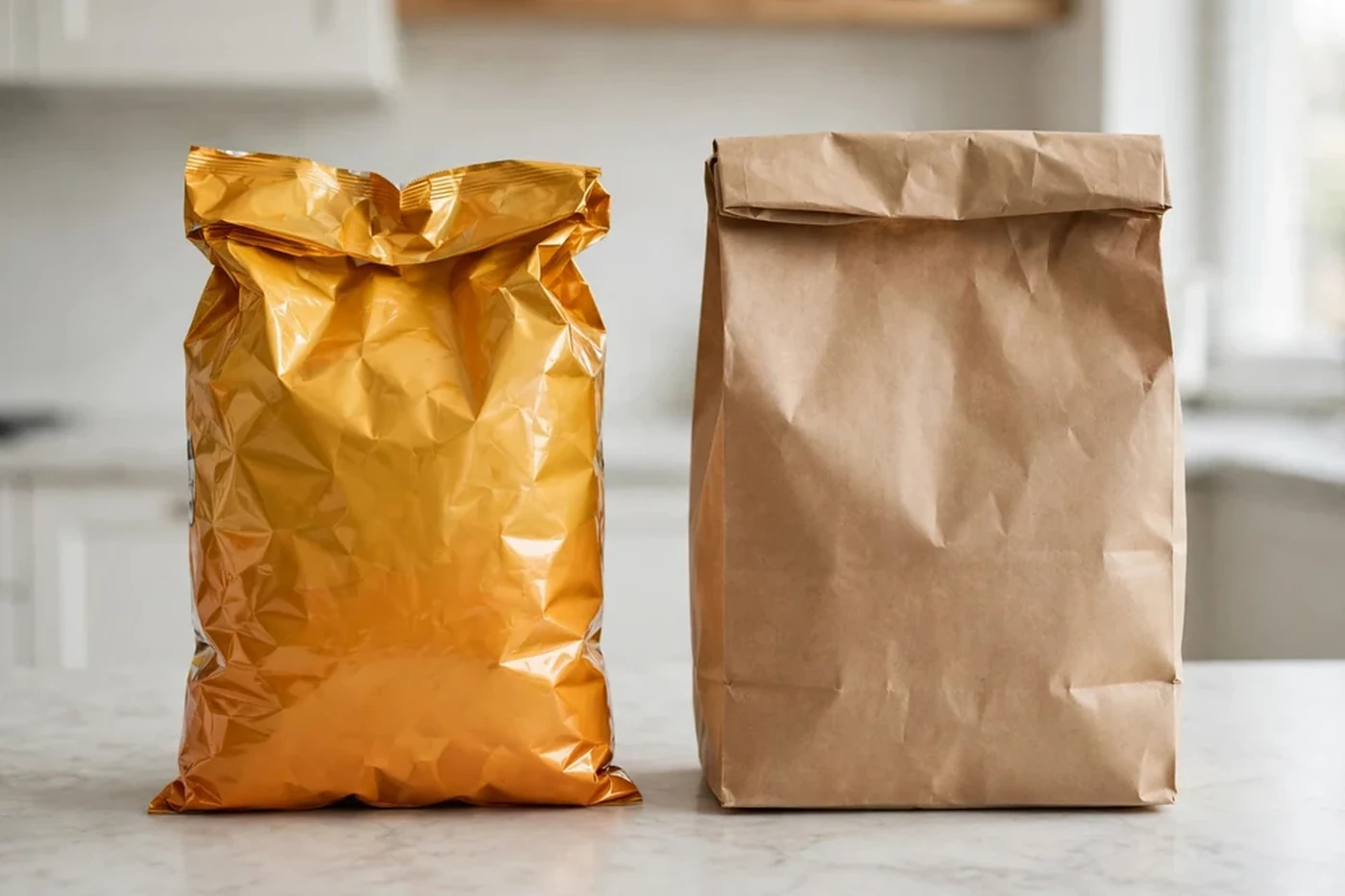
A store-bought microwave popcorn bag is an engineered piece of food packaging. It contains a susceptor: a thin metallized film layer laminated into the bag that absorbs microwave energy and converts it into intense, focused heat, which is what actually pops the corn. The bag’s paper layers, inks, and adhesives are all selected and tested for high microwave heat, and the whole package goes through food-contact safety testing for its exact intended use.
A brown grocery or lunch bag has none of that. No susceptor, no heat-rated materials, no food-heating testing, no safety engineering whatsoever. It is carrying-grade paper. Putting plain popcorn kernels in a brown paper bag and microwaving it, a trick that circulates online, gives you kernels in a bag that can scorch, smoke, and ignite while heating unevenly. Some kernels pop, some scorch, and the bag is a fire risk the entire time.
The rule of thumb: only microwave a bag that was manufactured, tested, and labeled for microwaving. A popcorn bag qualifies. A grocery bag, lunch bag, or takeout bag never does. If you want homemade popcorn, use a microwave-safe glass bowl with a vented lid and a spoonful of oil, or pop it on the stove. Both are safer and taste better.
The “Just a Few Seconds” Myth and Other Dangerous Ideas
Every warning article collects the same rationalizations, so let us deal with them directly.
“Just ten seconds is fine.” No. Ignition depends on power, bag condition, and hot spots, not on a magic safe number of seconds. A thin, dry bag at full power can scorch in seconds, and “a few seconds” has a way of becoming a minute when you get distracted.
“Fold the top down and it is safe.” Folding changes nothing about the paper’s flammability. If anything, extra folds create more edges where hot spots form.
“But paper plates are fine, so bags are fine.” Paper plates labeled microwave-safe are manufactured for the purpose, often with heat-rated coatings, and they are used for short reheats of moist food that keeps them cool. A brown bag is a different product with a different job. Our paper plates in the microwave guide explains which plates pass and why.
“I saw someone do it on social media.” Social media is full of people doing unsafe things for views and getting lucky on camera. The failures do not get posted. Fire services and appliance repair technicians see the aftermath that never makes it into a video.
“My bag is plain with no ink, so no toxic fumes.” Even unprinted brown bags can be made from recycled stock with unknown residues, and the fire risk exists regardless of ink. No ink removes one hazard and leaves the other two standing.
There is no clever workaround here. The safe move is always the same: take the food out of the bag and put it in a proper container.
What To Do If a Paper Bag Catches Fire in the Microwave
If it ever happens, whether from a bag or anything else, here is the drill. Do not panic, and do not open the door immediately.
First, turn the microwave off or unplug it if you can reach the plug safely. Starving the fire of continued energy is step one.
Second, keep the door closed. A small fire inside a closed microwave will often smother itself once the energy stops, because the sealed cavity limits oxygen. Opening the door feeds it fresh air and can turn smoldering into flames.
Third, watch it. If the fire dies down on its own, leave the door closed until everything is cool, then ventilate the kitchen and inspect the microwave for damage before using it again.
Fourth, if flames are visible and growing, or if the fire spreads beyond the microwave, call your local emergency number and get everyone out. Do not try to be a hero with a kitchen fire that is escaping the appliance.
After any microwave fire, have the appliance checked before using it again. Smoke and heat can damage the waveguide cover, the door seals, and internal components in ways you cannot see. And throw away any food that was in the microwave during the fire; smoke contamination is not something you can wash off.
Prevention, of course, beats all of this: never put the bag in there in the first place.
Lunch Bags, Grocery Bags, and Takeout Bags: All Equally Unsafe
People ask whether some paper bags are safer than others. They are not, in any way that matters.
Standard brown lunch bags are the classic offender: thin, dry, folded, and exactly the wrong geometry for microwave energy. Grocery bags are thicker but share every relevant property: dry paper, unknown recycled content, inks and adhesives, and no heat testing. Paper takeout bags and bakery bags are the same story.
What about white paper bags? The color makes no safety difference. White bags avoid some ink concerns but keep the full fire risk. Wax-coated or plastic-coated paper bags are worse, not better: coatings can melt, and some can spark.
The only bags that belong in a microwave are ones labeled for it by their manufacturer, which in practice means microwave popcorn bags and specialty microwave cooking bags sold for that exact purpose. Everything else stays out. When you bring food home in a paper bag, the bag’s job ended at your front door. Transfer the food to a microwave-safe dish, and recycle or compost the bag.
What Paper Actually Is Safe in the Microwave
Since paper bags are out, here is what paper you can use, so you are not left guessing.
Plain white paper towels are the workhorse: great for covering bowls to prevent splatters, wrapping a sandwich for a short reheat, or blotting. Use plain, unprinted towels, keep times short, and do not let a towel dry out completely under sustained heat. Our paper towels in the microwave guide has the full details.
Parchment paper is safe for short microwave uses like covering food or separating items. Wax paper is also generally safe for brief covering, though it is not for high-heat cooking. The two are often confused, so make sure you know which one you are holding before you use it.
Microwave-safe paper plates, the ones actually labeled as such, are fine for reheating. Avoid recycled-content plates, printed plates, and foam plates unless labeled.
The pattern across all of these: manufactured for microwave use, labeled as such, used for short times with moist food. Brown paper bags fail every part of that test.
Safe Alternatives for Everything You Wanted the Bag For
Whatever job you had in mind for the paper bag, there is a better tool.
Reheating a sandwich or pastry? Put it on a microwave-safe plate, cover loosely with a plain paper towel, and heat in short bursts. The towel keeps the bread from going rubbery by trapping a little steam.
Warming up takeout? Slide the food out of every bag and box into a glass or ceramic dish. Glass reheats more evenly than any paper container and does not add flavors. Our glass in the microwave guide covers what to look for.
Popping popcorn? A microwave-safe glass bowl with a vented lid plus kernels and a little oil gives you real popcorn with no fire risk and no fake-butter chemicals. Or use the stove: a pot, oil, kernels, and a lid is the classic for a reason.
Covering food to prevent splatters? A microwave-safe lid left ajar, an inverted microwave-safe plate, or a plain paper towel all work. Check the bottom of any lid or container for the microwave-safe symbol, a small microwave icon with wavy lines, to confirm it is truly safe.
Transporting food to reheat later? Keep using the paper bag for transport; that is what it is for. Just transfer the food before it goes in the microwave. The bag was never the cooking vessel.
Frequently Asked Questions
Straight answers, all framed the same way: do not do it.
Can you put a brown paper bag in the microwave?
No. Brown paper bags are not sanitary for food heating, they can catch fire, and they can emit toxic fumes when heated, according to the USDA’s Food Safety and Inspection Service. There is no safe time, power level, or folding technique. Transfer the food to a microwave-safe dish instead.
Why do brown paper bags catch fire in the microwave?
Because they are dry, thin, and full of folds. With almost no moisture to absorb microwave energy gently, the energy concentrates in the paper fibers and creates hot spots, especially at folded edges. Dry paper ignites at temperatures a microwave reaches quickly, and once smoldering starts in the confined oven cavity, it can turn into a real fire.
Can you pop popcorn in a paper bag in the microwave?
No, not in a plain brown paper bag. The online trick of putting kernels in a grocery bag and microwaving it is a fire risk: the bag can scorch, smoke, and ignite while heating the kernels unevenly. Use a microwave-safe glass bowl with a vented lid, the stovetop, or a store-bought microwave popcorn bag that was engineered and labeled for the job.
What happens if you microwave a paper bag?
At first, nothing visible, while hot spots form in the paper. Then comes a hot papery smell as the bag scorches and discolors. Left longer, the paper chars and smolders, producing smoke, and it can ignite into a fire inside the microwave. Even without flames, you get a smoke-filled kitchen, possible toxic fumes from inks, and a scorched microwave interior.
Are store microwave popcorn bags the same as paper bags?
No, they are completely different products. Microwave popcorn bags contain a susceptor layer that converts microwave energy into focused heat, and every material in the bag is selected and tested for high microwave heat and food contact. A brown grocery bag has no susceptor, no heat-rated materials, and no safety testing. Only the manufactured, labeled product belongs in the microwave.
Can a paper bag explode in the microwave?
It does not typically explode like a sealed container, but it can ignite, and a burning bag inside a microwave is dangerous enough without an explosion. Sealed bags can also build steam pressure and burst open, splattering hot contents. Either way, the outcome is a fire or burn hazard, not a cooking method.
What should I do if a paper bag catches fire in the microwave?
Turn the microwave off, keep the door closed so the fire is starved of oxygen, and watch it. Most small microwave fires smother themselves once the energy stops. If flames grow or spread beyond the microwave, call emergency services. Afterward, ventilate the kitchen, discard any food that was inside, and have the microwave inspected for hidden damage before using it again.
Are lunch bags and grocery bags equally unsafe?
Yes. Lunch bags, grocery bags, bakery bags, and takeout bags all share the dangerous properties: dry paper, folded construction, unknown recycled content and inks, and zero heat testing. Thicker grocery bags are not meaningfully safer than thin lunch bags. White bags are not safer than brown ones. None of them belong in the microwave.
Can you microwave a paper bag for a few seconds?
No. There is no safe number of seconds. Ignition depends on the bag’s dryness, thickness, folds, and your microwave’s power, not on a timer. A thin dry bag at full power can scorch in seconds, and brief intentions have a way of stretching longer when you get distracted. The safe number of seconds for a paper bag in the microwave is zero.
Why do some people say microwaving popcorn in a paper bag is fine?
Because they got lucky, and luck is not safety. The trick circulates on social media where successes get posted and fires do not. Fire services, appliance technicians, and food safety agencies all say the same thing: plain paper bags are a fire and fume risk in the microwave. Anecdotes from strangers online do not outweigh the USDA’s explicit warning.
Can you microwave food wrapped in a paper bag?
No. Wrapping the food does not change the bag’s flammability, and it adds a new problem: the food’s steam makes the bag soggy and weak while the dry outer layers still scorch. If you want to wrap food for the microwave, use a plain paper towel or parchment paper, both of which are actually rated for the job.
What paper is actually safe in the microwave?
Plain white paper towels, parchment paper, wax paper for brief covering, and paper plates that are specifically labeled microwave-safe. All of these are manufactured for microwave use and meant for short times with moist food. Recycled, printed, or coated papers are out, and brown paper bags are in a category of their own: never.
Can you microwave a paper bag with the top rolled down?
No. Rolling the top changes nothing about the paper’s ignition risk; it just adds more folds, which are exactly where hot spots form. There is no folding technique, no dampening trick, and no power setting that makes a brown paper bag safe. Take the food out and use a real container.
Where should I reheat food instead of a paper bag?
In a microwave-safe glass or ceramic dish, which are the gold standards for reheating. For covering, use a microwave-safe lid left ajar or a plain paper towel. Keep using paper bags for what they are good at, carrying food home, and make the transfer to a proper dish part of your routine.
The Bottom Line
Can you microwave paper bags? No, and this is one of the few microwave questions with no gray area at all. Brown paper bags can catch fire, they can release toxic fumes, and they were never built for heat. The USDA says so explicitly, fire professionals see the results, and there is no trick that changes the physics of dry thin paper in a microwave.
The good news is that everything a paper bag was supposed to do has a safer replacement: glass and ceramic dishes for reheating, plain paper towels and parchment for covering, and real popcorn methods for movie night. Make the transfer from bag to dish automatic, and this particular danger disappears from your kitchen permanently. For every other material question, the complete microwave safety chart is one click away.
