

Leftover rice is one of the most reheated foods on earth, and also one of the most misunderstood. Somewhere along the way you probably heard that reheated rice can give you food poisoning, and then you heard someone else say that is a myth, and now you are standing in front of the microwave with yesterday’s rice wondering who is right.
They are both half right. Reheating rice in the microwave is perfectly safe, and millions of people do it daily without a problem. But rice carries a specific food-poisoning risk that most other leftovers do not, and the danger has almost nothing to do with the reheating. It has everything to do with what happened to the rice in the hours after it was cooked, before it ever reached your fridge.
This guide gives you the complete, honest picture. You will learn what fried rice syndrome actually is, the bacterium behind it and why reheating cannot fix the real mistake, the exact cooling and storage rules that keep rice safe, how to reheat rice in the microwave so it comes out steaming and fluffy instead of dry and hard, how long rice lasts in the fridge and freezer, and the answers to every question people ask about leftover rice.
The Short Answer
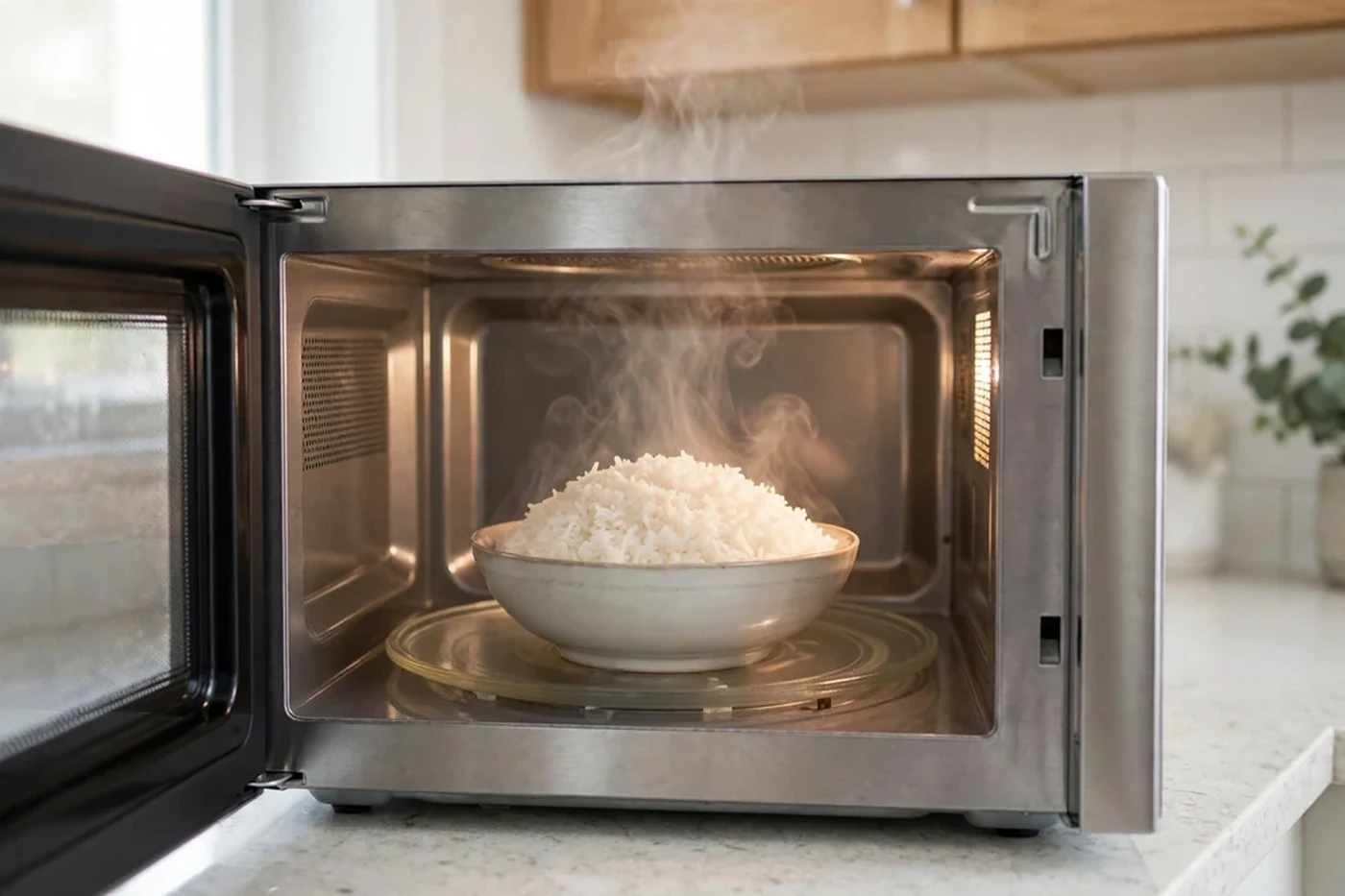
Yes, you can reheat rice in the microwave safely, as long as the rice was cooled quickly and refrigerated within 2 hours of cooking. The reheating itself is not the risk. The risk is rice that sat out at room temperature too long before refrigerating, because a bacterium called Bacillus cereus can grow in it and produce a toxin that reheating cannot destroy.
The safe routine is simple: cool cooked rice fast (spread it in a shallow container), refrigerate within 2 hours, keep it 3 to 4 days, and reheat only the portion you will eat until it is steaming hot throughout, at least 165 degrees Fahrenheit. Never reheat rice more than once. For the broader food-safety picture on reheating, see Can You Microwave It? The Complete Safety Chart.
What Is Fried Rice Syndrome? The Bacterium Behind It
Fried rice syndrome is the nickname for food poisoning caused by Bacillus cereus, a bacterium whose spores are naturally present on dry rice. The name comes from the classic scenario: cooked rice left out, then fried the next day. But the same risk applies to any cooked rice, pasta, or starchy food left at room temperature too long.
Here is the sequence that causes the illness. Dry rice carries Bacillus cereus spores, which are essentially armored seeds that survive normal cooking temperatures. Cooking kills the active bacteria but not the spores. If the cooked rice then sits in the temperature danger zone, between 40 and 140 degrees Fahrenheit, the spores wake up, multiply rapidly, and produce toxins in the rice.
There are two forms of the illness. The emetic (vomiting) form comes from a toxin already formed in the rice before you eat it; symptoms hit fast, typically within 1 to 6 hours, with nausea, vomiting, and cramps. The diarrheal form comes from bacteria that produce toxin inside your intestines; it arrives later, 6 to 15 hours after eating, with watery diarrhea and abdominal pain. Food Safety News’ guide to Bacillus cereus and leftover rice describes the same two syndromes and the same prevention rules. Most healthy people recover within a day, but it can be severe for young children, older adults, pregnant women, and anyone with a weakened immune system.
The CDC has documented outbreaks tied to rice cooled at room temperature, including cases at child day care centers where rice was cooked the night before, cooled on the counter, and served the next day. The CDC estimates Bacillus cereus causes tens of thousands of US foodborne illness cases each year, and rice is its most famous vehicle.
The Critical Fact: Reheating Cannot Undo the Mistake
This is the single most important paragraph in this guide, so read it twice.
If Bacillus cereus has already grown in rice and produced its emetic toxin, reheating the rice will not make it safe. The bacteria’s vegetative cells die in the heat, but the toxin they produced is heat-stable: microwaving, boiling, and frying do not break it down. As the University of Washington explains it: when you reheat contaminated rice, you are killing the cells but not destroying the toxins.
This flips the usual food-safety logic on its head. With most leftovers, thorough reheating is the safety net that catches earlier mistakes. With rice, there is no net. The safety has to happen before the rice goes into the fridge, in the cooling step that most people skip.
That is also why “reheated rice syndrome” is a misleading name, as food-safety writers have pointed out. The danger is not the reheating; it is the improper storage. Rice that was cooled quickly and refrigerated promptly is safe to reheat. Rice that sat on the counter for hours is not safe no matter how aggressively you nuke it. Once you internalize that distinction, every rule below makes obvious sense.
The Safe Rice Routine: Cooling, Storing, and Timing
Here is the routine that keeps rice safe from pot to plate to leftovers.
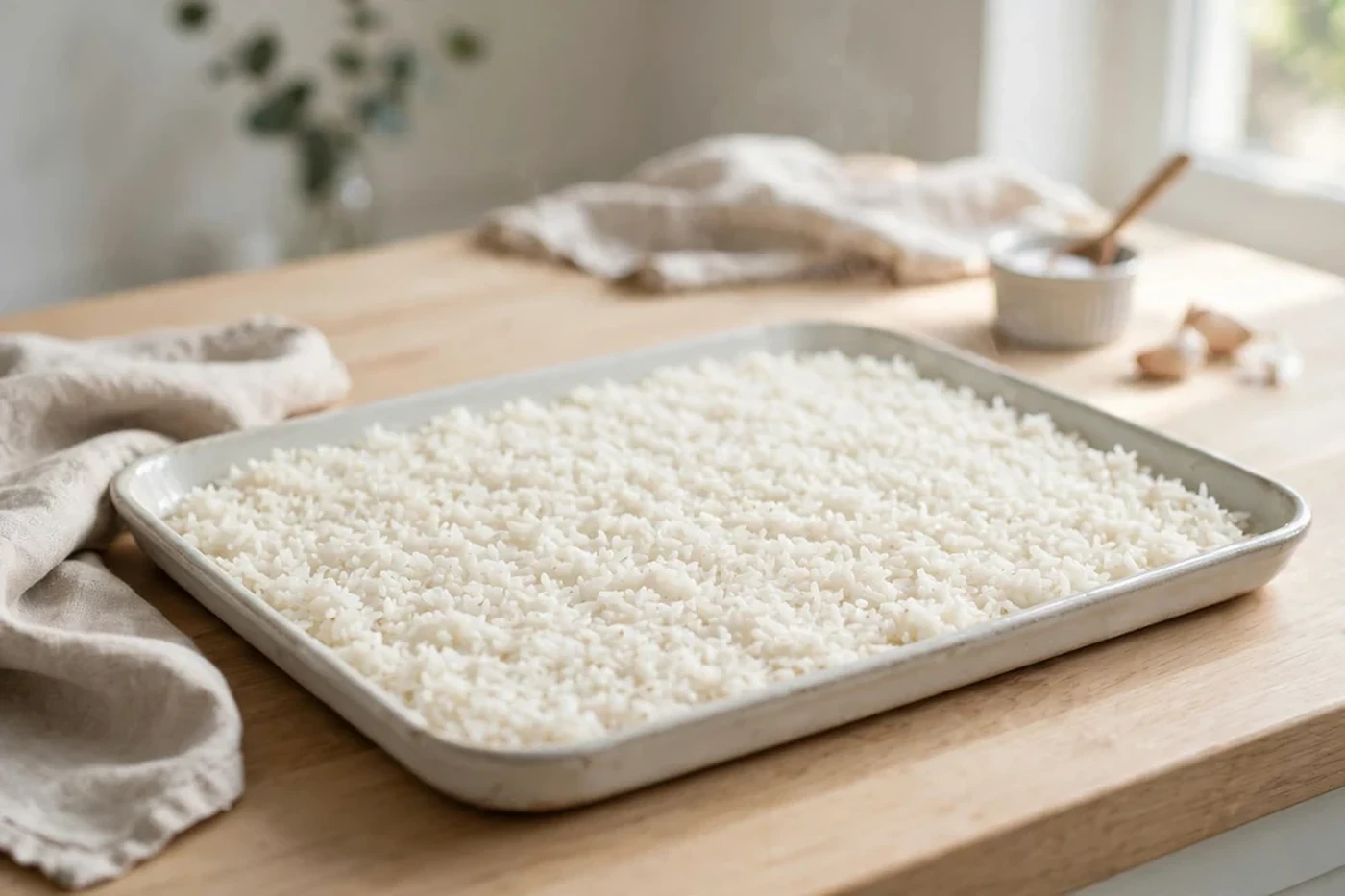
Cool it fast. This is the step that matters most. Do not leave the rice cooker on warm for hours and do not leave a pot of rice on the counter “to cool” all evening. As soon as you have served what you need, spread the remaining rice in a thin layer in a shallow container, or divide it into small portions. Thin layers shed heat fast; a deep pot of rice stays warm in the middle for hours, which is exactly the danger zone. Some cooks spread rice on a baking sheet for a few minutes to dump heat quickly, then pack it into containers.
Refrigerate within 2 hours. The USDA’s 2-hour rule applies to rice like everything else: cooked rice must be in the fridge within 2 hours of cooking, and within 1 hour if the room is hot (above 90 degrees Fahrenheit). Set a timer if you are the forgetful type. Rice left out overnight is not a “reheat it well and hope” situation; it is a throw-it-away situation.
Keep the fridge cold. Your refrigerator should hold at or below 40 degrees Fahrenheit. A fridge thermometer costs little and removes all guessing.
Eat it within 3 to 4 days. The USDA’s guideline for cooked rice is 3 to 4 days refrigerated. Label the container with the date if your household loses track. Past that window, freeze it or toss it.
Freeze for longer storage. Cooked rice freezes excellently for up to 6 months. Portion it into meal-size bags or containers, press flat for fast thawing, and freeze. Frozen rice goes straight from freezer to microwave with great results.
The pattern is simple: the rice should spend as little time as possible between 40 and 140 degrees Fahrenheit, on the way down after cooking and on the way up during reheating. Speed through the danger zone in both directions.
How to Reheat Rice in the Microwave: The Fluffy Method
Rice that was stored properly deserves a good reheating, because microwaved rice has an unfair reputation for coming out dry and rubbery. The trick is adding back the moisture the fridge stole.
Here is the method:
- Put the portion you will eat in a microwave-safe bowl. Only reheat what you will finish; rice should be reheated once, not repeatedly.
- Sprinkle 1 to 2 tablespoons of water over the rice for each cup. The fridge dries rice out, and this water becomes the steam that revives it. For fried-rice-style reheating, you can skip the water, but for plain fluffy rice, do not skip it.
- Break up any clumps with a fork so heat reaches evenly.
- Cover the bowl with a microwave-safe lid left ajar, a damp plain paper towel, or microwave-safe plastic wrap with a corner vented. The cover traps the steam around the rice. See our paper towels in the microwave guide for safe covering choices.
- Microwave on high for 1 to 2 minutes per cup of rice. A single serving usually needs 90 seconds to 2 minutes.
- Let it rest, covered, for 1 minute. The steam finishes the job and evens out the texture.
- Fluff with a fork and check that it is steaming hot throughout.
The result should be rice that tastes nearly fresh-cooked: separate grains, soft texture, no hard bits. If your microwave has hot spots, stir halfway through and add 30 seconds.
For frozen rice, the same method works with more time: 2 to 3 minutes per portion from frozen, breaking up and stirring halfway. No need to thaw first.
The 165-Degree Rule and How to Check
Food safety guidance says reheated rice should reach at least 165 degrees Fahrenheit (74 degrees Celsius) throughout. That temperature kills the vegetative Bacillus cereus cells and the ordinary bacteria that cause most foodborne illness.
In practice, “steaming hot throughout” is the home cook’s version of this rule. Stir the rice after microwaving and look for steam rising from the center of the bowl, not just the edges. If the edges are scorching and the middle is lukewarm, stir and give it another 30 to 60 seconds. Microwaves heat unevenly, and the middle of a dense bowl of rice is always the last place to get hot.
A food thermometer is the only way to verify 165 degrees exactly, and it is worth owning one if you reheat leftovers often. For rice, insert it into the center of the portion after stirring. This matters most when reheating large portions or when serving anyone in a higher-risk group.
Can You Reheat Rice Twice? The Firm Answer
No. Reheat rice only once, and only reheat the portion you are going to eat right now.
Every cooling and reheating cycle drags the rice through the temperature danger zone again, giving any surviving spores another window to grow. The risk compounds with each cycle. The safe habit is to portion before storing: divide leftover rice into single-meal containers when you pack it away, so each portion gets exactly one trip through the microwave.
If you reheated too much, the extra that has already been reheated once should not go back in the fridge for another round. Either eat it or discard it. This is one of those rules that feels wasteful until you compare it with a day of food poisoning.
The same once-only logic applies to restaurant leftovers. That takeout fried rice is delicious the next day, but it has already lived an unknown thermal life before it reached you. Refrigerate it promptly when you get home, eat it within a day or two, reheat it once until steaming, and do not push your luck with a second round.
How Long Cooked Rice Lasts: Fridge, Freezer, and Counter
The timelines, all in one place:
Counter: 2 hours maximum (1 hour if it is hot out). After that, the rice is not safe regardless of reheating. Rice left out overnight goes in the trash, not the microwave.
Fridge: 3 to 4 days at 40 degrees Fahrenheit or below, in sealed containers. This is the USDA guideline for cooked rice.
Freezer: Up to 6 months at 0 degrees Fahrenheit. Quality is best in the first 2 to 3 months, but it remains safe indefinitely while frozen solid.
Rice cooker on “warm”: This is the gray zone people ask about. Most rice cookers hold rice above 140 degrees, which is technically safe, but quality degrades fast and some cookers run cooler than they claim. Do not use the warm setting as multi-hour storage; refrigerate within 2 hours like everything else.
Signs the rice has turned: sour or off smell, slimy texture, discoloration, or visible mold. But here is the uncomfortable truth about Bacillus cereus: contaminated rice can look, smell, and taste completely normal. You cannot detect the toxin with your senses. That is why the timelines are rules, not suggestions.
Cold Rice, Rice Cookers, and Restaurant Rice
Can you eat cold leftover rice without reheating? Yes, if it was cooled and stored properly. Cold rice straight from the fridge is safe; the safety was established by the cooling and refrigeration, not by the temperature at serving. Sushi rice and rice salads work exactly this way. The “reheat until steaming” rule is about killing bacteria that may have grown, which proper storage prevents in the first place.
What about rice left in the cooker overnight? This is one of the most common questions, and the answer is no. An unplugged or cooling rice cooker is just a warm, moist incubator sitting squarely in the danger zone for hours. Even the “warm” setting is not reliable long-term storage. Treat cooker rice like any cooked rice: refrigerate within 2 hours.
Restaurant rice deserves extra caution because you did not control its thermal history. It may have sat in a warmer, traveled in a bag, and waited on your counter. Get it into your fridge quickly, eat it within a day or two rather than stretching to four, and reheat it once until steaming hot.
And a note on the viral stories: the widely shared 2008 case of a student who died after eating reheated pasta left out for days involved the same Bacillus cereus toxin mechanism. It is an extreme outlier, not the typical outcome, but it illustrates the real principle: the danger was the days at room temperature, not the microwave.
Frequently Asked Questions
Direct answers on rice, reheating, and food safety.
Can you reheat rice in the microwave?
Yes, safely, as long as the rice was cooled quickly and refrigerated within 2 hours of cooking. Add a tablespoon or two of water per cup, cover loosely, microwave 1 to 2 minutes per cup until steaming hot throughout, rest one minute, and fluff. Only reheat the portion you will eat, and reheat it just once.
Can reheating rice cause food poisoning?
Reheating itself does not cause it; improper storage before reheating does. The bacterium Bacillus cereus grows in cooked rice left at room temperature and produces a heat-stable toxin that microwaving cannot destroy. Rice that was refrigerated promptly is safe to reheat. Rice that sat out for hours is unsafe no matter how thoroughly you reheat it.
What is fried rice syndrome?
The common name for Bacillus cereus food poisoning from cooked rice or other starchy foods. The bacterium’s spores survive cooking; if the food sits in the danger zone (40 to 140 degrees Fahrenheit), the spores grow and produce toxins. It causes vomiting within 1 to 6 hours (emetic form) or diarrhea within 6 to 15 hours (diarrheal form). The name comes from fried rice made with day-old rice left out overnight.
How long can cooked rice sit out before refrigerating?
Two hours maximum, or one hour if the ambient temperature is above 90 degrees Fahrenheit. This is the USDA’s 2-hour rule, and rice follows it strictly. Rice left out overnight must be thrown away, not reheated. To cool rice fast, spread it in a shallow container rather than leaving it in a deep pot.
Can you reheat rice twice?
No. Reheat rice only once. Each cooling and reheating cycle passes the rice through the temperature danger zone again, compounding the risk. Portion leftovers into single-meal containers when you store them so each portion gets exactly one reheating. Rice that has already been reheated once should be eaten or discarded, not refrigerated for another round.
How do you reheat rice in the microwave without drying it out?
Sprinkle 1 to 2 tablespoons of water over each cup of rice, break up clumps with a fork, cover the bowl loosely to trap steam, and microwave 1 to 2 minutes per cup. Rest covered for one minute, then fluff. The added water becomes steam that revives the grains, which is the entire secret to fluffy reheated rice.
How do you know if reheated rice is hot enough?
It should be steaming hot throughout, at least 165 degrees Fahrenheit by food-safety guidance. Stir the rice and check the center, not just the edges, since microwaves heat unevenly. A food thermometer inserted into the middle of the portion after stirring is the only exact verification. When in doubt, give it another 30 seconds.
Can you eat cold leftover rice without reheating?
Yes, if it was stored properly. Cold rice from the fridge is safe when the rice was cooled quickly and refrigerated within 2 hours of cooking. The safety comes from the storage, not the serving temperature. Do not eat rice cold if you are unsure how long it sat out; when the storage history is unknown, the rice is not worth the risk.
How long does cooked rice last in the fridge?
Three to 4 days at 40 degrees Fahrenheit or below, in sealed containers, per USDA guidance. Date the container so you know. For restaurant takeout rice with an unknown thermal history, aim for 1 to 2 days rather than stretching the full window. When in doubt, freeze it or throw it out.
Can you freeze cooked rice and reheat it?
Yes, and it works excellently. Portion rice into meal-size containers or bags, press flat, and freeze for up to 6 months. Reheat straight from frozen in the microwave: 2 to 3 minutes per portion with a splash of water, breaking up and stirring halfway, until steaming throughout. Freezing is the best way to extend rice beyond the 4-day fridge window.
What are the symptoms of fried rice syndrome?
Two patterns. The emetic form strikes 1 to 6 hours after eating with nausea, vomiting, and abdominal cramps. The diarrheal form arrives 6 to 15 hours later with watery diarrhea and abdominal pain. Most healthy adults recover within a day with rest and fluids. Seek medical care for signs of dehydration, bloody stool, or symptoms in young children, older adults, or pregnant women.
Can you reheat fried rice from a restaurant?
Yes, once, with extra care. Refrigerate it promptly when you get home, eat it within 1 to 2 days, and reheat a single portion in the microwave until steaming hot throughout. Do not reheat it twice. Restaurant rice has an unknown thermal history before it reached you, so keep the storage window shorter than you would for rice you cooked yourself.
Does reheating rice in the microwave kill bacteria?
It kills active bacterial cells, including Bacillus cereus vegetative cells, when the rice reaches 165 degrees Fahrenheit throughout. But it does not destroy the heat-stable toxin that Bacillus cereus may have already produced during improper storage. That is why reheating is only a safety step for rice that was stored correctly; it cannot rescue rice that sat out too long.
Can you leave rice in a rice cooker overnight?
No. An unplugged or cooling rice cooker is a warm, moist environment sitting in the danger zone for hours, which is ideal for Bacillus cereus growth. Even the “warm” setting is not reliable for overnight storage, and quality suffers badly. Transfer rice to shallow containers and refrigerate within 2 hours, exactly as you would with any other cooked food.
The Bottom Line
Can you microwave reheat rice? Yes, and it is one of the microwave’s best jobs when you follow the rules. But now you know the real story: the microwave was never the risk. The risk was the rice sitting on the counter for hours, growing something no amount of reheating can fix.
The safe routine is five steps and takes almost no effort: cool it fast in a shallow container, refrigerate within 2 hours, eat within 3 to 4 days, reheat once until steaming hot with a splash of water, and never reheat twice. Do that, and leftover rice is one of the safest, easiest meals in your week. For every other reheating question, the complete microwave safety chart is waiting.

1 Comment
Pingback: Can You Microwave Tortillas? The Right Way (2026)