

You want oatmeal, you want it in three minutes, and you do not want to scrub a cemented oat-volcano off the microwave ceiling afterward. Anyone who has watched a bowl of oats rise like a science fair volcano knows the fear: one second it is a calm bowl of porridge, the next it is cascading over the rim and you are cleaning for ten minutes.
Here is the good news: microwaving oatmeal is completely safe, it is one of the fastest breakfasts you can make, and the boil-over is entirely preventable once you understand why it happens. It is not your microwave’s fault and it is not the oats’ fault. It is a geometry problem, and geometry has solutions.
This guide covers everything: exact microwave times for rolled, quick, and steel cut oats, the science of why oatmeal boils over, the five techniques that stop it, whether microwaving hurts the nutrition, milk versus water, instant packets, reheating leftovers, and the toppings that turn a plain bowl into breakfast worth waking up for.
The Short Answer
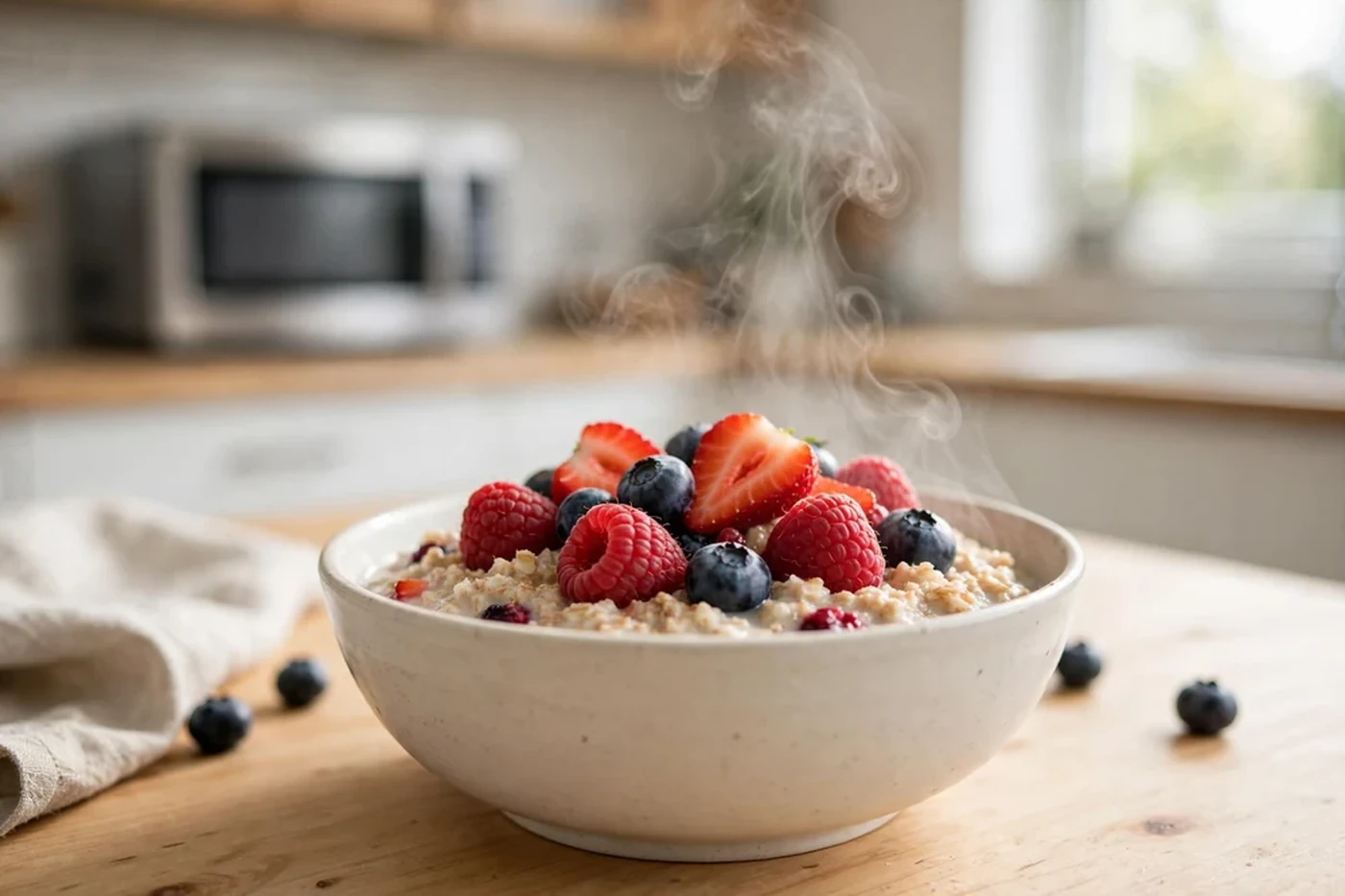
Yes, you can cook oatmeal in the microwave, and it is one of the quickest, most nutritious breakfasts you can make. For a single serving, combine half a cup of rolled oats with one cup of water or milk in a large, deep microwave-safe bowl, microwave on high for 2 to 3 minutes, stir halfway, then let it rest for one minute.
The boil-over that everyone fears happens because starch foam traps steam, and it is preventable: use a bowl much larger than you think you need, cook at reduced power or in intervals with stirring, and never cover the bowl tightly. Microwaving does not meaningfully reduce oatmeal’s nutrients compared with stovetop cooking; in fact, the shorter cooking time can preserve more of them. For the broader rundown of microwave-safe containers for jobs like this, see Can You Microwave It? The Complete Safety Chart.
Why Oatmeal Boils Over in the Microwave: The Actual Science
The boil-over looks like chaos, but the mechanism is simple and well understood.
As oats heat, their starches swell and release into the liquid, forming a thick, foamy layer on the surface. That foam is a surprisingly good lid: it traps the steam rising from below. Pressure builds under the foam cap faster than the foam can vent, and the whole mass surges upward at once. Because a microwave heats so quickly and unevenly, with intense hot spots, the surge can happen in seconds.
This is why the shape of the bowl matters more than almost anything else. A small, narrow bowl gives the foam nowhere to go but up and over. A large, deep, wide bowl gives the foam room to rise and collapse back down without reaching the rim. The oatmeal is doing the same thing in both bowls; only the container decides whether it becomes a mess.
It also explains why stirring is so effective. Stirring breaks the foam cap, releases the trapped steam in a controlled way, and evens out the hot spots. Every stir resets the pressure buildup. And it explains why covering the bowl tightly is the worst thing you can do: a lid turns the bowl into a pressure chamber with no vent.
One more factor: oat type. Quick oats and instant oats produce foam faster because their smaller pieces release starch more quickly. Steel cut oats are slower to foam but need much longer cooking, which brings its own challenges. The techniques below handle all three.
The No-Boil-Over Method: Five Techniques That Work
You do not need all five every time, but combine two or three and boil-overs become rare.
1. Use a bowl twice as big as you think you need. This is the single highest-impact change. For a half-cup serving of oats, use a bowl that holds at least four cups, a quart-size mixing bowl or a large soup bowl. The extra headroom absorbs the foam surge. Shallow and wide beats tall and narrow, because foam spreads out instead of climbing.
2. Cook in intervals and stir. Instead of one continuous 3-minute blast, microwave for 90 seconds, stir well, then microwave in 30 to 60-second bursts, stirring between each. Each stir breaks the foam cap and redistributes heat. It adds maybe 30 seconds of total effort and eliminates nearly every boil-over. Microwave Meal Prep’s no-boil-over guide recommends the same interval-and-stir approach for exactly this reason.
3. Drop the power level. Microwaves at full power create violent hot spots. Cooking at 50 to 70 percent power for a longer time, say 4 to 5 minutes for rolled oats, heats the oatmeal more gently and gives the foam time to settle between surges. This is the closest thing to a set-it-and-forget-it method.
4. Do not cover the bowl, or vent it well. An uncovered bowl lets steam escape freely. If you prefer covering to reduce splatter, use a microwave-safe lid left ajar or a plain paper towel laid loosely on top, never a sealed lid. Our paper towels in the microwave guide covers which towels are safe for this.
5. Watch the last minute. The boil-over almost always happens near the end, when the oatmeal is thickest and the foam is strongest. If you are going to look away, look away at the start, not the finish. Once you learn your microwave’s timing, you will know exactly when to hover.
A bonus trick from experienced microwave oatmeal makers: heat the liquid first. Microwave the water or milk alone for about a minute, pour it over the oats, stir, then microwave the bowl for just 30 to 60 seconds more. The heat-the-liquid-first method is popular because the oats hydrate in hot liquid without the violent microwave foaming phase, and the texture comes out excellent.
Exact Times for Every Oat Type
Microwave wattages vary, so treat these as starting points and adjust to your oven. All times below are for a single serving on high power in a large bowl, with stirring.
| Oat type | Oats | Liquid | Microwave time (high) | Notes |
|---|---|---|---|---|
| Rolled (old-fashioned) oats | 1/2 cup | 1 cup | 2.5 to 3 minutes | The classic; stir halfway |
| Quick oats | 1/2 cup | 1 cup | 1.5 to 2 minutes | Foams fastest; watch closely |
| Instant oatmeal packets | 1 packet | Per packet directions | 1 to 1.5 minutes | Already flavored; stir well |
| Steel cut oats | 1/4 cup | 3/4 to 1 cup | 7 to 10 minutes | Long cook; use 50% power and stir often |
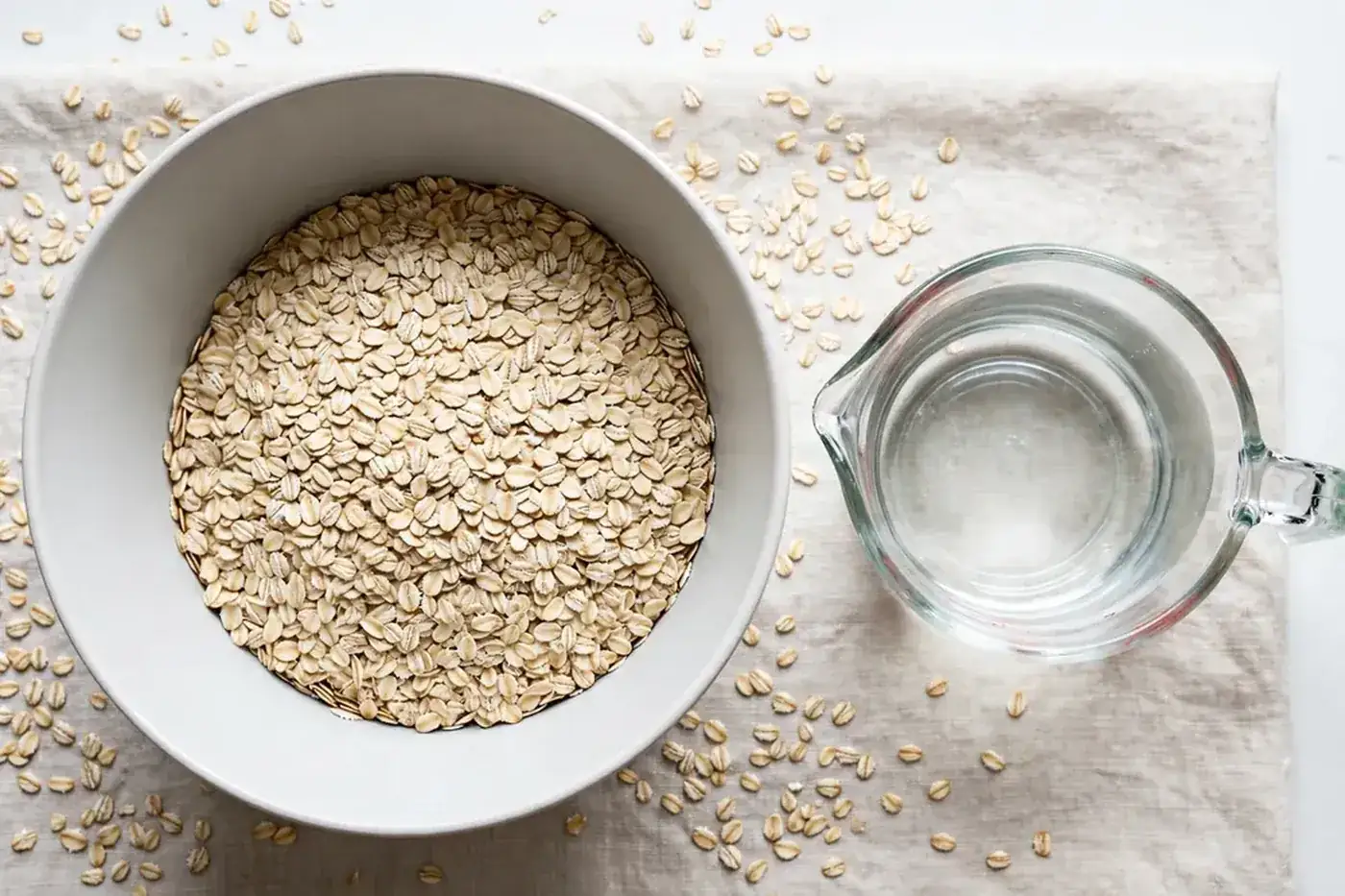
The ratio that never fails for rolled oats is 1 part oats to 2 parts liquid. For creamier oatmeal, add a splash more liquid; for thicker, use a little less. Salt matters more than people think: a small pinch added before cooking sharpens the oat flavor noticeably.
For steel cut oats specifically, the microwave is workable but slow, and the long cook time tests your patience and your boil-over technique. Many people prefer an overnight approach: combine steel cut oats and water in a bowl, microwave 3 minutes, then let it sit covered (off the heat, on the counter) for 10 minutes to finish hydrating, then microwave 2 to 3 minutes more. The resting does half the work without the microwave running.
Always let the oatmeal rest for one minute after the microwave stops. The oats continue absorbing liquid, the texture settles from soupy to creamy, and the temperature evens out so you do not burn your mouth on a hidden hot pocket.
Milk vs Water: What Changes
Both work, and the choice is mostly about taste, texture, and nutrition.
Water gives you the cleanest oat flavor and the fewest calories. It is the traditional base, and many oatmeal lovers prefer it because toppings then carry the flavor. Water also boils over slightly less violently than milk, since milk adds proteins that strengthen the foam.
Milk, dairy or plant-based, makes the oatmeal creamier and richer, and adds protein and calcium. The trade-off is vigilance: milk foams more aggressively and can scorch on the bottom of the bowl if the power is too high. If you use milk, the reduced-power method (50 to 70 percent) is strongly recommended, and a bigger bowl is non-negotiable.
A popular middle path: cook in water, then stir in a splash of milk after cooking. You get the creaminess without the boil-over drama, and the milk’s nutrients never see high heat at all.
One caution with milk: never walk away. Milk goes from fine to volcanic with almost no warning, and burnt milk on a microwave ceiling is a special kind of regret.
Does Microwaving Oatmeal Reduce Its Nutrients?
No, not in any meaningful way, and it may actually preserve nutrients better than some stovetop methods.
The key insight comes from nutrition science: nutrient loss in cooking depends mostly on time, temperature, and water volume, not on the heat source. Writing in the Harvard Health Letter, Dr. Anthony Komaroff of Harvard Medical School has noted that microwave cooking is “actually one of the least likely forms of cooking to damage nutrients,” precisely because the cooking time is so short. A fact-check by Full Fact, quoting the UK Food Standards Agency, confirms there is no scientific basis for claims that microwaves destroy food’s nutritional value or make food toxic.
For oatmeal specifically, the comparison favors the microwave. Boiling oats on the stove for a long time in lots of water exposes them to more heat for longer, and water-soluble B vitamins leach into cooking water that you might not finish. MedicineNet’s review of microwave oatmeal nutrition reaches the same conclusion: the microwave’s shorter cooking time means less nutrient loss than boiling on the stove. Minerals like iron, magnesium, and zinc are heat-stable regardless of method, and the beta-glucan fiber that makes oatmeal famous for heart health is unaffected by microwaving.
Two practical tips maximize nutrition. First, do not overcook: mushy, over-blasted oatmeal has spent more time at high heat than it needed to. Second, add toppings after cooking, not before. Fresh fruit, nuts, and seeds keep more of their own delicate nutrients when they are stirred into hot oatmeal rather than microwaved with it.
Instant Packets, Overnight Oats, and Reheating Leftovers
Instant oatmeal packets are designed for the microwave: empty the packet into a bowl (not the packet itself, which is not microwave-safe packaging), add the liquid amount on the directions, and microwave 1 to 1.5 minutes. Stir well, because the fine powder clumps. The packets are convenient, though plain rolled oats with your own toppings are cheaper and let you control the sugar.
Overnight oats are a different beast: they are made by soaking oats in milk or yogurt in the fridge overnight, no cooking at all. But yes, you can warm them in the microwave if you prefer hot oatmeal. Microwave in 30-second bursts, stirring between, since the soaked oats heat very fast and can go from cold to volcanic quickly. Do not microwave them in a sealed jar; transfer to a bowl first.
Leftover cooked oatmeal reheats beautifully. Add a splash of milk or water first, because refrigerated oatmeal firms up into a solid block, then microwave in 1-minute bursts, stirring between, until hot. The added liquid loosens it back to a creamy texture. Refrigerated cooked oatmeal keeps 3 to 4 days in a sealed container.
Troubleshooting: Gummy, Gluey, or Bland Oatmeal
If your microwave oatmeal comes out gummy or gluey, the usual cause is overcooking or too little liquid. Back the time down by 30 seconds, add a splash more liquid, and make sure you are stirring. Quick oats go gluey faster than rolled oats, so they need a watchful eye.
If it is bland, the fix is almost always salt and toppings, not more cooking. A pinch of salt before cooking, then cinnamon, brown sugar or honey, fresh or frozen berries, sliced banana, chopped nuts, a spoonful of peanut butter, or a splash of vanilla after cooking. The topping combinations are endless, and they are where a plain bowl becomes a breakfast you actually look forward to.
If the texture is uneven, with some oats crunchy and some mushy, the culprit is hot spots plus no stirring. The interval-and-stir method fixes this completely. Also check that your oats are not ancient: very old oats can cook unevenly, though they are still safe to eat.
Choosing the Right Bowl (It Matters More Than the Recipe)
The bowl is half the recipe in microwave oatmeal. Here is what to look for.
Size first: at least four times the volume of your uncooked oats plus liquid. A quart-size bowl for a single serving is not overkill; it is correct. Depth plus width gives foam room to rise and fall.
Material second: glass and ceramic are the best choices. They are non-reactive, handle the heat, and let you see what is happening. Our glass in the microwave guide covers what to look for in detail.
Avoid plastic bowls unless they are explicitly labeled microwave-safe, and even then, oatmeal’s sticky starch can stain them. Our plastic in the microwave guide explains the label rules. Never microwave oatmeal in the instant packet, a paper bag (see why paper bags are a hard no), or any container you have not verified.
Shape third: wide and deep beats tall and narrow. And make sure the bowl has a handle or is easy to grip with a cloth, because a big bowl of oatmeal is hot and heavy coming out.
Frequently Asked Questions
Every oatmeal question worth asking, answered directly.
Can you cook oatmeal in the microwave?
Yes. It is one of the fastest and easiest microwave meals: half a cup of rolled oats plus one cup of water or milk in a large deep bowl, microwaved 2 to 3 minutes with a stir halfway, then rested one minute. The result is as good as stovetop oatmeal in a third of the time, with one bowl to wash.
Why does oatmeal boil over in the microwave?
Because starch foam traps steam. As oats heat, released starches form a foamy cap on the surface that seals in rising steam. Pressure builds underneath until the whole mass surges upward at once. Microwaves make it worse by heating fast and unevenly. The fix is a much larger bowl, stirring to break the foam cap, and gentler power.
How do you stop oatmeal from boiling over in the microwave?
Use a bowl at least four times the volume of the oats and liquid, cook in intervals with stirring instead of one long blast, drop to 50 to 70 percent power, do not cover the bowl tightly, and watch the last minute when boil-overs happen. Any two of these together prevent nearly every mess.
How long do you microwave oatmeal?
On high power: rolled oats 2.5 to 3 minutes, quick oats 1.5 to 2 minutes, instant packets 1 to 1.5 minutes, steel cut oats 7 to 10 minutes. These are for single servings; larger portions need more time. Always stir halfway and let the oatmeal rest one minute after cooking, and adjust for your microwave’s wattage.
Does microwaving oatmeal reduce its nutrients?
No, not meaningfully. Nutrient loss depends on cooking time, temperature, and water volume, and the microwave’s short cook time is gentle on nutrients. Harvard Medical School’s Dr. Anthony Komaroff has noted that microwave cooking is one of the least damaging cooking methods for nutrients. Do not overcook, use just enough liquid, and add fresh toppings after cooking for maximum nutrition.
Can you microwave steel cut oats?
Yes, but it takes patience: 7 to 10 minutes with frequent stirring, ideally at 50 percent power in a very large bowl. An easier method is the partial-cook-and-rest trick: microwave 3 minutes, let the bowl sit covered on the counter for 10 minutes, then microwave 2 to 3 minutes more. The resting time finishes the hydrating without the microwave running.
Should you cover oatmeal in the microwave?
No, or only loosely. A tight lid traps steam and guarantees a boil-over or a lid-popping mess. If you want to reduce splatter, lay a plain paper towel loosely over the bowl or use a microwave-safe lid left ajar so steam escapes. Uncovered is the simplest and safest option.
Can you microwave oatmeal with milk instead of water?
Yes, and it comes out creamier and richer. Use 50 to 70 percent power, a bigger bowl than you think you need, and do not walk away, because milk foams aggressively and scorches. A good compromise is cooking in water and stirring in a splash of milk afterward, which gives creaminess with none of the drama.
Can you microwave instant oatmeal packets?
Yes, but not in the packet. Empty the packet into a microwave-safe bowl, add the liquid amount shown on the directions, and microwave 1 to 1.5 minutes, then stir well to break up clumps. The packet itself is not microwave-safe packaging. Plain rolled oats with your own toppings are cheaper and lower in sugar.
Why is my microwave oatmeal gummy or gluey?
Usually overcooking or too little liquid. Reduce the time by 30 seconds, add a splash more water or milk, and stir during cooking. Quick oats turn gluey faster than rolled oats, so they need shorter times and closer watching. A one-minute rest after cooking also helps the texture settle instead of seizing.
Can you reheat leftover oatmeal in the microwave?
Yes, it reheats very well. Refrigerated oatmeal firms up, so stir in a splash of milk or water first to loosen it, then microwave in 1-minute bursts with stirring until hot. The added liquid brings back the creamy texture. Cooked oatmeal keeps 3 to 4 days in a sealed container in the fridge.
Can you microwave overnight oats?
Yes, if you prefer them warm. Transfer the oats from their jar to a microwave-safe bowl first, never microwave a sealed jar, and heat in 30-second bursts with stirring. Soaked oats heat extremely fast, so short bursts prevent a volcanic surprise. Add fresh fruit and crunchy toppings after heating.
Is it safe to microwave oatmeal in a plastic bowl?
Only if the bowl is explicitly labeled microwave-safe, and even then glass or ceramic is better. Oatmeal’s sticky starch can stain plastic, and very hot oatmeal pushes plastic toward its limits. Check the bottom for the microwave-safe symbol, keep the power moderate, and replace any plastic bowl that has warped or gone cloudy.
How much water do you use for microwave oatmeal?
The standard ratio is 1 part oats to 2 parts liquid: half a cup of rolled oats to one cup of water or milk. Adjust to taste from there, with more liquid for creamier oatmeal and less for thicker. Steel cut oats need a bit more liquid relative to their volume because of the long cook time, around 3 to 4 parts liquid to 1 part oats.
The Bottom Line
Can you microwave oatmeal? Absolutely, and once you nail the method, it becomes the easiest healthy breakfast in your routine. The whole secret is the bowl: go big, go deep, and give the foam somewhere to go. Stir once or twice, keep the power reasonable, rest it a minute, and you get creamy, nutritious oatmeal with zero cleanup drama.
Remember the numbers: half a cup of rolled oats, one cup of liquid, 2 to 3 minutes, one stir, one minute of rest. That is the entire recipe. Dress it up with fruit, nuts, and a drizzle of honey, and the microwave just made you a breakfast that would take four times as long on the stove. For questions about any other food or container, the complete microwave safety chart has you covered.
