

Warm milk before bed, a quick mug for hot chocolate, milk heated for coffee or baking. The microwave is the fastest way to get there, and it works fine, as long as you respect a few rules. Milk is one of the most boil-over-prone liquids in the kitchen, it forms a skin when heated, and it curdles if you push it too far. None of that means you cannot microwave it. It just means the method matters.
There is one big exception to the “yes,” and it is important enough to say up front: never microwave breast milk or infant formula. The CDC, the American Academy of Pediatrics, and La Leche League all warn against it, because microwaves heat unevenly and create scalding hot spots, and the intense heat damages the milk’s protective components. Babies get their bottles warmed a different way, and this guide covers that method too.
For everyone else, this guide walks through the safe way to microwave milk step by step, how long to heat different amounts and types, what temperature to aim for, why milk boils over and how to stop it, why it curdles and forms skin, what microwaving does to nutrients, and which containers to use. By the end, warming milk in the microwave will be a calm two-minute routine instead of a cleanup job.
The Short Answer
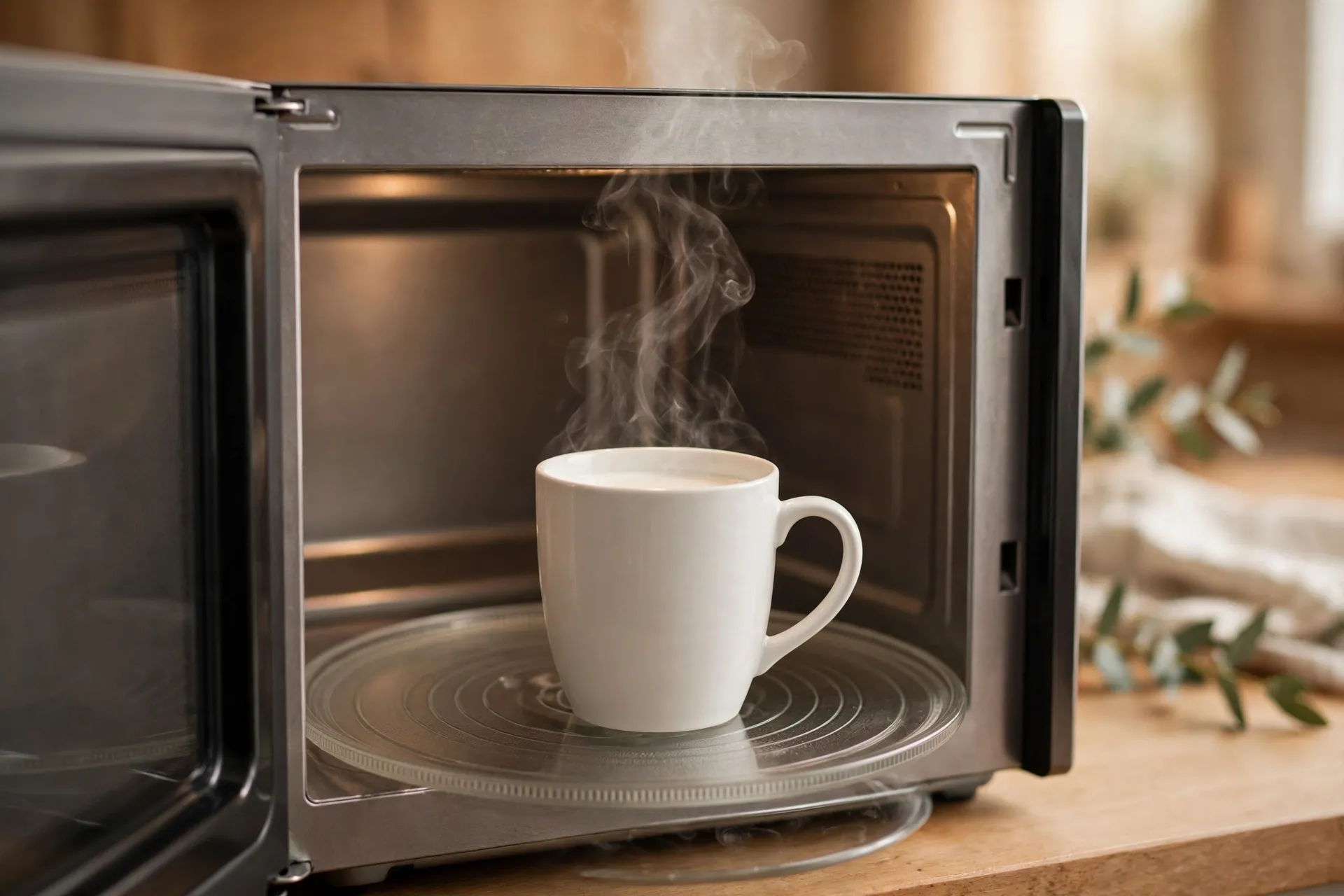
Yes, it is safe to microwave milk as long as you use a microwave-safe glass or ceramic container, heat on medium power in short bursts, and stir between bursts. For a single mug, start with 30 seconds at 50 percent power, stir, then continue in 15 second intervals until it reaches about 110 to 120 degrees Fahrenheit for drinking. Stop before it boils, because boiling is what causes the boil-over, the skin, and the curdling.
The two hard rules: never microwave breast milk or infant formula, and never microwave milk in a plastic container that is not labeled microwave-safe. Everything else is technique, and the sections below give you the full technique.
How to Microwave Milk Step by Step
The method is simple, and every step prevents a specific problem. Start with a microwave-safe mug or bowl made of glass or ceramic, and choose one noticeably larger than the amount of milk. Milk expands and foams as it heats, so a half-full mug is the sweet spot. A container filled to the brim is a spill waiting to happen.
Pour in the milk and set the microwave to medium power, around 50 percent. Full power heats the outer layer of the milk so fast that it can boil at the edges while the center is still cool, which is the main cause of both boil-overs and hot spots. Medium power gives the heat time to spread.
Heat for 30 seconds, then stop and stir. Stirring is the single most important step. It breaks up hot spots, prevents the protein skin from forming across the surface, and lets you feel how warm the milk actually is. After stirring, continue in 15 second bursts, stirring between each one, until the milk reaches the temperature you want. For drinking, aim for 110 to 120 degrees Fahrenheit, which feels warm and comforting without being scalding. If you like it hotter, for cocoa or cooking, you can go to about 150 degrees, where you will see steam rising, but stop before it reaches a rolling boil.
Watch the milk during the last bursts. Milk goes from calm to boiling over in seconds, and the moment you see it starting to rise or foam vigorously, stop the microwave. Let it sit for 30 seconds after heating, which lets the temperature even out and makes it safer to drink. If you are warming milk for a child or an older person, test it yourself first. For the full container safety picture, see our complete microwave safety chart.
How Long to Microwave Milk: A Quick Timing Guide
Heating time depends on the amount of milk, its starting temperature, and your microwave’s wattage, so treat these as starting points and adjust. Cold milk straight from the fridge needs more time than room-temperature milk, and a 1200-watt microwave works much faster than an older 700-watt one.
| Milk amount and type | Starting time at 50% power | Notes |
|---|---|---|
| 1 mug whole milk (8 oz) | 30 to 45 seconds | Stir, then 15 second bursts |
| 1 mug 2% or 1% milk (8 oz) | 30 to 40 seconds | Lower fat heats a touch faster |
| 1 mug skim milk (8 oz) | 15 to 30 seconds | Heats fastest, watch closely |
| 1 mug oat, almond, or soy milk (8 oz) | 30 to 60 seconds | Curdles more easily, go slow |
| 2 mugs (16 oz) for recipes | 1 to 1.5 minutes | Stir halfway, then in bursts |
| Small splash for coffee (2 to 4 oz) | 15 to 20 seconds | Easy to overshoot, use low power |
The pattern is consistent: start short, stir, and add time in small increments. It is always easier to add 15 more seconds than to clean boiled milk out of the microwave. If your microwave does not let you set power levels, use shorter bursts of 15 to 20 seconds at full power with stirring between, which approximates the same gentle heating.
Why Milk Boils Over in the Microwave
Milk does not boil over because it is boiling. It boils over before it ever reaches 212 degrees, usually around 176 to 185 degrees Fahrenheit, and the reason is protein. Milk contains whey proteins, mainly beta-lactoglobulin, that denature with heat and rise to the surface, where they join with fat to form a thin, sticky film. That film is milk skin, also called lactoderm, and it acts like a lid. Steam building up underneath has nowhere to go, so it pushes the whole foamy mass upward, and suddenly your mug erupts.
The microwave makes this worse in two ways. First, it heats fast, so the skin forms quickly while steam is still building. Second, it heats unevenly, so one part of the milk can be near boiling while the rest is merely warm, which means the eruption can start with no warning from the milk’s overall temperature. Wikipedia’s overview of milk skin formation explains the protein chemistry, and The Kitchn’s food science piece describes how the proteins coagulate around 150 degrees to form the film, at The Kitchn on milk skin.
Prevention is straightforward. Use a container much larger than the milk volume, heat on medium power, stir between bursts, and never walk away during the last 30 seconds. Stirring breaks the skin before it can seal, which removes the lid that causes the eruption. If milk does boil over, clean it up promptly, because baked-on milk residue can smoke and smell during the next use.
Why Milk Curdles When Heated
Curdling is proteins clumping together, and heat is one of the triggers. Milk’s proteins, casein and whey, are folded structures held in a delicate suspension. Enough heat unfolds them, and once unfolded they bond to each other instead of staying dissolved, forming the lumps and grainy texture of curdled milk. This is the same process cheesemakers use on purpose, but in your mug of warm milk it is a defect.
Two things make curdling more likely in the microwave. The first is overheating: the hotter the milk gets, the more the proteins denature. Staying under a simmer keeps the proteins intact. The second is acidity. If the milk is even slightly past its prime, the lactic acid from bacterial activity has already weakened the protein structures, and heat finishes the job. That is why milk that tastes fine cold can curdle the moment you heat it. It was already on the edge, and the heat pushed it over. If your milk curdles when heated but smelled and tasted normal cold, check the date and give it a sniff, because curdling on heating is often the first sign the milk is turning.
Plant-based milks curdle more readily than dairy. Soy, almond, and oat milks have proteins that are less heat-stable, and the effect gets worse in acidic drinks like coffee. If your oat milk goes grainy in hot coffee, heat the milk separately and gently, and add it to the coffee rather than heating them together. Lower power and shorter bursts help here more than anywhere else.
The Skin on Top: What It Is and How to Stop It
That wrinkly film on heated milk is denatured protein, mostly beta-lactoglobulin, coagulated with fat. It is completely safe to eat, and the protein’s nutritional value is unaffected by the denaturation, so if you do not mind the texture, you can stir it back in or lift it out and eat it. Some food cultures consider it a delicacy.
If you hate it, stirring is the fix. The skin forms when the surface of the milk sits undisturbed at high temperature, so stirring during heating and once afterward breaks up the protein clumps before they can form a continuous film. Heating gently on medium power also helps, because a lower surface temperature means less coagulation. Covering the mug loosely with a microwave-safe lid or a paper towel between bursts slows surface evaporation, which reduces skin formation too. For covering guidance, check whether your paper towels are microwave-safe.
Does Microwaving Milk Destroy Nutrients?
Not in any meaningful way. Milk’s main nutrients, protein, calcium, and most vitamins, survive short microwave heating well. The heat-sensitive vitamins in milk, mainly vitamin C and some B vitamins like B12, can drop slightly with heating, but the loss from a minute or two in the microwave is small, and it is smaller than the nutrient loss milk already went through during pasteurization. Pasteurized milk was heated far more aggressively at the dairy than your microwave ever will.
The honest comparison is with other heating methods. Warming milk on the stove for the same time and temperature causes essentially the same small nutrient changes, because it is the heat that matters, not the source. Microwaving does not have some special nutrient-destroying property. What does damage nutrients is overheating, boiling the milk hard or heating it repeatedly, so the gentle method in this guide protects both the texture and the nutrition. If you want the details on timing and nutrient retention, this milk microwaving guide covers the vitamin question directly.
Can You Microwave Breast Milk? No, and Here Is Why
This is the exception that matters most. Never thaw or heat breast milk in a microwave. The CDC states it plainly: microwaving can destroy nutrients in breast milk and create hot spots that can burn a baby’s mouth. Breast milk is not just food, it is a living fluid full of antibodies, enzymes like lysozyme, and immune cells, and the intense, uneven heat of a microwave degrades exactly the components that make breast milk special. Vitamin C, which is highly heat-sensitive, drops sharply. The CDC’s breast milk handling guide is the authority here, and it also gives the safe warming method.
The burn risk is just as serious. Microwaves heat liquids unevenly, so the milk can contain scalding pockets even when the bottle feels only warm to the touch. Testing on your wrist may not catch a hot spot deep in the bottle, and an infant cannot tell you the milk is too hot before it burns their mouth and throat. A study published in Pediatrics highlighted this hot-spot danger specifically for microwaved liquids given to infants.
The same warning covers infant formula. The American Academy of Pediatrics, the CDC, and La Leche League all advise against microwaving formula, for the same hot-spot and nutrient reasons. The MomMed safety guide collects the AAP, CDC, and La Leche League positions in one place. If breast milk or formula was microwaved by accident, discard it and prepare a fresh bottle. It feels wasteful, but the risk to the baby is not worth it.
How to Warm a Baby Bottle Without a Microwave
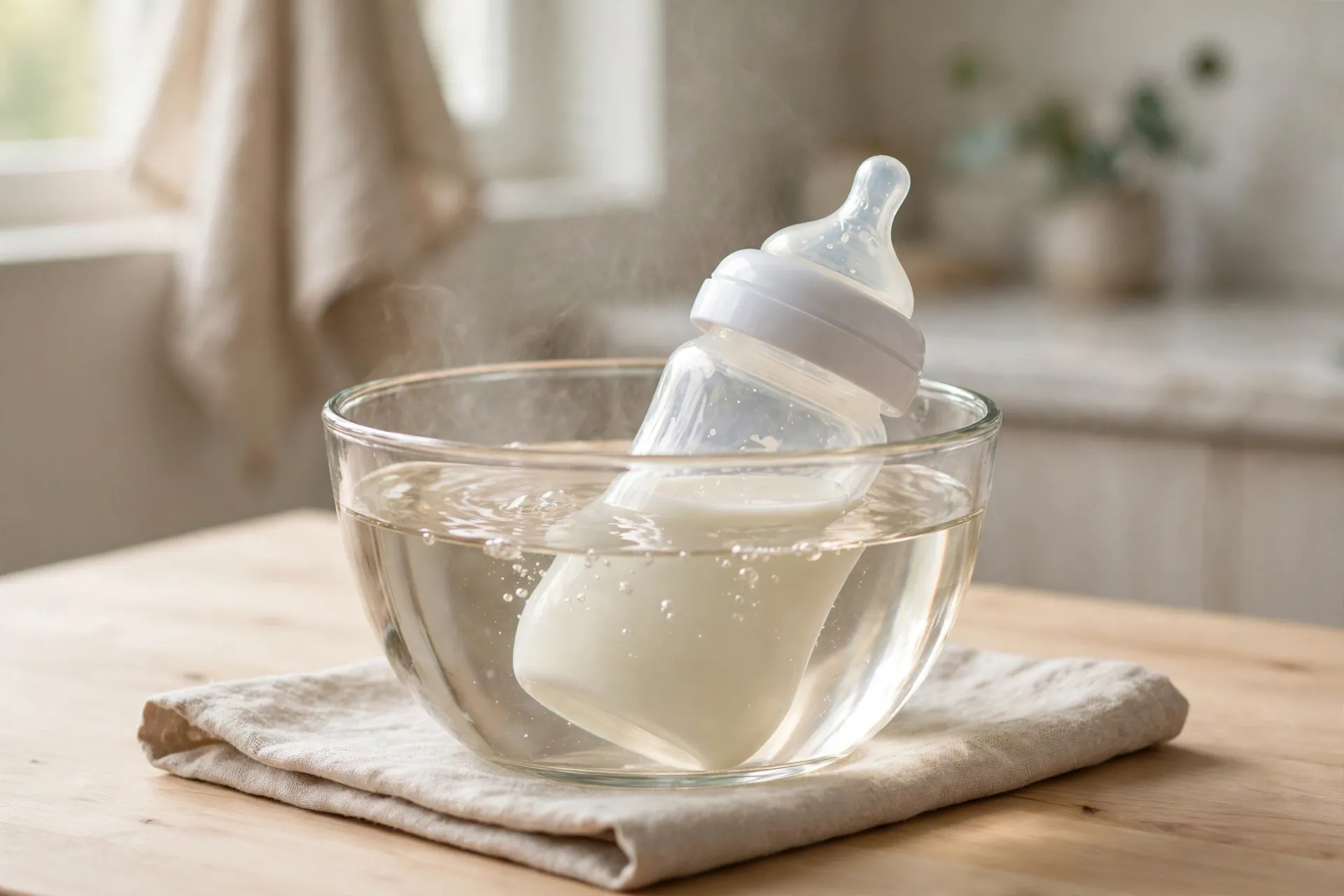
The safe method takes only a few minutes. Keep the bottle sealed and place it in a bowl of warm water, or hold it under warm, not hot, running water for a few minutes, rotating it so all sides warm evenly. The water should feel warm on your wrist, never hot. A bottle warmer designed for breast milk works the same way with controlled, even heat.
Before feeding, swirl the bottle gently to mix the milk and distribute the heat. Do not shake it hard, which can break down some components and create foam. Then test the temperature by shaking a few drops onto the inside of your wrist. It should feel lukewarm, close to body temperature, never hot. Breast milk does not even need warming; the CDC notes it can be served cold or at room temperature, and many babies accept it that way.
Two storage rules go with this. Once breast milk is warmed or brought to room temperature, use it within 2 hours, and discard whatever the baby does not finish after that window. Never refreeze thawed breast milk. For freezer stash, thaw overnight in the refrigerator or in lukewarm water, and count the 24-hour refrigerator clock from when the milk is fully thawed. Our upcoming guide to baby bottles will cover bottle materials and sterilizing in detail.
Which Containers Are Safe for Microwaving Milk
Glass and ceramic are the best choices. A plain glass mug or a ceramic bowl heats evenly, cannot leach anything into the milk, and lets you see the milk rising if it starts to boil over. If you use a mug with a metallic rim or decoration, keep it out of the microwave, since metal arcs.
Plastic is conditional. Only use a plastic container that is explicitly labeled microwave-safe, with the wavy-lines symbol on the bottom. Unlabeled plastic can warp and leach chemicals into hot milk, and milk’s fat content makes leaching worse. Our plastic guide explains which plastics are actually tested for heat, and the symbols guide shows exactly what the microwave-safe mark looks like.
Never microwave milk in its carton. Milk cartons are paperboard lined with a thin plastic coating that is not designed for microwave heat, and the folded spout often contains a metal staple or metallic seal. Transfer the milk to a proper mug first. The same goes for any sealed container: never heat milk with a tight lid on, because trapped steam can pop the lid or burst the container.
Frequently Asked Questions
Quick answers to the milk questions people ask most, with the detail behind each one.
Is it safe to microwave milk?
Yes, for regular cow’s milk and plant-based milks. Use a microwave-safe glass or ceramic container, heat on medium power in short bursts, and stir between bursts. The milk’s nutrition stays largely intact, and the only real risks are boil-overs and scalding from overheating. The exception is breast milk and infant formula, which should never go in the microwave.
How long do you microwave milk?
For a single 8-ounce mug, start with 30 seconds at 50 percent power, stir, then continue in 15 second bursts until it reaches your target temperature. Total time is usually 30 seconds to 1.5 minutes depending on the milk type and your microwave’s wattage. Skim milk heats fastest at 15 to 30 seconds, while plant-based milks may need 30 to 60 seconds. Always start short and add time, since overheating is the cause of nearly every milk problem.
Does microwaving milk destroy nutrients?
Only minimally. Protein, calcium, and most vitamins survive short microwave heating well. Heat-sensitive vitamins like C and B12 can dip slightly, but the loss is small and less than what pasteurization already caused. The microwave has no special nutrient-destroying property; it is the heat that matters, and gentle heating on medium power keeps losses tiny. Boiling the milk hard or reheating it repeatedly causes far more damage than one careful warming.
Can you microwave breast milk?
No. Never thaw or heat breast milk in a microwave. The CDC warns that microwaving destroys nutrients in breast milk and creates hot spots that can burn a baby’s mouth. The uneven, intense heat degrades antibodies, the antibacterial enzyme lysozyme, and vitamin C, which are exactly the components that make breast milk valuable. If it happens by accident, discard the milk and prepare a fresh bottle.
Can you microwave baby formula?
No. The American Academy of Pediatrics, the CDC, and La Leche League all advise against microwaving infant formula. Like breast milk, formula heats unevenly in the microwave, creating scalding hot spots that can burn an infant’s mouth and throat even when the bottle feels cool. Warm the bottle in a bowl of warm water or under warm running water instead, and always test a few drops on your wrist before feeding.
How do you warm a baby bottle without a microwave?
Place the sealed bottle in a bowl of warm water or hold it under warm, not hot, running water for a few minutes, rotating it for even warming. Swirl gently to mix, then test a few drops on the inside of your wrist; it should feel lukewarm, never hot. Breast milk can also be served cold or at room temperature with no warming at all. Once warmed, use the milk within 2 hours and never refreeze it.
Why does milk boil over in the microwave?
Because of milk skin. Heat denatures whey proteins that rise and form a sticky film across the surface, and that film traps steam underneath until the pressure pushes the foamy milk up and over the rim. Milk typically erupts around 176 to 185 degrees, well before it truly boils. The microwave makes it worse by heating fast and unevenly. Prevent it with a large container, medium power, frequent stirring, and never walking away during the final bursts.
Why does milk curdle when heated in the microwave?
Heat unfolds milk’s proteins and they clump together instead of staying dissolved, which is curdling. Overheating is the main trigger, so staying below a simmer keeps the texture smooth. Milk that is starting to turn will curdle even with gentle heat, because bacterial acid has already weakened the proteins, so curdling on heating is often the first sign the milk is past its prime. Plant-based milks curdle more easily because their proteins are less heat-stable.
Why does skin form on top of heated milk?
The skin is denatured whey protein, mostly beta-lactoglobulin, coagulated with fat at the surface. It forms when the milk’s surface sits undisturbed at high temperature, and it is completely safe to eat. Stirring during and after heating breaks up the protein clumps before they form a film, and heating on medium power keeps the surface cooler. If you like the skin, just leave the milk alone and it will form on its own.
Can you microwave milk in a plastic container?
Only if the container is explicitly labeled microwave-safe. Unlabeled plastic can warp in the heat and leach chemicals into the milk, and milk’s fat content encourages that migration. Glass or ceramic is always the safer choice. Check the bottom of any plastic container for the wavy-lines microwave-safe symbol before it goes near the oven, as explained in our symbols guide.
Can you reheat milk more than once?
You can, but you should not make a habit of it. Each heating cycle degrades nutrients a little more, encourages skin and curdling, and, most importantly, each round of warming and cooling gives bacteria more opportunity to grow. Milk that has been heated and then left at room temperature for over two hours should be discarded. Heat only the amount you plan to drink.
What temperature should microwaved milk reach?
For drinking, 110 to 120 degrees Fahrenheit is the comfort zone: warm without any scalding risk. For hot chocolate or cooking, up to about 150 degrees, where steam rises from the surface, is fine. Stop before a rolling boil, because boiling triggers the boil-over, the skin, and protein damage. A kitchen thermometer takes the guesswork out, but the wrist test and a careful sip work for everyday use.
Can you microwave almond, oat, or soy milk?
Yes, with extra care. Plant-based milks heat fine in the microwave, but their proteins are less heat-stable than dairy proteins, so they curdle and separate more easily, especially in acidic drinks like coffee. Use medium or low power, short 15 to 20 second bursts, and stir well. Heat the plant milk separately and add it to hot coffee rather than heating them together for the smoothest result.
Can you microwave chocolate milk or milk with chocolate?
Yes. Stir the chocolate or cocoa in before heating so it distributes evenly, then heat in short bursts with stirring between. Chocolate can make heating less even and increases the scorching risk, so medium power and frequent stirring matter even more. Chocolate syrup melts more smoothly than chopped chocolate. Watch the mug closely, because the added sugars make boil-overs foam up even faster.
Can you microwave milk in its carton?
No. Milk cartons are paperboard with a thin plastic lining that is not rated for microwave heat, and the spout area may contain metal staples or metallic seals that can arc. The carton can also warp and leak. Always pour the milk into a microwave-safe glass or ceramic mug first. The 30 seconds of extra effort beats a melted carton and a microwave full of scorched milk.
The Bottom Line
Can you microwave milk? Yes, and it is one of the most routine microwave jobs there is. The whole method fits in a sentence: a large microwave-safe mug, medium power, short bursts, stir between, and stop before it boils. That routine sidesteps the boil-over, the skin, the curdling, and the nutrient worries all at once, because nearly every milk problem in the microwave comes from too much heat too fast.
Keep the two hard rules separate from the technique. Breast milk and infant formula never go in the microwave, warmed instead in a bowl of warm water and tested on your wrist, and plastic only goes in if it carries the microwave-safe label. Everything else is just practice. Once the routine is automatic, warm milk is two calm minutes away, with nothing to clean up afterward.
