

Quick answer: Yes, you can microwave bread, and it is safe to eat. Warm one or two slices for 10 to 15 seconds on medium power, wrapped loosely in a slightly damp paper towel. Eat it right away, because microwaved bread turns tough and chewy within minutes as it cools. For frozen bread, use short 15 to 20 second bursts on low power, and never microwave bread in a plastic bag or with foil twist ties attached.
Bread is one of the most microwaved foods in the world, and also one of the most complained about. You warm a slice for what feels like a few seconds, it comes out soft and steamy, and by the time you spread the butter it has turned into something closer to a hockey puck. This is not your microwave being broken. It is simple food science, and once you understand it, you can warm bread in the microwave with good results almost every time.
It is a more common question than most people admit. Bread goes stale fast, freezers fill up with half loaves, and the microwave sits right there promising a fifteen second fix. Search results are full of thin answers that say “yes” and stop there, or horror stories about hockey puck toast. Neither helps when you are standing in the kitchen at 7 in the morning. What follows is the complete method, with the reasons behind each step, so you get it right the first time.
This guide covers the right method, exact times for different bread types, frozen and stale bread, sandwiches, what to avoid, and the real science behind why bread goes rubbery. If you are in a hurry, the quick answer above has everything you need.
Can You Microwave Bread? The Short Answer
Yes. Microwaving bread is completely safe, and it will not make the bread unsafe or poisonous in any way. The microwave heats the water inside the bread, the same as any other food. The problem is purely texture. Heat bread for too long, or with no moisture protection, and the rapid steam escape plus cooling starch turns it tough. Keep the time short, add a little moisture, and use medium power instead of full power, and you will get warm, soft bread.
The single most important rule: microwaved bread must be eaten immediately. Even perfectly microwaved bread starts firming up within two to three minutes of cooling. If you need bread for later, the microwave is the wrong tool. For a broader look at what the microwave can and cannot handle, see our main guide to what you can microwave.
Why Microwaved Bread Turns Rubbery: The Science
Bread is mostly starch and water. A microwave heats food by making water molecules vibrate, which generates heat deep inside the bread very quickly. At first this feels wonderful: the starch absorbs the steam and the bread feels soft, warm, and fresh.
The trouble starts when the bread cools. The starch molecules re-crystallize, a process food scientists call starch retrogradation. As the starch tightens back up, it squeezes the water out, and the crumb turns firm, dry, and chewy. Tasting Table explains that this cycle of steam, absorption, and re-crystallization is exactly why a baguette can feel soft for sixty seconds and rock-hard five minutes later (source: Tasting Table). The Takeout adds that the trapped steam first makes the bread soggy, and as the steam leaves during cooling the firmer starches are what you feel as chewiness (source: The Takeout).
Two things make this worse. First, high power. Full power drives the moisture out of the bread faster than the crumb can hold it. Second, time. Even ten extra seconds past “warm” pushes more starch past the point of no return. This is why every reliable method for microwaving bread uses short bursts and rest time: you are trying to warm the bread without fully cooking the starch.
Is It Safe to Microwave Bread?
Yes, microwaving bread is safe. The microwave does not change the chemical makeup of bread in a way that makes it harmful. It heats water molecules, the same process used for every other food you microwave. There is no radiation left in the food, and the bread is not “nuked” in any meaningful sense.
Microwaving also does not destroy the nutrients in bread in any significant way. The heating time is so short that vitamin and mineral losses are minimal, far less than long oven baking. The real risk with microwaving bread is not safety, it is quality. A slice that comes out like leather is a waste of good bread, and that is what the method below is designed to prevent.
One genuine safety note: check for twist ties, metal bread clips, and foil-lined packaging before microwaving. Metal causes sparks in a microwave. Remove any tie, and never microwave bread in its original bag if the bag has a metallic lining. Our guide to microwaving aluminum foil explains what happens when metal meets microwaves.
How to Microwave Bread the Right Way
The damp paper towel method is the one every reliable source recommends, including Panasonic’s own cooking tips for reheating bread (source: Panasonic). The towel creates a small steamy environment around the bread, so the crumb stays moist while it warms. Follow these steps:
- Start with a microwave-safe plate. Put one or two slices of bread on the plate in a single layer. Do not stack slices, because stacked bread heats unevenly and the middles stay cold while the edges overcook.
- Dampen a paper towel. Run a plain white paper towel under the tap, then wring it out well. It should be damp, not dripping. A soaking towel makes the bread soggy. (Plain paper towels are microwave safe; see our guide to microwaving paper towels for the details.)
- Wrap the bread loosely. Lay the damp towel over the bread, or loosely wrap each slice. The goal is a loose steam tent, not a tight seal. A tight wrap traps too much steam and the crust goes gummy.
- Use medium or low power. Set the microwave to 50 percent power. High power is the number one cause of rubbery bread. If your microwave does not have power levels, use shorter bursts instead.
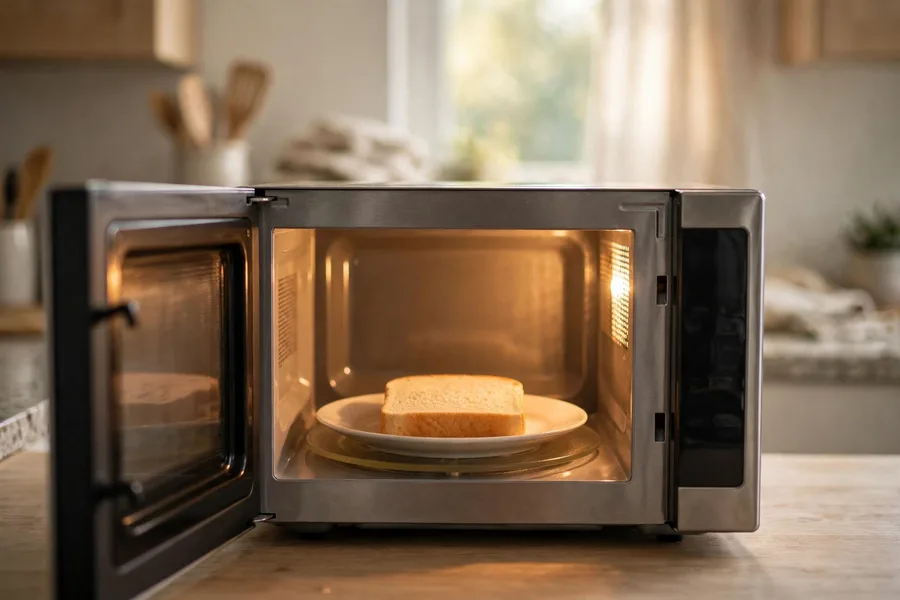
- Heat in short bursts. One or two slices need only 10 to 15 seconds. Check the bread after each burst by touching the center. Warm is done. Hot is overdone.
- Rest and serve immediately. Let the bread sit for about 30 seconds so the heat evens out, then eat it right away. Microwaved bread waits for no one.
A useful extra from Panasonic’s method: place a small microwave-safe cup of water in the corner of the microwave while the bread heats. The water adds ambient humidity to the cavity, which gives you a little more margin against drying. It is optional, but it helps with bagels and thicker rolls.
How Long to Microwave Bread
Time depends on the bread type, the slice thickness, and your microwave’s wattage. These are starting points on medium (50 percent) power. Always start at the low end and add 5 to 10 seconds only if needed.
| Bread type | Time on medium power | Notes |
|---|---|---|
| Sliced sandwich bread | 10 to 15 seconds | Most likely to dry out. Always use the damp towel. |
| Dinner rolls | 15 to 30 seconds | Check after 15 seconds. Rolls go from soft to tough fast. |
| Bagel (halved) | 20 to 40 seconds | Denser crumb tolerates a little more time. Great with the water cup trick. |
| Muffins | 20 to 40 seconds | Watch for dryness. Let rest 30 seconds before eating. |
| Frozen sandwich slices | 15 to 20 seconds on low | Defrost, do not cook. See the frozen section below. |
| Pita or flatbread | 10 to 20 seconds | Heats fast. Overheating makes pita crack instead of fold. |
Notice how small these numbers are. Ten seconds feels like nothing, and that is the point. Bread does not need to be hot through like a casserole. It needs to be gently warm. If your bread comes out steaming, you went too far, and it will be chewy within minutes.
Can You Microwave Frozen Bread?
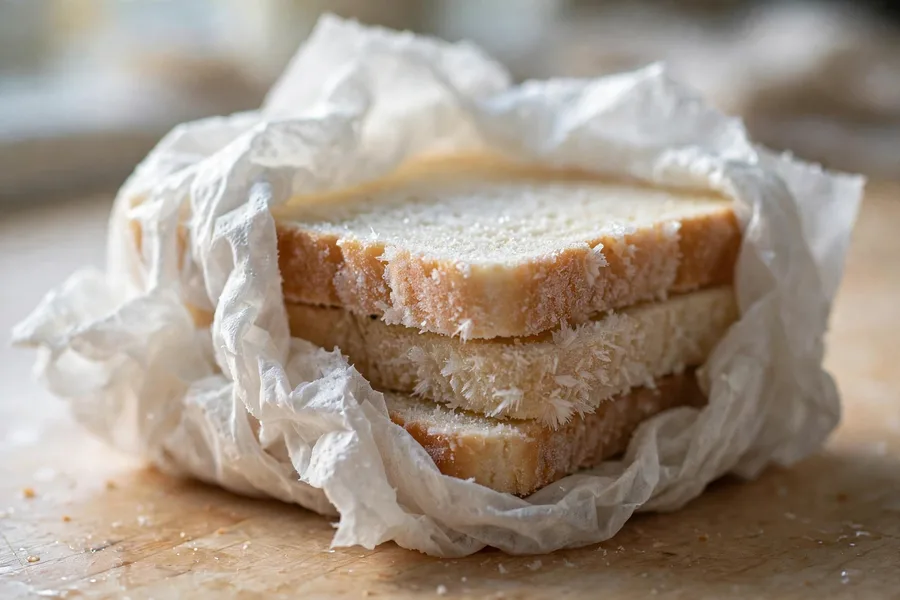
Yes, and the microwave is one of the fastest ways to defrost bread. The method is almost the same as warming fresh bread, with lower power and the same damp towel. Frozen bread slices go from icy to soft in about 15 to 20 seconds each on low (30 percent) power.
The key difference is intent. You are defrosting, not cooking. Work in small increments and check constantly. Chef’s Resource warns that even a few seconds too long turns thawing bread into a tough brick, because the microwave vibrates the water molecules and the rapid “staling” process hits hard the moment the bread cools (source: Chef’s Resource). Their advice matches ours: 30 percent to 50 percent power, a damp paper towel, and never walk away.
For best results with frozen bread:
- Separate the slices before microwaving. Stacked frozen slices thaw unevenly.
- Remove all plastic wrap and freezer bags first. Regular plastic can melt or release chemicals when heated; only microwave-safe plastic belongs in the microwave (more in our guide to microwaving plastic).
- Defrost only what you will eat now. Defrosted bread stales faster than fresh bread, so do not thaw a whole loaf for tomorrow.
- If you want a crisp crust afterward, defrost in the microwave and finish in the toaster or a hot oven for a minute. The microwave does the fast thaw, the dry heat restores the crust.
Anyday’s defrosting guide adds a useful detail: if your microwave has a Defrost setting, use it at the lowest power, and start with 20 to 30 seconds for a few slices, checking in 10 to 15 second bursts (source: Anyday). Let the bread rest 30 seconds after the last burst so the temperature evens out before you unwrap it.
Can You Revive Stale Bread in the Microwave?
To a point, yes. Lightly stale bread, the kind that is firm but not rock-hard and shows no mold, can be softened in the microwave. Mist the surface with water or wrap it in a damp towel, then heat in 10 to 15 second bursts on medium power. The steam rehydrates the crumb temporarily, and the bread will feel fresh for a few minutes.
Be honest with yourself about what “stale” means here. The microwave cannot reverse real staling, which is starch retrogradation that has fully set in over days. It can only buy you a short window of softness. Very hard or dried-out bread will not come back, and you are better off turning it into croutons, breadcrumbs, or bread pudding.
And one absolute rule: never microwave moldy bread. Microwaving does not kill mold reliably, and it does not make moldy bread safe to eat. If you see mold, smell anything off, or spot discoloration, throw the bread out. No shortcut fixes that.
What About Sandwiches and Bread With Fillings?
You can microwave a sandwich, but the filling decides how well it goes. Cheese melts beautifully. Deli meats warm fine. Cold fillings like lettuce, tomato, and mayo do not: they go limp, watery, or separate. The practical move is to microwave the bread alone using the method above, then assemble the sandwich with fresh cold fillings.
Watch the wrapping. Sandwiches from delis often come with metal twist ties, foil-lined paper, or staples. Remove every bit of metal before the sandwich goes near the microwave. If the sandwich is wrapped in plastic cling film, unwrap it too, since standard cling film can melt and is not meant for microwave heating.
Bread You Should Never Microwave
Most bread is fine in the microwave, but a few situations are genuine no-gos:
- Moldy bread. The microwave will not make it safe. Discard it.
- Bread in a plastic bag. Regular plastic bags can melt and release chemicals into the bread. Transfer the bread to a plate first.
- Bread with foil or metal twist ties. Metal arcs and sparks in a microwave and can damage the oven or start a fire. Remove ties and foil before heating.
- Bread in foil-lined packaging. Some bakery bags have a metallic inner lining. If the bag looks shiny inside, take the bread out and use a plate.
- Bread you want crispy. The microwave cannot crisp anything. A baguette microwaved for crispness just gets chewy. Use the oven or toaster for crust.
When in doubt, the plate plus damp paper towel method handles almost everything safely. It keeps the bread off questionable packaging and adds the moisture the bread needs.
Better Alternatives When You Have an Extra Minute
The microwave wins on speed, but it loses on texture to every dry-heat method. If you have even five extra minutes, these give better results:
- Toaster or toaster oven. The best choice for slices and bagel halves. Crisp outside, soft inside, no rubberiness.
- Oven at 350°F (175°C). Best for rolls, loaves, and baguettes. Wrap in foil with a sprinkle of water for soft bread, or heat uncovered on the rack for a crisp crust, about 5 to 10 minutes.
- Skillet. A dry skillet over medium heat warms flatbread, pita, and tortillas in under a minute per side with light toasting.
- Room temperature thaw. For frozen bread you plan ahead for, countertop thawing gives the best texture of all. Slices thaw in under 30 minutes.
Think of it as a trade. The microwave gives you warm bread in 15 seconds. The toaster gives you better bread in 3 minutes. On a busy morning the microwave earns its place. On a slow weekend, give the bread the heat it deserves.
Frequently Asked Questions
These are the questions people actually ask about microwaving bread, answered directly.
Is it safe to microwave bread?
Yes. Microwaving bread is safe. The microwave heats the water inside the bread and leaves no residue or radiation in the food. The only real risk is texture, not safety. Just remove any metal twist ties or foil-lined packaging first.
Why does bread get hard and chewy in the microwave?
Rapid heating drives moisture out of the crumb as steam, and as the bread cools the starch re-crystallizes (starch retrogradation), squeezing out water and turning the texture firm and chewy. Short heating times, medium power, and a damp paper towel all slow this process down.
How long should I microwave bread?
One or two slices of sandwich bread need 10 to 15 seconds on medium (50 percent) power. Rolls and bagels need 15 to 40 seconds depending on size. Start low, check, and add 5 to 10 seconds only if needed. Ten extra seconds is the difference between soft and rubbery.
Can you microwave frozen bread?
Yes. Separate the slices, remove all plastic wrap, wrap loosely in a damp paper towel, and heat on low (30 percent) power in 15 to 20 second bursts, checking each time. You are defrosting, not cooking, so stop as soon as the bread is soft and no longer icy.
Can you microwave bread to make stale bread fresh again?
Temporarily, yes. Dampen slightly stale bread (no mold), wrap in a damp towel, and heat in 10 to 15 second bursts. It will feel soft for a few minutes. The microwave cannot truly reverse staling, and very hard bread will not recover.
Does microwaving bread destroy nutrients?
No, not in any meaningful amount. The heating time is so short that vitamin and mineral losses are minimal. Texture is the thing microwaving affects, not nutrition.
Can you microwave a sandwich?
Yes, but remove all metal ties, foil, and plastic wrap first, and expect cold fillings like lettuce and tomato to go limp. For best results, microwave the bread alone and add fresh cold fillings after.
Can you microwave bread in a plastic bag?
No. Regular plastic bags can melt or release chemicals when heated. Transfer the bread to a microwave-safe plate before microwaving. Only plastics labeled microwave-safe belong in the microwave.
Can you microwave moldy bread to make it safe?
No. Microwaving does not reliably kill mold, and moldy bread is not safe to eat after heating. If bread shows mold, off smells, or discoloration, throw it out.
What power level is best for microwaving bread?
Medium (50 percent) power for fresh bread, low (30 percent) for frozen bread. High power drives moisture out too fast and is the main cause of tough, rubbery results. If your microwave has no power settings, use shorter bursts on full power.
Why is my microwaved bread soggy instead of soft?
Too much moisture or too tight a wrap. A dripping-wet towel or a sealed container traps excess steam and the crust turns gummy. Use a well-wrung damp towel and wrap loosely so some steam escapes.
Can you microwave a baguette?
You can warm slices of baguette, but the microwave will never keep the crust crisp. Expect a soft, chewy result. For a real baguette crust, use a hot oven: sprinkle the loaf with water and heat at 350°F for 5 to 8 minutes.
How do you keep microwaved bread soft longer?
You cannot keep it soft for long. Microwaved bread firms up within minutes as it cools, no matter the method. The honest answer is to microwave only what you will eat immediately. For bread you need later, use the oven or toaster.
Is it better to microwave or toast bread?
Toasting gives better texture: crisp outside, soft inside, and it stays good as it cools. Microwaving is faster (seconds versus minutes) but the result must be eaten immediately. For speed, microwave. For quality, toast.
The Bottom Line
You can microwave bread safely, and with the right technique it comes out warm and soft: a damp paper towel, medium power, 10 to 15 seconds, eaten immediately. The rubbery disasters happen when bread is overheated, heated on full power, or left to cool before eating. Respect the short time window, keep metal and plastic bags out of the oven, and the microwave becomes a genuinely useful bread tool for busy mornings. When you have a few extra minutes, though, the toaster still wins.
