

You ordered too much food again. It is sitting in the fridge in the same cardboard box it arrived in, and now you are tired, hungry, and staring at your microwave. The question hits you: can you microwave cardboard takeout boxes, or should you scoop everything into a bowl first?
This article gives you the full answer to can you microwave cardboard takeout boxes. You will learn what takeout boxes are actually made of, which types are safe to heat, which ones can spark or catch fire, and the exact steps to reheat your food safely. By the end, you will never have to guess again.
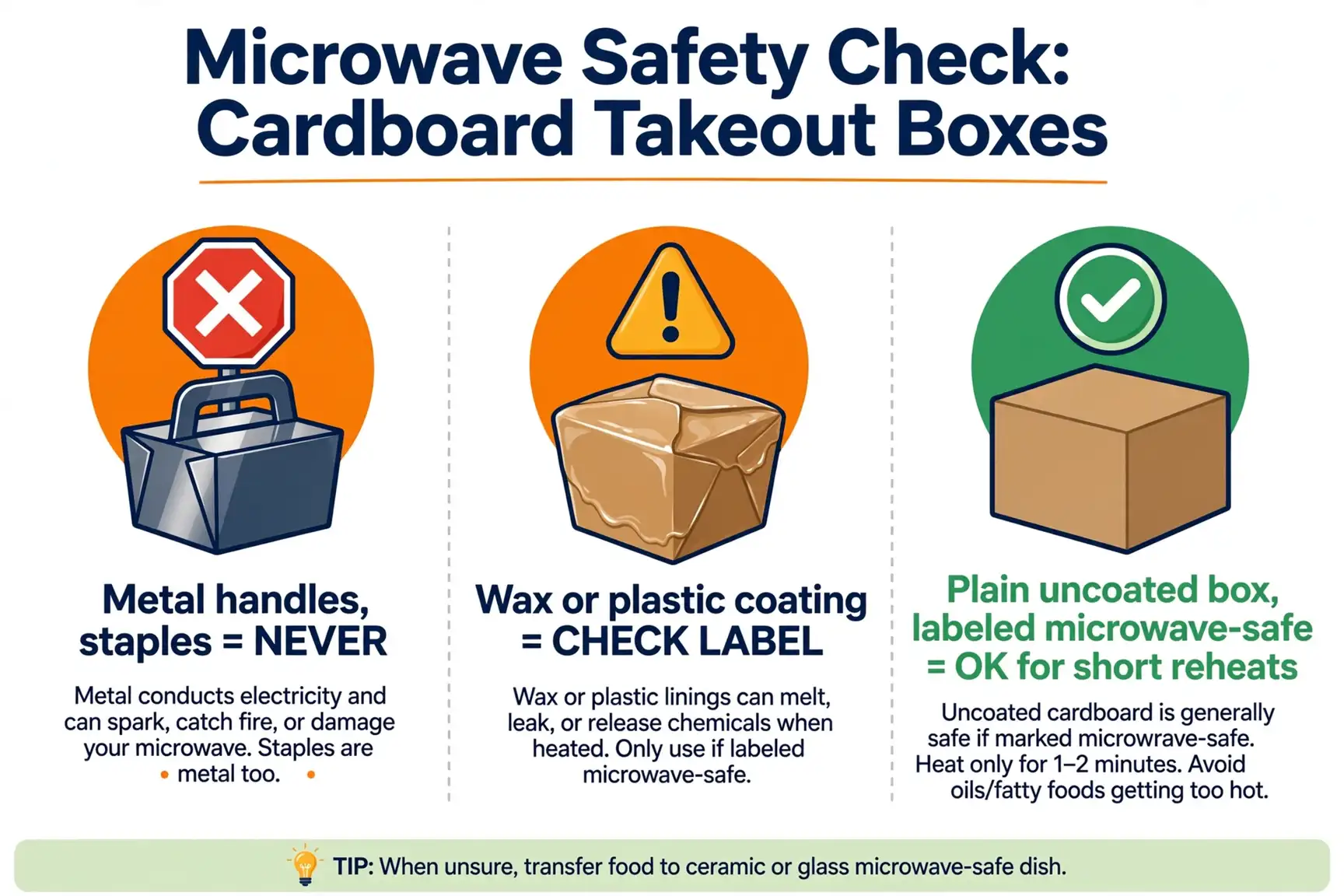
The short version: can you microwave cardboard takeout boxes? Sometimes yes, but only under the right conditions. A plain, uncoated box labeled microwave-safe can handle a short reheat. A box with metal handles, a plastic or wax lining, or no label is a risk you do not need to take.
Can You Microwave Cardboard Takeout Boxes? The Short Answer
Yes, you can microwave cardboard takeout boxes in some cases, but it is never automatic. A plain paperboard box with no metal parts, no plastic or wax lining, and a clear microwave-safe label is fine for a quick 1 to 2 minute reheat. Most real-world takeout boxes fail at least one of these checks.
The safest habit is a 30-second inspection before the box goes in. Look at the bottom or side of the box for a microwave-safe mark, and check for metal handles, staples, or a shiny plastic lining inside. If anything looks off, transfer the food to a glass or ceramic dish. That one move removes every risk at once.
This matters because cardboard is not one single material. Two boxes can look identical on the outside and behave very differently inside your microwave. The sections below break down what is actually in these boxes, so you can answer can you microwave cardboard takeout boxes for any box in seconds.
What Cardboard Takeout Boxes Are Really Made Of
Most takeout boxes look like simple folded cardboard, but they are usually a sandwich of several materials. Each layer matters for microwave safety, and this is where most quick answers online fall short. Knowing the layers lets you read any box like a label instead of guessing, and that is the real skill behind answering can you microwave cardboard takeout boxes.
The paperboard core
The main body of the box is paperboard, which is just a thicker grade of paper made from wood fiber. Many takeout boxes use recycled paperboard, which is good for the planet but less predictable for heating. Recycled board can carry tiny traces of inks, dyes, adhesives, or other residues from its previous life.
At room temperature these traces sit harmlessly in the material. Heat changes the equation, because high temperatures help chemicals migrate from packaging into food. This is one reason the question can you microwave cardboard takeout boxes has no single yes-or-no answer, and the FDA guidance on chemical considerations for recycled food packaging explains why recycled content in food contact materials needs careful control. For you as a consumer, the takeaway is simple: a box made from recycled board is fine for storage, but it is not automatically fine for the microwave.
The hidden plastic lining
Many cardboard takeout boxes have a thin polyethylene (PE) plastic coating on the inside. This lining is what keeps greasy sauces from soaking through the cardboard and landing on your table. You can often spot it as a faint shine on the inner surface of the box.
This lining is the number one reason generic answers to can you microwave cardboard takeout boxes go wrong. Plain cardboard and plastic-lined cardboard look almost the same, but only one of them belongs in a microwave without a second thought. When overheated, a plastic lining can soften, warp, and let chemicals migrate into your food. The USDA’s Food Safety and Inspection Service advises that only containers specially manufactured and labeled for microwave use should go in, and you can read their current microwave oven cooking guidance for the full safe-container list.
Wax and grease-resistant coatings
Some boxes use a paraffin wax coating or a grease-resistant treatment instead of plastic. Wax does a decent job of blocking grease at room temperature, but it is a poor partner for microwave heat. It can melt, pool into your food, and in extreme cases become a fire risk.
Glossy boxes are the usual suspects here. If the inside of your box has a waxy sheen or a slick feel that water would bead on, treat it as wax-coated until a label tells you otherwise. Waxed cardboard is generally less safe to microwave than plain uncoated board, so when you ask can you microwave cardboard takeout boxes, treat a waxy box as a no until a label says otherwise.
Inks, dyes, and adhesives
Decorative boxes with bright logos, bold colors, and heavy printing look nice on the delivery table, but the inks and dyes add another layer of chemistry. Food-safe packaging uses regulated inks on the food-contact side, but boxes meant only for transport are not always held to the same standard. The glue that holds the box together is another possible source of migrating compounds when heated.
This is why the USDA recommends white, unprinted paper materials for microwave use when you have the choice. A plain white oyster pail is a better microwave candidate than a heavily printed, glossy box. It is not a hard rule, but it is a useful tiebreaker when you are unsure.
Metal handles, staples, and closures
Some Chinese takeout boxes (the classic oyster pails) come with thin metal wire handles. Some boxes are sealed with metal staples. Metal and microwaves do not mix, and this is the most dangerous item on the list. Microwaves cause electric charges to build up in metal, especially at sharp edges and points, which produces sparks called arcing.
Arcing can scorch the box, ignite the cardboard, and damage the inside of your microwave. The USDA specifically names takeout containers with metal handles as items that do not belong in a microwave. Before any box goes in, run your fingers along the edges and check for metal, because this is the fastest check when you wonder can you microwave cardboard takeout boxes. If you find any, either remove it completely or move the food to a different container.
The Real Risks of Microwaving a Cardboard Takeout Box
Now that you know what is inside a takeout box, the risks are easier to understand. None of them are guaranteed to happen, but each one is real enough that the label check is worth your 30 seconds. Here is what can actually go wrong when someone asks can you microwave cardboard takeout boxes and skips the checks.
Sparks and fire from metal parts
This is the big one. Metal handles, staples, or even a metallic-printed design can cause arcing inside your microwave. The sparks themselves are hot enough to ignite cardboard, and cardboard is a genuinely flammable material once it gets hot and dry. People have started real kitchen fires this way.
The good news is that this risk is completely visible. You can see and feel metal on a box. No metal, no arcing. This is also the easiest risk to eliminate, so make it part of your habit every single time.
Chemicals migrating into your food
Heat pushes chemicals out of packaging and into food faster than room temperature does. Plastic linings can release compounds when they soften, and recycled board can release traces of inks or adhesives. You will not taste or smell most of this happening, which is why it gets less attention than fire even though it happens more often.
This is not a reason to panic. It is a reason to use boxes the way they were designed to be used. A box designed and labeled for microwave use has been tested for this, but a random box has not. When there is no label, that is the quietest risk behind can you microwave cardboard takeout boxes.
Melting, warping, and soggy boxes
A box that survives the microwave but falls apart is not a success. Plastic-lined boxes can warp and go limp as the lining softens. The box can leak sauce onto the turntable or collapse when you lift it. Hot grease can also soak through parts of the box that were never meant to hold hot liquid.
Watch for the warning signs while the box heats. If you see steam puffing from strange places, smell something sharp or chemical, or see the box sagging, stop the microwave. Let the box cool, then transfer the food. Your microwave and your dinner both survive.
Cardboard itself can burn
Even a plain cardboard box without metal can catch fire if it gets too hot for too long. Cardboard ignites around 450 degrees Fahrenheit, and while a microwave heats food rather than the box, hot spots, long cook times, and dry empty cardboard can push parts of the box toward dangerous temperatures. Never microwave an empty cardboard box.
Short reheats are the key. One to two minutes at medium power is a reheat. Ten minutes at full power is a science experiment. Keep your heating times short, stay near the microwave, and the fire risk from plain cardboard stays near zero.
Which Cardboard Takeout Boxes Can You Microwave Safely?
So, can you microwave cardboard takeout boxes safely or not? The answer depends on the box type, and this is the question most articles answer too vaguely. Use the table below as your quick reference, then read the details under each row if your box matches.
| Box type | Microwave safe? | Why |
|---|---|---|
| Plain oyster pail, no handles, labeled microwave-safe | Yes | Designed and tested for it; plain uncoated board |
| Plain oyster pail, no label, no metal | Usually yes, short reheats | Uncoated paperboard is generally fine, but untested |
| Oyster pail with metal wire handles | No | Arcing, sparks, fire risk |
| Wax-coated or plastic-lined box, no label | No | Linings can melt and migrate into food |
| Glossy printed box with heavy ink | Caution | Inks and coatings add chemical migration risk |
| Pizza box | No | Too large, adhesives and inks, not designed for it |
| Brown paper bag or newspaper | Never | USDA warns these can ignite and release fumes |
| Box explicitly labeled “Do not microwave” | Never | The manufacturer already did the testing for you |
The safest boxes
The best-case box is plain, white, uncoated paperboard with a microwave-safe symbol printed on the bottom. These are made for reheating, and the manufacturer has tested them. A white oyster pail without handles from a restaurant that prints reheating instructions is a good example. Even then, keep the reheat short, because can you microwave cardboard takeout boxes safely always comes with a time limit.
The boxes that need a second look
Unlabeled plain boxes sit in a gray zone. The cardboard itself is usually fine for a minute or two, but you cannot confirm the inks, adhesives, or fiber content. If the food inside is valuable to you, or if anyone eating has health sensitivities, moving the food to a bowl costs you 60 seconds and removes the question entirely. For a fuller picture of the safest overall options, see our complete microwave-safe containers safety chart.
The boxes that are always a no
Any box with metal parts or a “do not microwave” note is an instant no. Brown paper bags and newspaper are an instant no too, because the USDA warns they can ignite and emit toxic fumes. Pizza boxes are thick, heavily printed, and almost never labeled microwave-safe. Just transfer the slice.
How to Microwave Cardboard Takeout Boxes the Safe Way
If your box passes the label and metal checks, here is the safe way to handle can you microwave cardboard takeout boxes in your kitchen. Can you microwave cardboard takeout boxes without watching them? No, and that is the one rule people break most often. Follow these steps and your food will be hot, your box intact, and your microwave undamaged.
Step 1: do the 30-second box inspection
Hold the box up and look at the bottom and sides for a microwave-safe mark. Feel for metal handles, staples, or a metal rim, and look inside for a plastic lining or waxy shine. If you find a “do not microwave” note anywhere, stop here and transfer the food. This quick check catches every dangerous box.
Step 2: remove metal parts or lids that do not belong
If the box has a removable metal handle, take it off completely. Peel off any staples if you can do it safely. Remove any plastic lid that is not labeled microwave-safe, because single-use plastic lids can warp in the heat. Learning to read microwave-safe symbols makes this check much faster over time.
Step 3: open the flaps and heat in short bursts
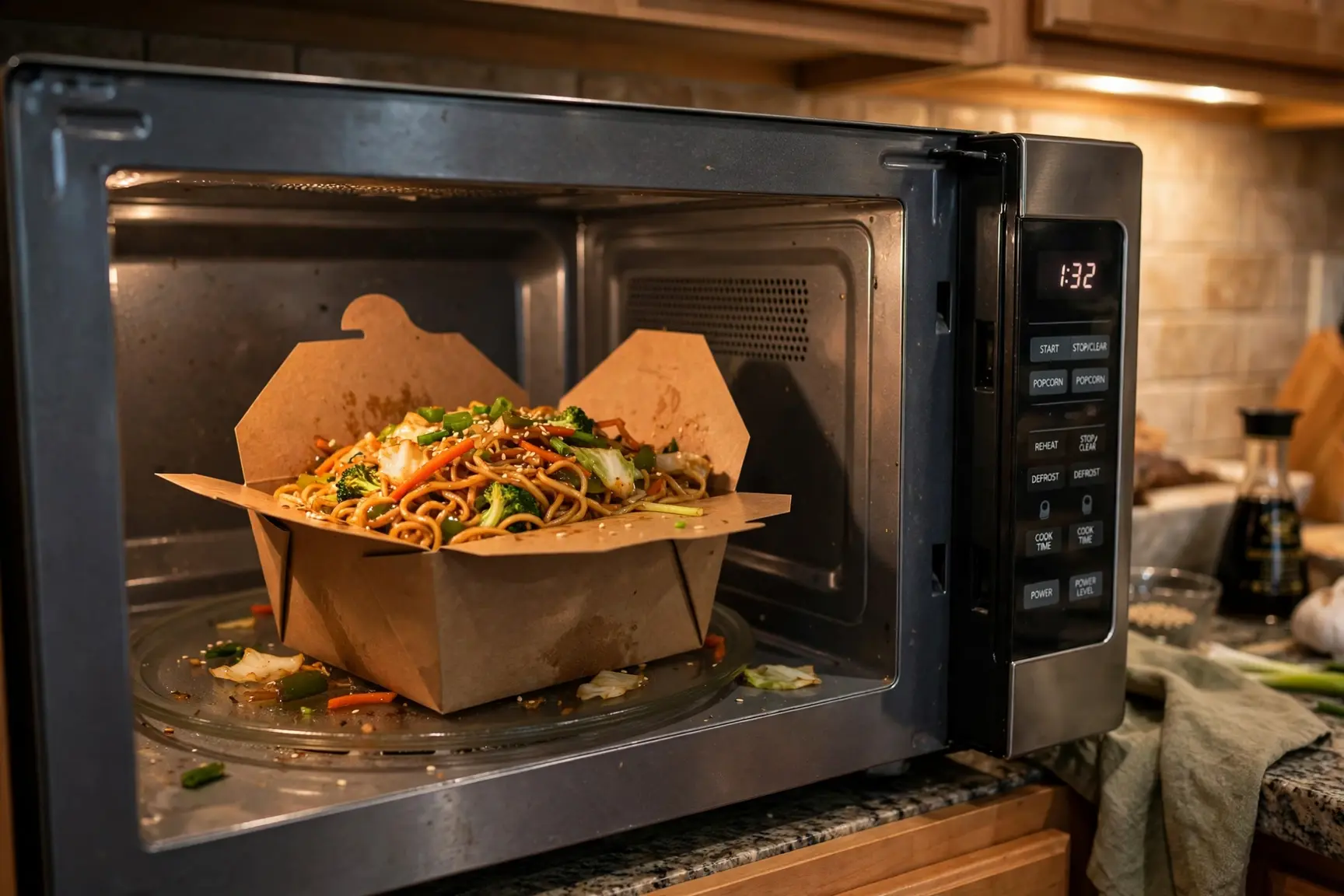
Open the box flaps instead of sealing the box shut. Trapped steam softens the cardboard and makes it more likely to collapse. Heat for 1 to 2 minutes at medium power rather than blasting it on high. For rice or noodles, a damp paper towel laid over the top keeps the food from drying out without sealing the box.
Step 4: stir, check, and stop at the first warning sign
Halfway through, stir the food so it heats evenly and check that the box still feels firm. Microwaves heat unevenly, and stirring eliminates the cold spots where bacteria survive. If you see sparks, smell burning, or notice the box going limp, stop immediately, let it cool, and move the food to a proper dish. These warning signs are your box answering can you microwave cardboard takeout boxes for you.
Step 5: make sure the food is actually hot enough
The USDA advises reheating leftovers until they are steaming hot, and checking that meat and poultry reach 165 degrees Fahrenheit with a food thermometer. A box that is only warm in the middle is not done. This step is about the food, not the box, but it belongs here because a soggy box tempts people to stop heating too early. If the box is falling apart before the food is hot, that is your sign to finish in a bowl.
When the Box Is Not Safe: Better Ways to Reheat
Transferring your food takes about a minute, and it is the right call whenever can you microwave cardboard takeout boxes gets a maybe. There is no prize for reheating in the original container. Your food will taste the same or better, and you remove every risk described in this article.
Transfer to glass or ceramic
A glass or ceramic bowl is the gold standard for microwaving. These materials do not melt, leach, or burn, and they are labeled for the job. Scoop the food in, cover it loosely with a microwave-safe lid or a damp paper towel, and heat until steaming. This is also the answer when you wonder what you should never put in a microwave in the first place.
Use the stovetop for saucy leftovers
Sauces, curries, and stir-fries often reheat better on the stove than in the microwave. Pour the food into a pan over medium heat and stir until it bubbles. You get even heating and the sauce does not turn the box into a soggy mess. For fried foods like spring rolls or fried rice, the stovetop keeps the texture crisp in a way the microwave never will.
Use the oven for crispy foods
Pizza, egg rolls, and anything breaded come back to life in the oven. Spread the food on an oven-safe tray, heat at around 350 degrees Fahrenheit until hot through, and you get your crunch back. It takes longer than the microwave, but the texture difference is worth it. Never put the cardboard box itself in the oven.
Can You Microwave Cardboard Takeout Boxes Without a Label?
This is the question behind most real searches, so it deserves a straight answer. Can you microwave cardboard takeout boxes when there is no label at all? You probably can for a short reheat if the box is plain, uncoated, and has no metal, but you are accepting a small unknown risk with every unlabeled box.
Here is the honest breakdown. The plain cardboard itself is very unlikely to hurt you in 90 seconds. The risk lives in what you cannot see: the fiber source, the inks, the adhesives, and any hidden plastic lining. Without a label, no one has tested that specific box, so heat a plain uncoated box only for a minute or two, or transfer the food.
Use this decision rule. If the box is plain white board, uncoated, no metal, and you only need a minute or two, heating it is a reasonable personal choice, and this is the closest thing to a yes that can you microwave cardboard takeout boxes gets without a label. If the box is glossy, printed, lined, or you need a long heat, transfer the food. When a label is missing, the label check becomes a judgment call, and the tiebreaker is always the same: moving the food to a bowl costs a minute and removes the question.
One more note for the gray zone. A box that held your food safely for a day in the fridge was tested by time, not by heat. Storage safety and microwave safety are different things, so do not skip the inspection. When in doubt, review the rules for common cousins like microwaving paper plates and microwaving plastic containers too.
Frequently Asked Questions
These are the questions real people ask when they wonder, can you microwave cardboard takeout boxes? Each answer starts with the direct answer, then the detail you need to decide.
Can you microwave cardboard takeout boxes?
Sometimes. You can microwave a cardboard takeout box if it is plain, uncoated, has no metal parts, and is labeled microwave-safe. Skip the microwave if the box has metal handles or staples, a plastic or wax lining, heavy printed ink, or a “do not microwave” note. When you are unsure, transfer the food to a glass or ceramic bowl.
Can I microwave a cardboard takeout box for just 30 seconds?
Yes, a short burst of 30 seconds is much safer than a long heat, but it does not fix every problem. Metal parts can spark within seconds, so remove all metal first. A 30-second warmup is a good strategy for plain, uncoated boxes that passed the label check, which is the best-case scenario for can you microwave cardboard takeout boxes.
What does the microwave-safe symbol look like on a takeout box?
The most common mark is a small microwave oven icon with wavy lines inside it, sometimes with the words “microwave-safe” printed underneath. On cardboard boxes the symbol may be stamped on the bottom or printed on a side panel. If you cannot find any mark at all, treat the box as unlabeled and use the judgment rules in this guide.
Can cardboard takeout boxes catch fire in the microwave?
Yes, although it is uncommon with short reheats. The biggest fire triggers are metal handles or staples that spark, and overheating the box for too long, and these are the two mistakes behind most can you microwave cardboard takeout boxes accidents. Plain cardboard itself can ignite if it gets extremely hot and dry, which is why you should never microwave an empty box and never walk away while a box is heating.
Are wax-coated takeout boxes safe to microwave?
No, not unless they carry a microwave-safe label. Wax coatings can melt into your food when heated, and melted wax ruins both the food and the box. If the inside of your box has a waxy sheen, transfer the food to a different container before reheating.
What about boxes with metal handles or staples?
Never microwave them. Metal handles and staples can cause arcing, which means visible sparks inside your microwave. The USDA specifically lists takeout containers with metal handles as items that do not belong in a microwave. Remove the metal completely or move the food to a bowl, because no version of can you microwave cardboard takeout boxes is worth a microwave fire.
Can I microwave a cardboard box if I remove the food first?
Do not do this. Microwaving an empty cardboard box is more dangerous than heating one with food, because the food absorbs most of the microwave energy. An empty box can overheat quickly and catch fire. There is no good reason to heat an empty box.
Are all cardboard takeout boxes the same?
No, they vary a lot. Some are plain uncoated paperboard, some have plastic or wax linings, some use recycled board with inks and adhesives, and some carry metal handles. Two boxes that look similar can behave very differently in a microwave. This is why the label check matters more than the box type.
Can you microwave Chinese takeout boxes (oyster pails)?
It depends on the specific box. A plain white oyster pail without metal handles is often fine for a short reheat. Many classic oyster pails have thin metal wire handles, and those must never go in the microwave. Check your exact box for handles, lining, and labeling before deciding, since can you microwave cardboard takeout boxes of the oyster-pail style depends entirely on the specific box.
Can you microwave cardboard pizza boxes?
No. Pizza boxes are thick, heavily printed, glued with adhesives, and almost never labeled microwave-safe. They are also usually too large to heat evenly. Transfer the slices to a microwave-safe plate and heat them there, or use the oven to keep the crust crisp.
What should I do if I accidentally microwaved a cardboard takeout box?
Turn off the microwave immediately. Let the box cool before touching it, then check whether the box melted, warped, or smells strongly of chemicals. If the box warped or melted, throw the food out rather than eating it. Wipe down the microwave interior and ventilate the kitchen.
Do I need to remove the lid or open the flaps before microwaving?
Yes, open the flaps or vent the lid. Trapped steam softens cardboard and can make the box collapse or leak. Open flaps let steam escape, keep the box firm, and heat the food more evenly. If the box has a separate plastic lid that is not labeled microwave-safe, leave the lid off entirely.
What is the best way to reheat food from a cardboard takeout box?
Transferring the food to a glass or ceramic bowl and microwaving it there is the simplest safe method. For saucy foods, a pan on the stovetop gives the most even heat. For crispy foods like pizza or egg rolls, the oven at around 350 degrees Fahrenheit restores the texture best, which is often a better answer than asking can you microwave cardboard takeout boxes at all.
Can I microwave a brown paper bag with my food in it?
No, never. The USDA warns that brown paper bags and newspapers in the microwave can ignite and release toxic fumes. This is different from a cardboard takeout box: thin bags heat up much faster and are a well-documented fire hazard. Always move the food into a proper container first.
The Bottom Line on Microwaving Cardboard Takeout Boxes
Can you microwave cardboard takeout boxes? Yes, when the box is plain, uncoated, free of metal, and labeled microwave-safe, a short 1 to 2 minute reheat is fine. That is the green light. Everything else is a judgment call, and the three red lights are metal parts, plastic or wax linings, and a missing label combined with a glossy or printed box.
Take two habits away from this guide. First, spend 30 seconds inspecting every box for a label and metal before it goes in. Second, when anything looks questionable, transfer the food to glass or ceramic, because the safest answer to can you microwave cardboard takeout boxes is always the transfer. That one-minute transfer is the cheapest insurance in your kitchen, and it works every single time.
