Local news
Scientists warn that this species is approaching extinction within the next decade, but conservationists say there is still hope.
Penguins on the beach in South Africa Diana Major/New England Aquarium
When hundreds of abandoned penguin chicks needed around-the-clock care in South Africa this spring, a penguin trainer at the New England Aquarium was eager to help.
The penguin’s long-time caretaker spent two weeks raising chicks and incubating eggs as part of an international effort to save one of the world’s most endangered seabird species.
“Playing even the smallest role in such an important conservation effort has been a truly humbling experience,” said Major, the aquarium’s penguin manager. “I have spent my career caring for penguins and educating guests about the challenges facing wild populations, so having the opportunity to directly contribute to their conservation using my experience and knowledge was extremely rewarding.”
In April, Major spent two weeks in Cape Town volunteering with the Southern African Shorebird Conservation Foundation (sancob). She was one of three New England Aquarium penguin trainers who traveled to South Africa over the past 18 months to support the organization’s rehabilitation efforts. Major was also the first Aquarium employee to volunteer at the newly opened penguin nursery.
African penguins are classified as critically endangered International Union for Conservation of Nature (IUCN) Red List, With the species losing an estimated 97 percent of its population. Conservationists have warned that the species could be functionally extinct by 2035 if current population trends continue.
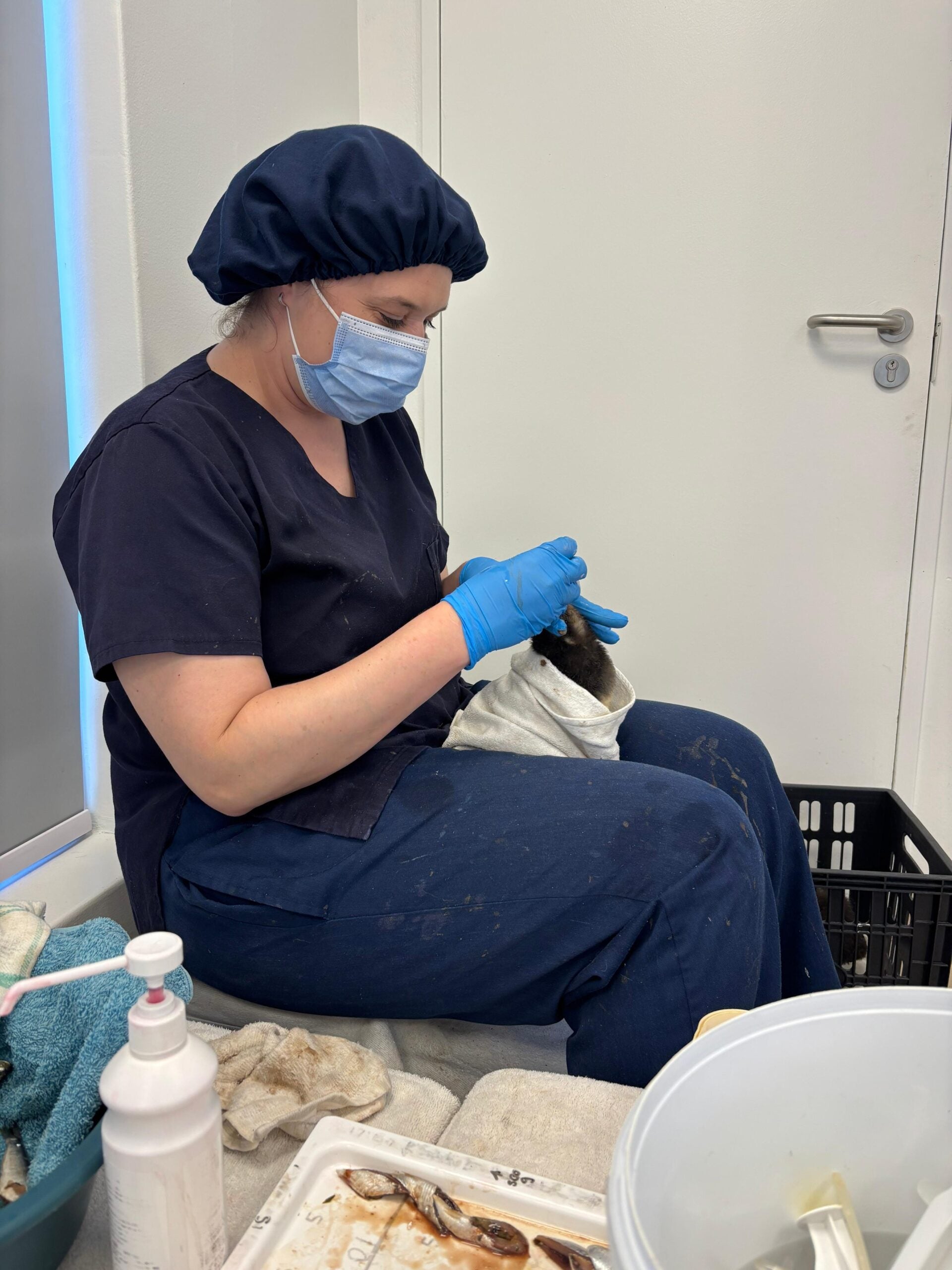
“These penguins are struggling to find enough food due to changes in the oceans and competition with commercial fisheries, while also facing habitat loss, pollution and disease,” Major told Boston.com. “Combined, these pressures make it difficult for penguins to not only survive, but also raise chicks successfully.”
During her volunteer assignment in April, Major joined a team that cares for approximately 100 chicks at a time. The birds needed to be fed every few hours, and some also needed treatment with medications or sprays. According to aquarium officials, caregivers wore masks, hoods and full protective gear while working in the incubator, and limited their interactions with the chicks so they would not become accustomed to humans before being released into the wild.
Although the outlook for African penguins is dire, Major said there is still hope if conservation efforts continue.
“It is important that we make changes now,” she said. “The good news is that there are conservation efforts focused on protecting nesting habitat, improving food availability, and reducing other human impacts, which will hopefully make a real difference. There is still an opportunity to change the future of this species, but it requires continued work and collaboration.”
The New England Aquarium has cared for penguins at its Central Wharf campus for decades and has joined the Association of Zoos and Aquariums. Saving Animals from Extinction (SAFE) African Penguin Programme in 2023. Through the partnership, the aquarium supports field conservation, rehabilitation efforts and public education to protect wild African penguin populations.
The aquarium said it plans to continue sending the penguin trainer to South Africa every year while also helping to fund rehabilitation work through it Marine Conservation Action Fund. Staff also share stories from their own conservation work during daily presentations in the aquarium’s penguin exhibit to encourage visitors to support conservation efforts.

Subscribe to our newsletter today
Get everything you need to know to start your day, delivered straight to your inbox every morning.