NASHVILLE, TN– Tennessee’s governor pardoned country music star Jelly Roll on Thursday over his criminal past in the state, acknowledging the Nashville native’s long road back from drugs and prison through soul-searching, songwriting and advocacy for second chances.
The rapper-turned-singer whose legal name is Jason Deford has spoken for years about his story of redemption to diverse audiences, from people serving time in correctional centers to concert crowds and even testifying before Congress.
Republican Gov. Bill Lee issued the pardon after friends and civic leaders of the Grammy-nominated musician joined the outpouring of support.
Jelly Roll’s convictions include robbery and drug offenses. He said that the pardon would make it easier for him to travel internationally to conduct musical tours and perform Christian missionary work without filling out cumbersome papers.
He was one of 33 people to receive clemency Thursday from Lee, who for years issued clemency orders around the Christmas season. Jelly Roll’s application underwent the same comprehensive, months-long review as other applicants, Lee said. The state Parole Board made a unanimous, nonbinding recommendation to pardon Jelly Roll in April.
“His story is amazing, it’s a redemptive story, it’s powerful, and it’s what you look for and what you hope for,” Lee told reporters.
Jelly Roll and Lee meet at the Governor’s Mansion
Lee said he didn’t meet Jelly Roll until Thursday, when the musician visited the governor’s mansion over news of the pardon. The two embraced in front of a lit Christmas tree and a fireplace decorated with holiday wreaths.
Unlike recent high-profile federal pardons, which allow people to escape prison, Tennessee’s pardon is a clemency statement for someone who has already completed a prison sentence. A pardon provides a path to restoring some civil rights such as the right to vote, although there are some legal restrictions, and the governor can set the terms.

This photo provided by Tennessee Gov. Bill Lee’s office shows Gov. Bill Lee, left, hugging country musician Jelly Roll on Thursday, Dec. 18, 2025.
Brandon Hall/Office of Gov. Bill Lee via AP
Jelly Roll took country music by storm with 2023 album “Whitsitt Chapel” and crossover hits like “Need a Favor.” He has won numerous CMT Awards, a CMA Award and has also received seven career Grammy Award nominations.
Much of his music deals with overcoming adversity, such as the song “Winning Streak,” which is about someone’s first day sober. Or “I’m not okay.”
“When I first started doing this, I was telling my story of my broken self,” he told The Associated Press in an interview. “By the time I passed, I realized that my story was the story of many others. So, I’m not telling my story anymore. I’ll be able to pry it right out of the cracks of people whose story has never been told.”
Jelly Roll: ”I was part of the problem”
Before the parole board, Jelly Roll said he first fell in love with songwriting while in custody, describing music as a therapeutic emotional project that “would end up changing my life in ways I never dreamed.”
Aside from sold-out shows, he has testified before the US Senate about the dangers of fentanyl, describing his younger drug-dealing self as “the uneducated guy in the kitchen playing chemist with drugs I knew absolutely nothing about.”
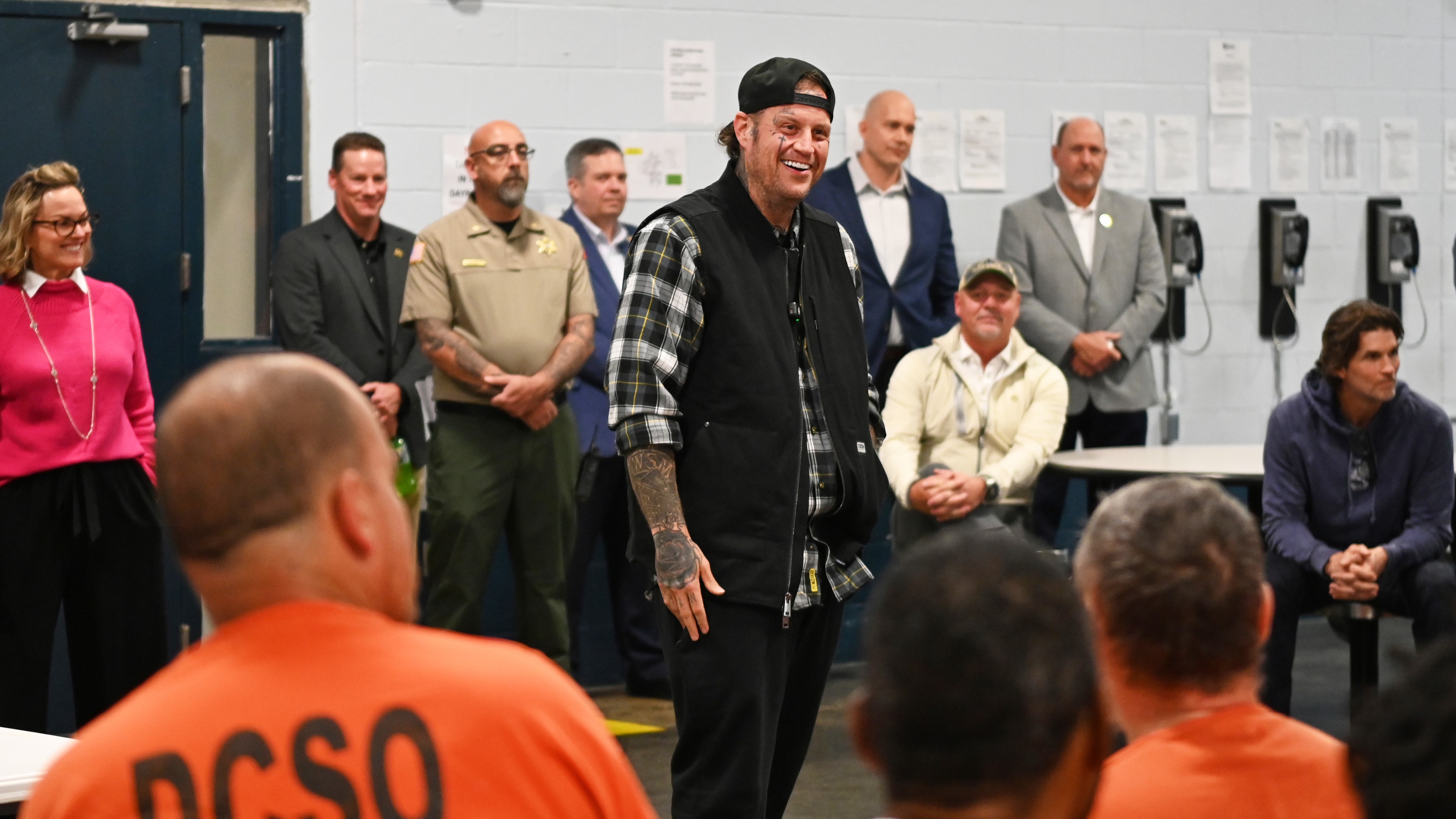
This photo provided by the Nashville-Davidson County Sheriff’s Office shows country music star Jelly Roll speaking to inmates at the Davidson County Sheriff’s Office on November 25, 2025.
Reginald Scott/Nashville-Davidson County Sheriff’s Office via AP
“I was part of the problem,” he told lawmakers at the time. “Here I stand now as a man who wants to be part of the solution.”
Jelly Roll’s most serious convictions include robbery when she was 17 and drug charges when she was 23. In the first case, an acquaintance helped Jelly Roll and two armed accomplices rob $350 from people at a home in 2002. Because the victims knew their female acquaintance, she and Jelly Roll were quickly arrested. Jelly Roll was unarmed and was sentenced to a year in jail plus probation.
In another operation in 2008, police found marijuana and cocaine in his car, resulting in him being placed on court-ordered probation for eight years.
The sheriff who held Jelly Roll in his prison urged pardon
Friends and civic leaders noted his shift in support of the pardon.
Davidson County Sheriff Daron Hall, who runs the Nashville jail, wrote that Jelly Roll woke up in one of the jails he ran. Live Nation Entertainment CEO and President Michael Rapinoe cited Jelly Roll donations from his shows to charities for at-risk youth.
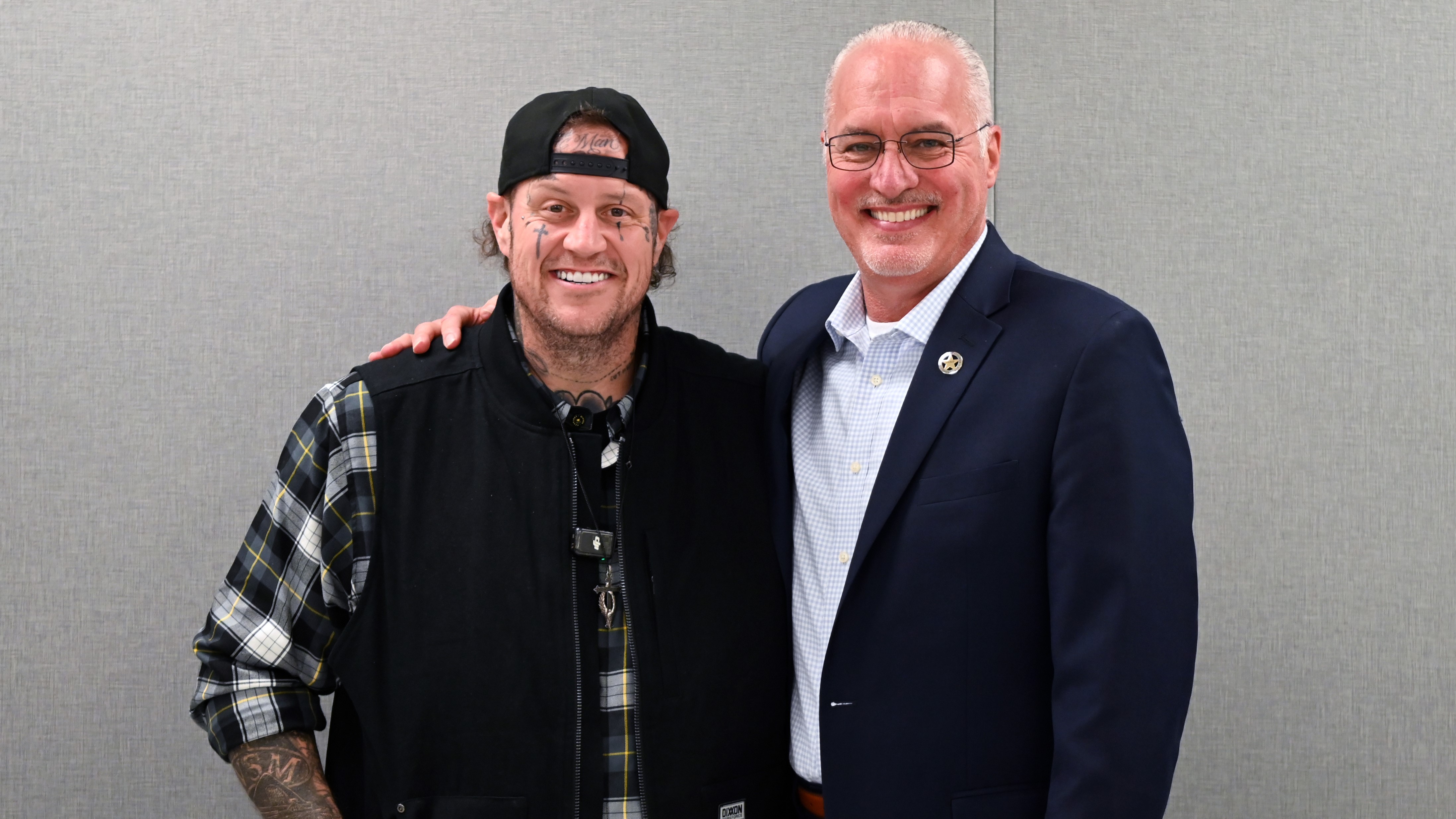
This photo provided by the Nashville-Davidson County Sheriff’s Office shows country music star Jelly Roll posing for a photo with Davidson County Sheriff Daron Hall on November 25, 2025.
Reginald Scott/Nashville-Davidson County Sheriff’s Office via AP
“I think he has a chance and he’s in the process of rehabilitating a generation, and that’s not just talk,” Hall said in a phone interview Thursday. “I’m talking about what I think we need in our country, which is people who accept responsibility, accept the fact that they make mistakes, accept the fact that they need help.”
The parole board began considering Jelly Roll’s clemency request in October 2024, which marks the state’s five-year timeline for eligibility after the end of his sentence. Prominent Nashville attorney David Raybin is representing Jelly Roll in the pardon case.
Lee’s office said no one was pardoned Thursday for murder or sex-related convictions, or for any crime committed as an adult against a minor.
Copyright © 2025 The Associated Press. All rights reserved.