

You poured a beautiful cup of coffee an hour ago, got pulled into something, and now it is sitting on your desk, cold and accusing. The microwave is ten steps away, and the temptation is enormous: thirty seconds and it is hot again. You have done it before, and you remember the result. The coffee came back hot, technically, but it tasted flat, bitter, and faintly burnt, like a photocopy of the cup you actually wanted.
This is one of the most universal kitchen disappointments there is, and it has real chemistry behind it. Reheating does not just warm coffee up; it actively dismantles the compounds that made it taste good in the first place. This guide explains exactly why microwaved coffee tastes bad, whether it is safe (yes, with caveats), how to microwave it the least-bad way if the microwave is all you have, how long to heat it, and the better methods, including the stovetop technique and the prevention strategies that make reheating unnecessary.
The Short Answer
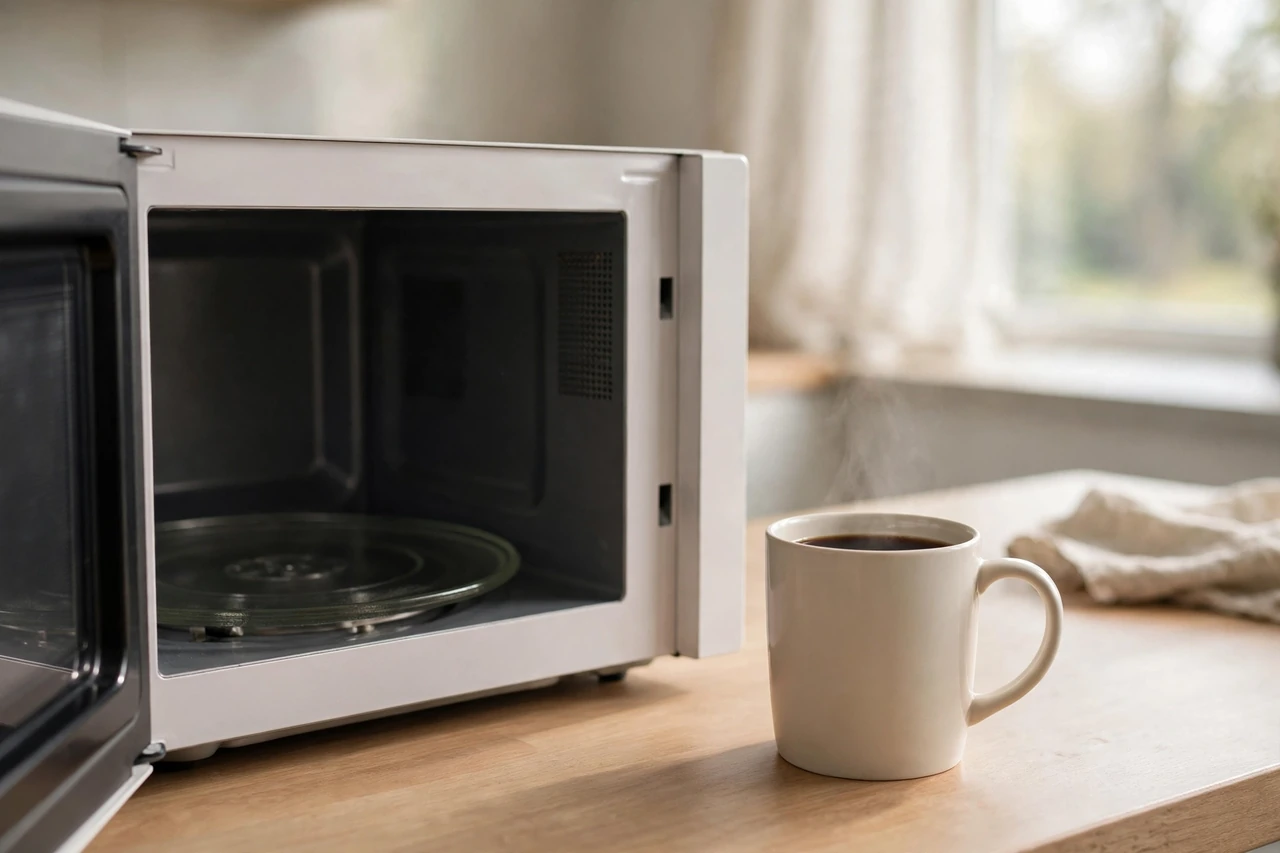
Yes, you can microwave coffee, and it is safe to drink afterward. But it will taste worse than the original cup, because reheating breaks down the delicate aromatic compounds and converts pleasant acids into bitter ones. If you must use the microwave, heat in short 30-second bursts at medium power, stir between bursts, and stop when it is hot but not boiling, usually 60 to 90 seconds for a standard mug.
The better move, when you have the option, is reheating gently on the stovetop over low heat, which preserves more flavor. And the best move of all is prevention: a preheated mug or a good thermos keeps the coffee hot long enough that reheating never comes up. If you want the full picture of what reheats well in a microwave, see Can You Microwave It? The Complete Safety Chart.
Why Reheated Coffee Tastes Bad: The Chemistry
Coffee’s flavor is built from hundreds of volatile aromatic compounds and a careful balance of acids, and almost all of them are fragile. Heat is what created them during brewing, and additional heat after brewing mostly destroys them. Here is what happens, step by step.
First, the aromatics evaporate. The sweet, fruity, nutty smells that hit you when coffee is fresh come from delicate volatile compounds, and as coffee expert Eric Gantz explained to Food Republic, aroma is the first thing to vanish under reheating because those compounds break down fast under heat. The microwave’s rapid, intense heating is especially brutal here: it drives the aromatics off quickly, leaving a cup that smells like vaguely brown hot water. Since smell is a huge part of taste, the cup immediately seems duller.
Second, the acids convert. Fresh coffee contains chlorogenic acids, which contribute pleasant brightness and body. Heat breaks chlorogenic acids down into quinic acid and caffeic acid, both of which taste sharply bitter and astringent. As the coffee science writers at Coffee Informer explain, this transformation is the main culprit behind the awful flavor of coffee that has been kept hot too long, and reheating triggers the exact same process. Every reheat makes more of the bitter acids.
Third, oxidation keeps working. From the moment coffee is brewed, oxygen in the air reacts with its oils and aromatic compounds, and heat accelerates that reaction dramatically. Sitting at room temperature lets oxidation proceed at a walking pace; microwaving forces it into a sprint. The tasty compounds break down faster, and the stale, cardboard notes move in sooner.
Finally, your own perception shifts. Very hot liquids make human taste buds notice bitterness more, so a reheated cup served piping hot tastes more bitter than the same coffee served warm. Between the lost aromatics, the converted acids, the oxidation, and your own tongue, reheated coffee never had a chance. It is not your imagination, and it is not a bad microwave. It is chemistry.
Is It Safe to Microwave Coffee?
Yes. Reheated coffee is safe to drink. The flavor damage is real, but there is no food-safety hazard in microwaving a cup of coffee that has been sitting for an hour or two, and no harmful compounds are created by the microwaves themselves. Coffee does not become toxic when reheated; it just becomes unpleasant.
There are three practical safety notes. First, the superheating risk that applies to microwaving plain water applies to coffee too, though slightly less, because coffee’s dissolved compounds give bubbles more places to form. Still, use a microwave-safe mug, do not overheat, and let the cup stand for thirty seconds before grabbing it.
Second, watch the mug. Use microwave-safe ceramic or glass, never a travel mug with metal parts or vacuum insulation, and never anything with metallic trim. Metal travel mugs can arc, and insulated mugs can build pressure. If your coffee is in a travel mug, pour it into a ceramic mug for reheating. The metal rules are covered in Can You Microwave Metal?.
Third, mind the milk. If your coffee already has milk or creamer, reheat it even more gently, because milk proteins begin to denature around 140 degrees Fahrenheit, which changes the texture and adds to the off taste. Uneven microwave heating creates hot pockets well past your target temperature, so stir halfway through. None of this is dangerous, but it is the difference between drinkable and regrettable.
How to Microwave Coffee the Least-Bad Way
If the microwave is your only option, this method minimizes the flavor damage. It will not make reheated coffee good, but it keeps it from becoming terrible.
Pour the coffee into a microwave-safe ceramic or glass mug if it is not in one already. Do not fill it to the brim; leave room for stirring. Set the microwave to medium power, around 50 to 70 percent, instead of full blast. High power creates the harsh hot spots that do the most aromatic damage.
Heat in 30-second bursts, stirring between each one. Stirring does two jobs: it evens out the temperature so no pocket gets hot enough to scorch the flavor, and it lets you check progress so you stop at the right moment. For a standard 8-ounce mug starting at room temperature, two bursts, 60 seconds total, is usually enough. For a large 12-ounce mug, three bursts.
Stop when the coffee is hot but not boiling. Boiling drives off the maximum amount of aromatics and pushes acid conversion into overdrive; it is the single most damaging thing you can do to an already compromised cup. If you see it starting to bubble vigorously, you have gone too far. Let it stand for 30 seconds, give it one final stir, and drink it promptly, because reheated coffee stales faster than fresh.
One thing not to do: do not microwave the same cup twice. Each heating cycle repeats the whole damage process, and twice-reheated coffee is reliably awful. If it went cold again, that is the universe telling you to brew fresh or pivot to iced.
How Long to Microwave a Cup of Coffee
This table assumes a standard 1,000-watt microwave and coffee starting at room temperature. Times are totals, broken into 30-second bursts with stirring.
| Mug size | Starting temp | Microwave time (medium power) |
|---|---|---|
| Small, 6 oz | Room temp | 45 to 60 seconds |
| Standard, 8 to 10 oz | Room temp | 60 to 90 seconds |
| Large, 12 to 16 oz | Room temp | 90 seconds to 2 minutes |
| Standard, 8 to 10 oz | Refrigerated | 90 seconds to 2 minutes |
| Any size | Already warm | 30 seconds |
These are ceilings, not targets: stop and stir at each 30-second mark, and stop heating the moment it is hot enough to enjoy. Remember that the cup itself retains heat, so coffee that feels slightly underdone at the stir check will warm a touch more during the 30-second rest.
Better Ways to Reheat Coffee (Without the Microwave)
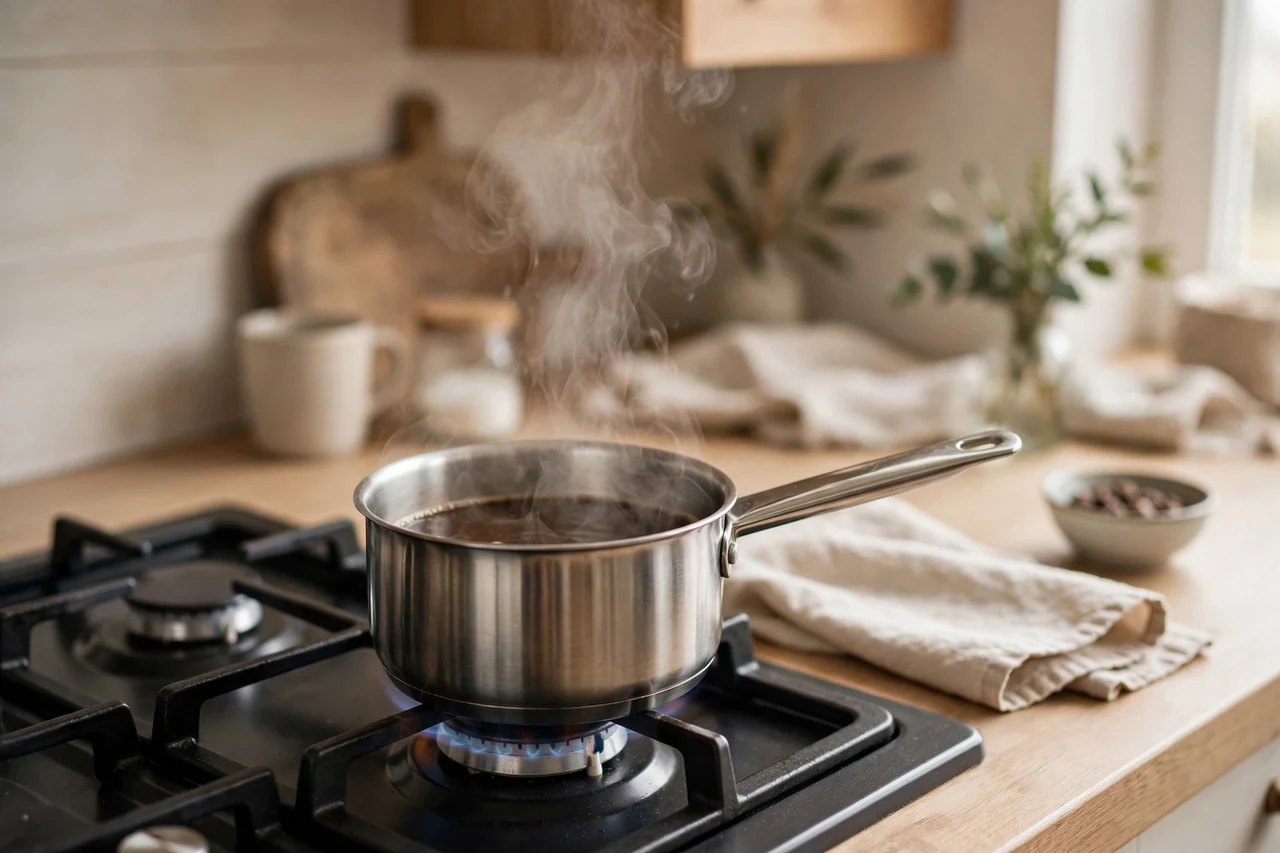
The stovetop is the best reheating method, full stop. Pour the coffee into a small saucepan and warm it over low heat, stirring occasionally, until wisps of steam rise from the surface. Do not let it boil. The gentle, even heat preserves far more of the remaining aromatics than the microwave’s violent bursts, and you control the temperature precisely. Tasting Table’s reheating guide puts the target at 120 to 140 degrees Fahrenheit on a food thermometer, which is hot enough to enjoy without pushing the bitter-acid conversion further.
The stovetop takes 3 to 4 minutes versus the microwave’s 90 seconds, and for a cup you actually want to enjoy, that trade is worth it every time. It will still not taste like fresh coffee, because the cooling already did its damage, but it will taste noticeably better than the microwaved version.
The iced pivot is the other smart move. If your coffee went cold and you have ice, do not reheat it at all: pour it over ice, add milk or sweetener if you like, and drink it as iced coffee. Cold coffee served cold tastes intentional and refreshing; the same coffee reheated tastes like a mistake. Coffee professionals consistently recommend this over reheating, and they are right.
The thermos method is prevention rather than cure. If you know you drink slowly, brew directly into a preheated insulated thermos or carafe instead of a mug. Good insulation holds coffee at drinking temperature for hours with far less flavor damage than any reheating method, because the coffee never cools and never gets reheated. It is the only strategy that actually solves the problem instead of managing it.
How to Keep Coffee Hot in the First Place
Since reheating is damage control, the real win is never needing it. A few habits make a large difference.
Preheat your mug. Fill it with hot water while the coffee brews, dump the water, then pour the coffee. A cold ceramic mug sucks a surprising amount of heat out of fresh coffee in the first minute, and preheating removes that loss entirely. It takes ten seconds and it is the easiest upgrade on this list.
Use a lid. A simple silicone mug lid or even a small plate over the top cuts heat loss dramatically by trapping the steam. Offices are full of abandoned cold coffees that a two-dollar lid would have saved.
Brew smaller amounts more often, if your routine allows it. A full pot that sits for two hours produces progressively worse cups; two half pots brewed an hour apart produce two good cups. Single-serve brewers exist for exactly this reason.
And keep the coffee maker or carafe warm properly. A glass carafe on a hot plate stays drinkable for about 30 minutes before the continued heat starts cooking it into bitterness; a thermal carafe holds it for hours without additional heat. If your machine has a hot plate, transfer the coffee to a thermos after 30 minutes rather than letting it stew.
The Milk and Sugar Complication
Black coffee reheats badly; coffee with milk reheats worse. Milk adds a second set of heat-sensitive chemistry to the cup. Milk proteins begin to denature around 140 degrees Fahrenheit, which is roughly the temperature you are aiming for anyway, and denatured proteins change both the texture and the flavor of the milk. The result is the distinctive off taste of reheated lattes and cream coffees, a flat, slightly cooked flavor that plain black coffee does not develop.
Microwave heating makes this worse because it is uneven. The hot pockets in a microwaved mug can sail well past 140 degrees while the average temperature looks right, so parts of the milk get cooked even in a short reheat. Stirring between bursts is the main defense, and lower power helps by shrinking the hot spots.
Sugar is less of a problem chemically, but reheating does not dissolve it any better, and the increased bitterness of the reheated coffee can make the same amount of sugar taste less sweet by contrast. If you take milk and sugar, the stovetop method’s gentle even heat is kinder to both than the microwave. Or embrace the iced pivot: cold milk over ice with cold coffee is genuinely delicious, which is more than reheating can claim.
Frequently Asked Questions
The real questions people ask about microwaving coffee, answered directly.
Can you reheat coffee in the microwave?
Yes, it is safe, and it takes 60 to 90 seconds for a standard mug at medium power in 30-second bursts with stirring. It will taste worse than fresh, because reheating destroys aromatic compounds and converts pleasant acids into bitter ones, but it is perfectly drinkable. For better flavor, reheat gently on the stovetop instead.
Why does reheated coffee taste bad?
Because heat breaks down the volatile aromatic compounds that give coffee its flavor, converts chlorogenic acids into bitter quinic and caffeic acids, and accelerates oxidation of the coffee’s oils. The cooling already started this damage; reheating finishes it. Very hot serving temperature also makes your taste buds perceive more bitterness. It is chemistry, not your imagination.
Is it safe to microwave coffee?
Yes. Microwaving coffee creates no harmful compounds and the coffee is safe to drink afterward. The only safety notes are practical: use a microwave-safe mug (never a metal travel mug), avoid overheating to prevent superheating burns, and let the cup stand 30 seconds before handling. The damage from reheating is to flavor, not to safety.
How long do you microwave a cup of coffee?
A standard 8 to 10-ounce mug at room temperature needs 60 to 90 seconds at medium power, in 30-second bursts with stirring between each. A large 12 to 16-ounce mug needs up to 2 minutes. Stop when it is hot but not boiling; boiling does the most flavor damage. Always let it rest 30 seconds before drinking.
How do you reheat coffee without a microwave?
Warm it in a small saucepan over low heat, stirring occasionally, until steam rises but it does not boil, about 3 to 4 minutes. This preserves more flavor than the microwave because the heat is gentle and even. Alternatively, pour the cold coffee over ice and drink it iced, which many coffee professionals prefer to any reheating method.
Does microwaving coffee destroy the caffeine?
No. Caffeine is very heat-stable and survives brewing, microwaving, and reheating without meaningful loss. Your reheated cup has essentially the same caffeine as the fresh one. What changes is everything around the caffeine: the aromatics, the acids, and the overall flavor balance. If you are reheating for the caffeine hit alone, the microwave does that job fine.
Can you microwave coffee with milk or creamer in it?
Yes, but reheat it even more gently. Milk proteins begin to denature around 140 degrees Fahrenheit, adding a cooked, off flavor on top of the coffee’s own reheating damage, and microwave hot spots make this worse. Use medium-low power, 30-second bursts, and stir well between each. Black coffee reheats badly; milky coffee reheats worse.
Why does microwaved coffee taste burnt?
Two reasons. First, the microwave’s uneven heating creates super-hot pockets that scorch flavor compounds even when the average temperature seems fine. Second, reheating converts acids into bitter compounds and strips aromatics, and your brain reads that flat bitterness as “burnt.” Lower power, shorter bursts, and stirring all reduce the scorched taste.
Is it bad to microwave coffee twice?
It is not unsafe, but the flavor will be genuinely unpleasant. Each heating cycle repeats the aromatic destruction and acid conversion, so twice-reheated coffee is reliably worse than once-reheated. If your cup went cold a second time, brew fresh or pour it over ice instead of microwaving it again.
Can you microwave cold brew coffee?
You can, but it defeats the purpose. Cold brew is prized for its smooth, low-acid flavor, which comes from the cold extraction process, and heating it reintroduces the bitter acid chemistry that cold brewing avoids. If you want hot coffee, brew it hot. If you have cold brew, drink it cold or over ice, which is what it was made for.
How do you turn a cold cup of coffee into good iced coffee?
Pour it over a full glass of ice, which chills it fast and dilutes it slightly, closer to a proper iced coffee ratio. Add milk and sweetener to taste; cold coffee takes sweetener well. For a better result next time, brew the coffee double-strength if you know it is destined for ice. This pivot consistently beats reheating for both taste and effort.
Does reheating make coffee more acidic?
It changes the acid profile rather than simply increasing total acidity. The pleasant chlorogenic acids break down into quinic acid, which tastes sour and astringent, and caffeic acid, which tastes bitter. So reheated coffee tastes harsher and more bitter-sour, which most people experience as “more acidic,” even though the chemistry is a conversion, not a simple increase.
Can you put a travel mug in the microwave?
No, not if it is metal or vacuum-insulated, which most travel mugs are. Metal causes arcing and sparks, and sealed insulated mugs can build dangerous pressure when heated. Pour the coffee into a microwave-safe ceramic or glass mug for reheating, then pour it back if you want it portable. When in doubt about any mug, check for the microwave-safe symbol.
What temperature should reheated coffee be?
Aim for 120 to 140 degrees Fahrenheit, hot enough to enjoy without pushing further bitter-acid conversion. Above 140, milk proteins denature and the harsh compounds multiply faster. A food thermometer gives you precision, but the practical rule works too: heat until steam rises and the mug feels hot, not until it bubbles.
The Bottom Line
You can microwave coffee, and sometimes you will, because life is busy and the microwave is right there. Do it with medium power, short bursts, and stirring, and you will get a hot cup that does its job. Just do it with open eyes: the aromatics are gone, the acids have turned, and no technique recovers what cooling took away.
The hierarchy is simple. Best is prevention: preheated mug, lid, thermos, and the coffee never goes cold. Next is the stovetop: gentle heat, better flavor, three minutes of patience. Next is the iced pivot: no heat at all, genuinely refreshing. Last is the microwave: fast, safe, and the worst-tasting option on the list. Now you know exactly what each choice costs, and the cold cup on your desk does not stand a chance.
