Pewter Report analyzes the top players in the 2026 NFL Draft with its position previews. Scott Reynolds continues the previews with the safety position, offering a comprehensive look at what the Bucs have and what they need at safety.
Matt Matera then analyzes a detailed list of this year’s top safety prospects while Reynolds provides the annual Pewter Report Bucs Best Bets – the most likely safety for the Bucs to select in Rounds 1-3, and in Rounds 4-7.
What The Bucs Have At Safety
The Bucs have two excellent starting safeties in Pro Bowler Antoine Winfield Jr. and Tykee Smith, both of whom were Day 2 picks in 2020 and 2024, respectively. Winfield and Smith are big-time playmakers and Winfield is a team captain, while Smith is an emerging leader as he enters his third season in Tampa Bay. The safety duo of Winfield and Smith has the chance of being one of the best in the league this year if Winfield can stay healthy and Smith continues to adjust to playing more in space as a deep safety during the rotations that Todd Bowles likes to deploy.
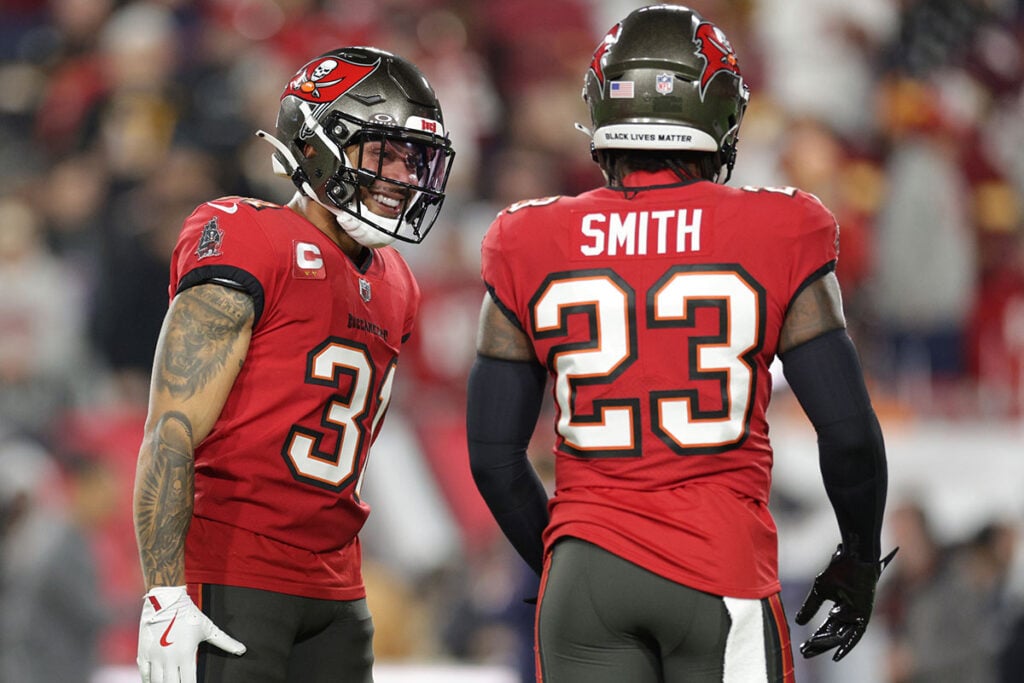
Bucs FS Antoine Winfield Jr. and SS Tykee Smith – Photo by: USA Today
But behind Winfield and Smith, the cupboard is quite bare. Longtime reserve Christian Izien left in free agency. The team felt that the restricted free agent tag of over $3.5 million was a little too rich for a backup, even one as versatile as Izien.
J.J. Roberts, last year’s prized undrafted free agent, suffered a torn ACL in the preseason and was lost for his rookie year. He’ll return to provide depth at both safety spots as well as in the nickel slot position just like Izien did for the past few years.
Tampa Bay has a few practice squad players back in Rashad Wisdom and Eric Banks for depth and training camp competition. The Bucs also added 32-year safety Miles Killebrew, but he was mostly a special teams ace in Pittsburgh under special teams coordinator Danny Smith, and shouldn’t be counted on to really contribute on defense unless its an emergency.
What The Bucs Need At Safety
The Bucs’ starting safeties are top-notch. Most teams would love to have the duo of Pro Bowler Antoine Winfield Jr. and Tykee Smith, who is a potential Pro Bowler himself. But if one of those safeties goes down the depth is very thin.
Newly added Miles Killebrew has plenty of experience in the league, but it’s mostly on special teams rather than defense. J.J. Roberts has plenty of ability and athletic talent, but lacks experience after missing his rookie season due to a knee injury.
Tampa Bay would benefit from drafting a developmental safety on Day 3 and then signing a veteran safety after the draft to bolster the depth at the position and add some experience.
Top Safeties In 2026 NFL Draft
*Important Note: These players are NOT listed in the order of Pewter Report’s ranking for them. Rather, the numbers are provided to show you the rough order in which we expect them to come off the board during the draft.
1. Ohio State S Caleb Downs – Junior – 6-0, 206, N/A
There’s no safer bet at the position in this class than Caleb Downs, who plays with the kind of instincts and polish that translate immediately to Sundays. A true centerfielder with elite range, Downs consistently finds himself around the football thanks to his diagnostic ability and closing burst. He’s just as effective triggering downhill, showing no hesitation as a run defender and bringing reliable tackling to the back end. Downs’ football IQ stands out on tape.
What separates Downs from other prospects is his versatility. He can line up as a deep safety, rotate into the slot, or play in the box depending on the call, giving defensive coordinators plenty of flexibility. Downs projects as a plug-and-play starter early in his career with Pro Bowl upside, especially in a scheme that allows him to roam and trust his instincts.
2. Oregon S Dillon Thieneman – Junior – 6-0, 201, 4.35
Dillon Thieneman burst onto the scene as one of the most productive safeties in college football in his first two seasons at Purdue, and his ball production jumps off the stat sheet. A former freshman All-American, Thieneman thrives in zone coverage where his eyes and awareness allow him to read quarterbacks and jump passing lanes. That speaks to the six interceptions he had as a rook. He’s got the kind of natural feel for the position that leads to takeaways, whether it’s interceptions or pass breakups, and he doesn’t shy away from being aggressive when opportunities present themselves.
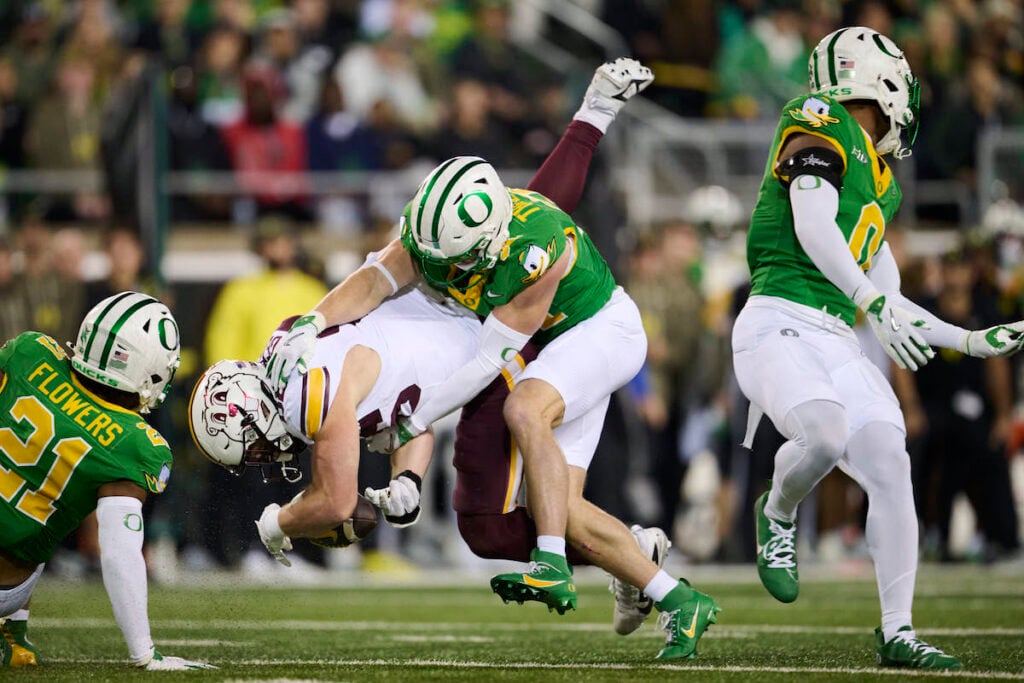
Oregon S Dillon Thieneman – Photo by: Troy Wayrynen – IMAGN Images
Thieneman transferred to Oregon for his Junior season and continued to produce. He came just shy of 100 tackles for a third straight season with 96, but also recorded two interceptions and matched a career high seven pass breakups while earning first team All-Big Ten and second team All-American.
3. Toledo S Emmanuel McNeil-Warren – Senior – 6-3, 201, 4.52
A steady, under-the-radar defender, McNeil-Warren brings an athletic presence to the secondary. In coverage, McNeil is more functional than flashy who benefits from his size. He can hold his own in short-to-intermediate zones and is very rangy with deep passes against opponents.
Born in Tampa and eventually living in St. Pete, McNeil-Warren played his whole career at Toledo. There he recorded 214 tackles, 11 tackles for loss, nine forced fumbles, 15 pass breakups and five interceptions in four seasons. He also made first team All-MAC and second team All-American in his senior season, which included a pick-six for a defensive touchdown.
4. Miami S Keionte Scott – RS Senior – 5-11, 191, 4.33
Scott is a more versatile defensive backs, bringing experience at nickel, safety, and as a return specialist. That versatility is a major selling point, especially in today’s NFL where sub-package flexibility is key. Scott plays with quick feet and good short-area burst, allowing him to mirror receivers in the slot and close quickly on underneath throws. He’s also dangerous with the ball in his hands, adding value on special teams.
He bounced around to a couple schools in his college career, starting at Snow College, then playing most of his time at Auburn before one last season at Miami. He made the best of his last stop have personal bests numbers with 64 tackles, 13 tackles for loss, five sacks, two forced fumbles, seven pass breakups and two interceptions as the Hurricanes made it to the National Championship game, falling short to Indiana. He made second team All-ACC for his efforts on the season.
5. Arizona S Treydan Stukes – RS Senior – 6-1, 190, 4.33
Stukes spent all six seasons of his college career in Arizona. Along the way, Stukes went from being a no-star recruit to a three-time team captain with the kind of tantalizing traits NFL teams covet. Growing as a person and player along the way, he recorded 52 tackles, six passes defensed, and four interceptions in just 10 games last season. What is intriguing about him compared to other defensive backs on this list is his positional versatility as he can play outside, in the nickel and at safety.
Stukes has elite speed for a defensive back, using his wheels and fluid hips to stay locked onto wide receivers. What he will need to work on is his tackling, as his technique leads to missed opportunities. One factor he cannot control but does not work in his favor is that he will be 25 years old in September. With that being said, he will find ways to see the field and produce wherever he is asked to line up.
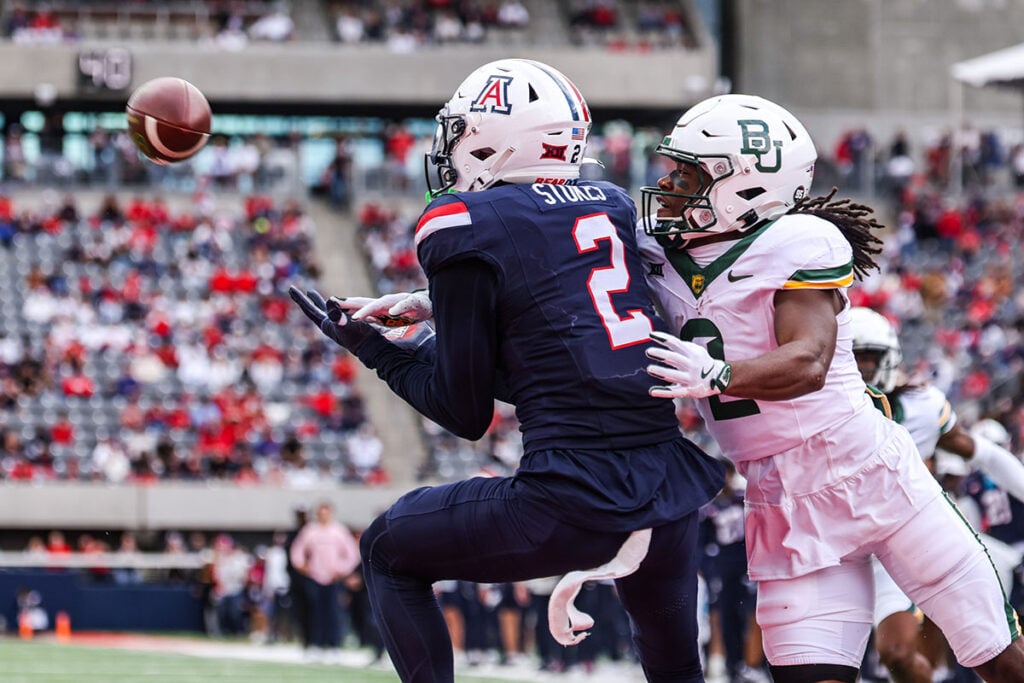
Arizona DB Treydan Stukes – Photo by: IMAGN Images – Aryanna Frank
6. LSU S A.J. Haulcy – Senior – 6-0, 215, 4.52
A tone-setter on the back end, Haulcy brings an attacking mindset every time he steps on the field. His ability to take the football away is the first thing that stands out as he recorded 10 interceptions in his career, including eight in his last two seasons.
He’s an active run defender, too. He isn’t afraid to step into the box and deliver hits, and his energy is contagious for the defense as a whole. Haulcy shows good downhill burst and plays with urgency, often beating blockers to the spot and disrupting plays before they fully develop.
7. TCU S Bud Clark – RS Senior – 6-1, 188, 4.41
Clark has range and is an instinctive safety who made a name for himself as a ball hawk on the back end of TCU’s defense. He shows strong awareness in zone coverage, reading quarterbacks well and capitalizing on mistakes with takeaways. Clark’s leaner frame shows up at times in run support, where he can struggle to consistently finish against bigger ball carriers. Still, his coverage instincts and ability to create turnovers give him a clear path as a rotational free safety.
Clark’s best fit at the next level comes in a defense that allows him to play deep and keep everything in front of him. He has the range to cover ground sideline-to-sideline, but he’ll need to clean up his tackling consistency to stay on the field in all situations. His playmaking ability is undeniable, and that trait alone gives him developmental upside. Early on, he profiles as a depth piece with situational value in sub-packages.
8. Penn State S Zakee Wheatley – RS Senior – 6-3, 202, 4.62
Wheatley brings a well-rounded skill set with experience in multiple roles within Penn State’s secondary. He’s a physical defender who isn’t afraid to step up in run support, showing solid tackling technique and effort. Wheatley flashes the ability to hold up in coverage, particularly in zone, though he’s still developing when it comes to matching routes downfield. His versatility and toughness make him an intriguing mid-round option.
Wheatley projects best as a strong safety who can rotate into the box and contribute on early downs. He plays with good discipline and doesn’t take many unnecessary risks, which coaches will appreciate. While he may not have elite range, he compensates with positioning and effort. His floor as a dependable rotational safety and special teams contributor gives him a good chance to stick on a roster.
9. South Carolina S Jalon Kilgore – Junior – 6-1, 210, 4.40
Showcasing his adaptability, Kilgore has seen playing time at both safety and nickel. He’s at his best playing downhill, where his quick trigger and physicality allow him to impact both the run and short passing game. Kilgore brings good energy and competitiveness, often flying around the field to make plays. His athleticism gives him a solid foundation to build on in coverage.
There are still areas of refinement, particularly in deep coverage, where consistency with angles and eye discipline can waver. Kilgore’s ability to play multiple spots in the secondary should help his chances early in his career. He projects as a sub-package defender who can contribute in dime looks and on special teams. With development, he has the upside to grow into a larger role.
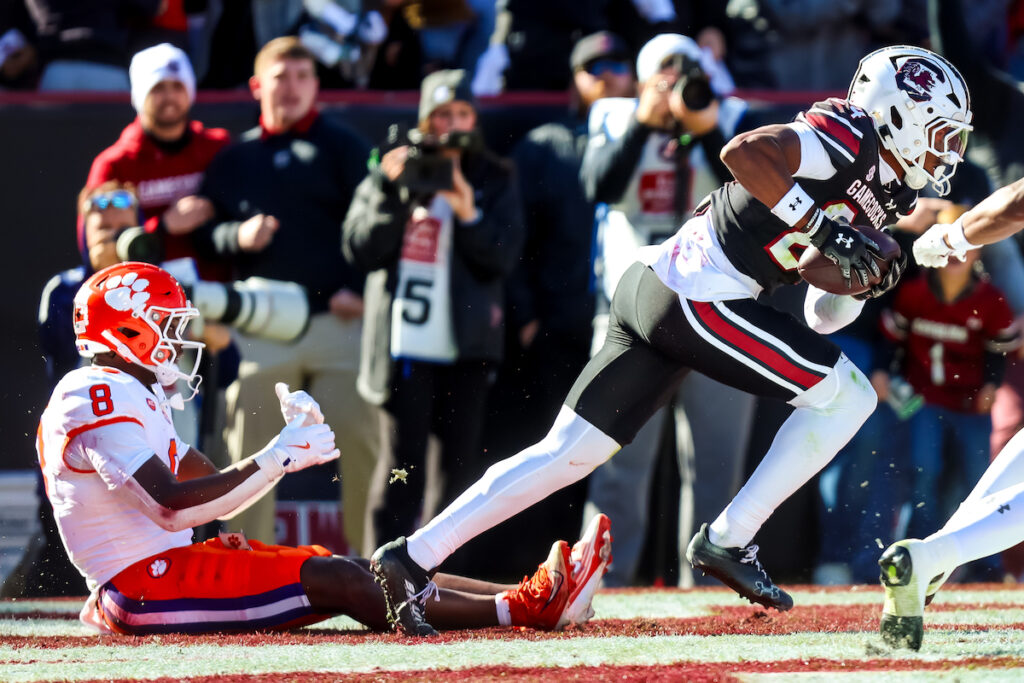
South Carolina S Jalon Kilgore – Photo by: Jeff Blake – IMAGN Images
10. USC Kamari Ramsey – RS Junior – 6-0, 202, 4.47
Ramsey is an athletic, modern safety prospect that thrives in space. He shows fluid movement skills and the ability to match up with slot receivers, making him a valuable piece in today’s pass-heavy game. Ramsey is active in run support as well, showing a willingness to come downhill and engage physically. His range and athletic profile stand out when he’s allowed to play freely.
Ramsey still needs to improve his consistency, particularly with tackling and taking proper angles. At times, he can rely too heavily on athleticism rather than technique, leading to missed opportunities. Even so, his upside is evident as a hybrid defender who can move around the formation.
11. Miami S Jakobe Thomas – RS Senior – 6-1, 214, 4.57
A physical presence that can accelerate downhill, Thomas has an aggressive mentality to the position. He’s effective in run support, showing the willingness to fill gaps and deliver hits, and he plays with a tone-setting edge. Thomas flashes solid awareness in zone coverage, keeping plays in front of him and limiting big mistakes. His toughness and effort are consistent traits on tape.
In coverage, Thomas is more steady than dynamic, lacking elite range when asked to patrol deep areas. His best role will likely come closer to the line of scrimmage, where he can maximize his physicality. He projects as a strong safety option who can contribute on early downs and special teams. With refinement, he could develop into a reliable rotational defender at the next level.
12. Kansas State S VJ Payne – Senior – 6-3, 206, 4.40
Payne is a physical safety who brings a tone-setting presence to the middle of the field. He’s got great length and is a willing tackler that will take on contact. Payne’s physicality and effort level give him a clear path as a depth safety and core special teamer early on.
Payne was a team captain at his last season and was an honorable mention for All Big-12 in two straight years. He was productive in his career, making 207 tackle with one sack, four forced fumbles, 13 pass breakups and four interceptions.
13. Arizona S Genesis Smith – Junior – 6-2, 205, 4.50
Smith is an intriguing defensive back with experience across multiple roles in the secondary. He shows a good deal of athleticism, particularly when playing in space, and has the ability to contribute in both coverage and run support. Smith plays with good effort and isn’t afraid to get involved physically.
Consistency remains the biggest question mark for Smith, as his play can be uneven from snap to snap. He’ll need to refine his instincts and discipline, particularly in coverage, to earn a larger role. Early in his career, he profiles as a developmental piece who can contribute on special teams. With growth, he has the tools to become a rotational defensive back.
14. Texas S Michael Taaffe – RS Senior – 6-0, 190, 4.50
A smart, instinctive defender, Taaffe consistently finds himself around the football. He was a former walk-on turned key contributor. Taaffe plays with a high football IQ and strong awareness in zone coverage. He takes solid angles to the ball and shows reliable tackling ability, even if he lacks elite top-end athleticism. His understanding of the game allows him to minimize mistakes on the back end.
Taaffe’s limitations show up when he’s asked to cover significant ground or match up with more explosive athletes. However, his instincts and effort help compensate for those shortcomings. He projects as a dependable depth safety who can provide value in sub-packages. His intelligence and reliability should also make him a trusted special teams contributor.
15. Oklahoma S Robert Spears-Jennings – Senior – 6-2, 205, 4.32
Spears-Jennings is a versatile defensive back with experience at both safety and nickel, giving him valuable positional flexibility. He’s a physical player who isn’t afraid to step up in run support, showing good tackling ability and competitiveness. Spears-Jennings also flashes the ability to hold his own in coverage, particularly in short-to-intermediate areas. His all-around skill set makes him an intriguing developmental option.
There are still areas to refine, particularly in deep coverage where consistency can waver. Spears-Jennings will need to improve his discipline and positioning to handle more complex passing concepts. His versatility should help him find a role early, especially in sub-packages and on special teams. With development, he has the upside to grow into a rotational contributor.
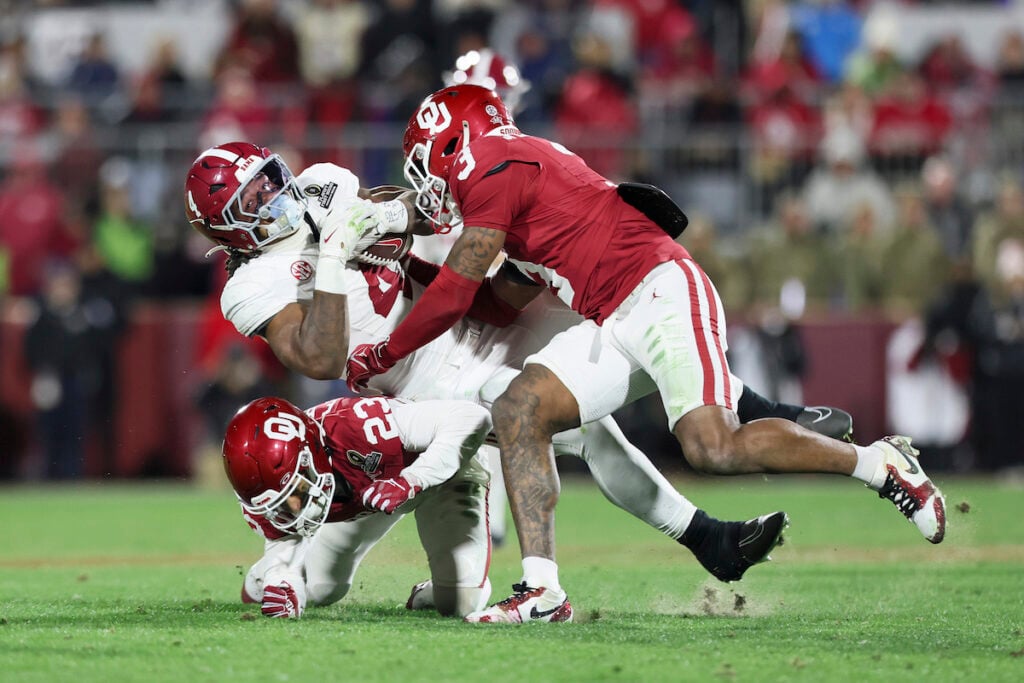
Oklahoma S Robert Spears-Jennings – Photo by: Nelson Chenault
Best Of The Rest
16. Nebraska S Deshon Singleton – RS Senior – 6-3, 206, 4.57
Singleton plays a physical, aggressive style of football at safety. He brings a strong presence in run support, showing the ability to fill gaps and deliver impactful tackles. Singleton plays with urgency and a high motor, consistently working around the football. His physical style stands out as one of his defining traits.
In coverage, Singleton is still developing, particularly when it comes to range and awareness in deeper zones. He can be vulnerable when asked to cover larger areas of the field or react to more complex route combinations. His best fit at the next level will likely come as a box safety and special teams contributor. If he can improve his coverage consistency, he has a chance to carve out a larger role.
17. Arizona S Dalton Johnson – RS Senior – 5-11, 192, 4.41
Johnson is a physical, downhill safety who thrives when attacking the line of scrimmage with solid acceleration. He brings a strong tackling presence and plays with an edge, making him effective in run support and on special teams. Johnson shows adequate instincts in zone coverage but isn’t a true range player on the back end. His path to a roster spot will likely come through his toughness, versatility, and ability to contribute in sub-packages.
18. Maryland S Jalen Huskey – Senior – 6-1, 192, 4.55
Huskey offers experience at both cornerback and safety, giving him added value for NFL defenses. He’s at his best in coverage, using his length and fluidity to stay attached to receivers and disrupt passing lanes. Huskey plays with good awareness and ball skills, though he’ll need to continue adding strength to handle more physical matchups. His flexibility makes him an appealing developmental defensive back with upside in multiple roles.
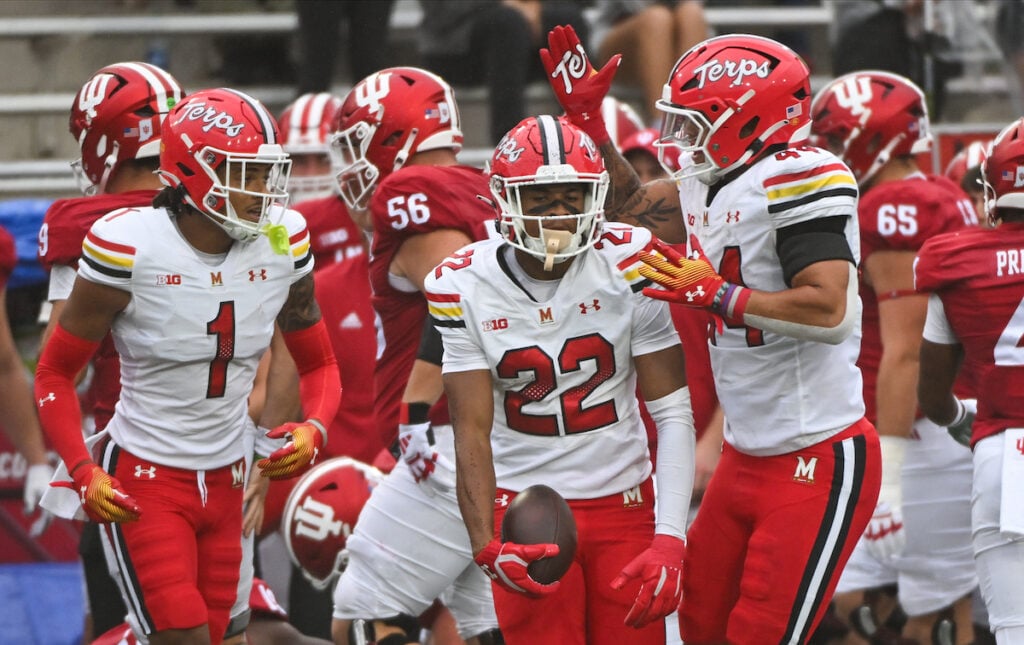
Maryland S Jalen Huskey – Photo by: Robert Goddin – IMAGN Images
19. USC S Bishop Fitzgerald – RS Senior – 5-10, 201, 4.55
Fitzgerald plays with good awareness and a feel for the game. He shows the ability to read quarterbacks and react quickly, allowing him to make plays on the ball in zone coverage. Fitzgerald isn’t the most explosive athlete, but he takes solid angles and limits mistakes on the back end.
20. Indiana S Louis Moore – RS Senior – 5-11, 190, 4.63
Moore brings a well-rounded skill set with experience in multiple alignments in the secondary. He’s comfortable playing deep or rolling down into the box, showing solid tackling ability and competitiveness in run support. Moore’s instincts in coverage allow him to be in the right place more often than not, even if he lacks elite top-end speed. His versatility and experience make him a strong candidate for a rotational role at the next level.
Bucs Best Bets – By Scott Reynolds
ROUNDS 1-3: Arizona S Treydan Stukes
The Bucs likely won’t draft a safety until Day 3 because of pressing needs elsewhere on defense, but Stukes is an interesting prospect because he was really a safety/nickel cornerback hybrid operating mostly out of the slot. His coaches at Arizona say that he is athletic and talented enough to play anywhere in the secondary. And with his size at 6-foot-1, 190 pounds with 4.33 speed, Stukes has the ideal frame, length and tools to even play outside cornerback in Todd Bowles’ defensive scheme. The Bucs had a formal interview with Stukes at the NFL Scouting Combine.
Bowles loves ballhawks in the secondary, and that’s what Stukes has proven to be. He recorded 52 tackles, six passes defensed, and four interceptions in just 10 games last season. Although he’s an older prospect at age 25, he has plenty of experience with his six seasons with the Wildcats to come in and make more of an instant impact in the NFL than a younger, developmental-type defensive back. Stukes is likely a Day 2 selection, and his versatility may be too good for the Bucs to pass up on, especially if he makes it to the third round.
ROUNDS 4-7: Texas Tech S Cole Wisniewski
Todd Bowles typically likes safeties that are around 5-foot-10 like Antoine Winfield Jr. and Tykee Smith because they are better at flipping their hips and turning and running in coverage. But there have been times when Bowles also likes to have a bigger safety to match up against bigger tight ends across the middle of the field. Such safeties in the past have included Keanu Neal and Kaevon Merriweather, who were both 6-foot, 210 pounds. Wisniewski is even bigger at 6-foot-3, 219 pounds.
Wisniewski had eight interceptions during the 2023 season at North Dakota State before transferring to Texas Tech to become part of an all-star defense that helped the Red Raiders win the Big XII title this year and make the playoffs. Wisniewski is a high-effort, high football I.Q. player with a penchant for making big hits in the secondary and in the box. He profiles as more of a strong safety than a free safety and will excel on special teams early in his NFL career. The Bucs had him in for an official 30 visit and he will likely be a late-round draft pick on Day 3.