If you could dig up my Google Maps history from fall 2022, you would find that I had repeatedly searched for how to get from Columbia University to the American Dream mall by public transportation. Located in East Rutherford, N.J., American Dream is the second-largest mall in the country, right behind the Mall of America. There’s an indoor ski slope, roller coasters, an aquarium, a water park, and even a virtual-reality cliff jumping attraction, whatever that means. But it wasn’t any of those things that made me consider the journey out to New Jersey. Instead, I was much more interested in visiting the indoor, NHL-sized ice rink located in the middle of the mall.
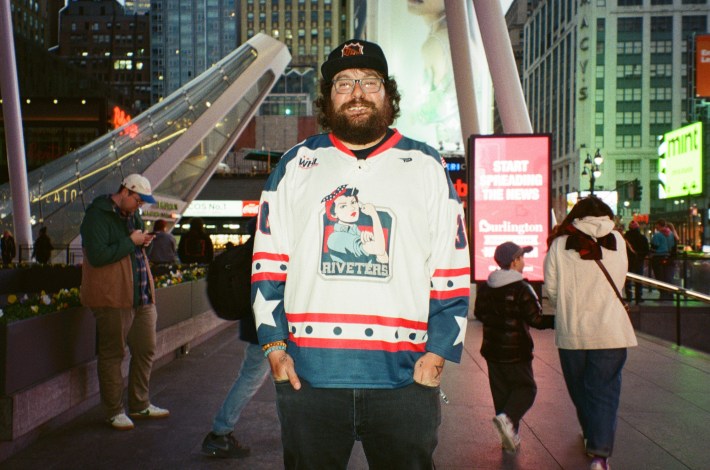
In September 2022, the Metropolitan Riveters of the Premier Hockey Federation, a professional women’s hockey league, announced that their home ice for the season was going to be the rink at the American Dream. They’d allegedly be able to have up to 2,000 spectators—with the caveat that there were no built-in seats at the mall’s rink, so the stands would need to be set up before every game. Controversially, then-Riveters president Digit Murphy made a comment about how players could promote the game by doing fashion shows on the ice.
I wanted to see a professional women’s hockey game in person, and to root for the Riveters, but I also couldn’t get over the indignity of these top-tier women’s players calling a megamall’s rink their home base. It was as if they were one of the many novel spectacles at American Dream, somewhere between the Nickelodeon theme park and the Angry Birds mini golf. As one Seattle Torrent fan, Katrina L., told me this past weekend, it felt like the last few professional women’s hockey leagues had been “really elaborate Ponzi schemes.”
That’s what made the introduction of the Professional Women’s Hockey League in 2024 so momentous. With a CBA already negotiated and more money backing the league, it seemed that women’s hockey players were finally going to be treated as the high-caliber athletes they are. That meant playing regularly in real, professional arenas.
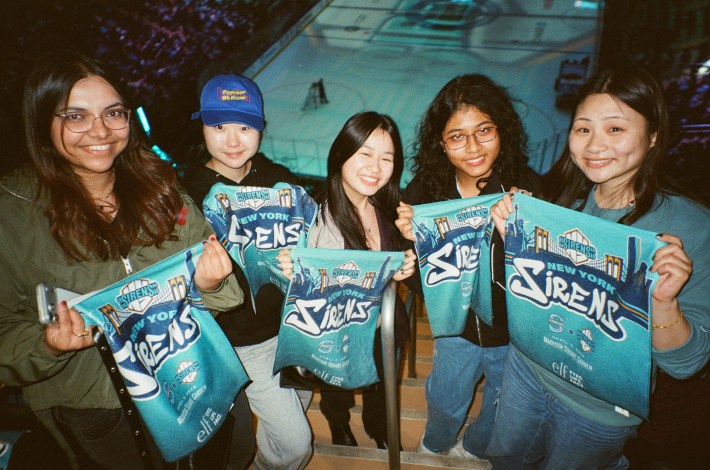
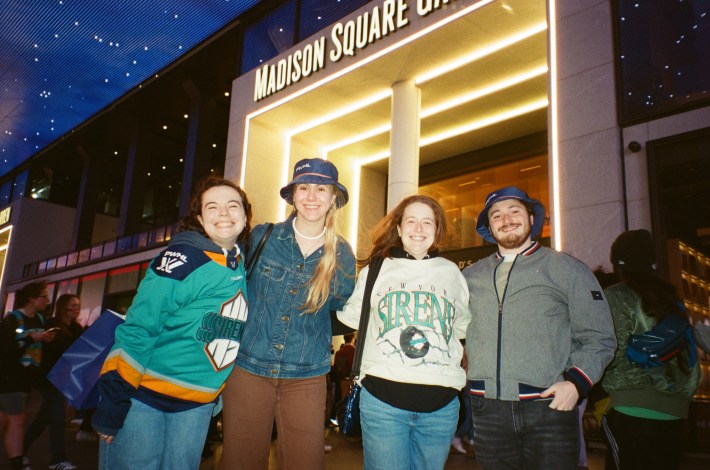
On Saturday, over 18,000 spectators sold out Madison Square Garden for its first-ever PWHL game, setting a U.S. attendance record for women’s hockey. The New York Sirens denied Defector’s credential request, so I was watching the game the old-fashioned way, in the nosebleeds of The Garden with a friend. It felt like a good sign, in some ways. During the PWHL’s inaugural season in 2024, I’d attended as a media member for a Minnesota-New York game at the Islanders’ arena, and half the lower bowl had been empty. They let me run all over the place, unmonitored, with my camera.
The Sirens finished at the bottom of the league that year, and the game I attended was representative of the season they had. New York lost in a shutout to Minnesota, and team captain Madison Packer had been incensed at the postgame press conference, especially toward then-head coach Howie Draper, who seemed like he was losing the locker room. While the team parted ways with Draper later that summer, the Sirens ended up in dead last again for the 2024-25 season.
Despite being located in one of the most populated areas in the country, the Sirens have struggled on the attendance front compared to other PWHL teams. This season, their attendance at the Prudential Center, their home arena that they share with the New Jersey Devils, has averaged 3,814 fans, the worst out of all venues in the league. Their best showing there came after the Olympic break, when the team played against Ottawa in front of an audience of 8,264.
You could attribute the Sirens’ attendance issues to a variety of factors: a lack of awareness about the team compared to Canadian markets, their less-than-ideal record in the league, the way they bounced back and forth between arenas in Connecticut, Long Island, and New Jersey in their inaugural season before settling at a rink that’s quite a way’s away from the state they’re named after. But other teams in the league have faced similar problems too, and yet they have much better attendance numbers. The Seattle Torrent, one of two expansion teams that debuted this season, has averaged over 12,000 fans per game while splitting a rink with the Kraken, despite sitting in last place.
Most articles about Saturday’s game at MSG have taken a celebratory tone, and rightfully so—the game set a U.S. attendance record for women’s hockey. But I was wondering how pivotal this night would be specifically for the Sirens, and the future of their fanbase. For whatever reason, the team is struggling to break through. Could the MSG game be a turning point?
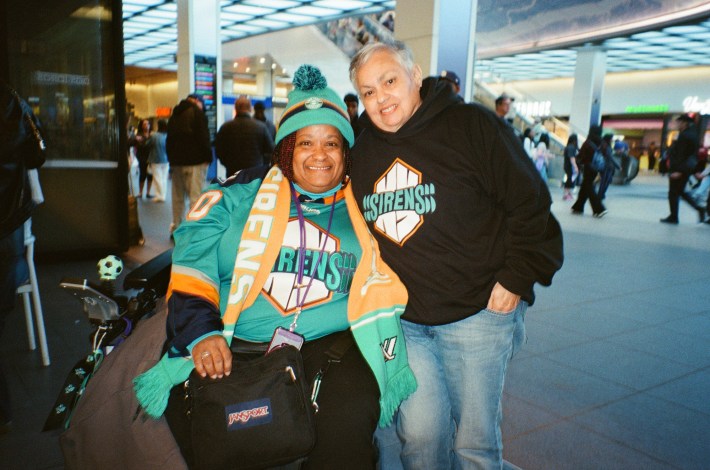
It isn’t as if the Sirens don’t have diehard fans. I ran into my first ones of the day around an hour and a half before puck drop in the underbelly of Penn Station. Patricia F. and Myrna M. were decked out in Sirens gear, and they told me they had begun as Riveters fans. They had never been able to attend a PHF game in person, but once the PWHL came to be in 2024, they started showing up. That first season, they went to games at all three arenas the New York team played at. Being able to see the Sirens at a sold-out MSG felt “totally extraordinary,” they told me.
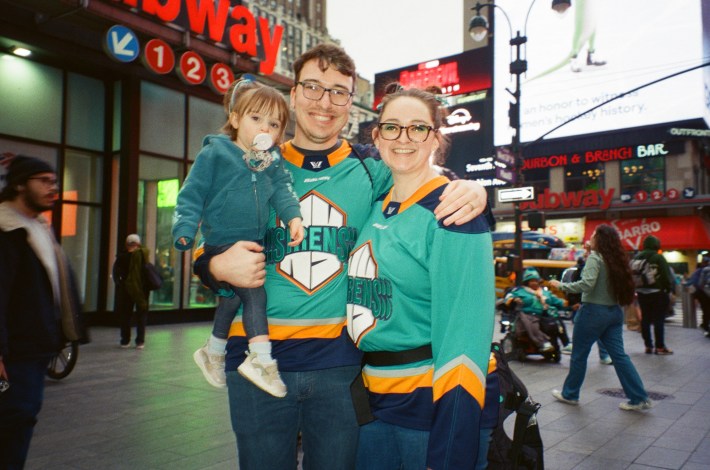
Annabelle and Ben P., who had travelled from New Haven for the game, also hopped on the Sirens’ wagon in 2024. Anabelle had been pregnant that first season. “Now I get to bring her to a game,” she told me, as she held their two-year-old daughter Nora. “She’s gonna be able to grow up and watch professional women’s hockey.” Their joy was so infectious, and we hadn’t even entered the arena yet.
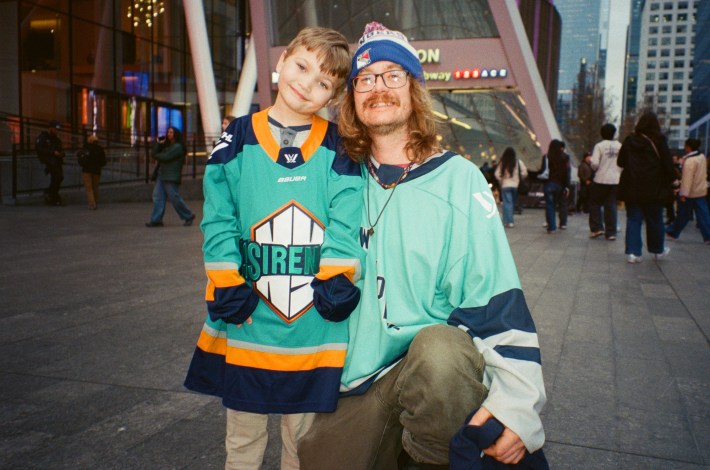
At the plaza right outside of Penn Station, I stopped one fan when I noticed that his Sirens jersey only read “New York,” which meant that it was an inaugural season jersey from back when the teams didn’t even have names yet. Rick H. had brought his son, Arbor, with him to the game. His family had gotten into women’s hockey through the local NCAA Division III team in his hometown upstate. When he had learned that the PWHL was going to allow checking, he was all in. Saturday, however, was his first in-person PWHL game. He had driven nearly six hours, but the venue made it worthwhile.
For the longtime Sirens fans I spoke to, Saturday’s game was evidence of the PWHL’s success. Playing at Madison Square Garden, in the heart of Manhattan, just has a ring to it that the Prudential Center in Newark does not, and that brand presented an opportunity for the Sirens to bring in new supporters. Jane F., a WNBA and Unrivaled fan, was one of these new-to-hockey people I met. She had become interested in women’s hockey during the Olympics, and she dragged her friends Alyssa S. and Emma J. along for the ride. When I asked what drew her in, she echoed a sentiment I heard from other fans as well: She only watched women’s sports, and this was another women’s sporting event.
“Women’s sports are just, like, objectively better and more entertaining and really gay—it’s just beautiful,” Jane told me. “I’m just tired of men’s sports in general. I’m just tired of men in general.” She had wanted to attend a game, but “couldn’t get out” to the Prudential Center. The idea of MSG being sold out was appealing, too.
There was this other thing that took me aback as I spoke to more and more fans—some of them told me they didn’t care who won, even if they were wearing a Sirens shirt and would ostensibly want their team to gain ground in the playoff chase. There was a startling lack of haterism all throughout the arena. The crowd cheered for the starting lineups on both teams. When New York Rangers captain J.T. Miller appeared on the jumbotron, I was the only person in my section that booed. This enthusiasm was unlike any hockey game I had ever been to before. People were so excited for every single thing that was happening. They even got hyped up for the ice crew. It felt like it was everyone’s first day on Earth.
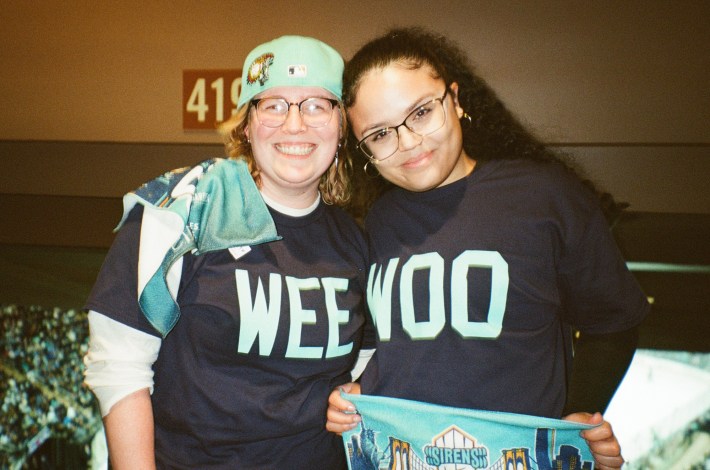
Some of this is likely an effect of so many people in the crowd attending or watching their first hockey game ever, learning audience etiquette in real time. The newcomers quickly picked up the Sirens’ unique “wee woo” chant. Trish M., who has the loudest voice I have ever heard, led a call-and-response two sections away from me. I felt so rallied by her shouts that I wee-wooed too. Trish told me that she only started attending Siren games earlier this season, but she and her friend had matching “WEE” and “WOO” shirts.
“To see women’s hockey here within three years is really incredible,” she said. The fans tonight were much louder than usual, Trish noted. “A Tuesday night at Prudential, you don’t get this kind of energy.”
During the dance cam, two femmes wearing Heated Rivalry jerseys cheered and then kissed when the camera turned to them. The whole crowd went crazy. The video director was clearly inspired, too, because the jumbotron quickly switched to a Heated Rivalry sing-along. At the second intermission, I interviewed three girls on the concourse, one of whom was wearing a sweatshirt that read “mentally i’m at the cottage,” another Heated Rivalry reference.
“Unfortunately, I’ve been to some Rangers games,” Janine G. told me. “This is way more fun than that. The crowd is a lot better.”
When I turned back to find my friend, she let me know that while I was chatting with Janine and her friends, I missed out on four other queer couples making out on the jumbotron.
Jo L., who had been wearing a Shane Hollander jersey, later told me that they had planned to kiss their friend if they made it on the big screen. The camera crew had been hovering around their section—Jo said that “one of the forwards for the New York Rangers” (Miller) was sitting two rows ahead of them—and so they had been angling to make an appearance.
Jo is a bit of a PWHL and Heated Rivalry influencer on TikTok—they moderate a Discord where they teach Heated Rivalry fans about the league, and help them find their PWHL team. While Jo grew up playing hockey in Texas alongside Torrent player Hannah Bilka, they eventually left the sport because they had felt “shoved out.” The PWHL, and Bilka’s position on the Torrent, had brought Jo back.
This was Jo’s second Sirens game of the week. They had been at the April 1 game at the Prudential Center, where star forward Sarah Fillier had clinched a narrow 4-3 win for the team with a natural hat trick. The energy had been great there, they said, but MSG was unreal. Jo felt like the issues the Sirens were facing mostly stem from its arena location. “The accessibility on a very physical level is already a challenge,” they said. “It creates these hardships for fans to actually be in the space and to be enjoying it.” It was “a bummer” to look up at the upper sections of Prudential and see them curtained off.

While Saturday’s game ended on a thrilling note, for much of the third period, I was worried that I was about to watch the Sirens get shut out again. Alex Carpenter, former Riveter and current Torrent forward, opened up the scoring in the second period, but the game was quiet—even boring—after that, as Seattle played conservatively to protect that slim lead. Luckily for the home crowd, Fillier tied the game with 3:45 left in the third. People celebrated for about a whole minute after that goal, and then they wee-wooed to top it off. When the teams went scoreless in overtime, the crowd was treated to a five-round shootout, where New York’s Kayle Osborne made the winning save on Carpenter.
At the postgame press conference, the Sirens were asked what big arena they wanted to play at in the future.
“I’d love to play as many games right back here,” Sirens head coach Greg Fargo said. “That’d be great.”
“I agree, it was awesome,” Fillier added. “I’d love to be able to come back here.”
It’s a sentiment I hear from other fans too, especially ones from Long Island and Connecticut who feel that the trip to New Jersey is too far. Some of them endure the trek; others say that they’re hoping the Sirens will make MSG a more regular stop. But with both the Rangers and Knicks playing at The Garden, it’s unlikely that the Sirens will be able to play more than one or two games there per season. The team will have to hope that fans—old and new—will make their way to Newark. That won’t be an easy sell, because if you were going to go to one Sirens game this year, it should have been this one. MSG was the perfect experience for a first-time fan, and a satisfying win in a supercharged environment for anyone who’d only had Bridgeport, Long Island, or Newark as a point of comparison.
Even if I understand their reasoning, however, it was a little disappointing when I spoke to some fans who told me they’d wait it out for the Sirens to return to MSG. We’d come so far from the Riveters playing at American Dream, but I couldn’t shake the feeling that we hadn’t truly moved past the point of treating women’s sports as primarily an inspirational spectacle. As much positivity as there was in MSG, I also want to be able to feel the stakes of a season on the line, where you’re forced to pick a side instead of simply cheering for the thrill of female athletes. I’m confident that the Sirens’ overall attendance will trend up, and that their most passionate fans will help grow a culture of ticketholders who are willing to cross state lines and brave NJ Transit. And I also hope some of the PWHL first-timers who are new to watching sports altogether learn, in time, about the heartbreak of a playoff series loss, and the spirit of being a hater.